📅 Published February 4, 2026 · 🔄 Updated October 5, 2026 · ⏱ 13 min read
An AI note taker device does one job your phone does badly: it records a whole room or a phone call on its own battery, then turns the audio into a transcript and summary. The hardware price is only half the story, so I priced six recorders that are on sale right now, plus the plan you would need, over two full years.
Short answer
The best AI note taker for most people is the Plaud Note Pro ($189): longest range, call recording, 300 free minutes a month. Wear the Plaud NotePin S ($179) for hands-free capture. If you record more than 20 hours a month, Comu Action Pro ($179.99) is cheapest over two years because its basic transcription is unlimited and free.
⚡ Quick verdict
📋 What's inside
🔍 How I researched this list
I haven't used these recorders myself, so every card is marked Researched. On October 5, 2026 I checked each price, plan and spec on the maker's own page (Plaud, Anker Soundcore, Mobvoi) or, where the maker page would not load, in two independent reviews. I dropped claims I could not confirm and built the cost table and calculator from those numbers.
Some links are affiliate links: if you buy through them I may earn a commission at no extra cost to you. It never decides what I recommend. Details
Do you need an AI note taker device, or is an app enough?
If most of your meetings happen on Zoom or Teams, start with an app: it costs less and lives in your calendar. My Otter vs Fathom vs Fireflies comparison covers that side. A device earns its price when the talk happens in a room, a car or on the phone.
Phones are poor recorders for those moments. They sit in a pocket, stop when a call or notification arrives and drain the battery you need later. A dedicated AI note taker starts with one press, uses microphones aimed at voices and keeps going for a full day on its own power.

Already sure you want Plaud? My Plaud Note Pro review goes deeper on that one device. This page compares the whole field.
The 6 best AI note taker devices compared
Here is the field at a glance. Each AI note taker gets a full card below with what the free tier covers and what two years of ownership cost.
| Device | Price | Recording | Phone calls | Free tier |
|---|---|---|---|---|
| Plaud Note Pro | $189 | 30 hr (50 hr Endurance) | Yes | 300 min/mo |
| Plaud NotePin S | $179 | 20 hr | No | 300 min/mo |
| Soundcore Work | $159 | 8 hr + 32 hr case | Not stated | 300 min/mo |
| Comu Action Pro | $179.99 | 70 hr | Coming soon | Unlimited basic |
| Mobvoi TicNote | $159.99 | 25 hr | Yes | 600 min/mo |
| Bee by Amazon | $49.99 | About 7 days | Not stated | Summaries, no audio |
Prices are list prices checked October 5, 2026; sales change them often. US pricing; the same devices usually cost a little more in euros in the EU, and Bee is sold in the US only.
Plaud Note Pro
Card-size recorder · 4 MEMS mics · AMOLED status display · Researched
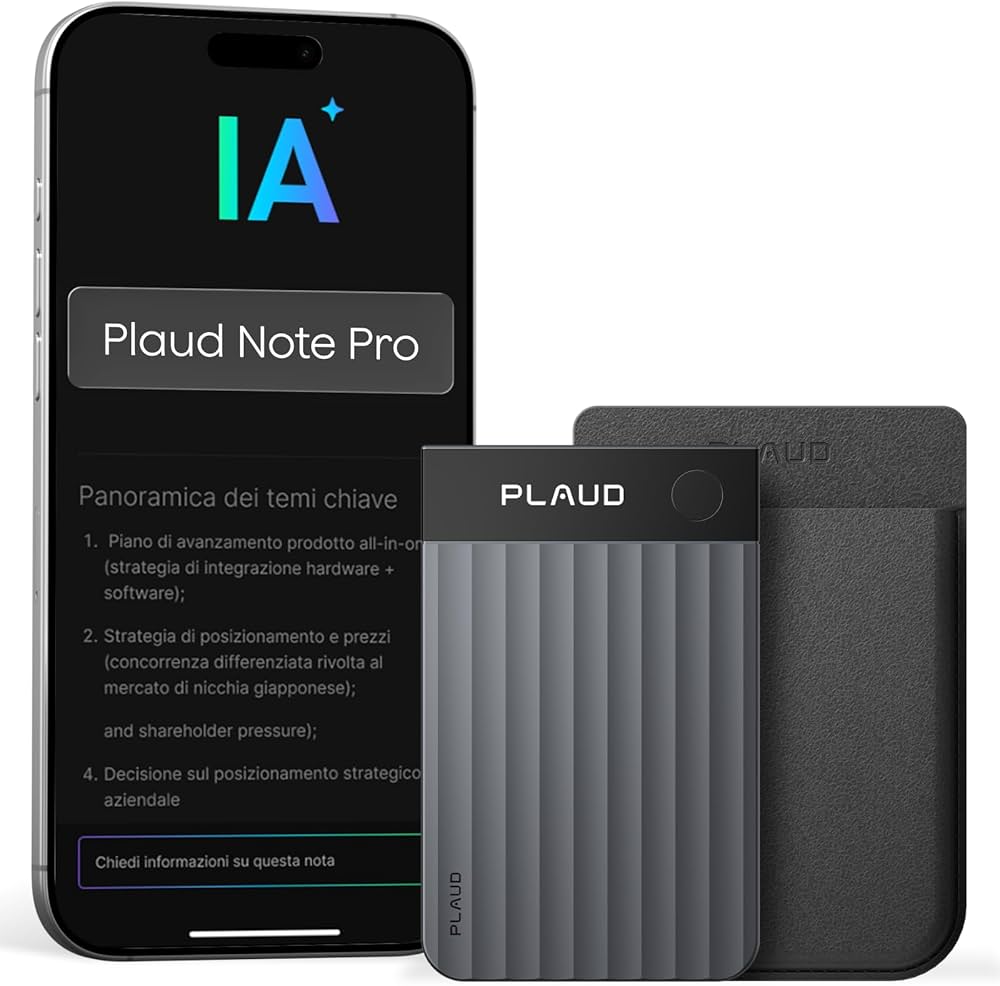
The safest pick if you want one AI note taker that covers rooms, calls and lectures. Four microphones pick up voices from up to 16.4 ft, and the small display shows that it is recording without opening the app. It switches between in-person and phone-call mode on its own, and the free Plaud Desktop app records online meetings without a bot joining.
👍 Pros
- Longest stated pickup range here
- Calls, rooms and online meetings in one library
- Published security certifications
👎 Cons
- Free tier is only 5 hours a month
- Most expensive device in the list
Plaud NotePin S
Clip, pin, lanyard or wristband · 2 MEMS mics · Researched
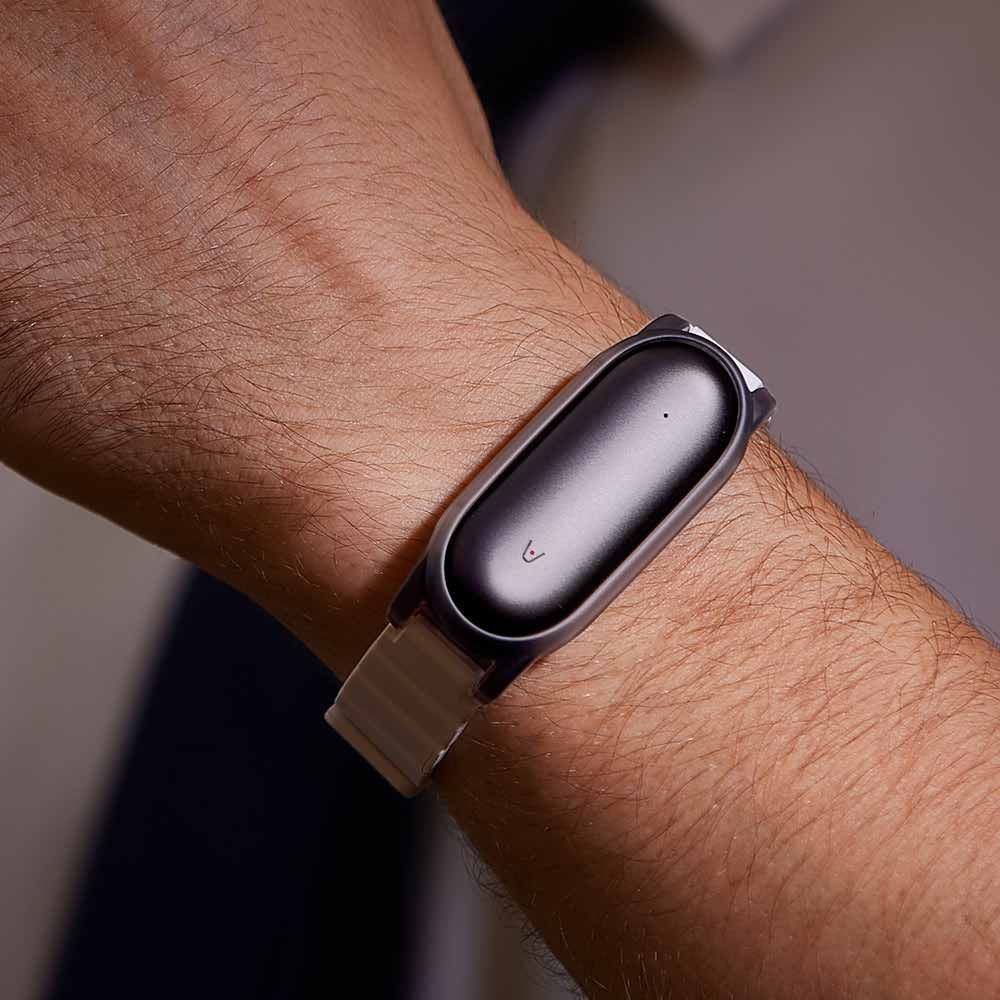
The NotePin S is the AI note taker you wear instead of carry. A physical button starts recording, and a short press marks a key moment so the summary gives it weight. Four mounting options come in the box. The catch most reviews skip: Plaud says it does not record phone calls, and its range is 9.84 ft, so it suits face-to-face talks more than big rooms.
👍 Pros
- Hands-free all day
- Press-to-highlight button
- Shares one account with other Plaud devices
👎 Cons
- No phone-call recording
- Shorter range than the Note Pro
Anker Soundcore Work
Coin-size recorder · charging case · Find My on iPhone · Researched
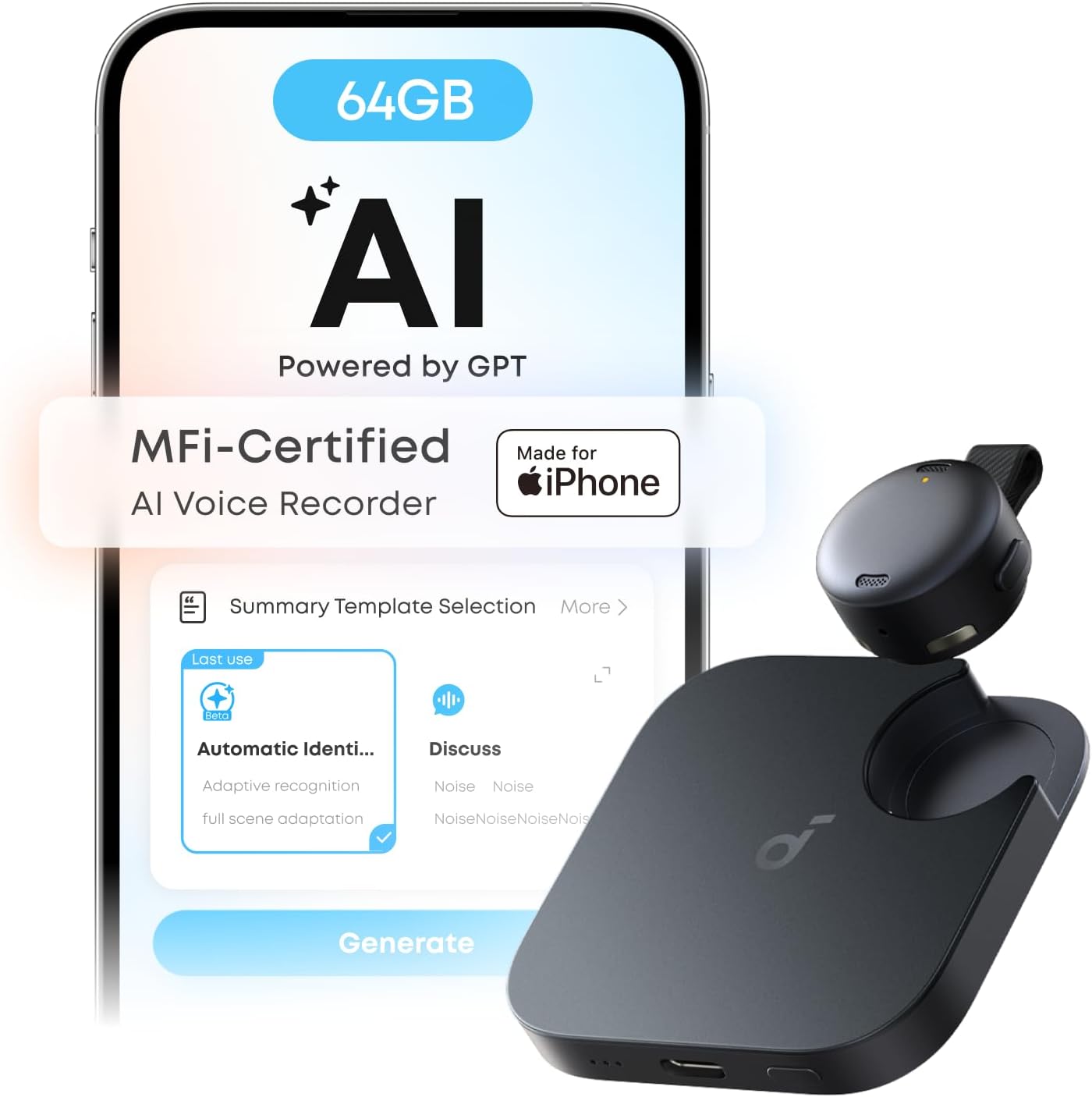
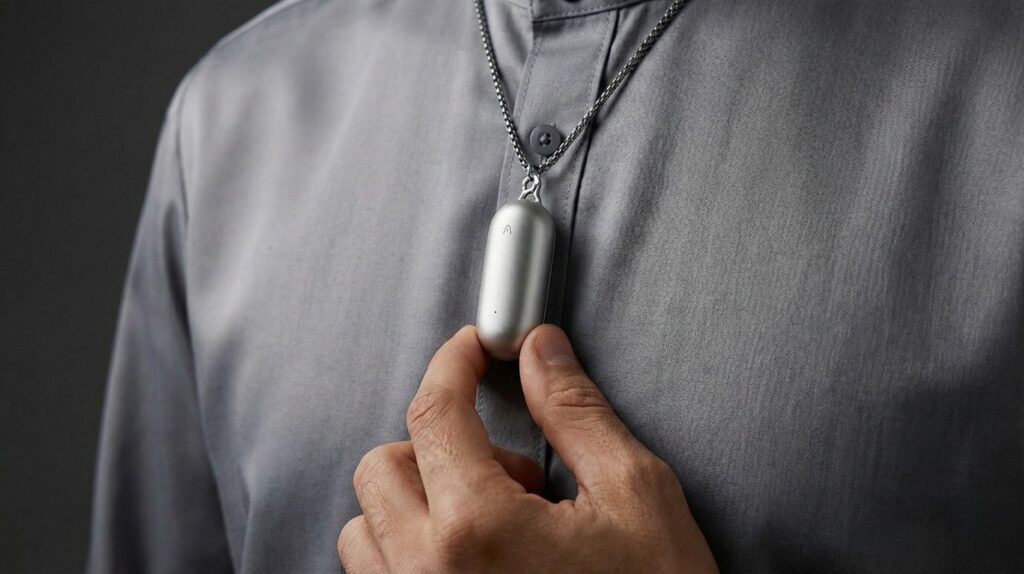
Anker's coin-size AI note taker clips to a collar or hangs from a chain. It runs 8 hours on a charge and up to 32 with the case, which is less than the card-style recorders but fine for a working day. Plans mirror Plaud's structure: 300 free minutes, then Pro or Unlimited. Anker says audio is stored on the device by default and cloud copies are deleted after transcription unless you turn on cloud storage.
👍 Pros
- Lightest device here
- Big-brand support and warranty
- Local-first storage option
👎 Cons
- Shortest battery per charge
- Some AI features locked behind Pro
💡 Comparing on cost? Jump to the 2-year cost table before you buy.
Comu also sells the older Comulytic Note Pro at around $129 with the same unlimited free transcription, a smaller display and 45 hours of recording. It is the cheapest serious AI note taker if you don't need the AI button.
Comu Action Pro
6-mic array · AI button for emails, slides and action lists · Researched

Comu, the company formerly called Comulytic, gives away what others sell: unlimited transcription and basic summaries with no monthly fee. Its new Action Pro adds a six-microphone array and an AI button that turns a meeting into a follow-up email or a slide outline. It is a first-generation device, headset call capture is still listed as coming soon, and Comu does not publish a pickup range yet.
👍 Pros
- No minute cap on the free tier
- 70-hour battery
- Turns notes into drafts
👎 Cons
- First-generation hardware
- Thicker than card-style recorders
- Compliance claims not published as audits
Mobvoi TicNote
Card-size · 3 MEMS mics · call and room modes · OLED display · Researched
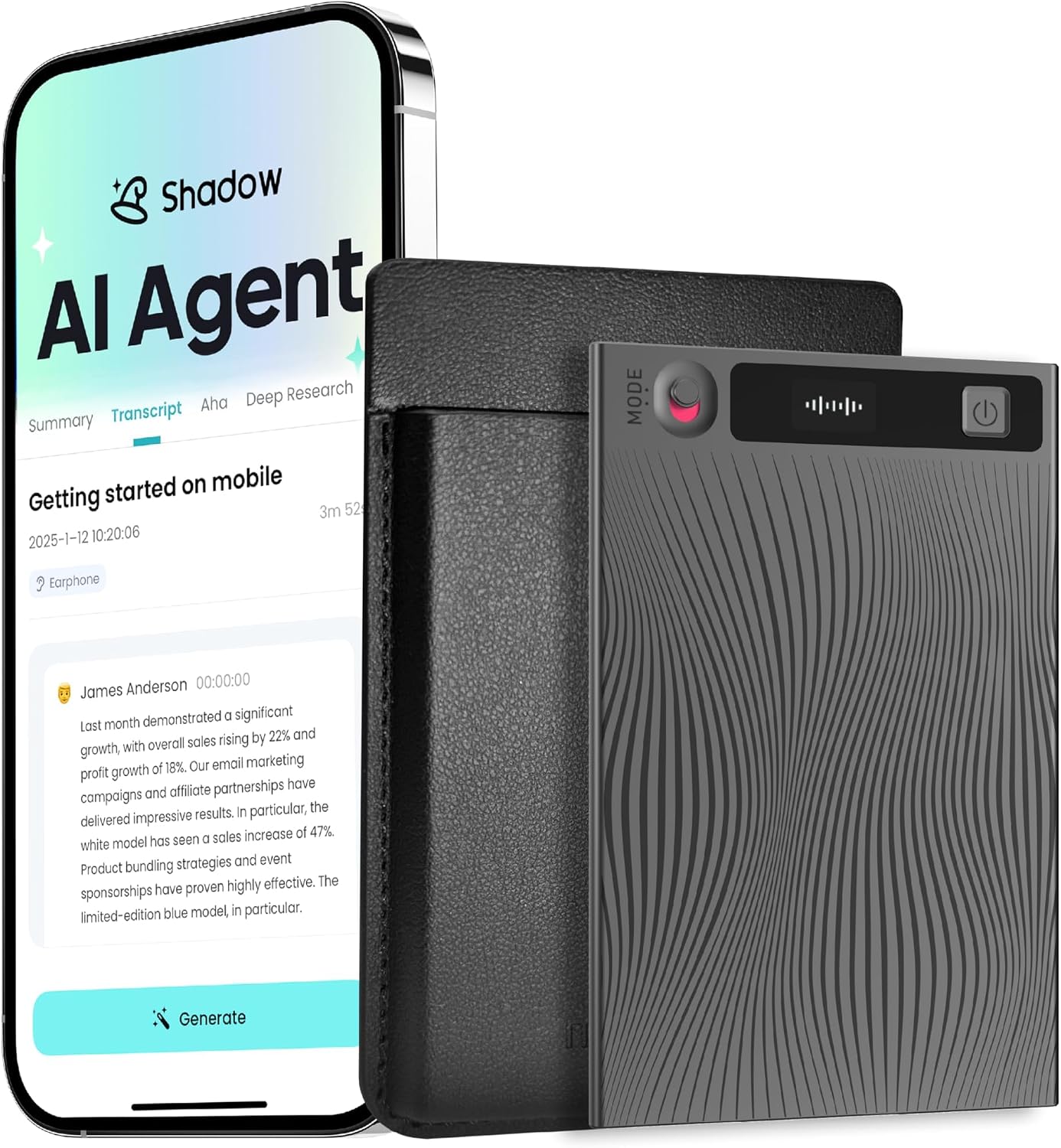
From the maker of TicWatch, this AI note taker doubles Plaud's free allowance: device owners get 600 minutes a month. A switch flips between phone-call and room recording, and the app adds mind maps, live translation and an AI agent that answers questions across files. Paid tiers raise the cap to 2,100 or 6,600 minutes, but plan prices change often, so check them in the app.
👍 Pros
- Double the free minutes of Plaud
- Call recording toggle
- 64GB storage
👎 Cons
- Plan prices vary by region and listing
- Agent features change often
💡 Comparing on cost? Jump to the 2-year cost table before you buy.
Bee by Amazon
Wristband or clip · always-on assistant · iOS only · Researched
Bee is the odd one out: less an AI note taker than a memory aid. Amazon bought the startup and now sells it as an ambient assistant that listens through your day and turns conversations into reminders, to-dos and daily recaps. Amazon says it does not keep raw audio, only processed text. That makes it cheap and private by design, but you cannot replay a meeting word for word, and it currently needs an iPhone.
👍 Pros
- Lowest entry price
- Week-long battery
- No raw audio stored
👎 Cons
- No full recordings to replay
- iPhone and US only
- Always-on capture needs extra care with consent
💡 Want memory, not meeting notes? Bee is closer to a diary than a dictation device.
⚠️ Why I left out the Limitless Pendant
Limitless stopped selling its pendant when Meta bought the company, according to AI Business, and existing owners got one more year of support. It is the clearest lesson in this category: an AI note taker is only as durable as the company running its cloud. Favor brands with years of shipping hardware, and export your notes regularly.
What does an AI note taker cost over 2 years?
Every AI note taker here is cheap to start and expensive to outgrow. I took three usage levels, picked the cheapest plan that covers each one, and added two years of that plan to the device price. Bee is left out because its plan terms are not confirmed.
| Device | Light · 5 hr/mo | Regular · 20 hr/mo | Heavy · 40 hr/mo |
|---|---|---|---|
| Plaud Note Pro | $189 | $389 | $669 |
| Plaud NotePin S | $179 | $379 | $659 |
| Soundcore Work | $159 | $359 | $639 |
| Comu Action Pro | $180 | $180 | $180 |
| Mobvoi TicNote | $160 | $398 | $758 |
5 hours = 300 minutes, a free tier on every device. 20 hours = 1,200 minutes, about one hour per workday. 40 hours = 2,400 minutes, roughly ten lecture hours a week. TicNote and Comu paid tiers are approximate; check them in the app.
Drag the slider to see your own number. If you also pay for ChatGPT, Claude or a meeting app, my free AI subscription cost calculator totals every plan in one place.
🧮 Your 2-year cost, by hours you record
Uses list prices and annual plans checked October 5, 2026. Runs in your browser; nothing is stored.
Which AI note taker device fits your week?
Match the AI note taker to where your hardest conversations happen, not to the longest spec sheet.
| Your week | Best pick | Why |
|---|---|---|
| Lectures and classes | Comu Action Pro | Unlimited free transcription covers 10+ hours a week |
| Client meetings and calls | Plaud Note Pro | Long range plus automatic call mode |
| Field interviews on foot | Plaud NotePin S | Wearable, one button, 20-hour battery |
| Quiet one-to-ones | Soundcore Work | Smallest and most discreet |
| Mostly video calls | An app, or Plaud Desktop | No hardware needed for online meetings |
| Memory aid for daily life | Bee by Amazon | Cheap, week-long battery, no raw audio |
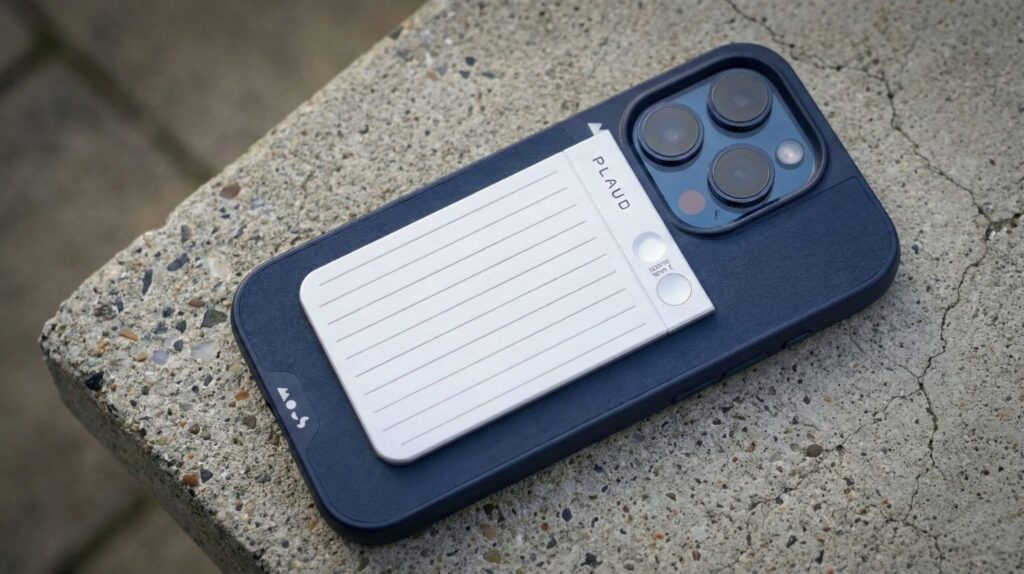
Whatever you pick, transcripts improve most with better audio, not a smarter model. Place the recorder in the open, at an even distance from speakers, and say the date and topic at the start so the summary has context. My guide to fixing inaccurate AI meeting notes covers the rest.
Is it legal to record with an AI note taker?
It depends on where you are. Most US states allow recording when one person in the conversation consents, but a smaller group, including California, Florida, Pennsylvania and Washington, requires everyone to agree. The Justia 50-state survey lists the rules state by state.
In the EU and UK, a recording of a person counts as personal data, so you need a clear reason and you should tell people. The simple habit that works everywhere: say "I'll record this so I don't miss anything, and I can share the notes." For workplace rules and data retention, read AI note-takers at work: the hidden privacy risks.
My verdict: which AI note taker should you buy?
For most people the Plaud Note Pro is the AI note taker to buy first. It covers rooms, phone calls and online meetings in one account, and the free 300 minutes are enough for about five one-hour meetings a month. If you want to forget it is there, the NotePin S does the same job on your collar, minus phone calls.
If you record for hours every week, do the math before you buy. Comu Action Pro wins on long-term cost, as long as you accept first-generation hardware. TicNote is the middle ground with double the free minutes, and Bee is a $50 experiment rather than a meeting tool.
Ready to start? My top pick for most people
Check the Plaud Note Pro price on Amazon →Includes 300 free transcription minutes a month.