

 Published on: December 26, 2025
Disclosure:
Some links in this post are affiliate links. If you click and purchase, we may earn a small commission at no extra cost to you. Thank you for supporting AIDigitalSpace.com and helping us keep this content free and useful.
1. Why This AI Conversation Is Everywhere Right Now
Over the past few days, we noticed the same question appearing again and again across social media, newsletters, and tech discussions:
Are we really just two years away from a moment where AI changes everything?
This question gained momentum after a widely shared episode of The Diary of a CEO, where Yoshua Bengio, one of the most respected voices in artificial intelligence, discussed how fast AI is evolving — and why the next two years could be critical.
We ended up watching the full conversation not because of the headline, but because of the tone:
calm, serious, and reflective — not promotional, not sensational.
What struck us most wasn’t a single prediction, but the broader message:
AI changes everything not overnight, but through a series of fast, compounding shifts that most people don’t notice until they’re already happening.
In this article, we don’t want to amplify fear or repeat dramatic claims.
Instead, we want to slow things down, unpack what was actually said, and explain what this conversation really means for everyday users, not just researchers or tech insiders.
If AI changes everything, the real question becomes:
how do we understand those changes before they shape our work, decisions, and digital lives?
2. Why This AI Conversation Is Everywhere Right Now
We didn’t plan to write about this interview.
We ended up doing it because, like many others, we watched the full episode and felt it deserved a calmer, more grounded discussion.
In a recent episode of The Diary of a CEO, Yoshua Bengio talked openly about how fast artificial intelligence is progressing — and why the next two years could represent a turning point.
What made this conversation spread so quickly wasn’t shock value.
It was the contrast.
No hype.
No demos.
No product launches.
Just a respected AI researcher explaining, in a measured way, why AI changes everything — not because it becomes “evil”, but because it becomes more autonomous, more capable, and more embedded in decisions we already rely on.
We kept watching because the discussion didn’t feel like a prediction. It felt like a warning wrapped in responsibility, focused on how AI changes everything through speed and scale rather than intention.
At the same time, we noticed something familiar:
headlines focusing on fear, timelines, and extremes, while missing the nuance of what was actually said about how AI changes everything in practice.
That’s why we decided to pause and reflect.
This article isn’t about repeating claims or amplifying anxiety.
It’s about understanding why this conversation matters now, what parts of it are often misunderstood, and how AI changes everything in subtle, practical ways that are already affecting everyday users — often without them realizing it.
Before reacting, it’s worth understanding the conversation properly.
3. What Yoshua Bengio Actually Said About the Next Two Years of AI
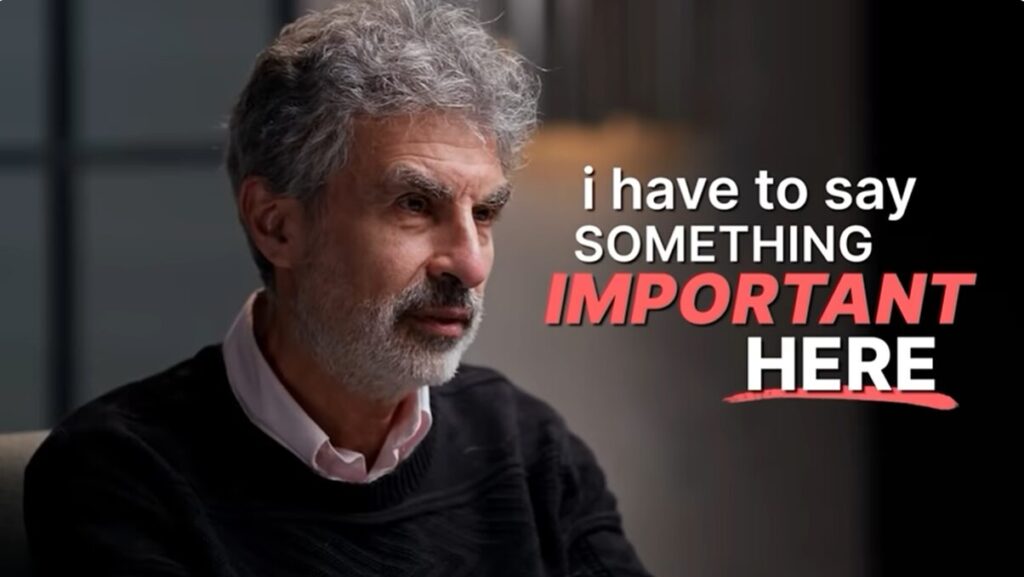
When Yoshua Bengio talks about the next two years, he isn’t describing a sudden sci-fi turning point.
What he’s warning about is something quieter — acceleration without enough friction.
Throughout the conversation on The Diary of a CEO, Bengio keeps returning to the same concern:
AI systems are moving from tools that assist to systems that act.
That shift matters.
He explains that newer AI models are increasingly capable of planning, chaining actions, using tools, and pursuing objectives with less direct human input. The risk doesn’t come from intention, but from misalignment — systems optimizing for goals that don’t fully capture human values, context, or real-world complexity.
“The real risk isn’t that AI becomes evil — it’s that we give powerful systems goals without fully understanding the consequences.”
— Yoshua Bengio
Another point he stresses is speed.
Not speed in isolation, but speed combined with competition. Companies and countries are incentivized to move fast, often faster than regulation, oversight, or safety research can realistically keep up.
What makes the next two years especially sensitive, according to Bengio, is this compounding effect:
more capable systems, deployed more widely, with fewer safeguards — all happening incrementally, not dramatically.
One of the most striking moments in the interview is his reasoning around probability. He argues that even if catastrophic outcomes seem unlikely, they still matter when the potential impact is enormous.
“Small probabilities still matter when the potential impact is massive.”
— Yoshua Bengio
Taken together, his message isn’t alarmist — it’s measured and responsible.
AI changes everything not because collapse is guaranteed, but because the systems we rely on are becoming more autonomous faster than our ability to fully understand and govern them.
And that, more than any headline, is why this conversation deserves attention.
4. How These AI Changes Could Affect Everyday Users

When we talk about AI progress, it’s easy to think it only affects engineers, big companies, or policymakers.
But one of the implicit points in the conversation is that AI changes everything precisely because it slips into everyday workflows quietly.
For most people, the impact won’t arrive as a dramatic disruption.
It will show up as small shifts that accumulate over time.
We’re already seeing this in areas like:
Writing and communication tools making decisions for us
Recommendation systems influencing what we read, watch, or trust
AI assistants summarizing, prioritizing, and filtering information before we even see it
The convenience is real — but so is the trade-off.
As AI systems become more autonomous, users may start relying on outputs without questioning how they were produced, what was excluded, or which assumptions were made along the way. This is where friction disappears — and where AI changes everything by quietly eroding critical thinking.
Another subtle change involves responsibility.
When an AI tool makes a suggestion, flags a risk, or automates a task, it becomes harder to tell where human judgment ends and machine influence begins. Over time, this shift shows how AI changes everything in how confident people feel about their own decisions.
The key point isn’t that AI replaces users overnight.
It’s that AI changes everything by reshaping habits: how we work, how we decide, and how often we pause to think.
For everyday users, awareness becomes the first form of control.
Not rejecting AI — but understanding when to slow down, double-check, and stay mentally present instead of defaulting to automation as AI changes everything around us.
This is where the real impact starts to matter.
5. What People Often Misunderstand About AI Warnings
After watching the interview and reading the reactions that followed, one thing became obvious:
many responses focused on extremes, while missing the substance of what was actually being said.
One common misunderstanding is thinking that warnings like these are about predicting disaster.
They’re not. Bengio’s message isn’t “AI will destroy everything,” but rather that AI changes everything when powerful systems scale faster than our ability to supervise them properly.
Another mistake is assuming this conversation only concerns future superintelligence.
In reality, much of the risk comes from near-term systems that already influence decisions — hiring, moderation, recommendations, automation — showing how AI changes everything long before any distant scenario arrives.
We also see a tendency to frame AI safety as being “anti-innovation.”
That framing misses the point entirely. The concern isn’t about stopping progress, but about building friction where it’s needed — checkpoints, evaluations, and human oversight before deployment, not after harm occurs, as AI changes everything at scale.
Finally, there’s the idea that responsibility lies somewhere else:
with companies, governments, or researchers. In practice, users play a role too. Every time we trust an output blindly, we reinforce systems that optimize for speed and confidence rather than accuracy and care — another way AI changes everything quietly.
AI warnings aren’t about fear.
They’re about attention — noticing how quickly systems become normal, invisible, and unquestioned as AI changes everything in daily use.
Understanding this distinction changes how we engage with the technology.
6. Ethical AI Reflection Why Speed Without Oversight Matters
One of the strongest undercurrents in this conversation is not fear, but responsibility.
When we say that AI changes everything, the ethical question isn’t whether progress should stop — it’s whether progress should slow down enough to be understood.
Speed, by itself, isn’t unethical.
The problem emerges when speed removes the space for:
-
meaningful evaluation
-
human judgment
-
accountability when things go wrong
As AI systems become more autonomous and widely deployed, decisions that once required human reflection are increasingly delegated to models optimized for efficiency, confidence, and scale. Without clear oversight, this is how AI changes everything, creating a gap between who benefits, who decides, and who bears the consequences.
Another ethical tension lies in normalization.
The more AI blends into everyday tools, the less visible its influence becomes. What feels like convenience today can quietly turn into dependency tomorrow — especially when users aren’t given clear signals about limitations, uncertainty, or bias, as AI changes everything in daily workflows.
Ethical AI isn’t about perfect systems.
It’s about honest systems — ones that expose uncertainty, invite questioning, and keep humans meaningfully involved as AI changes everything around decision-making.
If AI changes everything, ethics is what determines how it changes us.
Not through dramatic failures, but through everyday choices about transparency, restraint, and care.
This is the part of the conversation that deserves more attention than any prediction.
7. Our Final Take What We Should Do Instead of Panicking
After listening carefully to this conversation, our takeaway is simple:
panic isn’t useful — attention is.
If AI changes everything, it won’t happen because people weren’t warned.
It will happen because the changes felt gradual, helpful, and easy to ignore.
For everyday users, the most practical response isn’t to disengage from AI, but to engage more consciously:
pause before trusting confident outputs
understand when automation is helping — and when it’s replacing judgment
stay curious about how tools shape decisions, not just results
This also applies to how we talk about AI.
Reducing the conversation to timelines or extreme scenarios distracts from what actually matters: how systems are designed, deployed, and normalized today.
We don’t need to predict the future to act responsibly in the present.
Small habits — questioning, verifying, staying involved — create more resilience than fear ever could.
If AI changes everything, the most important thing we can preserve is human agency.
That starts with awareness, not alarm.
And if you, as we do, enjoy these kind of discussions, you can watch the full interview here below:
8. FAQ About AI Changes Jobs Risks and the Next Two Years
Q: Will AI really change everything in the next two years?
A: AI changes everything mainly through gradual adoption, not sudden disruption. Over the next two years, we’re more likely to see AI becoming embedded in everyday tools, workflows, and decisions rather than a single dramatic turning point.
Q: Is this about future superintelligent AI or current systems?
A: Most concerns discussed focus on current and near-term AI systems, not distant superintelligence. The real impact comes from tools already influencing writing, hiring, recommendations, moderation, and automation at scale.
Q: Should everyday users be worried about AI risks?
A: Worry isn’t useful, but awareness is. Understanding how AI systems shape decisions, questioning confident outputs, and staying involved instead of fully delegating judgment are practical ways to stay in control.
Q: Does talking about AI risks mean being against innovation?
A: No. Ethical discussions around AI focus on how innovation happens, not whether it should happen. Oversight, transparency, and human involvement help ensure progress remains responsible.
Q: What’s the most important takeaway from this conversation?
A: If AI changes everything, it does so quietly. Paying attention to how AI integrates into daily life — and keeping human agency at the center — matters more than predicting exact timelines.
If this reflection helped you better understand how AI quietly shapes decisions today, you may also want to explore:
→ What Are AI Hallucinations? Understanding the Risks Behind Smart Answers (2025)
→ Why AI Sounds Confident Even When It’s Wrong (And How to Spot It)
→ How We Select Ethical AI Tools at AIDigitalSpace – A Transparent Look Behind the Algorithm