

 Published on: September 15, 2025 • Updated: February 2026
This post contains affiliate links. If you buy through them, we may earn a small commission at no extra cost to you — thanks for supporting. Learn more.
1. Introduction: How to Choose the Right AI Book
Looking for the best AI books to read right now? This guide is designed for people who want clarity (not hype) — whether we’re learning AI from scratch, using it at work, or building with modern tools like GenAI and LLMs.
Here’s what you’ll get: a fast Quick Picks shortlist for instant answers, plus categories that match your goal — beginners, builders, and business/strategy. For every recommendation, we focus on the stuff that actually helps: who it’s for, what you’ll learn, and why it’s worth your time.
How we choose the best AI books: we prioritize consistently strong reader feedback, reputable authors/publishers, real-world usefulness, and editions that still feel current. And if you want to apply what you learn right away (not just read about it), pair this list with our curated tools: check our Top AI Tools collection here.
Start here: jump to Quick Picks if you want the fastest recommendation — or scroll to your category and pick the best AI book for your exact use case.
| Quick Pick | Best for | Why we recommend it | Link |
|---|---|---|---|
|
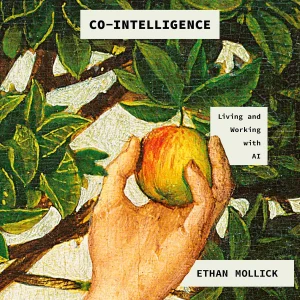
Co-Intelligence Ethan Mollick |
Beginners + busy professionals | Practical “use AI at work” thinking with fast, repeatable wins (no overwhelm). | Check → |
|
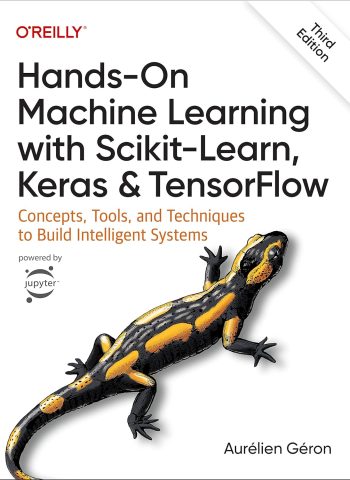
Hands-On Machine Learning Aurélien Géron |
Builders who want hands-on ML | Project-driven guide to real ML workflows and tools—built for learning by doing. | Check → |
|
Competing in the Age of AI Iansiti & Lakhani |
Business + strategy readers | Clear framework for how AI changes companies—useful for adoption and decision-making. | Check → |
Tip: pick the row that matches your goal, then scroll for deeper recommendations in each category.
Pick your path (jump to the right section)
Tip: beginners → pick 1 foundation book + 1 practical book. Builders → pick the one that matches your stack.
2. How We Picked These AI Books (Ratings, Value, Use Cases)
To shortlist the best AI books, we combine real demand with real usefulness. In plain English: we picked titles people actually finish, then filtered for clarity, staying power, and value you can apply quickly.
What we measured
Reader trust: consistent ratings + review patterns (not one-week hype).
Practical time-to-value: frameworks, checklists, exercises, and “do-this-next” chapters.
Up-to-date relevance: editions that reflect modern AI workflows (GenAI/LLMs + real use cases).
Level fit: clear tracks for beginners, builders, and business/strategy.
Formats: print, ebook, and audiobook availability (so it fits your routine).
Author credibility: proven experience (research, product, industry, or teaching).
Skimmability: summaries and structure that make it easy to retain.
Staying power: concepts that age well (reasoning, evaluation, safety), not just tool trends.
Red flags we exclude: vague futurism, outdated pre-GenAI advice, or padded content.
How this helps you choose faster
Beginner path: pick 1 foundation book + 1 practical “use AI” book for momentum.
Builder path: choose the title that matches your stack (ML, LLMs, product) and ship one small win.
Leader path: pair 1 strategy book with 1 ethics/safety read to make better decisions under uncertainty.
If you’re also looking for tools to practice what you learn, browse our Top AI Tools here.
For a reliable overview of what modern AI actually is (and what it isn’t), see IBM’s plain-English explainer here.
3. What’s Hot Right Now (New Releases & Reader Favorites)
Here’s what’s surging this month: the best AI books people actually buy and finish. Classics still anchor the charts with strong foundations and safety themes. At the same time, accessible explainers and practical, work-ready guides keep climbing.
To spot real momentum, we track category rankings, trusted editorial picks, and community ratings. We also review monthly trends highlighted by industry analysts such as the Stanford AI Index. This approach helps keep our AI reading list current, useful, and aligned with what readers value in artificial intelligence books today.
| Book (Why It’s Trending) | Best For | Read Time Vibe | Notes |
|---|---|---|---|
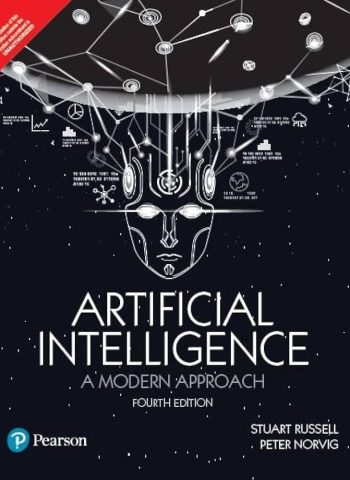
| Artificial Intelligence: A Modern Approach — foundational text stays near category top | Serious beginners, students | Long, reference-friendly | Widely used; pairs well with a practical guide |
| Superintelligence — risk and governance interest keeps sales steady | Leaders, policy-curious readers | Medium | Context for safety debates and trade-offs |
| Co-Intelligence — approachable “use AI at work” playbook still rising | Beginners, non-technical pros | Short-to-medium | Clear frameworks; quick wins |
| The Singularity Is Nearer — high-visibility author drives ongoing interest | Big-picture readers | Medium | Future scenarios; complements practical titles |
| If Anyone Builds It, Everyone Dies — new safety-focused release fueling debate | Policy, ethics, safety | Medium | Timely risk framing for 2025 |
| How Progress Ends — innovation cycles lens resonates with AI’s real-world impact | Leaders, strategists | Medium | Useful for policy and adoption choices |
| Empire of AI — on major business-book radars; strategy + power themes | Executives, policy watchers | Medium | Good companion to ethics & governance reads |
4. Best AI Books for Beginners (No Overwhelm)
Starting out? Here are the five best AI books people actually finish—clear language, practical takeaways, and real value this week.
Co-Intelligence — Ethan Mollick
Why it’s top: clear “use AI at work today” frameworks and quick, repeatable wins
Level & time: beginner; short chapters you can apply same day
Formats: print, ebook, audiobook
Notable takeaway: treat AI as a partner and design simple, iterative workflows
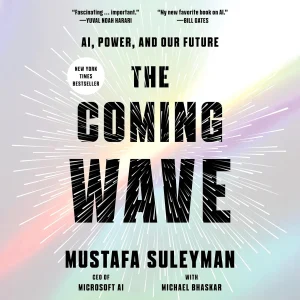
The Coming Wave — Mustafa Suleyman (with Michael Bhaskar)
Best for: newcomers who want the big picture before tools
Why it’s top: balanced view of risks, opportunities, and near-term shifts in work and policy
Level & time: beginner; medium read, highly accessible
Formats: print, ebook, audiobook
Notable takeaway: understand the landscape to make smarter everyday decisions
Hands-On Machine Learning with Scikit-Learn, Keras & TensorFlow — Aurélien Géron
Best for: beginners who learn by doing
Why it’s top: step-by-step projects that turn concepts into working results
Level & time: beginner→intermediate; project blocks you can pace weekly
Formats: print, ebook
Notable takeaway: start with a single project and ship a small model end-to-end
Artificial Intelligence: A Modern Approach (4th ed.) — Russell & Norvig
Best for: foundations-first learners
Why it’s top: the standard reference that explains core ideas beyond trends
Level & time: beginner→advanced; dip into targeted chapters as a reference
Formats: print, ebook
Notable takeaway: build durable mental models you’ll reuse across tools
Life 3.0 — Max Tegmark
Best for: thoughtful beginners curious about AI’s future
Why it’s top: engaging scenarios that sharpen judgment about where AI is headed
Level & time: beginner; medium read
Formats: print, ebook, audiobook
Notable takeaway: pair big-picture perspective with one practical book above
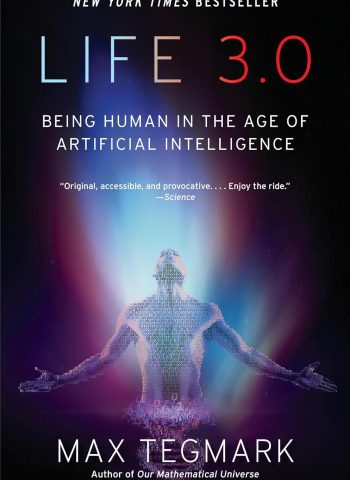
If you’re a beginner, here’s the fastest way to make these best AI books stick: read one chapter, then apply it immediately with a simple tool. We put together a practical list of free AI tools you can use without creating an account, so you can test what you’re learning in minutes (no friction, no setup). Start here at our Guide on Free AI Tools No Login Required.
5. Best AI Books for Builders (ML, GenAI, LLMs)
Building real features? Here are five of the best AI books engineers and product builders rely on. These artificial intelligence books focus on clear patterns, up-to-date practices, and fast time-to-value.
This short AI reading list is practical by design. Each title helps teams ship features faster, reduce guesswork, and apply AI at work. If you’re getting started, several picks also work as AI books for beginners, before moving into deeper implementation topics.
Generative Deep Learning (2nd ed.) — David Foster
Why it’s top: practical, up-to-date recipes plus an official repo you can adapt to real products
Level & time: beginner→intermediate; project-by-project, ship a small demo in a weekend
Formats: print, ebook, audiobook (new release)
Awards/recognition: strong community adoption; widely referenced by practitioners and courses (no major formal book awards listed).
Amazon US price (today): Paperback typically discounted vs. $79.99 list; recent observed prices around $49.87 (paperback) and $47.38 (Kindle).
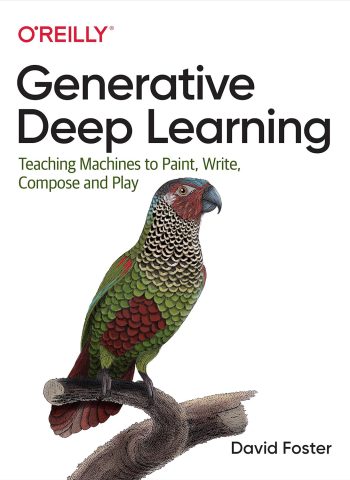
Designing Machine Learning Systems — Chip Huyen
Best for: product/ML engineers shipping real features
Why it’s top: practical patterns for data pipelines, deployment, monitoring, iteration loops
Level & time: intermediate; dip in by design phase
Formats: print, ebook, audiobook (audio availability noted by author)
Awards/recognition: widely adopted in ML systems courses/teams; strong reader ratings at major retailers.
Amazon US price (today): commonly near the retail paperback benchmark $65.99.
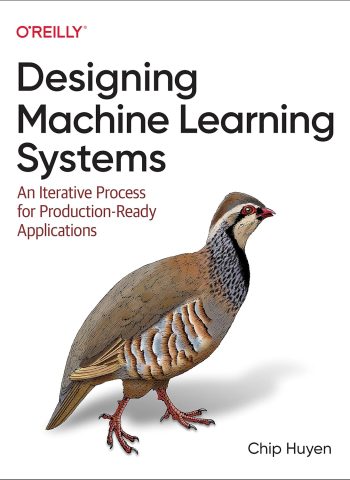
Natural Language Processing with Transformers (Revised Edition) — Lewis Tunstall, Leandro von Werra, Thomas Wolf
Best for: builders working with LLMs and text
Why it’s top: hands-on recipes for fine-tuning, evaluation, and pipelines on modern stacks
Level & time: intermediate; project-oriented
Formats: print, ebook (Audible also listed) O’Reilly Media+1
Awards/recognition: de-facto reference for the Hugging Face ecosystem (publisher + community standing
Amazon US price (today): paperbacks generally align with retail ~$65.99 benchmark.
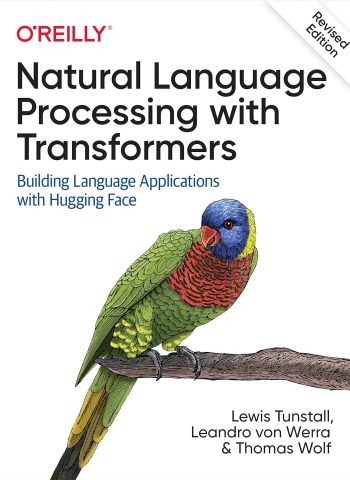
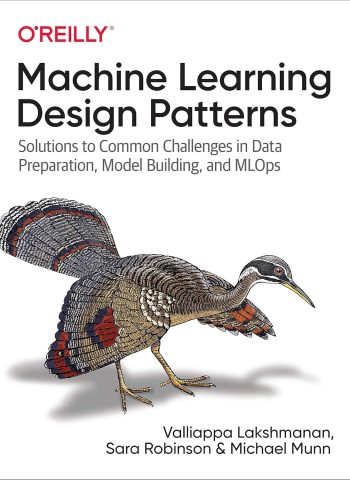
Machine Learning Design Patterns — Valliappa Lakshmanan, Sara Robinson, Michael Munn
Best for: teams standardizing how they build ML
Why it’s top: field-tested solutions that reduce failure modes and speed delivery
Level & time: intermediate; pattern-by-pattern reference
Formats: print, ebook
Awards/recognition: industry-standard reference cited across teams/courses (publisher + retailer signals).
Amazon US price (today): typically near the paperback retail benchmark $65.99.
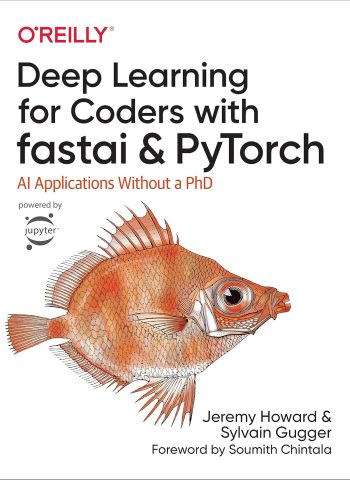
Deep Learning for Coders with fastai & PyTorch — Jeremy Howard, Sylvain Gugger
Best for: developers who learn by building
Why it’s top: code-first, project-driven path to ship real DL apps quickly
Level & time: beginner→intermediate; short, iterative lessons
Formats: print, ebook; companion notebooks/course available
Awards/recognition: cornerstone text for the fast.ai course and community (publisher/course pages).
Amazon US price (today): Kindle pricing commonly seen around $41.79.
Pick one project-ready title and one systems book, block 90 minutes this week, and ship a tiny win (a pipeline, an evaluation, or a prompt workflow).
6. Best AI Books for Business & Strategy
Leaders ask for the best AI books that turn buzz into decisions. This set of artificial intelligence books focuses on strategy, org design, and value creation.
Each pick follows a common format. We include a typical price to budget fast. This AI reading list helps teams move from insight to action. Several titles also work as AI books for beginners, before scaling decisions across the business.
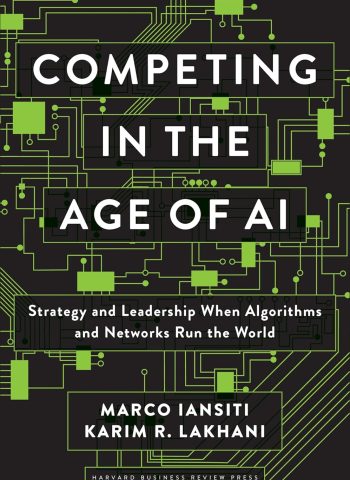
Competing in the Age of AI — Marco Iansiti, Karim R. Lakhani
Why it’s top: shows how AI-native operating models beat traditional constraints
Level & time: leader-friendly; skim by capability (operations, platforms, data)
Format chosen: Hardcover
Typical price: ~$32
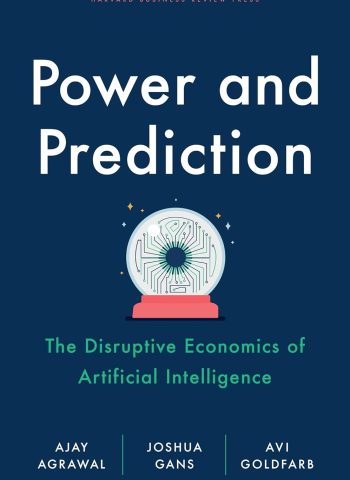
Power and Prediction — Ajay Agrawal, Joshua Gans, Avi Goldfarb
Best for: decision-makers mapping where AI creates ROI
Why it’s top: the “uncertainty → prediction” lens clarifies where to invest first
Level & time: accessible; playbook for sequencing pilots
Format chosen: Hardcover
Typical price: ~$32
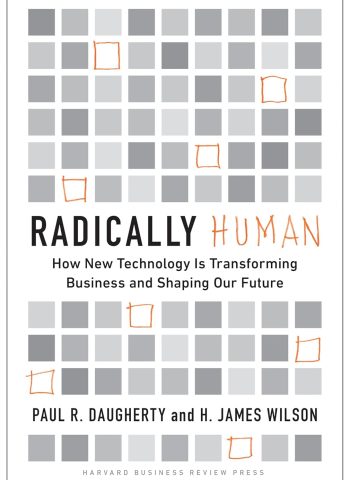
Radically Human — Paul Daugherty, H. James Wilson
Best for: leaders balancing automation with human strengths
Why it’s top: clear frameworks for talent, org design, and responsible adoption
Level & time: quick read; strong summaries at each chapter end
Format chosen: Hardcover
Typical price: ~$30
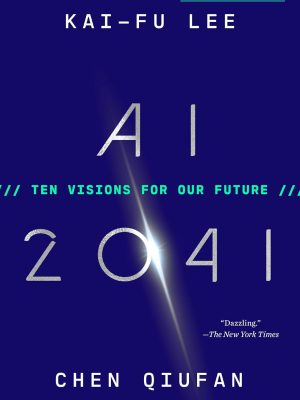
AI 2041 — Kai-Fu Lee, Chen Qiufan
Best for: strategy teams needing context beyond quarterly plans
Why it’s top: ten near-future scenarios + analysis translate trends into choices
Level & time: narrative + briefers; great for exec workshops
Format chosen: Trade paperback
Typical price: ~$20
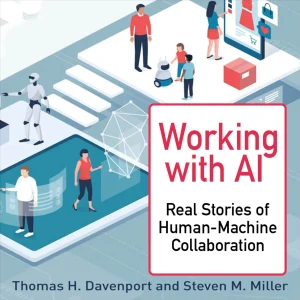
Working with AI — Thomas H. Davenport, Steven M. Miller
Best for: managers designing human–AI teams
Why it’s top: real case studies of collaboration patterns that actually ship
Level & time: case-driven; pick chapters that match your function
Format chosen: Hardcover
Typical price: ~$35
7. Ethical AI Reflection: Reading Critically (Bias, Hype, Risks)
A great AI book teaches skills and judgment. Our goal here is to keep the benefits while minimizing hype, bias, and blind spots as we read.
Quick principles for responsible reading
Prefer evidence over anecdotes: look for data, methods, and limits.
Separate near-term how-to from far-future speculation.
Watch for conflicts of interest (vendor-centric advice or cherry-picked wins).
Balance any “move fast” playbook with sections on evaluation, privacy, and safety.
| What to check | Why it matters | Simple action |
|---|---|---|
| Transparent sources & methods | Builds trust and lets you verify claims | Note citations; google one claim to cross-check |
| Clear limits & trade-offs | Prevents over-promising and bad decisions | Highlight any “doesn’t work when…” passages |
| Privacy & data handling | Protects users and reduces legal risk | Adopt a basic data policy note for each workflow |
| Bias & evaluation | Avoids harmful outputs; improves reliability | Test prompts on diverse cases; log failures |
| Realistic deployment steps | Turns ideas into safe, useful features | Map book advice to your 1-week pilot checklist |
Our take: pair each “how-to” chapter with a tiny evaluation routine (success metrics, failure log, privacy check). It keeps us fast and responsible at the same time.
8. Final Takeaways: What to Read Next
Here’s the simplest path to turn reading into results: pick one practical title (to apply this week) and one perspective title (to sharpen judgment). Block 15–20 minutes a day, and apply one idea to a real task—an email, report, workflow, or prompt. Keep it small, repeatable, and measurable.
Quick plan
-
Start now: choose 2 books (practice + perspective).
-
Make it actionable: highlight 1 technique per chapter and try it the same day.
-
Keep notes: log wins, failures, and questions—you’ll iterate faster.
-
Share once: teach one takeaway to someone else (it locks in learning).
Our take
These best AI books work because they stay practical and clear. If you keep the loop tight—read → try → review—you’ll improve without overwhelm. And if you want to practice immediately with zero friction, use our beginner-friendly list of free AI tools with no login here.
If this best AI books guide helped you choose what to read next (and why), these related reads will help you go from learning to actually applying AI in real life:
→ Offline AI Tools (Quick Practice List)
→ Top AI Tools (Curated Picks by Use Case)
→ All-in-One AI Tools (Best “Do-It-All” Platforms)