
 Published on: October 24, 2025
2. Where Bias Comes From – The Data Behind the Algorithm
3. Human Influence – The Role of Developers and Annotators
4. Real-World Consequences of Algorithmic Bias
5. Detecting and Reducing Bias – Techniques and Tools
6. Ethical AI Reflection – Who’s Responsible for Fair AI?
7. Future Outlook – Building Fairer AI Models in 2025 and Beyond
1. Introduction – Understanding Bias in AI Training
Every answer an AI gives — from a chatbot’s reply to a product recommendation — is shaped by something we rarely see: the bias in AI training. It’s not intentional evil or manipulation; it’s simply how data reflects the world it’s pulled from. And since data often mirrors human behavior, the same flaws, stereotypes, and blind spots sneak right into the algorithm’s “learning.”
At AI Digital Space, we believe understanding this bias is essential to using AI responsibly. When we ask tools like ChatGPT or Gemini for information, they’re not generating pure truth — they’re filtering patterns built from millions of examples. That’s why two AIs can give completely different answers to the same question. If you’ve ever compared outputs and wondered why one sounds more confident or more nuanced, that’s bias in action.
Bias isn’t always bad — sometimes it’s what makes AI sound human. But when it goes unchecked, it can distort results, misrepresent groups, or even shape public opinion. In this post, we’ll break down where that bias comes from, how it affects everyday tools, and what’s being done to fix it. If you’ve read our post on AI hallucinations or explored how AI voice replication works, this is the next step in understanding the logic behind what you see — and why awareness matters more than ever.
For deeper context, the Stanford HAI research center notes that transparency in training data will soon be a key metric for AI accountability. We agree — knowing how an AI learned is the first step to trusting what it says.
2. Where Bias Comes From: The Data Behind the Algorithm
To understand bias in AI training, we first need to look at its foundation — data. Every AI model, no matter how advanced, is only as fair as the information it learns from. These datasets are built from texts, images, and interactions gathered across the internet, which means they inevitably carry traces of human preference, cultural imbalance, and misinformation.
When developers train a model, they feed it billions of examples to help it recognize patterns. But if the majority of that data comes from specific regions, languages, or social groups, the AI starts to “believe” that those patterns are universal. That’s how bias in AI training quietly takes shape — not through intention, but through representation gaps. Even small imbalances can grow into noticeable differences in how an AI answers questions, interprets tone, or ranks information.
Let’s visualize this with a simple example.
| Dataset Type | Potential Bias Source | Result in AI Output |
|---|---|---|
| Text Data | Overrepresentation of Western sources | AI favors English-centric tone and examples |
| Image Data | Limited diversity in faces or contexts | AI misidentifies people or cultural settings |
| Behavioral Data | Feedback loops from user preferences | Reinforces popular opinions or stereotypes |
As we can see, bias in AI training doesn’t come from a single source — it’s built layer by layer through the data we produce and the systems that collect it. The next time an AI gives a strange or one-sided answer, it might not be “wrong” — it’s simply reflecting the data world it grew up in.
Our perspective at AI Digital Space is simple: transparency in data collection should be as important as performance metrics. When companies start to show where their datasets come from, trust in AI systems will naturally follow.
3. Human Influence: The Role of Developers and Annotators
Even when datasets look neutral, people still play a big role in shaping bias in AI training. Behind every model, there are developers, engineers, and annotators who decide what the AI should learn, what to filter, and what to ignore. Each of those decisions — from labeling text as “positive” or “negative” to filtering “unsafe” content — adds a human layer that can subtly influence results.
Developers often rely on annotation teams to tag data for machine learning models. If these teams come from limited cultural backgrounds or follow unclear guidelines, they might interpret the same phrase in very different ways. That’s how unintentional bias in AI training spreads — the system starts mirroring the subjectivity of its human teachers. Even seemingly small tweaks, like choosing which languages or slang terms to prioritize, can change how an AI responds globally.
To make things more transparent, some AI companies are now publishing their data-labeling practices and using “bias detection” models to review human inputs. OpenAI and Anthropic, for example, are testing feedback loops where users can flag biased responses that get retrained out in future versions. This growing awareness is crucial: we can’t eliminate human input, but we can make it more accountable and visible.
We see this as progress. When people understand that bias in AI training isn’t just technical but also human, they start asking the right questions — who taught this AI, and what values shaped it?
4. Real-World Consequences of Algorithmic Bias
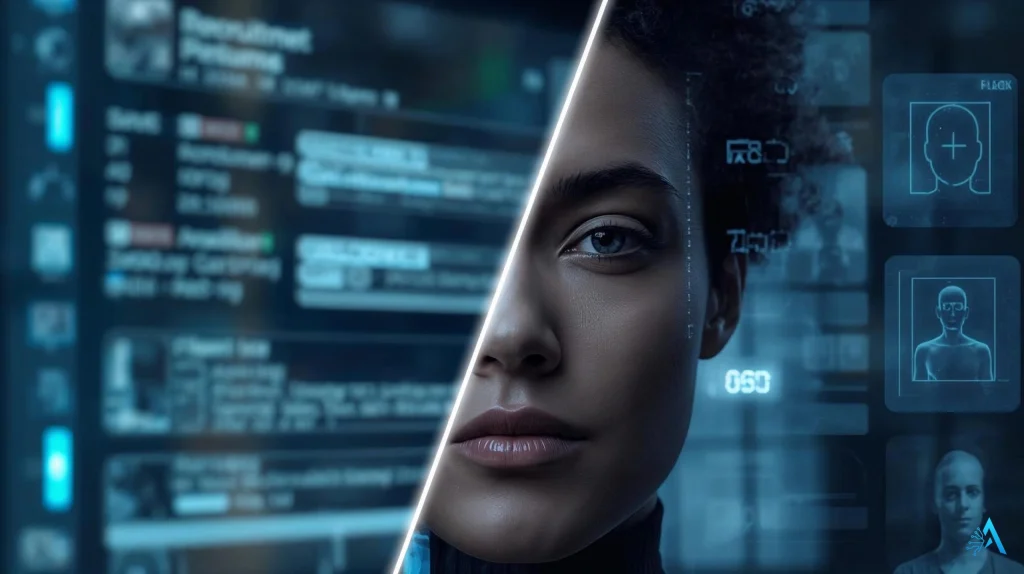
Bias in AI training isn’t just a technical issue — it affects real lives. When an algorithm is trained on unbalanced data, it can make unfair or inaccurate decisions in the real world. These effects show up everywhere: job applications, financial approvals, image recognition, and even customer service chatbots.
One of the clearest examples is in recruitment AI. Tools used to scan résumés often learn from past hiring data — which means if a company historically favored one group, the AI may unintentionally repeat that pattern. The same happens in facial recognition systems that perform well on light-skinned faces but struggle with darker tones. These gaps start small, but at scale, they reinforce inequality.
| Field | Example of Bias in AI Training | Real-World Effect |
|---|---|---|
| Hiring Platforms | AI favors certain gender or education background | Qualified candidates get filtered out |
| Healthcare AI | Training data underrepresents minorities | Misdiagnosis or lower care accuracy |
| Facial Recognition | Model trained mostly on limited demographics | Higher error rates for non-represented groups |
A biased system doesn’t mean the technology is broken — it means it learned from patterns that weren’t fair to begin with. The good news is that more companies are now auditing their models for bias in AI training, forcing transparency before deployment. Google’s Responsible AI Toolkit and Microsoft’s Fairlearn framework are leading examples of how businesses can track and reduce algorithmic bias before it reaches users.
Fairness starts with awareness. Understanding where bias appears helps all of us use AI more responsibly — not blindly.
5. Detecting and Reducing Bias: Techniques and Tools
Once we recognize that bias in AI training shapes the answers we get, the next question is clear — how can we detect and reduce it? The good news is that researchers and developers now have practical tools to identify unfair patterns before they become a problem.
One of the most effective methods is bias testing, where models are analyzed using balanced sample data to reveal whether they treat similar inputs differently. For example, a sentiment model might label “I’m assertive” as positive when referring to a man but neutral or negative when referring to a woman — a clear signal of biased training. Companies use metrics like demographic parity and equal opportunity to measure these gaps.
Several open-source frameworks make this process easier. Tools like IBM AI Fairness 360, Google’s What-If Tool, and Fairlearn allow developers to visualize and correct bias in AI training. These frameworks test model predictions, highlight hidden correlations, and suggest adjustments. Even non-technical users can use them to understand where an algorithm might be unfair or incomplete.
| Tool | Key Feature | Best For |
|---|---|---|
| AI Fairness 360 (IBM) | Detects and measures bias in datasets and models | Enterprise-level audits |
| Fairlearn (Microsoft) | Evaluates fairness metrics and mitigation options | Developers testing production models |
| What-If Tool (Google) | Interactive visual analysis of predictions | Educational or research use |
For readers who want to explore more, our post on How Voice Assistants Actually Understand You explains similar pattern-testing concepts in everyday AI systems.
6. Ethical AI Reflection: Who’s Responsible for Fair AI?
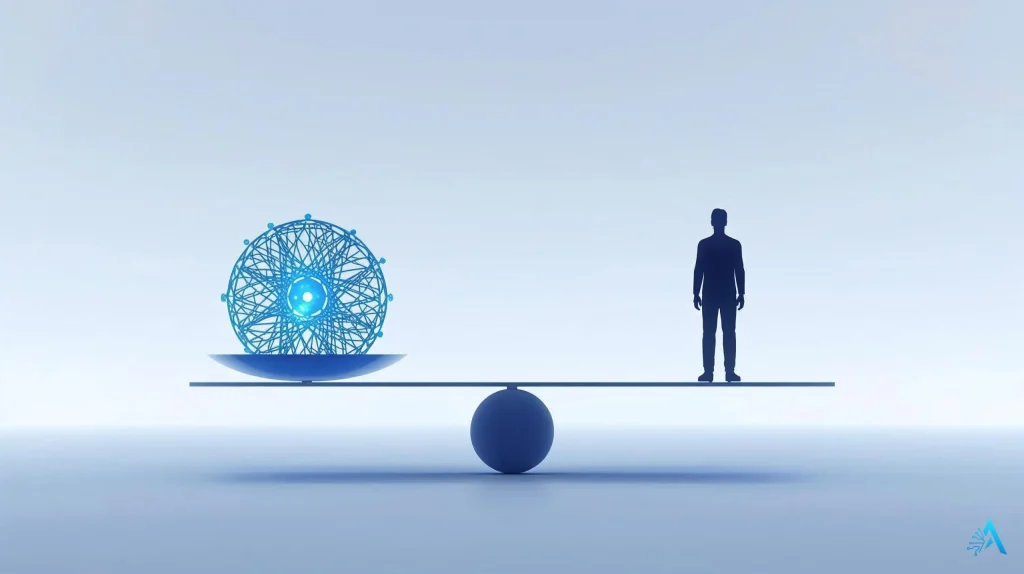
Understanding bias in AI training isn’t only a technical challenge — it’s an ethical one. Every time an algorithm makes a decision, someone, somewhere, is responsible for how it was trained and how its outcomes affect people. That’s why more organizations are starting to treat fairness and transparency as essential parts of AI design, not optional add-ons.
At AI Digital Space, we see ethics as the invisible backbone of innovation. It’s not enough for a model to be powerful; it must also be accountable. This is why companies like OpenAI, Anthropic, and Google DeepMind are investing in responsible AI research and open reporting. Their goal isn’t just to fix bias in AI training, but to make the entire process understandable to the public. As noted by the European Commission’s AI Ethics Guidelines, explainability and user rights are becoming key requirements for AI deployment in Europe.
For readers who want to see how ethics meets technology in daily life, we recommend checking out our post Avoid These 5 Dark UI Tricks Used by Popular AI Apps, which explores how subtle design choices can manipulate user behavior. Also, in Inside the Black Box: How AI Understands Visual Data in 2025, we explained why transparency in data handling is just as important as accuracy.
7. Future Outlook: Building Fairer AI Models in 2025 and Beyond
The next chapter for AI depends on how we address bias in AI training today. We’re entering a phase where performance alone isn’t enough — transparency, diversity, and accountability are becoming essential features of good AI. Models are getting smarter, but they’re also being built with clearer ethical boundaries and global datasets designed to reduce cultural imbalance.
Some of the most promising advancements come from self-auditing AI systems, where models can flag potential bias during training and prompt developers for correction. Initiatives like Anthropic’s Constitutional AI, Meta’s FAIR Lab, and OpenAI’s bias evaluation frameworks are setting new industry standards. As a result, the focus is slowly shifting from “how accurate is this model?” to “how responsibly was it trained?”
For users and creators alike, understanding bias in AI training helps us choose better tools, challenge unfair results, and contribute to more balanced algorithms. The more informed the community becomes, the faster AI evolves into something genuinely inclusive and reliable.
At AI Digital Space, we believe fair AI starts with education. By learning what shapes an algorithm’s decisions, we all gain a voice in shaping the systems that shape us.