

Published on: October 16, 2025
2. What ChatGPT Hidden Queries Actually Are
3. Why These Hidden Queries Exist – Accuracy, Context & Search Logic
4. Can You Reveal Them? Tools and Techniques Researchers Use
5. When Hidden Queries Go Wrong – Bias, Hallucinations & Misinformation
6. How to Write Prompts That Influence Hidden Queries
7. Ethical AI Reflection – Transparency and the Future of Trust
1. Introduction – The Hidden Side of ChatGPT’s Thinking
Have you ever wondered what really happens after you hit Enter in ChatGPT? It’s easy to assume the model instantly knows the answer, but in truth, ChatGPT hidden queries quietly work behind every reply. These invisible micro-searches help the AI interpret your intent, connect related data, and refine context before showing a single word on screen.
At AI Digital Space, we’ve been tracking how these behind-the-scenes steps are changing how people write, research, and even trust AI tools. Understanding how ChatGPT hidden queries work can help you craft more precise prompts, spot when answers sound off, and regain some control over what the AI “thinks” for you. For example, power users using structured prompt frameworks like AIPRM for ChatGPT (official site) have learned that steering sub-queries can drastically improve accuracy.
This isn’t just theory — researchers have confirmed that large language models often generate internal queries to expand or validate user input (MIT Technology Review). The more we understand these layers, the better we can use AI safely and effectively. In this post, we’ll unpack what these hidden queries are, why they exist, and how you can influence them for better results.
If you’re new to AI transparency, check out our post How Voice Assistants Actually Understand You to see similar mechanisms at work.
2. What ChatGPT Hidden Queries Actually Are
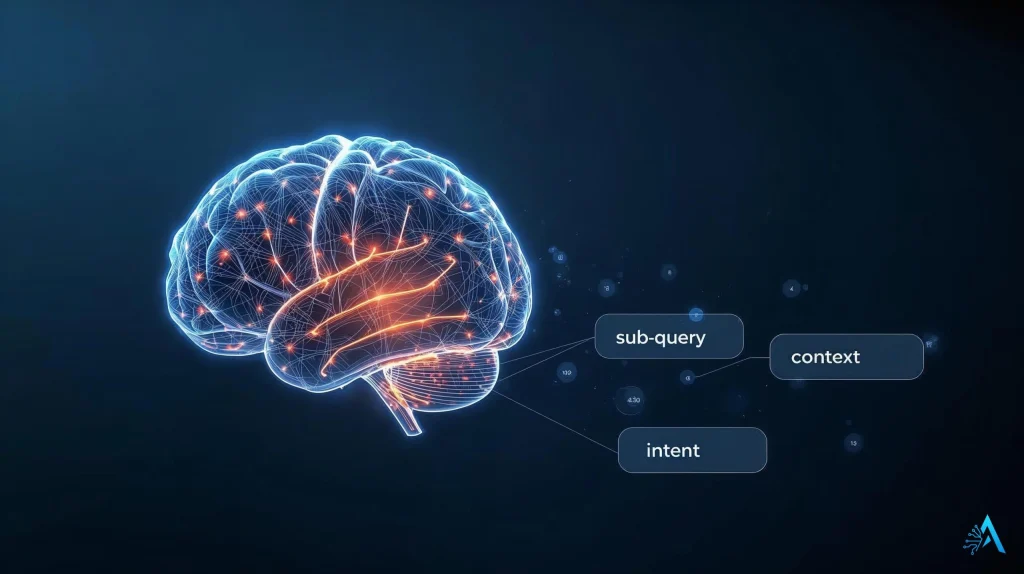
When you ask ChatGPT a question, it doesn’t just “know” the answer — it builds it. Under the surface, the model quietly generates hidden queries that break down your prompt into smaller, more manageable parts. Each of these background searches helps the system understand intent, retrieve related information, and predict the most logical response. In simple terms, ChatGPT hidden queries act like invisible steps in the reasoning process.
Think of it this way: if you ask, “Summarize the pros and cons of solar panels for home use,” ChatGPT may internally generate sub-queries such as “advantages of residential solar panels,” “disadvantages of solar energy for homes,” and “latest trends in solar adoption.” You’ll never see these fragments, but they’re what help the AI assemble a coherent, context-rich answer. This mechanism is a hallmark of how large language models (LLMs) reason through complex inputs — a process known as prompt chaining or context expansion.
Understanding this concept helps users improve accuracy. By giving ChatGPT clear context or adding structured instructions, you essentially “train” these hidden sub-queries to stay focused. Many productivity tools, like Jasper AI, use similar multi-step logic internally to generate high-quality copy. Once you know how these silent processes work, you can guide them — and that’s where the real advantage begins.
Related read: ChatGPT vs Gemini – Which One Wins in Daily Use?
3. Why These Hidden Queries Exist – Accuracy, Context & Search Logic
So why does ChatGPT go through all this trouble? The answer lies in how large language models achieve accuracy and coherence. Each ChatGPT hidden query is like a checkpoint that helps the system refine context, verify relevance, and avoid missing key details. Rather than pulling one direct answer, ChatGPT works through a chain of micro-queries that allow it to simulate reasoning — combining retrieved data, past training, and your conversation history into a single coherent response.
This approach improves fluency and adaptability. For example, when you ask ChatGPT to “write a product review for a smart coffee grinder under $200,” it doesn’t just search for product data — it internally checks for the meaning of “smart grinder,” the most relevant price range, and what a typical product review should look like. These hidden prompts are what make AI responses feel intuitive, but they also explain why the same question can yield slightly different results each time.
Understanding this pattern helps creators, students, and professionals alike refine their queries to get more consistent outcomes. When we adjust the way we write prompts — adding intent, limits, or examples — we help ChatGPT’s hidden logic perform better. Tools like PromptPerfect are designed for this: they analyze your text, predict how the AI will break it down internally, and optimize it before it’s sent.
If you’d like to explore how these AI “thought processes” impact results, our post Inside the Black Box: How AI Understands Visual Data in 2025 takes a similar look into the hidden reasoning of generative models.
4. Can You Reveal Them? Tools and Techniques Researchers Use
While ChatGPT hidden queries aren’t directly visible to the public, researchers and advanced users have found creative ways to peek behind the curtain. Some developers use API call inspection or log analyzers to detect the sub-queries a model generates before forming a final answer. These insights show that ChatGPT may create multiple reasoning layers — analyzing, validating, and reframing a question several times in the background.
A few experimental tools attempt to make this process more transparent. For example, PromptPerfect (official website) lets users optimize prompts and observe how the AI interprets each section. Similarly, LangSmith by LangChain provides visualization of agent reasoning chains, often used in academic AI testing. These tools don’t expose OpenAI’s proprietary layers but help you understand how your input is parsed, weighted, and re-composed into structured intent.
It’s worth noting that OpenAI and other providers intentionally keep these layers hidden for security and reliability reasons. If full transparency were available, malicious actors could exploit the model through prompt injection or data extraction. That said, responsible exploration — especially through trusted interfaces like PromptPerfect or LangSmith — can help users better understand AI reasoning without crossing ethical lines.
5. When Hidden Queries Go Wrong – Bias, Hallucinations & Misinformation
Sometimes, the same system that makes ChatGPT smart also makes it unpredictable. Because ChatGPT hidden queries happen out of sight, users don’t always know when the model takes a wrong turn. If one of those unseen sub-queries misinterprets your request, the final answer might include hallucinations — confident but false statements — or subtle biases drawn from skewed data.
Imagine asking, “What’s the safest energy source for homes?” If a hidden query prioritizes older or biased data, the answer might underplay modern renewable options. These quiet logic slips can distort results without warning. Studies like Forbes’ AI accuracy report – external nofollow – confirm that even well-trained models generate misleading claims when their reasoning chain drifts.
That’s why understanding hidden queries is more than curiosity — it’s digital self-defense. When we know that ChatGPT may “fill in gaps” based on unseen logic, we can cross-check facts and guide it with clearer, verifiable context. Adding short clarifiers like “use data after 2023” or “avoid opinion-based assumptions” helps keep those hidden steps on track.
6. How to Write Prompts That Influence Hidden Queries
The good news? You can learn to steer ChatGPT hidden queries without needing technical access. Every time you write a prompt, the words, order, and context you use shape how the model breaks it down internally. A clear, structured request produces a more predictable reasoning chain — while vague or emotional language can trigger unrelated sub-queries and less accurate results.
Here’s how to take control:
Be specific about context. Instead of “write about AI tools,” try “write a 2025 comparison of free AI tools for students.”
Add time or data boundaries. Hidden queries tend to expand; guide them by saying “use information updated to 2025.”
Define the tone or output type. Phrases like “step-by-step guide” or “concise explainer” help the system select the right reasoning path.
Use prompt-structuring tools. Apps like PromptPerfect or AIPRM for ChatGPT analyze how your text will likely be interpreted behind the scenes and offer suggestions before you send it.
Prompt optimization isn’t about tricking the AI — it’s about clarity and influence. When we understand how our words become hidden sub-queries, we stop guessing what ChatGPT “understands” and start directing it.
7. Ethical AI Reflection – Transparency and the Future of Trust
Understanding ChatGPT hidden queries isn’t just a technical curiosity — it’s a matter of digital transparency. Every hidden process inside an AI system shapes what billions of users read, believe, or act upon. Yet, few people realize how much these silent reasoning steps influence tone, accuracy, and even the perceived “truth” of information online.
As AI tools become part of daily decision-making — from writing school essays to creating marketing strategies — users deserve to know what happens under the hood. Transparency helps us build trust between humans and algorithms, ensuring that automation doesn’t quietly replace accountability. OpenAI and other developers are slowly introducing features like explainable outputs and clearer documentation, but the journey toward full clarity is still just beginning.
At AI Digital Space, we believe understanding how tools like ChatGPT “think” is the first step toward responsible use. We can’t always see the hidden layers, but we can ask better questions, use trustworthy platforms, and support companies that value openness over mystery.
By making these systems more understandable, we make them safer — and that’s exactly the kind of progress the next generation of AI should stand for.

