

 Published on: February 6, 2026
Affiliate Disclaimer:
Some of the links in this post are affiliate links. This means we may earn a small commission if you click through and make a purchase, at no extra cost to you. We only recommend tools we truly believe offer value.
1. Why Gamma decks often fail — and why people search “storytelling” now
We open Gamma, type a solid idea, click generate… and the result looks polished. Clean layout. Nice spacing. Good visuals.
Yet when we present it, something feels off. The message doesn’t land. The flow feels flat. People don’t remember the point.
This is exactly why so many creators are now searching for gamma storytelling — not because Gamma is hard to use, but because using it well to build a gamma AI presentation is a different thing.
What we’re noticing (and probably you too) is a clear shift:
AI can assemble slides fast, but it doesn’t automatically create meaning, logic, or momentum. Without a clear narrative, even a beautiful gamma AI deck becomes just a sequence of screens.
That frustration is the signal.
People aren’t asking “what is Gamma?” anymore — they’re asking how to turn ideas into presentations that actually make sense and follow a coherent presentation workflow.
In this guide, we’ll focus on that missing layer: how to structure ideas, control pacing, and guide attention so a Gamma deck doesn’t just look good, but communicates clearly. No theory, no hype — just a practical way to fix a problem many of us are already experiencing.
2. AI presentations look good but don’t convince anyone
Here’s the uncomfortable truth many of us have already experienced:
AI presentations often look finished, but they don’t change minds.
When we use tools like Gamma, the output is visually clean and well balanced. Slides are readable, layouts feel modern, and nothing seems obviously wrong.
Yet when we present them, the reaction is flat. The idea doesn’t stick. The message doesn’t travel.
The issue isn’t design quality — it’s lack of narrative structure.
This isn’t just a feeling. Research from the Nielsen Norman Group shows that people struggle to understand and remember content when it lacks clear hierarchy, logical sequencing, and purpose — even if the interface is visually polished. Their work on content structure and information flow explains why users disengage when ideas aren’t connected in a meaningful way. You can read more here.
In practical terms, this is what happens with many AI-generated decks:
Slides feel isolated instead of connected
Important points appear without proper buildup
The “why this matters” moment never fully lands
So the problem isn’t that AI tools are weak.
It’s that they don’t think in narratives unless we guide them to.
That’s why improving results doesn’t start with better templates or longer prompts — it starts with learning how to shape a story before asking the AI to generate slides.
3. What storytelling inside Gamma actually means (in practical terms)

When we talk about storytelling in Gamma, we’re not talking about creativity tricks or writing fiction.
We’re talking about how ideas are ordered, revealed, and connected so the reader or audience can follow without effort.
In practice, Gamma doesn’t work like traditional slide software.
It doesn’t force us to think in “slide 1, slide 2, slide 3.”
Instead, it works in blocks — and those blocks are the key to storytelling.
Here’s the shift many people miss:
| Traditional thinking | Storytelling in Gamma |
|---|---|
| One idea per slide | One idea per narrative block |
| Linear sequence | Logical progression (why → what → how) |
| Visual-first approach | Meaning-first, visuals support the message |
Storytelling inside Gamma means we decide the journey before we generate content:
What problem are we opening with?
When do we add context instead of details?
Where do we want the “aha” moment to happen?
Each block becomes a step in reasoning, not just a container for text or images.
Once this clicks, Gamma stops feeling random.
The tool isn’t guessing anymore — it’s following a structure we’ve already set.
In the next section, we’ll turn this into a clear, repeatable workflow, showing how to go from a raw idea to a deck that feels intentional from the first screen to the last.
4. Step-by-step Gamma storytelling workflow (idea → clear deck)
This is where Gamma starts working with us instead of guessing for us.
Before generating anything in Gamma, we define the story path. Not the slides. The logic.
Think of this as a repeatable workflow you can use for any presentation — business, educational, or creative.

Step 1 — Write the outcome first (not the topic)
Instead of starting with what the deck is about, we start with what should change after someone sees it.
One sentence is enough:
What should the audience understand?
Decide?
Remember?
This single line becomes the anchor for everything that follows.
Step 2 — Break the idea into narrative blocks
Now we translate the outcome into blocks of reasoning.
Not slides. Not visuals. Just logic.
| Narrative block | Purpose in the story |
|---|---|
| Context / problem | Help the audience recognize themselves |
| Insight | Reframe the problem or add clarity |
| Solution | Show what works and why |
| Next step / takeaway | Guide action or reflection |
Each row becomes one Gamma block.
This is the backbone of the deck.
Step 3 — Feed Gamma structure, not instructions
When generating content, we don’t ask Gamma to “make a presentation.”
We give it the blocks, in order, with a short explanation of intent for each one.
This reduces randomness and keeps the flow coherent from start to finish.
Step 4 — Let visuals support the message (not lead it)
Only now do we allow Gamma to suggest layouts, visuals, and formatting.
Because the meaning is already set, visuals naturally reinforce the story instead of distracting from it.
Step 5 — Do a fast “story check” before sharing
Before presenting or exporting, we scan the deck once with a simple question:
“If someone skips one block, does the story still make sense?”
If the answer is no, we adjust the structure — not the design.
This final check is what turns a good-looking deck into a clear, intentional presentation.
5. Limits, risks, and ethical use of AI-generated storytelling
AI can help us structure ideas faster, but storytelling still carries responsibility — especially when we rely on gamma storytelling to shape a message.
When we use tools like Gamma to build a gamma AI presentation, the risk isn’t visual errors — it’s unquestioned confidence.
The most common issues we see aren’t technical; they’re interpretive:
Over-polished narratives that sound convincing but oversimplify reality
Assumptions filled in by the model, not by verified data
Generic insights presented as if they were tailored conclusions
This matters because presentations — including AI-generated decks — are often used to inform decisions in business, education, or public communication.
If the story is smooth but inaccurate, the harm is subtle and easy to miss, especially when a gamma AI deck looks authoritative by default.
A reliable reference point here is the National Institute of Standards and Technology (NIST), which highlights the risks of over-reliance on automated systems and stresses the importance of human oversight, context checking, and accountability in AI-assisted outputs. Official framework here.
From a practical perspective, ethical Gamma storytelling means we should:
Treat AI output as a draft, not a conclusion
Verify claims, numbers, and causal links manually
Avoid using AI-generated narratives to mask uncertainty or inflate confidence
There’s also a privacy angle to keep in mind. Feeding sensitive or confidential information into any AI tool requires caution — especially when working on internal strategies, client data, or unpublished ideas.
Used responsibly, Gamma can amplify clarity.
Used blindly, it can amplify persuasion without understanding.
That’s why the most effective (and ethical) approach is simple:
we let AI help with structure and speed, but we keep humans in charge of meaning, truth, and intent.
If this guide made you reflect on why some presentations work and others don’t — even when the slides look polished — Made to Stick is a powerful next step. It explains how ideas become memorable, persuasive, and clear, and why structure and storytelling matter more than visuals alone when we communicate through tools like Gamma.
6. When Gamma storytelling works — and when it doesn’t
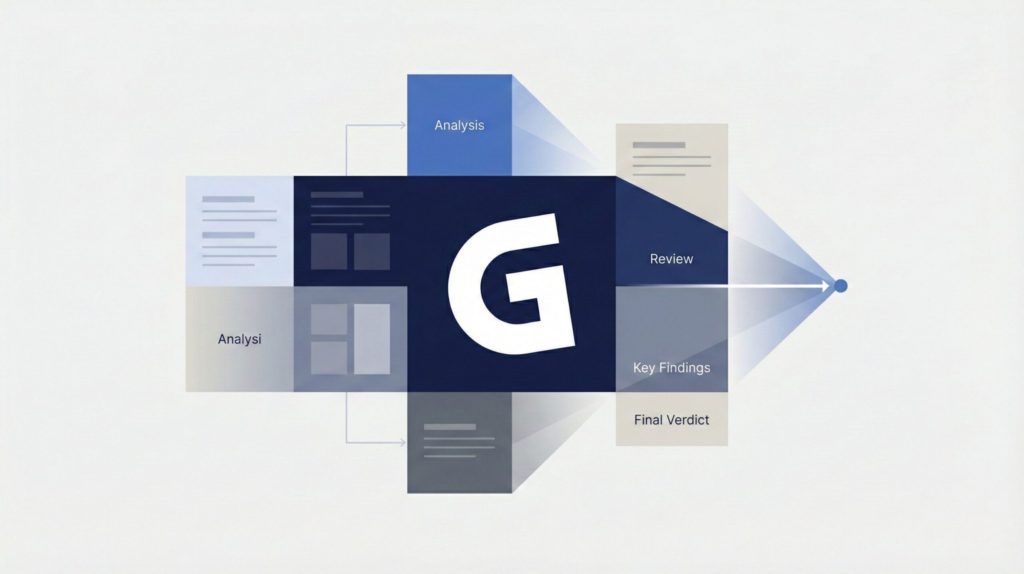
When we use Gamma with a clear gamma storytelling mindset, the results are hard to ignore. Ideas feel lighter. Flow improves. Presentations become easier to follow — and easier to remember.
Gamma storytelling works best when:
-
We already know the message we want to land
-
The goal is clarity, not decoration
-
We use AI to support reasoning, not replace it in a gamma AI presentation
It doesn’t work well when:
-
We expect the tool to invent insight for us
-
We skip structure and jump straight to visuals
-
We treat AI output as final instead of reviewable, even in a polished gamma AI deck
Used this way, Gamma isn’t a shortcut — it’s a multiplier.
It speeds up the parts that slow us down, while still leaving decisions, judgment, and responsibility in our hands.
FAQ — quick answers to common questions
Q: Is Gamma good for business or professional presentations?
A: Yes. Gamma works especially well when clarity matters more than complex design, such as internal decks, strategy overviews, and structured explanations.
Q: Can Gamma replace PowerPoint or Canva for storytelling?
A: For narrative-driven decks, yes. For highly customized layouts or strict brand control, traditional tools may still be the better choice.
Q: How do we avoid generic AI slides in Gamma?
A: By defining the story before generating content. Generic results usually come from vague prompts, not from the tool itself.
Q: Is Gamma safe to use with sensitive information?
A: It’s best to avoid uploading confidential or proprietary data. AI tools should be treated as public drafting environments unless clearly stated otherwise.
Q: Does the free version of Gamma limit storytelling features?
A: The storytelling logic stays the same. Paid plans mainly improve export options, customization, and overall workflow speed.
If this guide helped you understand how Gamma storytelling actually works — and why structure matters more than visuals alone — you might also find it useful to explore a few closely related topics we’ve already covered on AIDigitalSpace.
These articles go deeper into using AI creatively without losing control, clarity, or intent, which is exactly where many people struggle today:
→ AI Visual Storytelling Guide: Turn Ideas into Stories with Gamma
→ Midjourney Prompt Hacks – Get Better Images with Smarter Prompts
→ AI Object Remover: Delete People and Remove Clutter