

 Published on: September 25, 2025
2. The problem with AI hype overload
3. Our sources for spotting genuine AI trends
4. How we evaluate if an AI tool is worth covering
5. Tools we use daily to track and filter AI news
6. Building an editorial workflow that keeps us focused
7. How readers can apply our process to their own work
8. Ethical AI reflection: why filtering hype responsibly matters
9. Practical resources and tools to explore further
10. Final thoughts: staying ahead without burning out
1. Why staying ahead of AI matters in 2025
Artificial intelligence is no longer just a buzzword—it’s shaping how we work, create, and even make daily decisions. At AIDigitalSpace, we believe that staying ahead of AI in 2025 means more than chasing shiny new tools. It’s about learning how to use them correctly, questioning what’s behind the technology, and understanding the difference between real progress and temporary hype.
We’re the first to admit we don’t have all the answers. AI is advancing so quickly that even researchers and industry leaders sometimes struggle to keep up (MIT Technology Review). That’s why we approach every trend with humility: instead of claiming to be experts, we see ourselves as curious learners who want to explore alongside our readers. Our role is to filter the noise, share what we discover, and help you apply AI in ways that are practical and safe.
If you’ve read our pieces on AI hallucinations or how voice assistants understand you, you know we value clarity and transparency. This post continues in that spirit. We’ll show you how we decide which AI topics to cover, why we treat hype with caution, and how you can apply the same mindset when deciding what’s worth your time.
2. The problem with AI hype overload

Every week, a new AI tool pops up promising to “revolutionize” how we work or create. From flashy chatbots to so-called miracle productivity apps, it can feel like the internet is drowning in promises. The challenge is simple: not all AI tools deliver real value, and many fade away as quickly as they appear.
This hype overload makes it difficult for anyone—businesses, students, or everyday users—to know what’s worth their time. We’ve seen entire social media threads go viral about “the next ChatGPT killer,” only for the tool to vanish months later. The risk isn’t just wasted time: subscribing to unproven platforms can also mean sharing sensitive data without knowing how it’s handled (Harvard Business Review).
At AIDigitalSpace, we take this seriously. That’s why, before writing a single review or recommendation, we run each trend through a careful filter. We want to help readers avoid getting caught in short-lived hype and instead focus on tools with a realistic chance of becoming part of their workflow. If you’ve followed our comparison of Leonardo vs Midjourney, you’ll notice this principle in action—we put both hype and substance under the same spotlight.
3. Our sources for spotting genuine AI trends
To stay ahead of AI in 2025, we rely on a mix of trusted sources rather than chasing every headline. Our goal is to understand what’s happening behind the scenes of algorithm changes and tool releases, not just what’s trending on TikTok or X.
We start with specialized newsletters and research hubs like Ben’s Bites, The Rundown AI, and MIT Technology Review, which often highlight breakthroughs before they hit mainstream news. We also track official product changelogs and GitHub activity, because these give early signals of where a tool is really evolving—not just what it’s promising in marketing campaigns.
At the same time, we value community feedback. Forums like Reddit’s r/MachineLearning or creator groups on Discord often reveal blind spots that polished press releases leave out. This blend of expert analysis and real-world reactions helps us decide whether a new AI feature is a short-lived trend or a shift worth your attention. For example, our recent post on open source AI models came directly from watching how developer communities were shaping the conversation, not just what companies were announcing.
By combining these signals, we build a balanced picture—one that helps us filter hype and give readers only what’s worth following.
4. How we evaluate if an AI tool is worth covering
Not every AI tool deserves a deep dive. Our job is to make sure that what we feature at AIDigitalSpace is both useful and trustworthy. To do that, we apply a simple but structured evaluation process before writing a single review.
We usually ask four key questions:
| Evaluation Step | What We Look For |
|---|---|
| Real use case | Does the tool solve a clear problem, or is it just repackaging existing features with buzzwords? |
| Sustainability | Is the project backed by reliable updates, funding, or an active community that signals it won’t disappear overnight? |
| Transparency | Do we know how the algorithm works, or at least how data is handled and stored? |
| Ethical impact | Could using the tool raise privacy, bias, or misuse concerns that readers should be aware of? |
By keeping these checks visible, we make sure our content isn’t just another “Top 10 AI Tools” list but a real guide. For example, when we reviewed Harpa AI, we focused less on the marketing claims and more on whether it fit into a daily workflow without compromising data safety.
This framework doesn’t guarantee perfection, but it gives us and our readers a reliable way to navigate an overcrowded market.
5. Tools we use daily to track and filter AI news
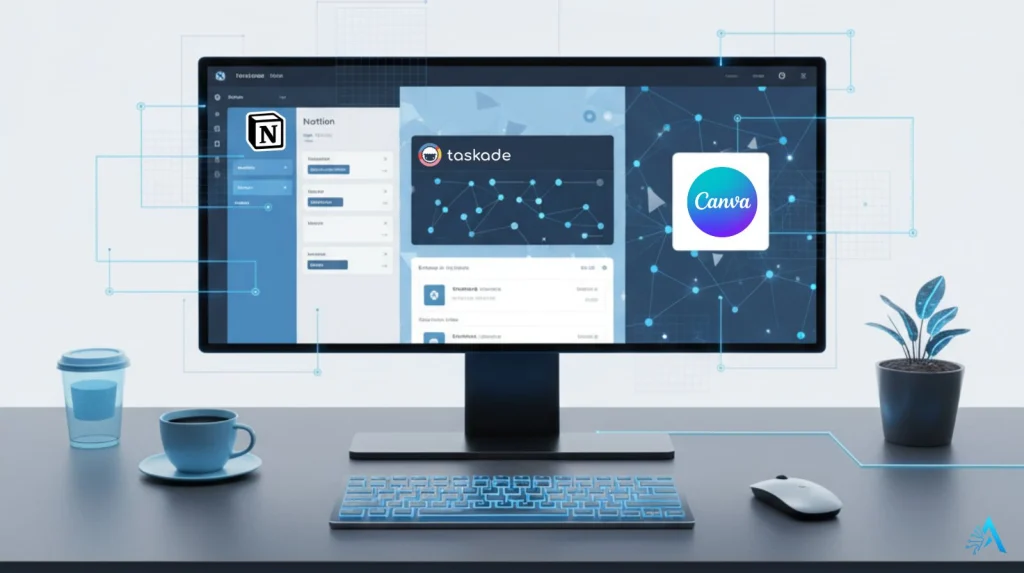
Keeping pace with AI in 2025 requires more than just curiosity — it takes the right set of tools to cut through noise and focus on what matters. At AIDigitalSpace, we use a daily mix of research, productivity, and monitoring apps that make the process structured and sustainable.
For trend tracking, we rely on Google Trends and Feedly Pro to see which keywords and products are gaining traction. These give us an early signal of what readers are likely searching for. To manage the flood of updates, we lean on Notion AI and Taskade AI, where we organize notes, research snippets, and potential article drafts in real time. These tools keep us from losing track of useful leads.
We also use content helpers like Grammarly for clean writing and Canva Pro for creating quick visuals that make posts more engaging. Each of these tools is part of our daily workflow, and they’re available to anyone who wants to track AI more systematically. If you’re curious, we recommend starting with one or two of them to see how much easier your own research and decision-making becomes.
By sharing the very tools we rely on, we invite readers into our process. This way, you don’t just read about AI trends — you can build your own system for staying ahead.
6. Building an editorial workflow that keeps us focused
Having the right tools is only half of the story — the real value comes from how we use them together in a repeatable workflow. At AIDigitalSpace, we’ve built an editorial routine that helps us stay ahead of AI without getting overwhelmed by constant updates.
Our process starts with a daily scan of trend signals (Google Trends, newsletters, community forums). From there, we drop the most relevant findings into Notion AI and assign them priority levels: urgent news, upcoming reviews, or long-term background research. This prevents us from chasing every new headline and lets us see the bigger picture.
Next, we run each potential topic through our evaluation framework (see Section 4). Only if a tool or trend passes the test does it move into the “article pipeline.” From there, Taskade keeps us on track with deadlines and checklists, while Canva Pro supports the visual side of the post. Finally, every draft goes through Grammarly for clarity and style, so the finished article is both polished and accessible.
This structured workflow doesn’t just keep us organized — it helps us deliver consistent, transparent reviews. Readers can trust that each post comes from a process designed to filter hype and highlight what’s worth attention.
7. How readers can apply our process to their own work
You don’t need to run a blog to benefit from a structured way of staying ahead of AI. The same workflow we use can help anyone—whether you’re a student, freelancer, or small business owner—decide which tools are worth your time.
A simple starting point is to set up a weekly trend check. Use free tools like Google Trends or sign up for one reliable AI newsletter. Instead of trying to follow everything, pick one or two signals and track them consistently. This helps you see patterns rather than reacting to noise.
Next, create a personal filter similar to ours:
| Step | What to Ask |
|---|---|
| Real need | Does this AI tool solve a problem I actually have? |
| Reliability | Is the company or community behind it stable enough to last? |
| Safety | Am I comfortable with how my data will be used? |
Finally, use a lightweight organizer—even a free Notion workspace or Taskade board—to log discoveries. This prevents decision fatigue and helps you compare tools over time. For readers who want to go deeper, our guide on AI tools for beginners is a good next step.
By applying these small habits, you can avoid hype fatigue and focus only on AI tools that genuinely improve your work or learning.
8. Ethical AI reflection: why filtering hype responsibly matters

Behind every new AI feature or viral tool, there are bigger questions that often get overlooked: Who benefits from this technology? How is the data being used? And what risks come with adopting it too quickly? These questions are why we take the time to filter hype before recommending anything.
For us, staying ahead of AI isn’t just about productivity or trends—it’s also about responsibility. Tools that promise shortcuts can sometimes hide biases, privacy issues, or even exploitative business models. By slowing down and asking the right questions, we try to protect both ourselves and our readers from jumping into something that could create bigger problems later.
We know that AI will be a permanent part of our lives, and with that comes a shared responsibility to use it wisely. That’s why we always include an ethical lens in our reviews, whether it’s in a detailed product analysis or a broader reflection.
By keeping ethics in the conversation, we hope to build not just knowledge, but also trust—because in a world full of hype, trust is the most valuable filter of all.
9. Practical resources and tools to explore further
If you’d like to build your own system for staying ahead of AI, here are a few resources and tools we recommend exploring. These are the same kinds of platforms we use daily to research, organize, and stay focused.
| Resource | What It’s Best For | Get Started |
|---|---|---|
| Google Trends | Spotting early signals of rising AI keywords and topics. | Explore Free |
| Feedly Pro | Collecting news, newsletters, and research updates in one feed. | Try Feedly |
| Notion AI | Organizing ideas, ranking priorities, and structuring drafts. | Try Notion AI |
| Taskade | Keeping workflows and checklists clear for ongoing projects. | Organize with Taskade |
| Canva Pro | Designing clean visuals, reports, or presentations with ease. | Explore Canva Pro |
These tools are not magic bullets, but they can make a huge difference in how you filter information, stay organized, and decide where to spend your time. Our advice: pick one, get comfortable with it, then expand as your needs grow.
10. Final thoughts: staying ahead without burning out
Staying ahead of AI in 2025 doesn’t mean chasing every new release or downloading every tool. It means learning to pause, filter, and focus on what’s actually useful. That’s the approach we take at AIDigitalSpace, and it’s the same mindset we encourage our readers to adopt.
We know AI is going to be a permanent part of our lives. There are still many question marks—about ethics, privacy, and the long-term impact—but that’s exactly why we choose to face them openly and with curiosity. By treating AI as something we’re learning about together, we can turn uncertainty into opportunity, without letting the hype exhaust us.
Our promise is simple: we’ll keep exploring, testing, and sharing what’s worth your attention—always with clarity and honesty. And if you take just one thing from this post, let it be this: you don’t need to follow every AI headline to stay ahead—you just need the right filter.