

Most investors chasing the AI boom still pick single stocks and hope they picked the right one. AI ETFs let you own a diversified slice of the entire sector instead — no stock-picking, no single-company bet, just structured exposure to where AI money is actually flowing.
🔍 EXPLORE THESE PLATFORMS
Some links are informational, not sponsored · We are not financial advisors · Full disclosure
1. What Are AI ETFs and Why They Matter
AI ETFs are the easiest way for everyday investors to join the artificial intelligence boom without picking individual stocks.
Instead of betting on one chipmaker or software company, an AI ETF bundles dozens of AI-related businesses into a single fund.
At AI Digital Space, we're not financial advisors — but we do explore how technology reshapes smarter decisions. That's exactly why AI ETFs matter right now.
As of mid-2026, AI-focused funds have pulled in more than $20 billion in net inflows, with over 92 now tracked in the U.S. alone.
These funds group companies across chips, cloud infrastructure, and generative software into one basket. That structure lets you invest in AI without predicting which single company wins the race.
Why AI ETFs Attract Attention
- Diversification: one fund can hold 40-100+ AI-related companies.
- Accessibility: buy shares through most online brokers, low fees.
- Growth: AI ETFs are among the fastest-growing thematic fund categories tracked today.
For readers connecting tech and strategy, this pairs naturally with our piece on how AI understands visual data. The next section breaks down how these funds actually work.
2. How AI ETFs Work Compared to Individual Stocks

When you buy an AI ETF, you're not betting on one company — you're buying a slice of many artificial intelligence stocks in one product. Each fund holds chipmakers, cloud providers, and data-processing firms together.
Here's the simple logic: individual shares live or die with one company's results. An AI ETF spreads that risk. If one chipmaker dips, other holdings can offset it, keeping your overall exposure steadier.
| AI ETFs | Individual Stocks |
|---|---|
| Diversified across companies | Concentrated in one company |
| Lower single-stock volatility | High volatility, single-name risk |
| Managed or index-tracked | You research and manage each position |
| Easier for beginners | Requires closer market experience |
Platforms like eToro or DEGIRO make it simple to explore ETFs side-by-side. Tools such as Morningstar's screener or JustETF help you check holdings, fees, and long-term returns before deciding.
You don't need to guess which AI startup wins. You're investing in the ecosystem itself — and next, we'll look at which funds are worth watching in 2026.
3. Top AI ETFs to Watch in 2026
The table below covers five widely-held AI ETFs as of mid-2026, spanning robotics, autonomous systems, AI infrastructure, and broad AI exposure across the U.S. and Europe.
| ETF (Ticker) | Focus Area | Region | Expense Ratio | Winner For |
|---|---|---|---|---|
| Global X Robotics & AI ETF (BOTZ) | Robotics & automation | US | 0.68% | Longest track record |
| ARK Autonomous Tech & Robotics ETF (ARKQ) | Autonomous systems | US | 0.75% | Highest 2026 YTD return |
| WisdomTree Artificial Intelligence UCITS ETF (WTAI) | AI infrastructure & data | Europe | 0.45% | Lowest fee, EU access |
| iShares Robotics and AI ETF (IRBO) | Global AI & automation | Global | 0.47% | Broadest global spread |
| Global X Artificial Intelligence & Technology ETF (AIQ) | Broad AI ecosystem | Global | 0.68% | Largest, most-cited pick |
Expense Ratio at a Glance
Our research turned up a detail worth flagging: BOTZ, ARKQ, and IRBO have all traded for 7+ years, while AIQ's closest 2026 peers launched only since 2023.
Fund age is a screening detail most roundups skip.
When comparing, prioritize expense ratio, diversification, and underlying holdings. Interactive Brokers, eToro, and DEGIRO all let you simulate positions before committing real funds.
4. Step-by-Step: How to Start Investing in AI ETFs
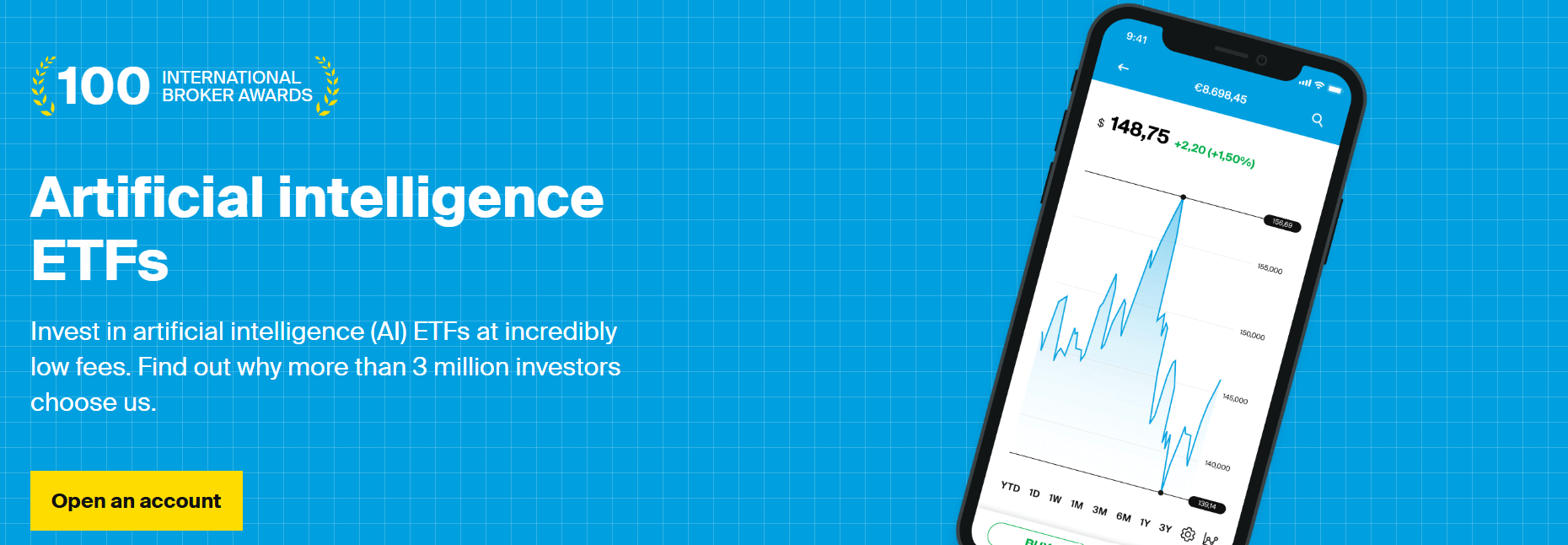
Getting started doesn't require financial expertise — just clear steps and a bit of patience. Here's how most beginners approach it.
1. Choose a brokerage platform. eToro, DEGIRO, and Interactive Brokers all offer low-fee ETF trading and demo accounts for practicing before committing real money.
2. Research your chosen ETFs. Check each fund's factsheet on Morningstar or JustETF for expense ratio, top holdings, and historical performance before buying.
3. Decide how much to invest. Avoid going all-in on one theme. Many long-term investors use recurring monthly contributions instead of a single lump sum.
4. Track and rebalance. Even diversified AI ETFs can be volatile. Recheck your allocation every few months using tools like Portfolio Visualizer or Morningstar X-Ray.
Start exploring AI ETFs on DEGIRO
These funds open access to a market where automation and computing merge into real progress — one careful step at a time.
5. Key Risks and Smart Diversification Tips
Before going further, it's worth talking about the flip side — the risks — and how smart diversification helps manage them.
Understanding the Main Risks
- Sector concentration: many AI funds lean heavily on a handful of big tech and chip names.
- Hype and valuation risk: AI enthusiasm can push prices ahead of fundamentals. The book AI Snake Oil warns about inflated AI promises.
- Technology and execution risk: regulation, data-privacy rules, or technical setbacks could slow growth.
- Timing risk: buying near a market peak raises short-term loss potential.
Smart Diversification Tips
- Spread your AI allocation across several funds instead of one.
- Check the top 10 holdings — avoid overlap across "different" funds.
- Watch expense ratio and turnover; high fees quietly erode returns.
- Use dollar-cost averaging to reduce timing risk over time.
- Rebalance every 6-12 months if one fund grows too large.
AI ETFs deserve the same caution as any thematic investment. Diversification doesn't remove risk — it helps you ride the wave more sustainably.
6. Ethical AI Reflection — Investing Responsibly

Investing in AI ETFs isn't only about returns — it's also about asking where your money goes and what kind of innovation it funds.
Some ETFs apply ESG screening, excluding companies tied to unethical data practices or energy-heavy AI infrastructure. Checking ESG ratings on Morningstar or Sustainalytics shows how a fund's holdings align with responsible development.
According to the Wikipedia entry on AI Snake Oil, inflated AI claims are a documented pattern worth watching for as an investor, not just a consumer.
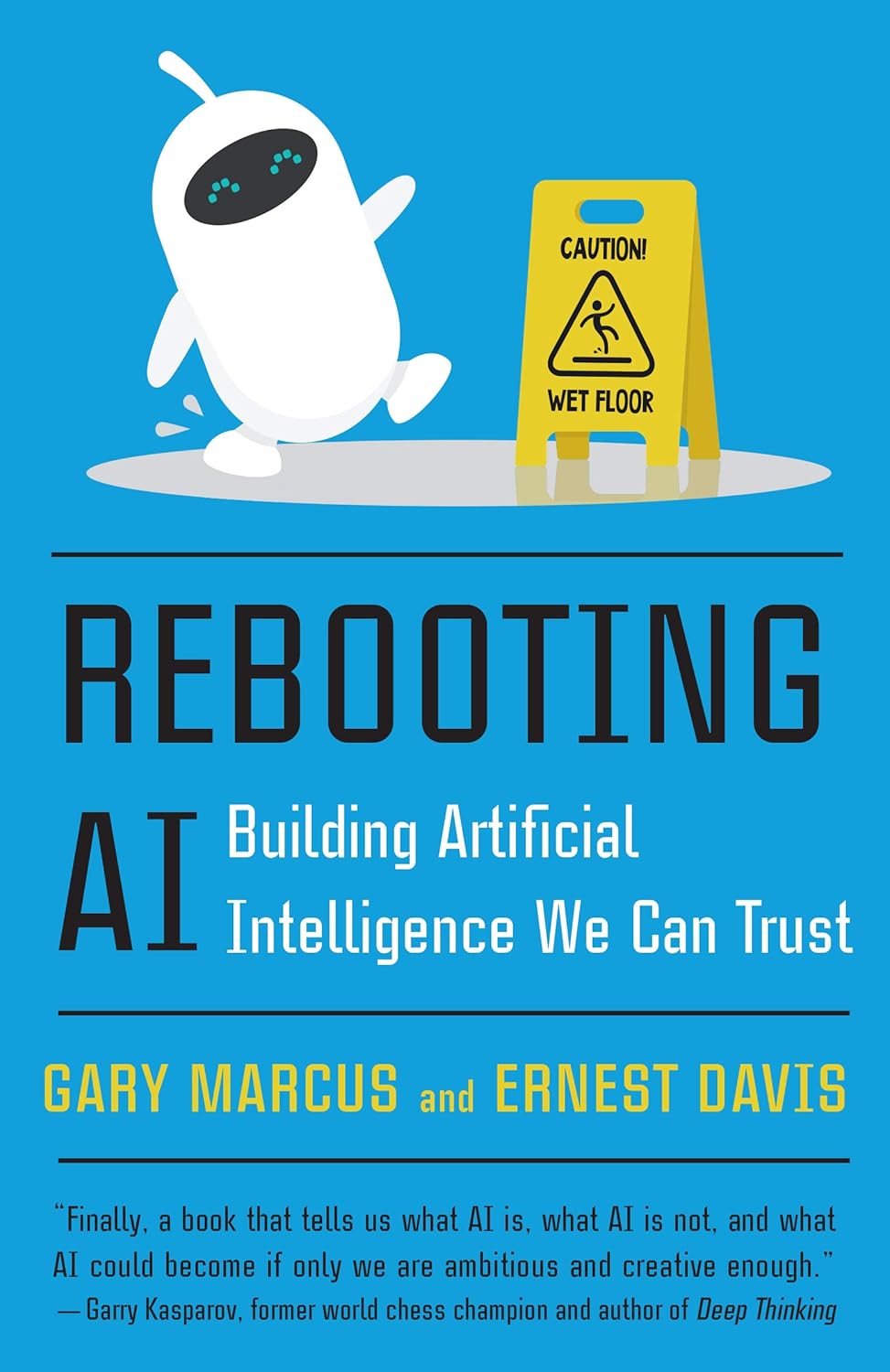
Rebooting AI
Gary Marcus and Ernest Davis explore where AI succeeds, where it fails, and why trust matters for anyone funding its growth.
Read on Amazon →Ethical awareness doesn't mean avoiding innovation — it means guiding it wisely, one informed choice at a time.
7. Final Insights and Next Steps
AI ETFs remain one of the most accessible ways to invest in AI without mastering stock analysis. They let you spread risk across automation, cloud, and machine learning all at once.
Prices will rise and fall, and hype will come and go. Treat AI ETFs as a long-term position, not a short-term trade, and you'll ride the sector's real growth instead of its noise.
Choose funds with clear holdings, check their ethical screening, and keep contributions consistent. That turns curiosity into a sustainable investing habit.
Continue exploring with our guides on how AI understands visual data and AI voice replication tools and ethics.
Frequently Asked Questions — AI ETFs
What exactly is an AI ETF?
An AI ETF bundles stocks from companies building or applying artificial intelligence — chipmakers, cloud providers, and software firms — into a single, tradable fund.
Instead of buying one company's shares, you buy one fund that spreads your money across dozens of AI-related businesses automatically.
Are AI ETFs a safe investment?
"Safe" is relative. AI ETFs tend to be less risky than individual AI stocks because they're diversified, but they still move with the broader tech market.
Many investors treat them as a balanced way to participate in AI growth without betting everything on one company.
How much money do I need to start?
How do I know which AI ETF to choose?
Match the fund to your goals and risk tolerance by checking its expense ratio, top holdings, and regional exposure before committing any money.
Free tools like Morningstar's ETF screener or JustETF let you compare multiple funds side-by-side in a few minutes.
What are the tax implications of AI ETFs?
Taxes depend entirely on your country of residence, and most ETF profits fall under capital gains tax rules.
Always check official guidelines or talk to a tax advisor before assuming how your specific AI ETF gains will be treated.
Can I invest in AI ETFs from Europe?
Yes. European investors can access AI-themed ETFs listed on EU exchanges, including the WisdomTree Artificial Intelligence UCITS ETF (WTAI).
Most brokers offer international market access with transparent fees and EU-compliant fund versions for AI-focused portfolios.
What's the difference between active and passive AI ETFs?
Active AI ETFs, like ARKQ, are managed by experts who pick companies based on performance and outlook.
Passive ETFs, like BOTZ or AIQ, simply track a predefined AI index — usually cheaper, but less responsive to sudden shifts.
How is an AI ETF different from a regular tech ETF?
A standard tech ETF, like XLK, covers all of technology — hardware, payments, software — with no AI-specific mandate.
An AI ETF only includes companies where artificial intelligence is a primary, named revenue driver, giving more concentrated AI exposure.