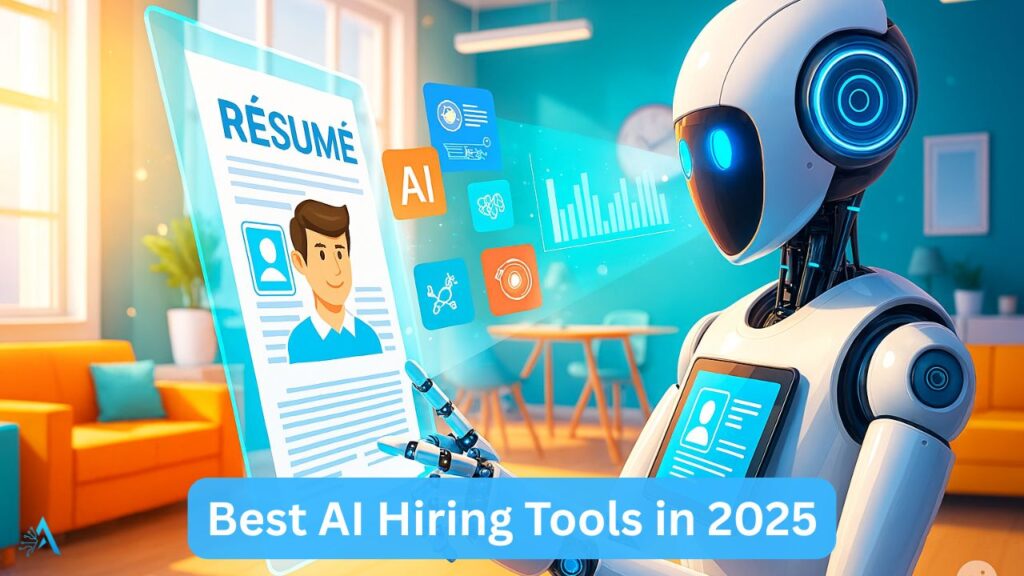
AI reviewing a digital résumé during a virtual job interview in 2025

Best AI Hiring Tools in 2025 – What to Know Before You Apply

📅 Published on: July 6, 2025

1. Introduction: AI Is Reading Your Résumé Before Anyone Else

Would you pass an interview… with a machine?

Before a human recruiter even glances at your résumé, there’s a high chance it’s already been scanned, sorted, and scored by an AI hiring tool. These algorithms are silently shaping your career path — deciding whether you’re shortlisted or silently rejected in seconds.

That’s why understanding AI hiring tools in 2025 isn’t just useful — it’s essential. This post is part of our Behind the Algorithm series because we believe job seekers deserve to know who (or what) is evaluating them. We’re pulling back the curtain on how these systems work, which platforms dominate the market, and most importantly — how to beat the algorithm without losing your authenticity.

AI in recruitment isn’t inherently bad. In fact, when used ethically, it can reduce bias, speed up the process, and match candidates to roles they might have missed. But without transparency or regulation, these same systems can filter you out unfairly — for something as small as a missing keyword or a format error.

In this post, we’ll break down the best AI hiring tools in 2025, how they actually work, and what you can do to stay ahead. Whether you’re applying for your first job or making a career pivot, understanding AI hiring tools is your new superpower.

2. What Are AI Hiring Tools and Why Are They Used?

AI hiring tools are software systems powered by artificial intelligence that assist — or sometimes fully automate — parts of the recruitment process. These tools can analyze résumés, assess video interviews, and even chat with candidates before a human recruiter is ever involved.

The rise of AI hiring tools isn’t random. With thousands of applicants for a single job post, companies need scalable solutions. Hiring teams simply can’t screen hundreds of CVs manually — that’s where AI in recruitment steps in. These systems quickly filter out unqualified candidates, highlight the strongest fits, and streamline the overall process.

But speed isn’t the only reason companies are investing in these tools.

Here’s why AI hiring tools are being adopted across industries:

  • Efficiency at scale: One recruiter might screen 200 résumés in a day — an AI can screen 2,000 in under a minute.

  • Bias reduction (in theory): By using standardized evaluations, AI tools aim to reduce human bias. Of course, this depends on how well the model is trained — more on that later.

  • Candidate experience: AI-driven chatbots can answer questions 24/7, schedule interviews instantly, and provide a smoother application experience.

  • Cost savings: Automating early hiring stages cuts down significantly on HR overhead, especially for large enterprises.

Common Types of AI Hiring Tools

Here are the most common tools you’re likely to face:

1. Résumé Screeners
These tools scan your CV for keywords, job titles, years of experience, and formatting. They’re essentially ranking your résumé against the job description — so even small mismatches can cost you the interview. (Related: How AI is changing job search platforms – internal link)

2. Video Interview Analyzers
This is where it gets more advanced. Some companies use tools like HireVue or Pymetrics that analyze your facial expressions, tone of voice, speaking speed, and even eye movement during recorded interviews. While these tools promise “objective scoring,” they’ve also raised ethical concerns around bias and accessibility.

3. Chatbot Recruiters
AI-powered chatbots like Mya or Paradox can guide you through the application process, answer questions, and ask pre-screening questions to qualify you before a human steps in. While they improve engagement, they also collect behavioral data and responses that might influence hiring decisions.

If you’re not aware of how AI hiring tools operate, you’re entering the job market at a disadvantage. In the next section, we’ll go behind the scenes and show you exactly how these systems work — and what you can do to avoid being filtered out unfairly.

3. The Top AI Hiring Tools of 2025 (With Pros & Cons)

The AI recruitment space is evolving fast, but a few AI hiring tools have clearly taken the lead in 2025. These platforms are being used by major global companies to automate everything from CV screening to live interview analysis.

If you’re applying for jobs this year, there’s a high chance one of these tools will interact with your application — whether you realize it or not. Let’s explore their key features, use cases, pricing, and ethical flags.

Here’s a quick overview table to help you compare:

Tool Main Features Best For Pricing Ethical Concerns Link
HireVue Video interview analysis, AI scoring, structured assessments Enterprise hiring, finance & tech roles High ($$$) Facial recognition & accessibility issues Visit
Paradox Olivia AI chatbot for recruiting, screening, and interview scheduling Retail & high-volume hiring Mid ($$) Risk of oversimplified candidate evaluation Visit
Pymetrics Neuroscience-based games to assess cognitive & emotional traits Graduate & early-career programs Mid ($$) Bias in interpretation, lack of transparency Visit
Eightfold AI Talent intelligence platform for matching, internal mobility & upskilling Large HR teams, internal talent markets Premium ($$$) Data usage and fairness transparency Visit

4. How These Tools Actually Work: Behind the Algorithm

When you click “Submit Application,” most of us imagine a recruiter reading our résumé. But today, you’re far more likely to be evaluated by a machine learning model before a human ever sees your name.

So what’s actually happening behind the scenes of AI hiring tools?

Here’s how these systems work — step by invisible step — to score and sort your application.

1. NLP Scans Your Résumé for Relevance

At the heart of most AI hiring tools is Natural Language Processing (NLP) — a form of AI that reads and interprets human language. These models analyze your résumé like a search engine. They don’t “read” for meaning like a person would. Instead, they match specific keywords, job titles, action verbs, and formatting.

For example:
If the job description says “CRM management,” but your résumé says “client systems,” the AI may fail to see the connection — and rank you lower. That’s why tailoring your résumé with exact matches matters more than ever. (See also: Productivity AI tools that boost job applications)

2. Sentiment and Tone in Video Interviews

If you’re invited to record an asynchronous interview, chances are your answers will be analyzed by AI-driven video tools like HireVue or Modern Hire. These platforms go beyond what you say — they how you say it.

They extract:

  • Sentiment: Are you speaking positively or negatively?

  • Tone: Do you sound confident or uncertain?

  • Pacing: Are you speaking too fast or slow?

  • Pauses: Are you hesitating too much?

While these metrics aim to standardize evaluation, they also raise accessibility concerns. Not everyone performs the same way on camera, and neurodivergent candidates may be unfairly penalized. (Read more in our AI Ethics for Job Seekers guide)

3. Facial Expression Mapping

Some tools claim to analyze facial expressions — like smiles, eye contact, or micro-expressions — to detect enthusiasm or engagement. These models use computer vision and trained data to score your “non-verbal communication.”

But this is one of the most controversial parts of AI hiring tools. Critics argue these systems may:

  • Reinforce cultural biases

  • Penalize candidates with disabilities

  • Misinterpret expressions due to lighting or camera quality

As of 2025, some platforms like HireVue have reduced reliance on facial analysis after public backlash, but the technology still exists in several enterprise suites.

4. Personality Profiling from Your Responses

Tools like Pymetrics use games, questions, or open-ended answers to infer personality traits. Based on how you react under pressure, how you manage risk, or how you solve problems, the AI creates a personality “fit” score against the company’s ideal candidate profile.

It might sound like science fiction, but this is already live in thousands of global organizations.

For example, a system might decide:

“This person is 74% aligned with our ideal problem-solving and empathy profile for a team leader.”

The problem? You rarely see the criteria or know how your “fit” was calculated. And many applicants are rejected without ever knowing why.

5. Risks & Ethical Concerns You Should Know

AI hiring tools promise speed, efficiency, and objectivity — but they come with a shadow side that every job seeker should be aware of. Understanding the ethical concerns around these systems can help you protect yourself and advocate for more fair, transparent hiring.

Here’s what’s happening behind the algorithm that many companies don’t talk about.

1. Algorithmic Bias Is Still a Problem

Despite efforts to reduce human bias, AI hiring tools can unintentionally replicate or even amplify discrimination. Why? Because many models are trained on historical hiring data — which already carries biases based on race, gender, accent, and even educational background.

For example:

  • Candidates with non-Western accents may score lower on speech-based evaluations.

  • Gendered language in résumés can affect how systems rank leadership potential.

  • Facial recognition models have historically underperformed for darker skin tones, as proven by MIT studies.

Bias isn’t just a glitch. It’s baked into the data unless specifically addressed — and most companies still don’t disclose how their models are built.

2. Lack of Transparency in Scoring

One of the most frustrating aspects of AI hiring tools is the black-box nature of their scoring systems. Applicants rarely know:

  • What factors are being measured

  • How their performance is evaluated

  • Why they were rejected

This lack of transparency is especially problematic when decisions are automated. You may never know whether your résumé was rejected for formatting, tone, or a single missing keyword.

Worse, some companies outsource these tools and don’t even fully understand how the scoring works themselves.

3. Video & Voice Data Raises Privacy Concerns

Many AI hiring tools request recorded video interviews or voice samples. These files are processed for analysis — but also stored, sometimes indefinitely.

Key privacy concerns include:

  • Consent: Most users don’t fully understand what data is collected or how it’s used.

  • Storage & security: Who stores your voice or face data? For how long? Is it encrypted?

  • Reusability: Could your data be reused to train other models or shared with third parties?

In some regions, these practices already violate privacy norms or push the legal gray area. As AI evolves, so do the stakes around your personal data.

4. The Legal Framework Is Catching Up (Slowly)

Thankfully, regulation is starting to address these concerns. A few key developments in 2025:

  • EU AI Act: Sets strict rules for high-risk systems (like hiring algorithms), requiring transparency, auditability, and human oversight.

  • EEOC Guidelines (US): The Equal Employment Opportunity Commission has released new guidance that AI systems in hiring must be tested for disparate impact and bias.

While promising, enforcement is still limited. Many platforms operate in countries with minimal AI regulation, and legal redress is still rare for individual applicants.

So, what can you do?

Be informed. Understand your rights. And whenever possible, apply through multiple channels — not just automated systems. A personal referral or direct email can still make a difference in a system built to filter.

In the next section, we’ll share practical steps to beat the algorithm and improve your odds — without selling your soul to the keyword gods.

6. How to Prepare for AI Screening: 5 Smart Tips

If you’re applying to jobs in 2025, there’s a high chance your first screener isn’t human — it’s one of several AI hiring tools scanning résumés and analyzing interviews. But don’t panic. The good news is you can absolutely prepare for these systems without resorting to hacks or dishonesty.

Here are five smart, practical tips to help you pass the algorithm and stand out for the right reasons.

1. Use the Right Keywords (Not Just Buzzwords)

AI hiring tools rely heavily on keyword matching. If your résumé doesn’t include the same phrases from the job post, you risk being filtered out — even if you’re fully qualified.

Tip:
Copy the job description into a keyword analysis tool (like Jobscan). Then, naturally include those terms throughout your résumé and cover letter — especially in your job titles, skills section, and bullet points.

🟢 Internal tip: we listed more tools like this in our AI productivity tools for job seekers post.

2. Keep Your Layout Clean and Scannable

Fancy layouts might impress a human, but they confuse parsing algorithms.

Best practices:

  • Use standard fonts (Arial, Calibri, Times)

  • Avoid columns or tables (unless you’re 100% sure they’re ATS-safe)

  • Save as PDF or .docx — not image-based formats

Remember: AI hiring tools often read résumés like a script, line by line. Simpler is smarter.

3. Practice with AI-Powered Mock Interviews

You don’t have to go in cold. Tools like Interview Warmup by Google or Yoodli simulate AI-style interviews, giving you feedback on speech clarity, filler words, pace, and tone.

If your target companies use AI hiring tools with video scoring, practicing with these platforms can help you:

  • Speak more clearly and confidently

  • Manage filler words and tone

  • Reduce nerves and over-rehearsed answers

🟢 Bonus: Many of these mock tools are free and don’t require logins.

4. Ditch the Flair – Stick to the Message

That creative résumé with infographics and icons? It may look great, but AI hiring tools might not read it correctly. Focus on clarity over creativity.

Avoid:

  • Headshots or logos

  • Embedded graphs

  • Colorful formatting or icons

Instead, use strong quantifiable results in your bullet points:

“Increased onboarding speed by 28% using automated workflows.”

5. Prepare Your Environment for Video Interviews

If your application includes a video response, remember: you’re being analyzed on more than words. AI hiring tools may assess lighting, posture, tone, and even background distractions.

Checklist before recording:

  • Use a clean, well-lit background

  • Make eye contact with the camera (not just your screen)

  • Speak slowly and clearly with natural energy

  • Avoid reading or sounding overly scripted

🟢 Pro tip: Place a sticky note with a smiley face near your webcam — it helps with natural eye contact and tone!

Final thought:
You don’t need to outsmart the system — just understand how it works. Most AI hiring tools are looking for clarity, relevance, and consistency. By applying these tips, you’re putting your best (digital) foot forward — and giving yourself the best shot to reach an actual recruiter.

Next, we’ll wrap things up with a clear summary and helpful FAQ so you’re fully equipped to handle your next AI-powered job application.
AI hiring tools interface showing candidate analysis and resume screening – Best AI tools for recruitment in 2025

7. AI for Recruiters vs. AI for Applicants – The Power Imbalance

Let’s be honest: AI hiring tools weren’t built for job seekers — they were built for recruiters.

That doesn’t mean they’re inherently bad, but it does mean we’re playing on an uneven field. Companies have access to sophisticated platforms to sort, analyze, and filter applicants at scale — while most job seekers aren’t even aware they’re being judged by a machine.

This creates a power imbalance that affects your chances, your confidence, and your ability to adapt.

Recruiters Are Using AI Like a Superpower

Today’s recruiters aren’t just reading résumés — they’re using platforms like:

  • Eightfold AI for talent intelligence and predictive analytics

  • HireVue to automate interview scoring and ranking

  • Paradox Olivia to screen candidates before a human gets involved

These tools save time and improve consistency for HR teams. But they also filter out thousands of applicants instantly, often with no feedback or transparency.

And while recruiters are trained on how these systems work… you’re probably not.

Meanwhile, Most Applicants Don’t Know What They’re Up Against

The average job seeker may have never heard of AI hiring tools — let alone know how to prepare for them.

Most candidates:

  • Submit the same résumé to every job

  • Use outdated formats that confuse AI parsers

  • Don’t optimize for keyword matching

  • Freeze in front of asynchronous video interviews

And let’s not forget: many people still believe a real human is reading every application.

The Good News: You Can Level the Field

While recruiters have entire AI suites at their disposal, job seekers now have access to smart tools too — many of them free or low-cost.

Here are a few tools to help even the odds:

Tool What It Does Link
Jobscan Matches your résumé to job descriptions using keyword analysis and scoring Visit
Interview Warmup Simulates AI-style job interviews with speech analysis and feedback Visit
Yoodli AI-powered interview coach that tracks filler words, pacing, and tone Visit
Canva AI Résumé Templates Clean, ATS-friendly résumé templates powered by AI for content suggestions Visit

🟢 We’ve also reviewed more helpful tools in our Productivity AI Tools roundup

Final Thought on the Imbalance

Yes — AI hiring tools give companies a huge advantage. But knowledge is power.

Once you understand how these systems work and start using your own AI-enhanced tools, you move from being filtered out to being filtered in — with confidence.

8. What to Expect in the Future of AI Hiring

We’re just at the beginning of the AI hiring tools era — and what’s coming next could reshape how every job is filled, everywhere.

The systems used today are powerful but basic compared to what’s coming. As companies invest more in artificial intelligence, hiring may become faster, more personalized, and — paradoxically — even less transparent.

Here’s what to expect in the near future:

1. HR Departments Are Going AI-First

Forget “AI-assisted hiring” — the trend is now AI-first recruiting.

Many large companies in 2025 are moving toward end-to-end automation. That means:

  • Résumés screened by AI

  • Interviews scheduled by AI

  • Answers analyzed by AI

  • Shortlists created by AI
    … with a human recruiter stepping in only at the final stage.

This shift isn’t just happening in tech or finance. Even retail, healthcare, and logistics sectors are adopting full-stack AI hiring tools to handle high volumes.

🟢 This is exactly why we started our Behind the Algorithm series — to bring awareness to what’s happening silently in the background.

2. More “Personalization” — But Less Transparency

Ironically, as AI hiring tools evolve, they’ll become more “personalized” to each applicant — customizing interview questions, evaluating soft skills, and even recommending alternate roles based on your data.

But that doesn’t mean they’ll become more fair or open.

In fact, many of these tools operate as black boxes:

  • You won’t know what data influenced your score.

  • You won’t see how your answers were interpreted.

  • You might not even realize the decision was automated.

Expect to see more job seekers feeling ghosted, not because of human rejection — but because AI didn’t flag them as “worthy of follow-up.”

3. Regulation Is Coming… Slowly

The EU AI Act is already classifying hiring algorithms as “high risk,” meaning they’ll soon face:

  • Required transparency

  • Bias auditing

  • Human-in-the-loop mandates

In the U.S., the EEOC and several states are introducing new laws requiring employers to test AI systems for discrimination and notify applicants when AI is used. Still, enforcement is spotty and inconsistent.

🌐 *Here’s a great external overview of upcoming AI hiring regulations from SHRM: AI in Employment Law 2025 

Until legal frameworks catch up, ethical hiring remains the responsibility of companies — and pressure from candidates like you.

4. Growing Resistance and Alternative Models

As more people become aware of these systems, resistance is growing. Expect to see:

  • More companies advertising “human-reviewed applications only” as a competitive edge.

  • Professional networks promoting AI-free job boards.

  • Legal challenges based on discrimination and automated decision-making.

There’s also a rise in “reverse-AI” tools — platforms built specifically to help applicants navigate and beat the algorithm (like Jobscan or Yoodli).

And candidates themselves are becoming savvier, asking:

Was my application even seen by a person?

The future of AI hiring tools is powerful — but it doesn’t have to be dystopian. With the right mix of regulation, transparency, and education, we can build a job market where technology supports fairness rather than replaces it.

And if you’re reading this? You’re already ahead of the curve.

9. Final Thoughts: Don’t Fear the Algorithm — Outsmart It

AI isn’t replacing all human decisions — but in the hiring world, it’s already rewriting the rules.

If there’s one takeaway from this guide, it’s this: AI hiring tools aren’t unbeatable. They’re predictable. They follow patterns. And with the right strategy, you can navigate them successfully.

Yes, it’s frustrating to feel like you’re talking to a machine instead of a person. Yes, it’s unfair when your résumé is rejected before human eyes ever land on it. But it’s also the new reality — and being aware of that gives you an advantage most applicants don’t have.

Awareness + Strategy = Confidence

The job seekers who succeed in 2025 aren’t necessarily the ones with the fanciest credentials — they’re the ones who understand how the system works.

They:

  • Use the right keywords

  • Prepare for AI-analyzed interviews

  • Avoid résumé formatting mistakes

  • Know how to speak both to bots and to people

  • Stay calm, prepared, and aware

With this guide, you’ve joined that group.

Don’t Let the System Discourage You

It’s easy to feel demotivated when you hear about algorithms making career decisions. But remember: technology changes fast — and so can you.

Every time you tailor your résumé, practice an AI interview, or learn how these tools work, you’re not just playing the game — you’re learning how to win it.

Stay Informed, Stay Empowered

We’ll continue covering the latest AI hiring trends in our Behind the Algorithm and News & Updates sections — so you’re always one step ahead of what’s changing.

You don’t need to become a tech expert.

You just need to be informed, prepared, and willing to adapt.

10. FAQ – Best AI Hiring Tools in 2025

Q1: What are the best AI hiring tools in 2025?
A: Some of the top-rated tools include HireVue, Pymetrics, Manatal, Paradox Olivia, and SeekOut. They assist with everything from CV screening to candidate matching, video analysis, and even pre-interview simulations.
Tip: Always research how a tool is used before applying — especially with video-based assessments.

Q2: Can AI reject your résumé before a human sees it?
A: Yes. Many applicant tracking systems (ATS) and AI screeners filter candidates based on keywords, structure, or job match score before a recruiter ever reads your CV. This is why formatting and keyword optimization are critical.

Q3: How do I make my CV AI-friendly?
A: Use clear job titles, include skills from the job description, avoid fancy graphics or columns, and export your résumé as a .docx or .pdf.
Use tools like Jobscan to test your résumé against real listings.

Q4: Are AI hiring tools ethical?
A: It depends. While they improve efficiency, they can also introduce bias, lack transparency, and reduce human connection. Look for companies with clear ethical AI policies or human review processes.

Q5: How do I know if a company is using AI to screen me?
A: You might see signs like fast rejections, structured video interviews with no interviewer, or language in the application process mentioning “automated screening.”.