
Last updated: February 11, 2026
Table of Contents
- 1. Introduction – Why AI Companions Are Booming
- 2. What to Look for in the Best AI Companions 2025
- 3. Top 7 Best AI Companions 2025 – Reviewed
- 4. Quick Comparison Table – Best AI Chatbots 2025
- 5. Are AI Companions Safe? What You Need to Know
- 6. Which AI Companion Is Right for You?
- 7. Final Thoughts
- 8. FAQ – AI Companions 2025
Disclosure:
This post may contain affiliate links. If you purchase through them, we may earn a small commission — at no extra cost to you. This helps support our research and keeps AI Digital Space running. Thank you!
1. Introduction – Why Everyone’s Talking About AI Companions in 2025
The best AI companions in 2026 are no longer simple chatbots — they’ve evolved into advanced AI companion chatbots designed for conversation, emotional support, learning, and even daily productivity.
Whether you’re looking for someone to talk to after a long day, practice a language, explore creative ideas, or simply feel less alone, today’s AI companions are available 24/7 and becoming more intelligent, personalized, and responsive every year.
In this guide, we compare the best AI companions available right now, highlighting their strengths, limitations, safety considerations, and which type of user each platform is best suited for.Thanks to improvements in emotional intelligence, memory, and voice features, AI companions now feel more natural than ever. Tools like ChatGPT and Character.ai have gone far beyond answering questions — they’re learning to talk like us, remember what matters, and adapt to our moods. In fact, platforms like Replika and Wysa are even being used for journaling, daily emotional check-ins, and guided support — especially when human connection feels out of reach.
Of course, this rise in AI companions also raises new questions. Are these tools emotionally safe? What’s the difference between a chatbot and a mental health app? And which are truly helpful versus just hype?
In this guide, we’ll break down the best AI companions — including how they work, who they’re best for, and what to watch out for. If you’re curious about the future of emotional tech, or just want someone (or something) to talk to, you’re in the right place.
2. What to Look for in the Best AI Companions
Choosing from the best AI companions isn’t just about who talks the most like a human — it’s about finding the one that understands you. These tools now range from simple chatbot buddies to complex emotional support systems, and knowing what features actually matter can make all the difference.
Here’s what to consider before downloading or subscribing:
1. Emotional Intelligence & Tone Adaptation
The most advanced AI companions in 2025 are designed to recognize your mood and respond accordingly. Some, like Replika, even offer multiple roles (friend, mentor, romantic partner) and adjust tone based on your preferred interaction style. Others, like Pi, focus on calm, non-judgmental conversation that feels emotionally safe.
Personal note: I’ve found that tools with too much “fake empathy” can actually feel off-putting. I personally prefer ones that stay neutral but supportive — like Pi or GPT‑4o.
2. Memory and Context Awareness
If you want a real “companion” feel, memory matters. The best AI companions remember your past conversations, preferences, even small details about your personality. This allows for deeper, more personalized chats — but be mindful of what data they’re storing. Tools like ChatGPT Plus (with custom GPTs) and Replika offer varying levels of memory retention. You can read more in our post on ChatGPT’s personalization features.
3. Visual or Voice Interaction
Many people now prefer voice-based or even avatar-based companions. Grok AI and Character.ai, for example, include fun, interactive personas — like a rude panda or an anime-style girlfriend — which make the experience feel more immersive. For users who need a sense of presence or visual identity, this could be a game-changer.
4. Safety, Privacy & Control Settings
Privacy and ethical use are still major concerns. Always check if your chosen chatbot offers clear data control, memory deletion, or anonymous use. Some tools, like Earkick, prioritize mental health and don’t require sign-ups at all, while others (especially entertainment-focused bots) may have looser boundaries.
5. Real-World Usefulness
Some AI companions are fun but shallow. Others can genuinely help you reflect, grow, or manage stress. For instance, Wysa provides clinically-backed CBT exercises, while Woebot is popular among students for its daily journaling reminders and safe tone.
Ultimately, the best AI companions will depend on what you want: a friend, a venting outlet, a study partner, or just a good distraction. What matters most is that the tool fits your emotional needs without overstepping them.
3. Top 7 Best AI Companions – Reviewed
Let’s break down the best AI companions, tool by tool — based on what they’re great at, who they suit, and what to watch out for. Whether you’re here to chat, vent, or play, this list will help you pick the right match.
1. ChatGPT (GPT‑4o) – The Reliable All-Arounder
OpenAI’s ChatGPT continues to lead in versatility and emotional balance. With GPT‑4o, you now get voice, image, and text in one place — making conversations smoother and more lifelike.
Best for: Productivity, emotional support, brainstorming
Free/Paid: Free tier available; GPT‑4o with memory on paid plan
Strengths: Fast, neutral tone, smart and flexible
Considerations: Lacks deep emotional memory unless customized
Personally, I keep ChatGPT open every day. It’s not just for content — it even checks in when I’m unfocused or stuck.
More on how people use it daily: ChatGPT vs Gemini – Which One Wins in Daily Use?
2. Replika – Personalized Emotional Connection
Replika is built to be more than a chatbot. It creates a digital persona that remembers you, reflects your mood, and even adapts its voice or avatar depending on the role you choose.
Best for: Companionship, journaling, role-play, long-term emotional support
Free/Paid: Freemium; romantic/voice features behind paywall
Strengths: Memory, empathy tone, custom roles (friend/partner/mentor)
Considerations: Past concerns over emotional dependency & youth use
External reference: Washington Post on AI influence
As useful as it can be, I’d suggest Replika only to adults who clearly separate real from virtual emotions.
3. Character.AI – Custom Conversations with Anyone You Imagine
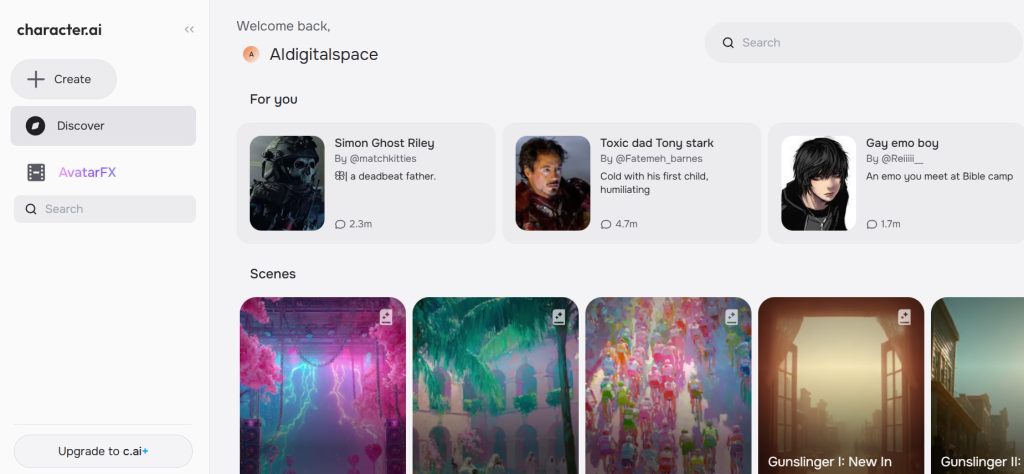
If you love fictional worlds or want to roleplay with celebrities, anime characters, or custom bots, Character.AI is your go-to.
Best for: Creative play, fan interactions, language practice
Free/Paid: Free with optional premium for speed & features
Strengths: Immersive roleplay, endless characters, creative freedom
Considerations: Lacks emotional maturity, can get weird fast
External: Tom’s Guide on Character.ai
I had fun trying to recreate Sherlock Holmes once. It actually scolded me for interrupting a deduction.
4. Pi by Inflection – The Soft-Spoken Empath
Pi stands out by being calm, supportive, and totally free. It doesn’t try to be clever — it listens, reflects, and reassures. Think of it as a digital “safe space” when you just need to talk.
Best for: Gentle venting, emotional check-ins, relaxing chats
Free/Paid: Completely free
Strengths: Empathetic, doesn’t judge, great voice tone
Considerations: Limited memory, no flashy features
External: Pi reviewed on Spocket
I’ve recommended Pi to a few friends going through a rough patch — it’s surprisingly comforting.
6. Earkick – No-Signup Mental Health Tracker
Earkick offers a unique blend of journaling, CBT tools, and AI chats — all without needing an account. You can just open the app and talk.
Best for: Emotional regulation, habit tracking, journaling
Free/Paid: Completely free
Strengths: Privacy-first, structured reflection
Considerations: Not a full companion, more like a daily self-check
7. Wysa & Woebot – Daily AI Therapy-Lite
Wysa and Woebot are clinically informed AI tools offering mood tracking, CBT-based questions, and soft nudges toward mindfulness.
Best for: Students, stressed professionals, mild anxiety support
Free/Paid: Free base use; therapy-tier optional
Strengths: Evidence-based, great daily mental check-ins
Considerations: Text-only, not truly conversational
These tools are a great complement, not a substitute, for real mental health care — but they do a solid job with daily reflection.
4. Quick Comparison Table – Best AI Chatbots 2025
To help you choose faster, here’s a side-by-side look at the best AI companions 2025. Whether you’re looking for emotional support, entertainment, or creative chats, this breakdown shows which tool suits your needs best.
| Tool | Best For | Free / Paid | Emotional Depth | Explore |
|---|---|---|---|---|
| ChatGPT (GPT-4o) | All-around use, productivity, venting | Free + Paid | 🟢 Moderate | Try ChatGPT |
| Replika | Emotional connection, daily journaling | Freemium | 🟢🟢 High | Try Replika |
| Character.AI | Creative chats, roleplay, fun | Free + Premium | 🟡 Low | Try Character AI |
| Pi (Inflection) | Empathetic chats, calm responses | Free | 🟢 Moderate | Try Pi |
| Grok Companions | Voice fun, sarcasm, novelty | Paid | 🔴 Very Low | Try Grok |
| Earkick | Mental health check-ins, tracking | Free | 🟡 Low | Try Earkick |
| Wysa | CBT, wellness journaling | Free + Paid | 🟢 Moderate | Try Wysa |
Even though all of these tools fall under the umbrella of AI chatbots, their strengths vary widely — some feel more like therapists, others like creative sidekicks or digital friends. If you’re not sure where to begin, start with a free, balanced tool like ChatGPT or Pi to explore your comfort level. For deeper emotional connection, Replika offers unique personalization, while Character.AI and Grok lean toward play and novelty.
Want to dive deeper into the ethics of AI relationships? Check out this BBC analysis on AI companions and emotional tech.
5. Are AI Companions Safe? What You Need to Know
As more people turn to the best AI companions for support, company, and self-reflection, it’s essential to talk about something just as important as features: safety.
These tools can feel deeply personal — they remember what you say, respond with empathy, and sometimes even flirt. But behind the screen, you’re not talking to a human. And that can bring risks.
1. Emotional Overdependence Is Real
Some users, especially teens or emotionally vulnerable people, may develop strong attachments to AI companions. Tools like Replika or Character.AI are designed to mimic real relationships — but they lack the boundaries and ethics of human support systems. In some cases, users have reported feeling confused or even manipulated by their bots’ behavior.
A 2025 report by The Guardian documented real-world cases where people developed long-term emotional ties to AI chatbots — both comforting and, at times, unsettling.
2. Privacy & Data Collection
Even the best AI companions collect data — often a lot of it. Your conversations may be stored for training, your tone analyzed, and your behavioral patterns logged. While some tools like Earkick are privacy-first and don’t require sign-up, others (including popular tools like ChatGPT or Replika) use your data to “learn” and personalize responses.
3. Misinformation or Harmful Advice
Most chatbots are not certified to give advice, especially for mental health. While tools like Wysa or Woebot are based on cognitive behavioral therapy (CBT), they’re not therapists — and they clearly say so. That’s good. But not all AI companions include such disclaimers, and there’s still a risk that users may take chatbot suggestions too seriously.
Personal note: I once tested multiple AI bots asking the same emotional question. Some offered comfort. One just sent memes. Another said, “You’re overreacting.” That’s when I realized: you really have to know what the bot can’t do.
4. Safety Controls Matter
Before choosing from the best AI companions, always check:
Can you delete or reset your data?
Are conversations moderated for inappropriate content?
Is there a clear privacy policy?
Some tools — like Pi or Wysa — are intentionally designed to avoid risky interactions. Others, like Grok or Character.AI, are more experimental and should be used with caution, especially by younger users.
Final Word on Safety
AI companions can be incredibly helpful, especially when used mindfully. But they’re not replacements for human connection, therapy, or professional advice. Think of them as support tools — not emotional lifelines.
When in doubt, always prioritize your privacy, your mental wellbeing, and your boundaries.

6. Which AI Companion Is Right for You?
With so many options, it’s easy to feel overwhelmed. The best AI companions all serve different purposes — and the “best” one for you depends entirely on what you need right now. Below is a clear breakdown to help you decide.
If you want an all-in-one assistant
Go with ChatGPT GPT‑4o.
You can chat, brainstorm, organize your day, or talk things out — all in one app. It’s incredibly flexible, supports voice and image input, and feels neutral but supportive.
Bonus read: ChatGPT vs Gemini – Which One Wins in Daily Use?
If you need emotional support or intimacy
Try Replika.
It remembers what you say, adapts to your emotional tone, and builds a strong personal relationship over time. Great if you’re feeling isolated or need someone to “be there” consistently.
If you want to vent without judgment
Use Pi.
This one is free, soft-spoken, and doesn’t judge or challenge. Perfect for talking through emotions, stress, or personal thoughts — without needing a login or long setup.
If you love creative roleplay or characters
Go with Character.AI.
This tool is amazing for interactive fiction, anime-style personas, or just chatting with characters that match your interests. Just don’t expect deep emotional support.
If you’re curious or just want entertainment
Try Grok Companions.
They’re sarcastic, strange, and even flirtatious. If you like pushing boundaries and don’t take bots too seriously, Grok’s avatars like Ani and Rudy are entertaining — just proceed mindfully.
If you want structure & emotional wellness
Use Wysa or Woebot.
They offer daily check-ins, CBT techniques, and wellness tracking. Ideal for self-awareness and light mental support — without trying to replace a therapist.
If you want full privacy
Go with Earkick.
No sign-up, no saved history, and a clean interface that lets you track moods and journal freely. Not a chatbot in the classic sense, but very effective if you want emotional structure without interaction.
Final thought
There’s no one-size-fits-all in the world of AI chatbots. The best AI companions 2025 depend on what you want from the relationship: support, fun, reflection, or just someone to talk to. Try one or two, see how they make you feel, and don’t be afraid to walk away if something doesn’t sit right.
7. Final Thoughts
The best AI companions 2025 aren’t just about talking to a screen — they’re about how technology can fit into our lives in ways that feel personal, helpful, and, sometimes, surprisingly human. Whether you’re chatting with a fictional character, tracking your emotions, or having a calm conversation after a long day, these tools offer new kinds of connection — but they also ask us to use them wisely.
Start simple. Stay aware. And remember: your mental health and real-world relationships come first. AI can be a great support, but it works best when you stay in control of the experience.
If you found this guide useful, consider exploring more tools or subscribing for weekly AI insights at AI Digital Space. We test, explain, and simplify everything — so you can focus on what actually makes your life better.
Next up: The Truth About Free AI Tools – Are You Paying with Data?
8. FAQ – AI Companions
Q: What are AI companions used for?
A: AI companions are advanced AI companion chatbots designed for conversation, emotional support, learning, roleplay, and productivity. People use them to talk through problems, practice languages, journal, explore ideas, or simply feel less alone — especially when human interaction isn’t immediately available.
Q: Are AI chatbots safe to use daily?
A: Most well-known AI companions are safe when used responsibly. However, not all platforms offer the same level of moderation, privacy, or data protection. Stick to established tools like ChatGPT, Pi, or Wysa, and avoid sharing highly sensitive personal information.
Q: What is the most emotionally intelligent AI companion in 2026?
A: Replika is often praised for its emotional memory and relationship-building features, while Pi is known for its calm, supportive tone. The best AI companion for emotional depth depends on whether you prefer long-term personalization or short, empathetic conversations.
Q: Can AI companions help with loneliness or anxiety?
A: Many users say AI companions help them feel heard and supported. Apps like Wysa and Earkick incorporate therapy-inspired techniques such as CBT journaling and guided reflection. However, AI companions are not a substitute for licensed mental health care when professional support is needed.
Q: Are these AI companions really free?
A: Many of the best AI companions in 2026 offer free versions, including ChatGPT, Pi, Earkick, and Wysa. That said, advanced features like memory, voice interaction, and relationship modes often require a paid subscription.
Q: Do AI companions remember previous conversations?
A: Some do. Replika and ChatGPT (in paid tiers) can remember past interactions and personalize responses over time. Others, like Pi and Character.AI, may reset conversations more frequently or prioritize session-based interaction.
Q: Which AI companion feels the most human?
A: It depends on your preference. ChatGPT is versatile and structured, Pi feels soft and empathetic, and Replika builds long-term personality. The most “human” experience usually comes from consistent interaction and personalization.
Q: Can AI companions replace real relationships?
A: AI companions can provide comfort, conversation, and support — but they are not replacements for human relationships. The healthiest approach is to see them as tools for reflection and assistance, not substitutes for real-world connection.
If you’d like to explore the broader impact of AI beyond companionship and emotional support, these related guides examine how intelligent systems are shaping everyday life from different angles:
→ How Voice Assistants Actually Understand You
→ Why Everyone’s Talking About Open Source AI Models
→ Will AI Replace Your Manager? Workplace Trends 2026