
 Published on: August 14, 2025
- 1. Introduction – Why This Comparison Matters in 2025
- 2. ElevenLabs at a Glance
- 3. PlayHT at a Glance
- 4. Voice Quality & Realism
- 5. Languages, Accents & Customization
- 6. Latency & Real-Time Use
- 7. Pricing & Value
- 8. Ethics & Voice Safety
- 9. Quick Comparison Table
- 10. Verdict & Best Use Cases
- 11. FAQ – ElevenLabs vs PlayHT
Disclosure:
This post contains affiliate links. If you click and subscribe, we may earn a small commission at no extra cost to you. We only recommend tools like Copy.ai and Writesonic that we’ve tested and believe offer real value to our readers.
1. Introduction – Why This Comparison Matters in 2025
In 2025, the ElevenLabs vs PlayHT debate is one of the hottest topics in AI voice technology. With text-to-speech tools now producing voices so realistic that listeners often can’t tell if they’re hearing a human or a machine, picking the right platform matters more than ever. Both ElevenLabs and PlayHT are leading choices for creators, educators, and businesses — but they offer different strengths when it comes to voice realism, latency, language support, and ethical safeguards.
If you’ve already explored our Best AI Tools for 2025 guide, you know that combining a solid content workflow with the right voice AI can dramatically improve your production quality. In this ElevenLabs vs PlayHT comparison, we’ll break down audio naturalness, customization, pricing, and API options — so you can choose the one that truly sounds more real and fits your workflow. For deeper background on one of the tools, you can check the official ElevenLabs website for their latest feature updates.
2. ElevenLabs at a Glance
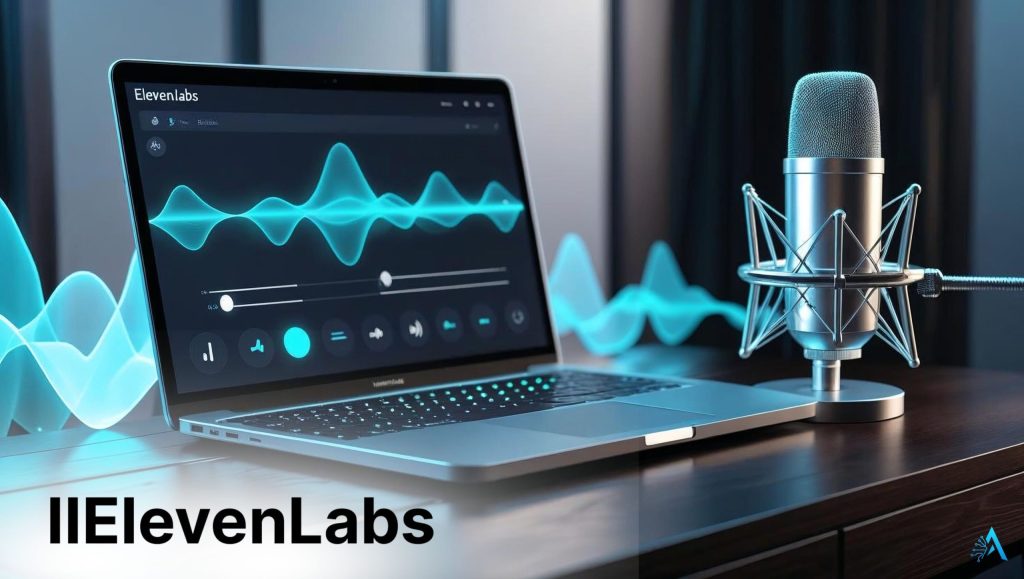
If the ElevenLabs vs PlayHT debate was a talent show, ElevenLabs would be the contestant that makes the judges cry in the first 30 seconds. Its voices don’t just speak — they breathe, pause, and carry emotion so well that you sometimes forget you’re listening to AI.
Why creators love it:
Emotion on demand: Whisper a line, shout it, or add a subtle sigh — ElevenLabs nails it.
Global reach: Over 70 languages and accents that sound native, not robotic.
Clone in minutes: From quick “Instant” clones to pro-grade 30-minute training sessions.
Ready for developers: Low-latency APIs, SDKs, and real-time streaming for live projects.
Built-in ethics: Voice watermarking and AI speech classifiers to keep use safe.
Where it’s making waves:
Spotify uses ElevenLabs to power AI-narrated audiobooks in 29 languages. Medical programs use it to preserve the voices of ALS patients. Indie YouTubers use it for multilingual content without hiring multiple voice actors.
Bottom line: If realism and emotional depth are your top priorities in the ElevenLabs vs PlayHT face-off, ElevenLabs is often the first choice. But… PlayHT has a few tricks of its own — and some might surprise you.
3. PlayHT at a Glance
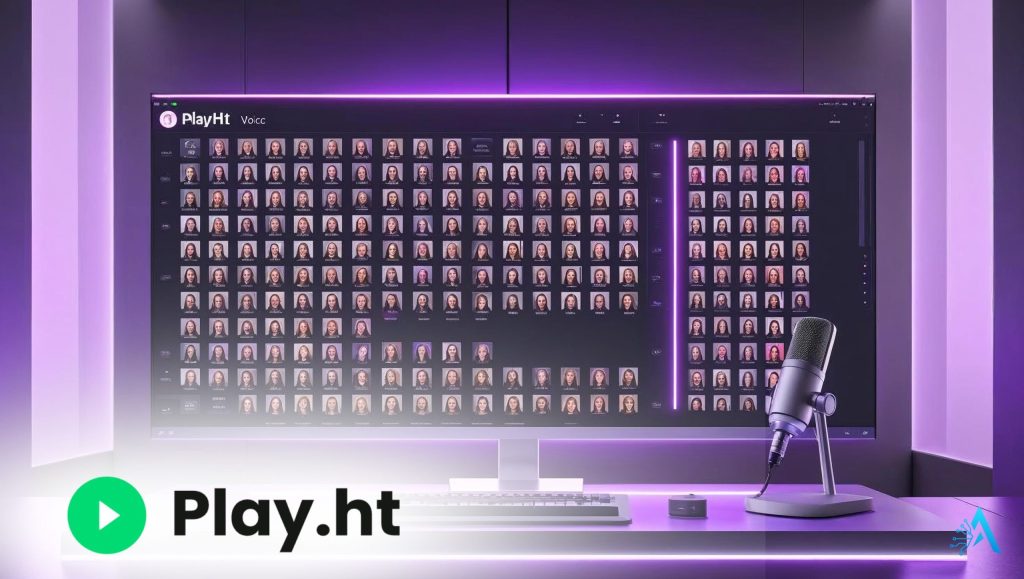
If ElevenLabs vs PlayHT were a race, PlayHT would be the sprinter who wins over the crowd with speed, variety, and simplicity. It’s built for creators who want great-sounding audio without overcomplicating the process.
Why people choose PlayHT
Massive voice variety: Over 800 voices in 140+ languages and accents, from natural conversational tones to energetic presenters.
Beginner-friendly interface: Just paste text, choose a voice, adjust pitch or speed, and hit play—no technical skills required.
Expressive options: Switch between styles like Newscaster, Conversational, Cheerful, or Empathetic. You can also fine-tune pauses and pronunciations for a smoother flow.
Great value for money: Offers a solid free tier and affordable paid plans, with generous character limits compared to some competitors.
Where it shines
PlayHT is a favorite for podcasters, marketers, educators, and multilingual content creators who need quick, high-quality audio in multiple languages. While it may not capture the same level of emotional nuance as ElevenLabs, it’s hard to beat for variety, ease, and cost-effectiveness.
Bottom line
If your priority in the ElevenLabs vs PlayHT choice is speed, accessibility, and a huge selection of voices, PlayHT deserves a serious look.
4. Voice Quality & Realism
When it comes to ElevenLabs vs PlayHT, voice quality is where most people make their final decision. After all, if the audio doesn’t sound human, everything else—features, pricing, and speed—matters a lot less.
ElevenLabs is widely praised for its emotional depth. It captures subtle details like breathing, natural pauses, and variations in tone that make a voice sound alive. This means if you need to convey storytelling, dramatic readings, or high-emotion content, ElevenLabs can make listeners forget they’re hearing AI.
PlayHT, on the other hand, shines with clarity and consistency. Its voices are clean, easy to understand, and well-suited for e-learning, podcasts, and marketing videos. While it may not always hit the same emotional highs as ElevenLabs, its stability and variety of voice styles give it an edge for projects where tone needs to stay steady over long recordings.
In simple terms:
ElevenLabs = best for realistic, emotive narration that feels like a professional voice actor.
PlayHT = best for clear, consistent voices with a huge style and accent range.
Why this matters for your choice
Think about your main use case. If you’re producing a documentary-style YouTube channel or an audiobook with character voices, the emotional realism of ElevenLabs will make a difference. But if you’re building an educational course in multiple languages or need a variety of voices for different markets, PlayHT’s range could be more valuable.
Bottom line: In the ElevenLabs vs PlayHT comparison, neither “wins” outright—voice quality depends entirely on whether you value emotional authenticity or clarity across many styles.
5. Languages, Accents & Customization
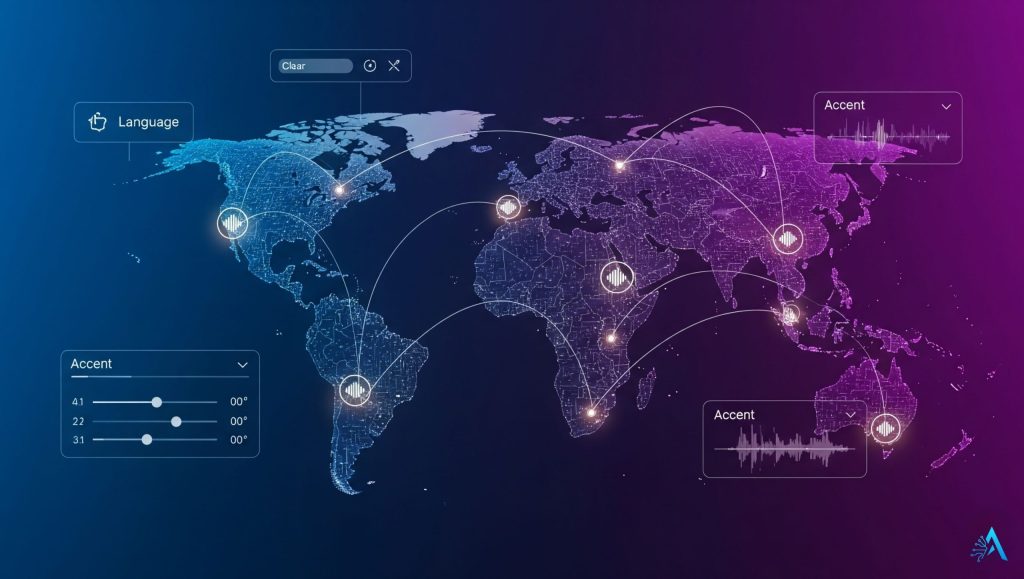
In the ElevenLabs vs PlayHT choice, language coverage and customization can be the deciding factor—especially if your content reaches a global audience. The right tool can mean less editing, fewer retakes, and more natural-sounding results.
ElevenLabs strengths
ElevenLabs supports over 70 languages and can automatically detect the language of your text. It’s designed to keep a consistent voice across translations, which is ideal if you want the same narrator to speak multiple languages. Features like “Voice Design” let you create a custom voice from scratch, and advanced delivery controls allow adjustments in pace, emphasis, and emotional tone.
PlayHT strengths
PlayHT offers one of the largest language and accent libraries in the market—over 140 options—with more than 800 voice choices. It supports SSML for many voices, so you can fine-tune pronunciation, pauses, and speed. This makes it especially practical for projects where you need many voices quickly, like e-learning courses or multilingual marketing campaigns.
Choosing between them
Pick ElevenLabs if you need emotional consistency across multiple languages and want deeper control over how the voice performs.
Pick PlayHT if you prioritize having the widest selection of voices and accents, along with quick SSML tweaks for fast production.
Pro tips for better multilingual voice output
Keep sentences short and punctuated for clarity.
Write numbers in words (e.g., “twelve thousand” instead of “12,000”) for smoother delivery.
Provide phonetic hints for names or uncommon words.
Always test a short 15–30 second sample before generating a full script to ensure the voice matches your needs.
Bottom line: In the ElevenLabs vs PlayHT comparison for languages and customization, ElevenLabs wins for emotional consistency and fine control, while PlayHT leads for sheer variety and speed in multilingual work.
6. Latency & Real-Time Use
In the ElevenLabs vs PlayHT debate, speed can be just as important as sound quality. For live streaming, interactive apps, or fast content production, latency—the delay between submitting text and hearing audio—can make or break your workflow.
ElevenLabs performance
ElevenLabs has made big strides in reducing latency, especially with its real-time API. For short lines, the delay is barely noticeable, making it ideal for interactive voice assistants, live dubbing, or gaming applications. Its speech feels fluid even in fast-paced scenarios, and the emotional delivery doesn’t drop when generating on the fly.
PlayHT performance
PlayHT also offers near-real-time speech generation, but its sweet spot is in batch processing. It handles longer scripts efficiently, producing clean, consistent audio with minimal hiccups. This makes it a solid choice for podcasters, educators, and marketers who need fast turnaround on bulk scripts but don’t necessarily require sub-second responses.
Choosing between them
Choose ElevenLabs if you need conversational AI, live streams, or any project where instant response is key.
Choose PlayHT if your priority is generating large volumes of speech quickly, with stable and predictable processing times.
Pro tips to optimize latency
For ElevenLabs, break long scripts into smaller chunks to keep real-time generation smooth.
For PlayHT, pre-load voices and settings before starting batch conversions to avoid delays.
Use stable internet connections—latency is partly tool-based, but network speed matters too.
Bottom line: In the ElevenLabs vs PlayHT comparison for latency and real-time use, ElevenLabs has the edge for instant interactions, while PlayHT is more efficient for producing high volumes of audio in a short timeframe.
7. Pricing & Value
In the ElevenLabs vs PlayHT decision, pricing only matters if it delivers the results you need. Use this fast snapshot to see where each platform gives you more for your money.
| What you’re paying for | ElevenLabs | PlayHT | Best for |
|---|---|---|---|
| Free tier | Good for quick tests; limited monthly characters and features. | Starter-friendly; typically more generous characters for trials. | Trying before you commit |
| Paid value per €/$ | Premium feel; you’re paying for realism and delivery controls. | Often more characters at the same price; strong for volume work. | Volume vs. premium nuance |
| Emotional realism | High – natural pauses, breath, and expressive delivery. | Clear and consistent; slightly less dramatic nuance overall. | Storytelling, trailers, branded content |
| Voice variety | Smaller set but highly lifelike; strong custom “Voice Design.” | Very large catalog; easy to match different use cases fast. | E-learning, ads, multi-format teams |
| Languages & accents | Strong multilingual with consistent voice identity across locales. | Very broad language/accent coverage; quick to deploy. | Multilingual campaigns, global reach |
| Real-time & latency | Great for interactive use; smooth short-line generation. | Efficient for batches; stable on longer scripts. | Live vs. bulk workflows |
| API & cloning | Robust API; instant and pro voice cloning for brand consistency. | Straightforward API; broad voice set reduces need to clone. | Developers, brand voice teams |
| Licensing & usage | Emphasis on ethical use and consent; check terms for commercial use tiers. | Clear project-based usage; confirm commercial terms on your plan. | Commercial projects with clarity |
| Typical monthly cost* | Higher for premium realism and cloning features. | Often lower per character; easier to scale output. | Budget planning |
| *Pricing, character limits, and licensing change over time. Always review current plan details before purchasing. | |||
For ElevenLabs vs PlayHT on pricing, think value per goal—not just cost. If emotional realism is the centerpiece of your content, ElevenLabs earns its premium. If your priority is volume, many languages, and predictable monthly output, PlayHT gives you more characters per euro and scales smoothly. A practical workflow: draft shorter scripts, preview before full renders, and batch projects to stretch your allowance on either platform.
8. Ethics & Voice Safety
When comparing ElevenLabs vs PlayHT, technical specs aren’t the only factor that matters. Voice AI has enormous potential—but it also raises critical questions about consent, misuse, and authenticity. A Wired article reveals how scammers are using AI-generated voices to impersonate family members in urgent calls, sometimes demanding money and fooling people because the voice sounds so real. This underscores that choosing the right platform is about more than just features and price—it’s about trust, safety, and transparency.
How ElevenLabs approaches ethics
ElevenLabs has built-in tools to detect AI-generated speech and watermark audio so it can be identified later. It also requires consent for professional voice cloning and offers moderation features to help prevent misuse, such as generating harmful or impersonating content. This makes it a strong choice for brands and public figures who want to protect their identity while still using AI voices.
How PlayHT approaches ethics
PlayHT clearly outlines commercial usage rights in its plans and allows users to set pronunciation and delivery without crossing into deceptive voice cloning. While it may not have as many in-built watermarking tools as ElevenLabs, it does maintain strict guidelines on content use and commercial licensing to ensure fair and safe application of its voices.
Practical safety tips for any AI voice use
Always get permission before cloning a real person’s voice.
Label AI-generated voice content clearly, especially for public or commercial use.
Avoid using AI voices to impersonate, mislead, or create harmful material.
Keep a record of your voice settings and project details for accountability.
Bottom line: In the ElevenLabs vs PlayHT ethical comparison, ElevenLabs leads in detection and anti-misuse features, while PlayHT offers straightforward commercial terms and encourages responsible content creation. The safest choice is the one you use with transparency and proper consent every time.
9. Quick Comparison Table
If you’ve read through the details but want the ElevenLabs vs PlayHT essentials in one place, this table gives you the full picture in seconds.
| Feature | ElevenLabs | PlayHT |
|---|---|---|
| Voice Realism | Exceptional emotional depth, natural pauses, and breathiness. | Clear, consistent delivery; slightly less emotional nuance. |
| Voice Variety | Smaller catalog but highly realistic; custom “Voice Design.” | 800+ voices in 140+ languages and accents. |
| Languages & Accents | 70+ languages; consistent voice across translations. | Extensive accent library and quick multilingual setup. |
| Real-Time & Latency | Excellent for instant, interactive use. | Efficient for batch and long-form generation. |
| Pricing | Premium; best for high-quality, short-form content. | Budget-friendly for high-volume output. |
| API & Developer Tools | Robust real-time API, instant/pro voice cloning. | Straightforward API with broad voice access. |
| Ethics & Safety | Built-in watermarking, detection, and misuse prevention. | Clear usage terms and licensing guidelines. |
If emotional realism and natural performance are your priority, ElevenLabs stands out. If you need voice variety, large-scale multilingual output, and predictable costs, PlayHT is hard to beat. In the end, the better choice in the ElevenLabs vs PlayHT match-up depends on whether you value emotional nuance or production flexibility more.
10. Verdict & Best Use Cases
After reviewing ElevenLabs vs PlayHT from every angle—voice quality, variety, language support, latency, pricing, and ethics—the choice comes down to what you value most in your workflow.
Choose ElevenLabs if…
Emotional realism is critical (audiobooks, storytelling, branded voiceovers).
You want one consistent, lifelike voice across multiple languages.
Fine delivery controls and expressive tone are essential.
You’re willing to pay more for top-tier quality.
Choose PlayHT if…
You need a huge range of voices and accents for different projects.
Cost-efficiency and character volume are top priorities.
You create multilingual or high-volume content regularly.
You prefer a simpler, beginner-friendly interface with fast setup.
In the ElevenLabs vs PlayHT comparison, there’s no single “winner” for everyone—only the tool that best fits your goals. If your projects demand emotional impact and nuanced delivery, ElevenLabs is worth the investment. If your focus is versatility, speed, and budget control, PlayHT is a smart, scalable choice. Many professionals even use both: ElevenLabs for key emotional pieces, PlayHT for bulk production, much like pairing different tools in our best AI voice replication tools review to get the perfect mix of quality and efficiency.
11. FAQ
Q: Which platform sounds more realistic—ElevenLabs or PlayHT?
A: ElevenLabs generally wins on realism. If emotional nuance and natural tone matter most, ElevenLabs is the better choice. PlayHT still delivers strong, clear voices for most commercial needs, but they tend to be slightly less lifelike.
Q: Can I use the voices for commercial projects?
A: Yes—both ElevenLabs and PlayHT allow commercial usage through their paid plans. Always review the licensing terms on your specific subscription to avoid issues.
Q: Which platform gives more value for high-volume projects?
A: PlayHT is often more cost-efficient for high-volume output, especially with its Unlimited plan. ElevenLabs can become pricier as your usage scales.
Q: How do voice cloning speeds compare between the two?
A: ElevenLabs can clone a voice from a short sample in roughly 2–5 minutes. PlayHT can work from an even shorter clip, but may take 5–10 minutes to process the final result.
Q: What do real users say after testing both?
A: Many users say PlayHT is good—sometimes close to ElevenLabs—but still note that ElevenLabs has the edge in sounding human. Some also mention that PlayHT can sound more “synthetic” in certain phrases.