

 Published on: October 11, 2025
- 1. Introduction – Why AI Apps Access More Data Than You Think
- 2. How AI Collects Data From Everyday Apps
- 3. Quick Privacy Settings You Should Change Right Now
- 4. Best Tools to Block AI Data Tracking
- 5. Comparing VPNs, Secure Browsers, and App Permissions
- 6. Case Study – WhatsApp, Instagram, and AI Assistants
- 7. Ethical AI Reflection – Where Convenience Ends and Privacy Begins
- 8. Practical Checklist – Steps to Keep Your Data Safe in 2025
- 9. Recommended Tools and Services
- 10. Final Thoughts – Take Back Control of Your Data
Disclosure:
Some links in this post are affiliate links. If you click and purchase, we may earn a small commission at no extra cost to you. Thank you for supporting AIDigitalSpace.com and helping us keep this content free and useful.
1. Introduction: Google’s New AI Shopping Revolution
Shopping online is about to feel less like scrolling and more like trying things in person — thanks to Google AI shopping tools. The company has just rolled out advanced features like Virtual Try-On and Smart Price Alerts, blending AI with the way we already shop on Google Search and Chrome. In practical terms, you’ll soon be able to see how clothes look on real-life body types and get price drop notifications that actually match your size, brand, or favorite color.
At AI Digital Space, we’re tracking how these new tools are reshaping everyday habits, not just tech trends. These updates aren’t abstract—they help anyone who shops online save time, compare better, and make more confident choices. And because they’re built directly into Google’s ecosystem, you don’t need to install anything fancy or pay extra to use them.
According to Search Engine Land, the new AI models behind these features can analyze thousands of listings in seconds, giving users cleaner visuals and fairer pricing. For readers interested in how this connects to smarter online experiences, we’ve also explored this evolution in our post on Best AI Tools for Everyday Productivity and how AI personalization is influencing consumer choices in Behind the Algorithm: How AI Understands You.
In short: Google is quietly redefining what “smart shopping” means—and this time, it’s personal, visual, and genuinely useful.
2. What Are Google’s AI Shopping Tools?
Google’s new AI shopping tools are designed to make online buying feel effortless and more human. Instead of scrolling through endless product grids, users can now interact with smarter visuals, personalized suggestions, and automatic price tracking—all powered by Google’s latest AI models.
The two headline features are Virtual Try-On and Smart Price Alerts. Virtual Try-On lets you see how clothes fit on a variety of body shapes and skin tones, using real images—not just digital mannequins. It’s available for popular brands directly in Google Search and aims to reduce that “guessing game” that often ends in returns. Smart Price Alerts, on the other hand, don’t just notify you of random sales—they track trends, compare across sites, and alert you when a product you’ve viewed actually hits its lowest price point.
From what we’ve seen so far, these Google AI shopping tools aren’t just gimmicks; they’re a step toward predictive commerce—shopping that anticipates your needs instead of reacting to them. It’s a clear sign of how AI is moving from background algorithms to front-facing experiences everyone can use daily.
For comparison, you can check how other consumer AIs are evolving in our analysis of Alexa+ and Smart Assistants 2025, where we discuss how major brands are embedding AI directly into everyday actions.
3. Virtual Try-On Explained: From Models to Reality

The Google AI shopping tools introduce something people have wanted for years — the chance to see how clothes actually look before buying them. With Virtual Try-On, you can preview shirts, dresses, or jackets on real models who reflect your body type, skin tone, and style.
Here’s how it works: when you search for clothing items in Google Shopping or on Chrome, you’ll see a new “Try On” button next to eligible products. Tap it, and Google’s AI instantly maps how that piece of clothing fits on different real-life models, helping you visualize it better. The feature currently supports top brands like Levi’s, H&M, and Anthropologie, with more rolling out through 2025.
The biggest advantage? You no longer rely on perfect studio shots that hide how something drapes or stretches. The Google AI shopping tools create a more realistic, confidence-building view that can save time, reduce returns, and make your next purchase feel smarter.
If you’re curious about other visual AI tools improving creativity and style, explore our guide on AI Tools for Designers 2025 — it shows how similar AI tech helps creators preview designs, outfits, and layouts before finalizing them.
4. Price Alerts Reimagined: How AI Predicts Drops
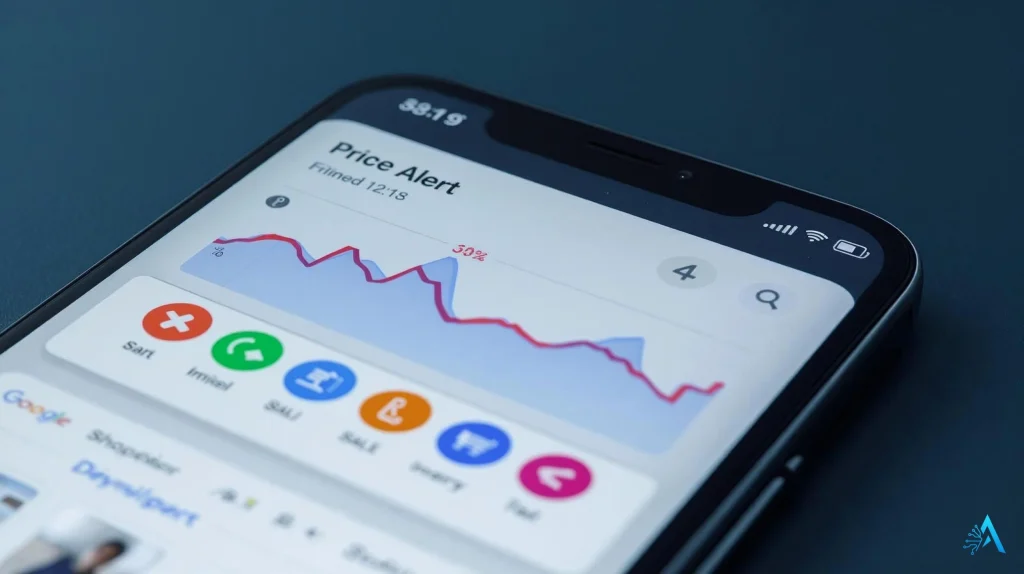
The new Google AI shopping tools don’t just show what to buy — they help you decide when to buy. The updated Smart Price Alerts system goes beyond the classic “notify me when price drops” feature. Instead, it uses predictive AI to analyze patterns from thousands of online retailers and forecast when a product is likely to reach its best price.
Here’s the practical side: when you browse an item on Google Shopping or Chrome, you can tap “Track Price.” Google’s AI then studies recent discounts, inventory levels, and even seasonal trends to estimate when a better deal might appear. You’ll receive an automatic alert directly in your Gmail or Google app — no extensions or extra setup required.
These smarter alerts can save serious money, especially for electronics or seasonal purchases. The Google AI shopping tools remove the guesswork and constant refreshing, so you don’t overpay or miss the right moment. For anyone who likes comparing deals efficiently, we also covered similar time-saving AI in our post on Best All-in-One AI Tools for 2025, where automation helps streamline everyday decisions.
5. Real-Life Benefits: Saving Time and Money
The biggest win from Google AI shopping tools is simple — they make online shopping faster, smarter, and more personal. Virtual Try-On lets you skip the endless size guessing, while Smart Price Alerts ensure you never pay more than you should. Together, they’re turning browsing into a guided experience instead of a guessing game.
For most people, this means fewer returns, fewer impulse buys, and a lot more confidence when ordering online. The Google AI shopping tools analyze colors, fits, and price patterns so efficiently that your shopping results feel almost tailor-made. It’s not just convenient — it’s a real money-saver.
6. How to Use Google AI Shopping Tools Step-by-Step
You don’t need to install any extra app to use the Google AI shopping tools — they’re already built into Search, Chrome, and the Google Shopping tab. Here’s how to make the most of them in just a few easy steps.
-
Search for your product
Open Google Search or Chrome and look for a clothing item or product as you normally would — for example, “Levi’s denim jacket” or “Samsung earbuds.” -
Tap “Try On” (when available)
For supported fashion brands, you’ll see a Try On button. Click it to preview the outfit on real human models. The Google AI shopping tools will adapt the fit and color in real time, helping you see how it looks before adding it to your cart. -
Set a Price Alert
On the product page, tap Track Price to activate Google’s predictive alert. The AI will monitor the item across verified stores and notify you via Gmail or the Google app when a meaningful price drop happens. -
Review and Buy Smart
Once an alert arrives, you can compare sellers instantly — all within the same interface. The Google AI shopping tools ensure the listings are up to date and filter out outdated prices, saving you time and clicks.
Tip: If you’re browsing on mobile, make sure your Google app is updated to the latest version to get real-time price alerts. You can find similar automation hacks in our guide to Bardeen AI – Automate Everything in Your Browser, another tool that simplifies daily online tasks.
7. Where These Tools Are Rolling Out (and When)
The Google AI shopping tools are gradually rolling out across the U.S., U.K., and selected parts of Europe in late 2025, with more regions expected early next year. Google confirmed that these updates are being integrated directly into Search and Shopping results, meaning you’ll see them appear automatically — no manual update or beta signup needed.
At launch, Virtual Try-On is available for women’s and men’s top brands, with an expanded catalog coming soon for accessories and shoes. Meanwhile, Smart Price Alerts are now live for most electronics and fashion items. Users in Italy, Germany, and Spain should start seeing these options appear by early 2026 as Google refines its regional data and retail partnerships.
If you want to check availability, open the Google Shopping tab and look for the “Try On” or “Track Price” options next to listed products. These features will show up more frequently as retailers join the program.
Our comment: this staged release is typical of Google — it starts with English-speaking markets to fine-tune accuracy before global rollout. Based on previous launches like the Shopping Graph, we expect Google AI shopping tools to become standard across all major marketplaces within months, just as voice-based shopping did with Google Assistant.
8. Privacy and Ethical AI in Smart Shopping

Like every innovation, the Google AI shopping tools raise important questions about privacy, transparency, and data use. When you use features such as Virtual Try-On or Smart Price Alerts, Google’s AI processes a mix of product, browsing, and user preference data to personalize your results. The company states that these insights are anonymized, but as always, we should stay aware of what we share online.
From an ethical point of view, AI-powered shopping can be both empowering and risky. It helps reduce waste by cutting down returns and promoting better buying decisions—but it can also amplify biases in how clothing is displayed or which deals get recommended first. As with all AI systems, the balance between convenience and fairness depends on how responsibly it’s trained and monitored.
At AI Digital Space, we encourage using these innovations consciously: let Google AI shopping tools simplify your decisions, but keep control over your data and your final choice. For a deeper look at similar issues, our article on Avoid These 5 Dark UI Tricks Used by Popular AI Apps explores how design and algorithms can shape user behavior without us even noticing.
9. Best Alternatives and Complementary Apps
If the Google AI shopping tools aren’t available in your region yet, or you’d like extra features, there are several alternatives worth trying. Each offers a slightly different take on smarter, AI-driven shopping and price tracking.
| Tool | Key Features | Best For | Try It |
|---|---|---|---|
| Keepa | Tracks Amazon price history, sends reliable drop alerts, and shows daily deal charts. Used by millions of shoppers worldwide. | Amazon users who want clear, data-driven price insights before buying. | Visit Keepa |
| CamelCamelCamel | Provides detailed Amazon price charts, alerts for drops, and long-term deal history — one of the most trusted trackers online. | Shoppers who like visual trends and transparent price data over time. | Visit Camel |
| PriceSpy | Compares prices across hundreds of online retailers, shows reviews, and tracks historical trends across multiple categories. | Smart buyers who want cross-store comparison beyond Amazon. | Try PriceSpy |
| Idealo | Europe’s leading price comparison site with AI-driven deal alerts, verified sellers, and a highly rated mobile app. | European users seeking local store coverage and dependable deal alerts. | Visit Idealo |
These tools complement what Google AI shopping tools do by adding deal comparison, review validation, and price-drop analytics. Many also integrate with Chrome extensions, which means you can combine them for maximum efficiency.
If you’re exploring automation beyond shopping, our review of Frase vs Scalenut – Best SEO AI for 2025 shows how AI comparison tools can also help writers, marketers, and small business owners optimize smarter decisions every day.
10. Final Thoughts

The evolution of Google AI shopping tools shows how technology can finally make online shopping feel simple and personal again. With Virtual Try-On and Smart Price Alerts, Google has taken the stress out of comparing, guessing, and waiting — giving us tools that adapt to our habits and preferences in real time.
These updates also fit perfectly with other trusted helpers like Keepa, CamelCamelCamel, PriceSpy, and Idealo. When combined, they create a smooth shopping workflow where AI suggests, compares, and tracks — and we stay fully in control of when and how we buy.
At AI Digital Space, we see this as the start of a smarter shopping era, where personalization meets transparency. The goal isn’t to make people spend more — it’s to help them spend better. And that’s the kind of AI progress worth following.