

 Published on: February 11, 2026
Disclosure:
This post may contain affiliate links. If you purchase through them, we may earn a small commission — at no extra cost to you. This helps support our research and keeps AI Digital Space running. Thank you!
1. Why Claude Opus 4.6 Is Suddenly Everywhere in Developer Searches
We’ve all had that moment recently: you open X, Reddit, or a dev Slack, and someone casually drops “Claude did this better”—usually about code. No big announcement, no flashy launch video. Just… more people quietly switching tools and comparing notes.
If you’ve noticed that searches around claude opus 4.6 are popping up everywhere, you’re not imagining it. Over the past few weeks, developers and power users have been actively testing it in real workflows—debugging messy functions, refactoring old code, handling long contexts—and sharing what actually worked.
That’s why this article exists.
Not to hype a release, but to explain what changed, why people are paying attention now, and who this model is really for. We’ll cut through the noise, clear up common confusion (especially around “Claude code”), and help you decide whether this version makes sense for how you work—without drowning you in benchmarks or marketing claims.
If you’ve been wondering why Claude keeps coming up in technical conversations lately, you’re in the right place.
2. What People Actually Mean When They Search “Claude Code Opus 4.6”
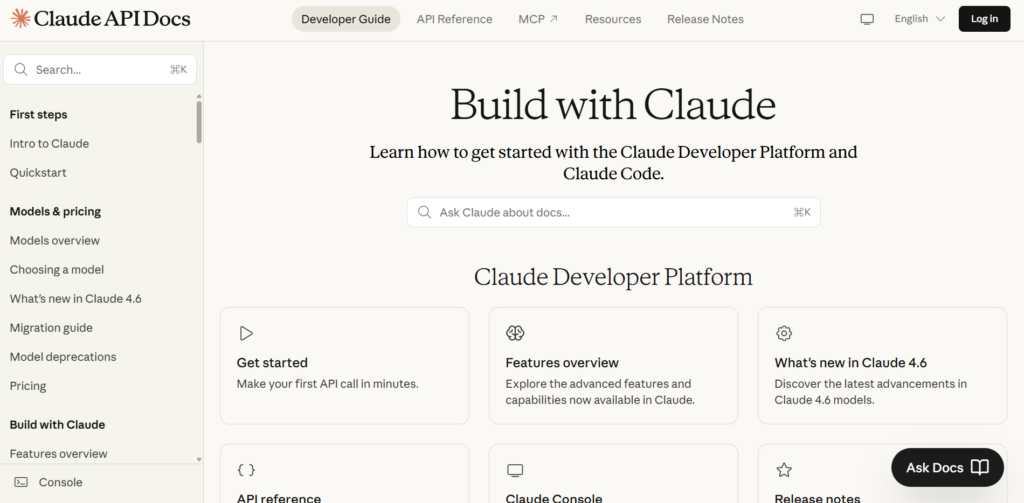
If you’ve searched for “Claude Code” and felt a bit lost, you’re not alone. Many people expect to find a standalone product or a special developer tool—but that’s not what’s happening here.
What people are really referring to is how Anthropic’s latest model is being used for coding tasks. In other words, “Claude Code” isn’t a separate feature—it’s shorthand for using Claude Opus 4.6 to write, review, debug, and reason about code more reliably than before.
This confusion makes sense. As models evolve, the way we talk about them shifts faster than official naming does. Developers tend to label tools by what they’re good at, not by their product pages. So when Opus 4.6 started showing stronger results in real coding workflows—especially with long files and multi-step logic—the phrase stuck.
To ground this in something concrete, Anthropic itself frames Claude as a general-purpose assistant with strong reasoning and programming capabilities, not a code-only product. Their official documentation explains how the model is designed to handle complex instructions, long context windows, and iterative problem-solving—exactly the traits developers care about when working with code. (You can see this positioning clearly in Anthropic’s own Claude documentation.)
This section of the guide will help us align language with reality. Once we’re clear on what people actually mean by “Claude Code,” it becomes much easier to evaluate what Opus 4.6 does well—and where expectations should stay realistic.
3. What’s New in Claude Opus 4.6 for Coding and Reasoning
AI model understands the task, starts well, then quietly loses track of the bigger picture. A variable disappears, an assumption changes, or the final output looks confident but doesn’t quite hold up when you test it.
This is exactly where many users started noticing a difference with claude opus 4.6.
Rather than introducing flashy new features, this release focuses on how the model behaves during longer, real-world interactions—especially when dealing with code, logic, and layered instructions.
The biggest shift is context reliability.
Claude Opus 4.6 is noticeably better at keeping earlier constraints, file structure, and intent in mind across longer conversations. This matters most when you’re not writing code from scratch, but working inside existing projects where continuity is everything.
Reasoning has also become more deliberate.
Instead of jumping straight to an answer, the model is more consistent at following multi-step logic, handling edge cases, and adjusting when you refine your request. This makes debugging and refactoring feel less like trial and error.
Finally, outputs feel more stable.
Claude Opus 4.6 is more likely to stick to the format you ask for, explain trade-offs when they exist, and signal uncertainty instead of filling gaps with guesses. That predictability is what turns an AI from a curiosity into a daily tool.
To make these improvements easier to evaluate at a glance, here’s how they show up in practice:
| Area | What Changed in Opus 4.6 |
|---|---|
| Context handling | Maintains long conversations and large codebases with fewer dropped details |
| Reasoning flow | Follows multi-step logic more consistently instead of skipping intermediate steps |
| Code suggestions | Cleaner structure, fewer invented functions, and clearer assumptions |
| Response reliability | More predictable formatting and clearer explanations when uncertainty exists |
These changes align closely with how Anthropic positions Claude overall: not as a shortcut that replaces thinking, but as a reasoning-focused assistant designed to support complex work without overstating confidence.
In the next section, we’ll put this into context by comparing Claude Opus 4.6 with earlier Claude versions and with ChatGPT—so you can understand when these improvements actually influence the choice of model.
4. Claude Opus 4.6 vs Other Claude Versions (and ChatGPT)

When people start comparing AI models, the question is rarely “Which one is the best?”.
Much more often, it’s “Which one makes my work easier right now?”.
This is where Claude Opus 4.6 needs to be understood in context.
Rather than replacing every other model in the lineup, Opus 4.6 sits at the top end of Claude’s range. It’s designed for tasks where depth, continuity, and reasoning quality matter more than speed or cost.
Compared to earlier Claude versions, the difference shows up most clearly in longer sessions. If you’re working through a large codebase, refining logic across multiple steps, or iterating on the same problem over time, Opus 4.6 feels more stable and less forgetful. Earlier versions often handled single tasks well but struggled to maintain consistency over extended back-and-forth.
The comparison with ChatGPT is more nuanced.
ChatGPT often feels faster and more versatile for short, exploratory tasks or quick snippets. Claude Opus 4.6, on the other hand, tends to shine when the work requires sustained focus—following constraints carefully, reasoning through edge cases, and sticking to the structure you define.
To make this easier to evaluate, here’s a high-level comparison focused on real usage rather than benchmarks:
| Use case | Claude Opus 4.6 | ChatGPT |
|---|---|---|
| Long coding sessions | Strong at maintaining context and constraints over time | Effective, but may require more re-clarification |
| Debugging & refactoring | Careful reasoning, fewer rushed assumptions | Faster iterations, sometimes more speculative |
| Short tasks & quick ideas | Works well, but may feel heavier than needed | Often quicker and more flexible |
| Structured instructions | Strong adherence to format and constraints | Can drift without reinforcement |
What this comparison highlights is not a clear “winner,” but a difference in philosophy.
Claude Opus 4.6 reflects Anthropic’s focus on cautious reasoning and reliability, while ChatGPT often prioritizes speed and breadth.
If your work depends on thinking through problems carefully, Opus 4.6 may justify the extra overhead. If you need fast answers and broad versatility, other models may still be the better fit.
In the next section, we’ll step back and look at limits, reliability, and ethical considerations—the part most reviews skip, but the one that matters most when AI becomes part of daily work.
5. Limits, Reliability, and Ethical Considerations You Should Know
We’ve all felt that quiet temptation: the model sounds confident, the answer looks clean, and it would be easy to trust it without a second thought. That moment—when convenience meets confidence—is exactly where limits and ethics start to matter.
Claude Opus 4.6 is more cautious than many competing models, but that doesn’t make it infallible.
Reliability improves, but it’s not guaranteed.
While Opus 4.6 is better at maintaining context and following logic, it can still produce convincing explanations that need verification—especially in edge cases or domain-specific code. The improvement lies in how often this happens, not in eliminating the risk entirely.
Over-trust is still the main danger.
Because the model is more consistent and better at explaining its reasoning, it can feel “safer” than it actually is. This is where experienced users benefit most: they know when to treat outputs as a starting point, not a final answer.
Privacy and data sensitivity remain a consideration.
As with any cloud-based AI system, you should avoid sharing proprietary code, credentials, or sensitive business logic unless you clearly understand how your data is handled. Claude’s positioning emphasizes safety, but responsibility still sits with the user.
This cautious approach reflects how Anthropic differentiates itself: prioritizing alignment, transparency, and controlled behavior over raw assertiveness. That philosophy reduces some risks—but it also means the model may refuse or hedge more often in ambiguous situations.
In practical terms, Claude Opus 4.6 works best when:
outputs are reviewed, not blindly accepted
decisions remain human-led
AI is treated as a collaborator, not an authority
Understanding these boundaries is what turns a powerful model into a reliable long-term tool, rather than a short-term productivity boost.
6. Who Should Use Claude Opus 4.6 (and Who Shouldn’t)
After all the comparisons and nuances, the real question becomes simple: does Claude Opus 4.6 fit the way we actually work?
For many users, the answer depends less on raw capability and more on how much they value reliability over speed.
Claude Opus 4.6 makes the most sense if:
we work on long or complex coding tasks where losing context is costly
we value careful reasoning over fast, speculative answers
we prefer an AI that explains why something works, not just what to paste
It may be less ideal if:
we mainly need quick snippets or brainstorming
speed matters more than depth
our tasks are short, repetitive, or highly exploratory
This positioning isn’t accidental. It reflects how Anthropic approaches model design, with a strong emphasis on safety, alignment, and controlled behavior. If you want to go deeper into that philosophy, Anthropic’s own overview of their safety and research approach is a useful reference for understanding why Claude behaves the way it does:
https://www.anthropic.com/safety
Ultimately, Claude Opus 4.6 isn’t about replacing every other AI model. It’s about reducing friction in serious work, where consistency and trust matter more than raw output volume.
FAQ
Q: Is Claude Opus 4.6 good for professional coding work?
A: Yes. Claude Opus 4.6 is well suited for professional tasks like refactoring, debugging, and multi-step reasoning, as long as outputs are reviewed and validated like any other tool-assisted work.
Q: What’s the difference between “Claude Code” and Claude Opus 4.6?
A: “Claude Code” is not a separate product. It’s an informal way people describe using Claude Opus 4.6 for coding, debugging, and reasoning tasks.
Q: Is Claude Opus 4.6 better than ChatGPT for developers?
A: It depends on the workflow. Claude Opus 4.6 prioritizes depth, consistency, and reasoning, while ChatGPT often feels faster for short or exploratory tasks.
Q: Should beginners use Claude Opus 4.6?
A: Beginners can benefit, but may not fully leverage its strengths. For simple or early-stage learning, lighter models can sometimes be more approachable.
If this guide helped you understand why reasoning quality and reliability matter more than raw speed when choosing an AI model, there are a few related reads on AIDigitalSpace that naturally expand on the same idea.
→ Claude 3 vs ChatGPT-4o (2025): Which AI Assistant Truly Delivers?
→ Why AI Sounds Confident Even When It’s Wrong (And How to Spot It)
→ Deep Research vs Claude 4: Which AI Agent Should You Use in 2025?
Each of these explores the same core question from a different angle: how to choose AI tools that support thoughtful work instead of rushing it, whether you’re comparing models, evaluating reliability, or deciding when an AI assistant should slow down rather than answer faster.