
Mirko
AI Tech Writer
AI search engines now handle a fast-growing share of everyday questions, and most of those answers never include a blue link to click.
If your content isn't built for that moment, it stays invisible. This guide shares the exact GEO framework we use to get blogs cited inside ChatGPT, Perplexity, and Google AI Overviews.
Some links are affiliate links · You support us at no extra cost · Full disclosure
What Is GEO (Generative Engine Optimization)?
GEO, short for Generative Engine Optimization, is the practice of structuring content so AI engines like ChatGPT, Perplexity, Claude, and Google AI Overviews quote or cite it inside their generated answers.
Where SEO earns you a ranking, GEO earns you a citation. That's a different skill, and most blogs haven't caught up yet.
Only a small share of websites are actually built for this. LLM referral traffic grew roughly 800% year over year, and the gap between sites ready for it and sites that aren't keeps widening.
📊 GEO by the Numbers
- Perplexity cites 4–8 sources per answer; ChatGPT typically cites 2–4.
- Adding statistics and source citations each lift AI visibility by 30–40%, per the Princeton GEO study.
- AI referral traffic converts several times higher than typical organic search traffic.
We've researched this shift across hundreds of GEO case studies. Content with clear definitions and named stats earns citations; vague content gets skipped.
GEO sits next to two related disciplines: SEO, which earns rankings, and AEO, which earns featured snippets. The three overlap, but the selection logic differs.
Curious how dedicated tracking platforms stack up? Our Best AI SEO Tools 2026 comparison covers AthenaHQ, Semrush Copilot, and Clearscope side by side.

How ChatGPT, Perplexity & Google AI Overviews Choose Sources
Each AI engine picks GEO sources differently, and treating them as one audience is the single biggest GEO mistake we see.
| Engine | Sources per Answer | What It Rewards | Best Lever |
|---|---|---|---|
| ChatGPT | 2–4 | Brand authority, training-data presence | Strong entity signals across the web |
| Perplexity | 4–8 | Freshness, specific named statistics | Frequent updates + dated stats |
| Google AI Overviews | Top-ranked pages | Existing SEO + structured data | Rank in the top 10 organically |
Google AI Overviews leans hardest on classic SEO. If you already rank on page one, you're a strong candidate for the Overview citation too.
Google's own Search Central documentation confirms AI Overviews draw primarily from the existing organic index.
Claude and standard ChatGPT (without browsing) also cite from training data. A page you published two years ago can still surface today if it's well-structured and widely referenced.
Tools like the ones in our AI Brand Monitoring roundup help you watch which engine is citing you, and how often.
Pick your highest-priority engine based on where your buyers already search, then build backward from there.
We Recommend Reading
★ Editor's Pick
Co-Intelligence: Living and Working with AI
by Ethan Mollick
The most practical guide to working alongside AI — not replacing yourself with it. Mollick shows how to integrate tools like GPT into your daily workflow without losing your competitive edge.
The 7-Step GEO Framework We Use
Here's the exact sequence in our GEO checklist for every post we want AI engines to pick up.
- Front-load the answer. Answer the core question in the first 40–55 words after every H2.
- Add named, specific statistics. Generic claims get skipped; a precise 30–40% lift gets quoted.
- Structure for extraction. Tables, numbered lists, and short paragraphs parse far easier than dense prose.
- Add FAQ and Article schema. Structured data tells AI crawlers exactly what your content means.
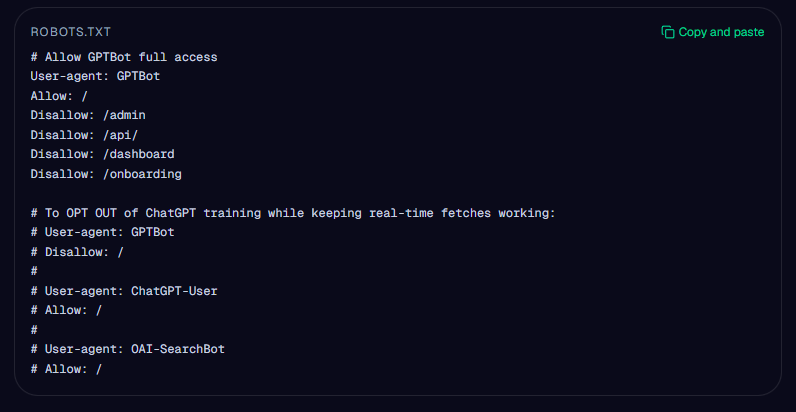
- Open AI crawlers in robots.txt. GPTBot, PerplexityBot, and ClaudeBot need explicit access to read you at all.
- Strengthen E-E-A-T signals. Visible bylines, dates, and credentials build the trust models look for.
- Earn third-party mentions. Reviews on G2, Reddit threads, and press coverage feed the consensus layer AI checks against.
Skip step five and none of the rest matters, because a blocked crawler can't read your content however well it's written.
⚡ Quick win: Most teams see citation movement within 30–60 days of finishing steps one through four of this GEO checklist alone.
If you want to automate steps one through three, our guide on building an AI research agent without coding walks through a no-code setup.
Technical Setup: Schema, Crawlers & llms.txt
The tactics above only work if AI crawlers can actually reach your pages. Technical access comes before content polish.
🤖 robots.txt — allow these GEO crawlers
- User-agent: GPTBot → Allow
- User-agent: OAI-SearchBot → Allow
- User-agent: ChatGPT-User → Allow
- User-agent: ClaudeBot → Allow
- User-agent: PerplexityBot → Allow
- User-agent: Google-Extended → Allow
FAQ schema alone makes a page roughly 3.2x more likely to surface inside Google AI Overviews, according to the same research most GEO teams now cite.
Schema.org's FAQPage documentation is the canonical reference for the markup itself.
A newer addition is llms.txt, a plain Markdown file at yoursite.com/llms.txt that points AI models toward your most authoritative pages.
We build this schema directly in Rank Math, which validates FAQ and Article schema before you publish.
If a Google algorithm shift disrupts your technical signals, our SEMrush Sensor explainer shows how to spot it fast.
None of this needs to happen overnight. Tackle crawler access first, schema second, and llms.txt last.
We Recommend Reading
★ Editor's Pick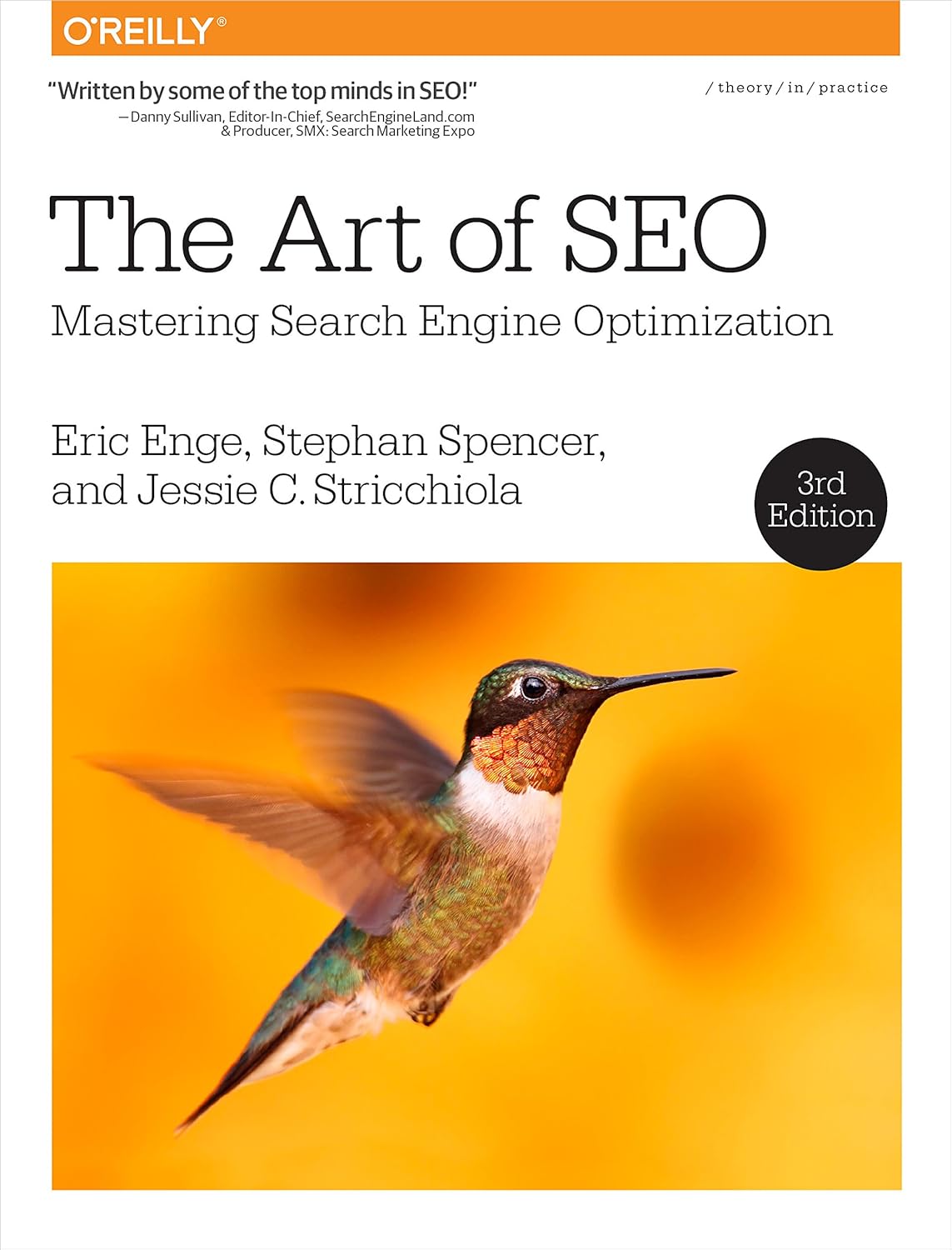
The Art of SEO: Mastering Search Engine Optimization
by Eric Enge, Stephan Spencer & Jessie Stricchiola
A comprehensive walkthrough of how search engines actually work, now updated with a new chapter on generative AI — a solid foundation before layering a GEO strategy on top.
Common GEO Mistakes (and How to Measure What's Working)
Most GEO mistakes aren't technical. They're strategic, and we see the same handful repeated across almost every brand we research.
🚫 The 4 GEO mistakes we see most
- Treating GEO as "SEO with extra steps" — the ranking logic and the citation logic aren't the same thing.
- Optimizing only for Google AI Overviews while ignoring Perplexity, where newer content has a real shot.
- Publishing once and never updating — Perplexity rewards freshness more than almost any other signal in GEO.
- Keyword stuffing — the Princeton GEO study found this actively hurts citation odds.
Measurement is simpler than it sounds. Run your top 10–20 target queries through ChatGPT, Perplexity, and Google AI Mode weekly, and log who gets cited.
Our Google AI Mode vs ChatGPT vs Perplexity comparison breaks down exactly how each engine selects citations, side by side.
Two months of consistent weekly checks will tell you more about your GEO progress than any single audit ever could.
Frequently Asked Questions — GEO (Generative Engine Optimization)
What is GEO (Generative Engine Optimization)?
+GEO is the practice of structuring content so AI engines cite it inside generated answers. Where SEO earns a ranking, GEO earns a direct quote inside the AI's response.
The core tactics include front-loading answers, named statistics, FAQ and Article schema, and unblocked crawlers — most of which also help traditional SEO.
Is GEO the same as SEO?
+Not exactly, though they overlap heavily. SEO ranks pages in a list; GEO earns a citation inside an AI-generated paragraph.
A page can rank first on Google and still never get quoted by ChatGPT if its opening lines don't directly answer the question.
Which AI engine should I optimize for first?
+Start with whichever engine your buyers already use. Check analytics for referral traffic from chat.openai.com and perplexity.ai first.
Perplexity cites 4–8 sources and rewards freshness, making it the fastest feedback loop. ChatGPT rewards brand consistency, and Google AI Overviews rewards existing rankings.
Do I need llms.txt for GEO?
+No, but it helps. It's a Markdown file at yoursite.com/llms.txt pointing AI models toward your most authoritative pages.
Robots.txt access matters far more — a blocked crawler can't read your content at all, however good llms.txt looks.
How long does it take to get cited by ChatGPT or Perplexity?
+Most teams see movement within 30–60 days of finishing the first steps of a GEO framework, especially front-loaded answers and schema.
Perplexity reflects changes fastest since it indexes near-daily. Run a weekly citation check to see the trend, not a single test.
Does keyword density still matter for GEO?
+Far less than for Google rankings. The Princeton GEO study found keyword-stuffed content actually hurts citation odds in generative contexts.
Write a clean, direct answer with named statistics and clear structure, and natural keyword usage follows from there.
What tools help track AI citations?
+Frase bakes citation-style outlines into its workflow, which is useful while drafting GEO content.
For dedicated tracking, our Best AI SEO Tools 2026 roundup compares AthenaHQ, Semrush Copilot, and Clearscope. A manual weekly log works too, at zero cost.
Does blocking AI crawlers hurt or help my site?
+Blocking protects content from training use, but removes you from GEO citations entirely, since a blocked bot can't read your pages.
Each crawler is controllable independently, so you can allow search bots while still blocking pure training bots if that distinction matters to you.
Here an interesting deep dive to watch:
📡 Keep Building Your AI Visibility
You've got the GEO framework down. Now put it to work with the tools that track and accelerate citations: