

 Published on: December 23, 2025
Affiliate Disclaimer:
Some of the links in this post are affiliate links. This means we may earn a small commission if you click through and make a purchase, at no extra cost to you. We only recommend tools we truly believe offer value.
1.Why How AI Recommends What You Buy Online matters for everyday shopping
How AI Recommends What You Buy Online is becoming a real part of everyday life. We see suggested products on Amazon, Instagram, Google Shopping, and even while reading reviews. Most of the time, we don’t realize those suggestions are based on our clicks, searches, and past purchases.
This matters because it shapes what we discover, what we compare, and sometimes what we believe is the “best deal.” When we understand How AI Recommends What You Buy Online, we gain control: we know what’s targeted, what’s organic, and what’s designed to influence.
Experts highlight how recommendation systems shape buying behavior and attention (source: OECD AI Principles), showing that this isn’t just a marketing trick — it’s a system built to predict our choices.
Our goal here is simple: give you clear awareness, so you can shop smarter, avoid impulse traps, and recognize when an algorithm—not your actual need—is guiding the cart.
Recommended Read
If you want a deeper understanding of how tracking works behind online shopping, why personalized recommendations exist, and what real privacy means today, “Privacy Is Power” by Carissa Véliz explains it clearly and without fear-mongering. It’s a great companion to everything we discuss in this guide on How AI Recommends What You Buy Online.
2. The hidden pain points behind personalized shopping algorithms
Most of us notice recommendations, but we rarely stop to ask how AI recommends what you buy online or why certain products keep appearing. The main issue is simple: these suggestions can feel helpful, yet they quietly shape our choices without us realizing it.
A few everyday pain points stand out:
impulse purchases triggered by “recommended for you” items
seeing only brands we’ve clicked before, reducing real comparison
price anchoring or “limited deal” nudges based on past behavior
feeling tracked without understanding how it works
When we understand how AI recommends what you buy online, we see that it’s not magic — it’s tracking patterns like browsing history, cart drops, and reviews we read. Recognizing these signals helps us separate genuine interest from algorithm-driven influence.
This awareness doesn’t mean rejecting recommendations. It simply gives us more control, so we shop from intention instead of instinct.
3. How AI recommends what you buy online and the tools behind it
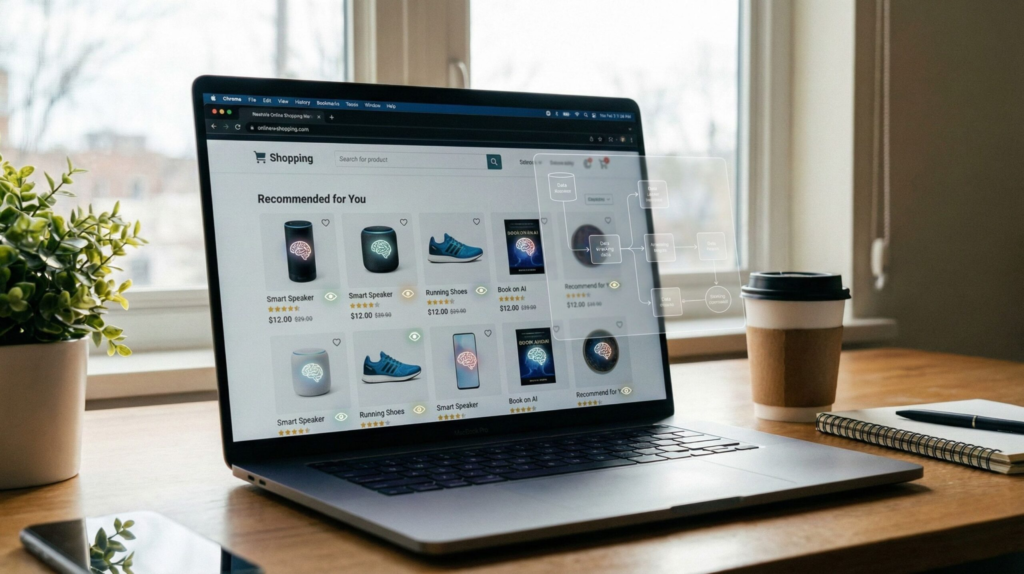
Understanding how AI recommends what you buy online starts with a simple idea: platforms observe what we do and use patterns to predict what we want next. Each action—clicks, searches, time spent on a product page—becomes a signal that feeds recommendation systems.
Here’s what those systems usually track:
items you viewed but didn’t buy
products added to wishlists or carts
search keywords and browsing history
reviews you read or interacted with
purchases from similar users
Different platforms rely on different tools. For example:
Amazon uses collaborative filtering to match you with products others bought.
Google Shopping combines search intent with browsing habits.
Social apps mix interests, engagement, and profile data to personalize ads.
To make this clearer, here’s a short comparison table:
| Platform | Primary Signals | Recommendation Style |
|---|---|---|
| Amazon | Viewed items, carts, purchase history | People who bought X also bought Y |
| Google Shopping | Search queries, browsing behavior | Intent-based product matching |
| Social Apps | Likes, follows, ad interactions | Interest and audience profiling |
Once we recognize how how AI recommends what you buy online actually works, we start to see why product suggestions appear and how we can respond with awareness instead of surprise.
4. Simple ways we can recognize and control AI shopping suggestions
Once we understand How AI Recommends What You Buy Online, we can start spotting when a product suggestion is based on our behavior rather than genuine need. The good news is that small adjustments help us stay in control without giving up convenience.
A few simple actions make a clear difference:
look for labels like “recommended for you” or “similar items” — these are algorithm-driven
use private or incognito mode when researching, so suggestions don’t follow you
clear browsing or search history before comparing prices
avoid staying logged in across multiple shopping platforms
We can also use tools that help manage or reduce targeted recommendations. Price-tracking extensions, privacy-focused browsers, and cookie-control apps give us more transparency, especially when How AI Recommends What You Buy Online feels overwhelming.
These steps aren’t about avoiding personalization completely. They help us shop with intention and recognize when an algorithm might be nudging us instead of letting us decide on our own pace.
5. Practical tips and common mistakes when navigating AI recommendations

Understanding How AI Recommends What You Buy Online is useful, but knowing how to avoid its common traps is even more important. Many of us fall into the same patterns without noticing, which makes personalized suggestions more persuasive than we expect.
Here are practical tips to stay in control:
compare prices outside the platform showing the recommendation
search manually before relying on “suggested for you” lists
use price trackers to check if discounts are genuine
read reviews beyond the first page to avoid biased sorting
And here are common mistakes to watch for:
assuming recommended products are always the best deal
buying quickly because a product feels familiar or “made for you”
trusting “limited-time offers” without verifying
letting ads replace real research
Recognizing these patterns shows us how How AI Recommends What You Buy Online can influence decision-making. When we slow down and compare, we reduce impulse purchases and make smarter choices — without giving up the convenience of personalized shopping.
6. Ethical considerations around data, tracking, and consumer transparency

When we explore How AI Recommends What You Buy Online, it becomes clear that convenience comes with ethical questions. Recommendation systems rely on data, and that means our shopping habits, browsing behavior, and personal interests become part of someone’s dataset.
The biggest concerns are simple to understand:
data collection without clear consent — we often accept tracking by default
profiling based on behavior — algorithms infer what we want, sometimes incorrectly
lack of transparency — we rarely know which signals influence the products we see
These issues don’t mean we should fear personalization. They encourage responsible use and awareness. A helpful reference is the OECD’s guidelines on trustworthy AI (source: OECD AI Principles), which highlight fairness and transparency in consumer systems.
By understanding How AI Recommends What You Buy Online, we gain the ability to protect our privacy, question unclear tracking, and expect transparency. Ethical awareness gives us control — not to reject smart recommendations, but to make sure they serve our interests instead of shaping them without our permission.
7. Smart shopping choices and recommended tools to stay in control

Knowing How AI Recommends What You Buy Online is only useful if we can turn that knowledge into practical habits. The goal isn’t to avoid recommendations completely, but to shop with awareness and reduce the influence of impulse-driven suggestions.
Here are simple, smart steps that work for most of us:
compare product prices on more than one site before buying
use trusted price-tracking tools to detect fake discounts
rely on review-analysis tools instead of sorting by “top picks”
explore alternatives rather than clicking the first recommendation
A few tool categories that naturally help:
price trackers and deal alerts
privacy-focused browsers and extensions
review filters and scam-spotting tools
VPNs and cookie-management tools
| Tool | Best For | Key Features | Try |
|---|---|---|---|
| Keepa | Amazon price tracking & alerts | Price history, drop alerts, wishlist integration | Try Keepa |
| CamelCamelCamel | Free Amazon price history | Browser add-on, alerts, price charts | Try Camel |
| Price History App | Multi-store price comparison | Drop alerts, app support, comparison view | Try Price History |
| NordVPN | Private browsing & unbiased pricing | Location masking, cookie control, safer shopping | Try NordVPN |
8. FAQ About How AI Recommends What You Buy Online
Q: Does understanding how AI recommends what you buy online help with avoiding impulse purchases?
A: Yes. When we recognize how AI recommends what you buy online, it becomes easier to identify suggestions designed to trigger quick decisions rather than genuine needs.
Q: Are personalized shopping recommendations always accurate?
A: Not always. How AI recommends what you buy online is based on patterns, not context. That means algorithms can misinterpret interests or suggest items you don’t actually need.
Q: Can we stop or limit AI shopping recommendations?
A: Yes, to an extent. Clearing search history, using privacy browsers, or using a VPN reduces tracking signals that influence how AI recommends what you buy online.
Q: Why do recommended products seem similar to ones I viewed?
A: Because how AI recommends what you buy online relies on matching your browsing behavior with products others considered or purchased.
Q: Are tools like price trackers useful even with personalized suggestions?
A: Absolutely. They help verify if recommended deals are real, making how AI recommends what you buy online more transparent and less manipulative.
If you want to understand more about how algorithms shape what we see and buy, these guides are perfect next reads:
→ The Truth About Free AI Tools: Are You Paying With Your Data?
→ How AI Is Controlling What You See on TikTok & Instagram
→ How to Spot AI-Generated Product Reviews – Tips for Smarter Shopping