
 Published on: January 26, 2026
Disclosure:
This post contains affiliate links. If you click through and make a purchase, we may earn a small commission at no additional cost to you. Thank you for supporting AIDigitalSpace — we only recommend tools and services we genuinely trust and believe bring real value to our readers.
1. Why SEO professionals are switching to AI SEO tools
If you work with SEO every day, you’ve probably felt this already.
Choosing the best AI SEO tools 2026 has become less obvious than it used to be.
What was once a clear process—keywords, content, links, patience—now feels noisier and harder to control. Rankings move faster. SERPs change more often. AI-generated content is everywhere, yet only some pages actually improve.
Most of us aren’t looking for shortcuts.
We’re looking for clarity.
In 2026, many teams are turning to AI SEO tools not because they want automation for its own sake, but because manual decisions alone no longer scale. There’s simply too much data to interpret and too many signals to monitor consistently across modern SEO workflows.
At the same time, skepticism is growing.
Not every “AI copilot” actually helps. Some add complexity, others recycle generic advice, and a few can even push content in risky directions—especially when AI content optimization is applied without context.
That’s why this comparison exists.
In this guide, we break down why tools like AthenaHQ, Semrush Copilot, and Clearscope are gaining attention now—and what problem they’re really trying to solve. By the end, you’ll understand when AI support makes sense, when it doesn’t, and how to evaluate the best AI SEO tools 2026 without getting lost in hype.
No technical overload.
Just a clear starting point for making a smarter decision.
2. The real buying question: which AI SEO tool actually improves rankings?
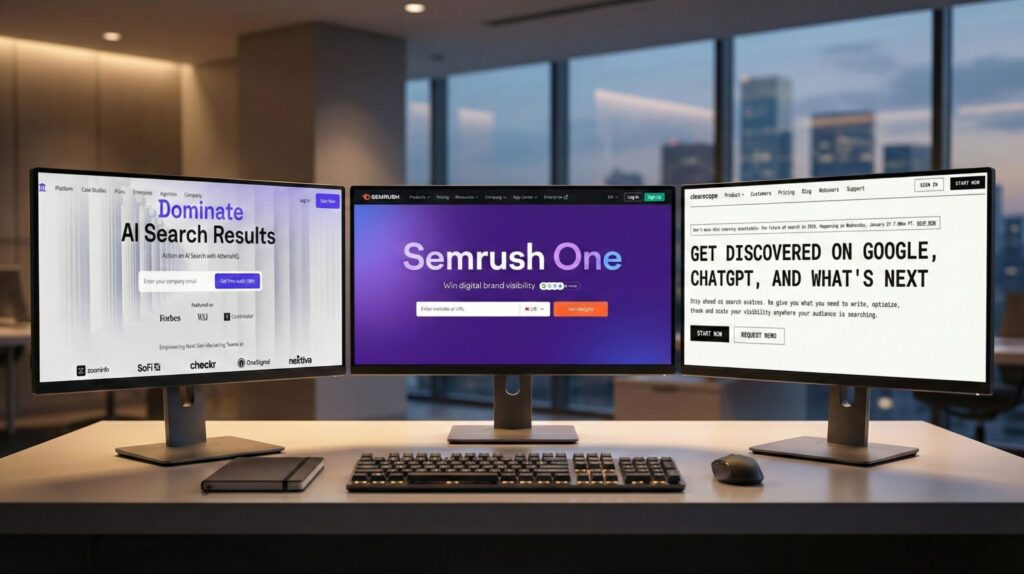
If you’ve ever tried to choose a new SEO tool, you know the feeling: dozens of dashboards, all promising to “boost rankings,” but very few that actually move the needle in real campaigns.
What most beginners and even experienced marketers are really looking for isn’t a list of features — it’s results. They want to know:
Will this tool help me rank higher?
Will it save time without sacrificing quality?
Will it work with my existing workflow?
These aren’t trivial questions. Traditional SEO already demands deep expertise in keyword research, content optimization, backlinks, and technical audits. Add in AI-driven search engines and generative search summaries, and the landscape becomes even more complex. AI isn’t just automating task X or Y — it’s reshaping what ranking success looks like. Research shows that AI-powered tools are fundamentally changing SEO workflows and how content must be structured, analyzed, and optimized to stay visible in both AI search results and traditional SERPs (source here).
For example, top guides on choosing AI SEO tools highlight that the biggest challenge in 2026 isn’t the lack of data, but the paralysis caused by too much of it — and the need to decide whether a tool helps with insights or execution (source here).
That’s the real buying question:
Which AI SEO tool helps you actually improve organic visibility, cut manual workload, and adapt to AI-driven search behavior today?
As we compare AthenaHQ, Semrush Copilot, and Clearscope below, we’ll keep this question at the center — because every feature, workflow, and recommendation hinges on it.
3. AthenaHQ vs Semrush Copilot vs Clearscope: features, strengths, and limits
At this point, most of us don’t need another list of AI features.
What we need is to understand how these tools actually behave in real SEO workflows—and where they don’t help.
Below is a clear, outcome-focused comparison of AthenaHQ, Semrush Copilot, and Clearscope, based on what they’re designed to do best.
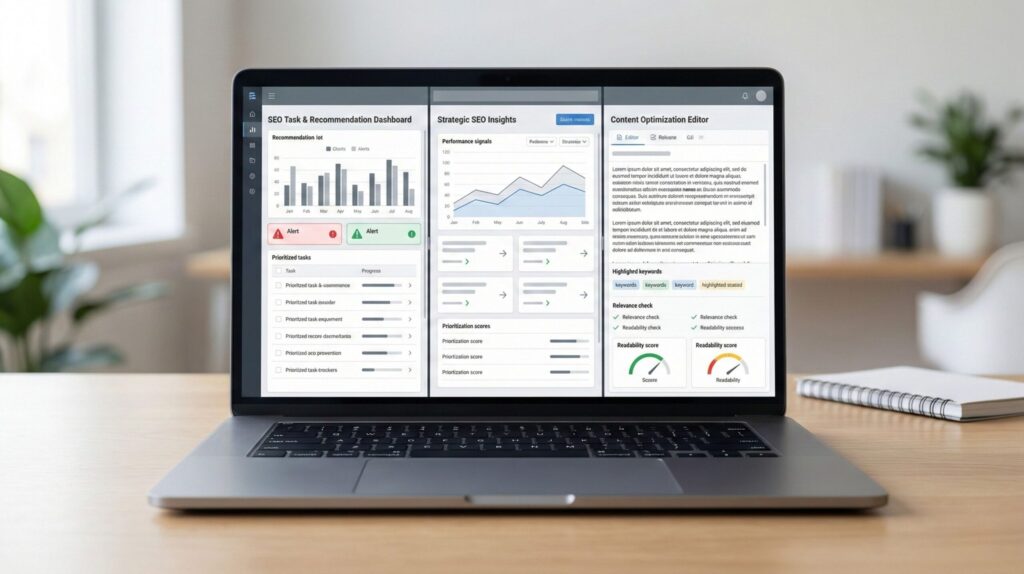
What each tool is really built for
| Tool | Primary strength | Where it helps most | Main limitation |
|---|---|---|---|
| AthenaHQ | AI-driven SEO strategy & prioritization | Deciding what to optimize first and why | Less hands-on content editing |
| Semrush Copilot | Actionable recommendations inside a full SEO suite | Daily SEO tasks, monitoring, execution | Can feel overwhelming for small teams |
| Clearscope | Content relevance & topical optimization | Improving on-page quality for existing articles | No broader SEO or technical guidance |
How they approach “AI” differently
One important thing many comparisons miss: these tools don’t use AI in the same way.
AthenaHQ focuses on decision intelligence. It looks at performance signals and helps us understand where effort matters most.
Semrush Copilot acts like an operational assistant, surfacing tasks, warnings, and opportunities inside a mature SEO ecosystem.
Clearscope is narrowly focused on content relevance, helping align articles with what search engines already reward.
This distinction matters because Google has been clear that tools don’t rank pages—quality decisions do. AI can support those decisions, but it can’t replace judgment. Google’s own guidance emphasizes helpfulness, intent match, and expertise over automation shortcuts. (Reference: Google Search Central – Helpful Content guidance)
What this means for your decision
If you’re evaluating best AI SEO tools 2026, this section should already make one thing clearer:
There is no “one-size-fits-all” winner
Each tool solves a different SEO bottleneck
Choosing the wrong one often means paying for features you won’t use
In the next section, we’ll translate this comparison into real-world use cases—so you can quickly see which tool fits your workflow, budget, and level of SEO maturity.
4. How to choose the right AI SEO tool (workflow, budget, skill level)
This is where most decisions quietly fail.
On paper, all three tools look capable. In practice, the right choice depends on how we work, how much time we have, and how much guidance we actually want from AI. Instead of guessing, let’s reduce the decision to a few concrete signals.
A fast way to decide (without overthinking)
| If this sounds like you… | You’ll likely prefer… | Try it here |
|---|---|---|
| You manage many SEO tasks daily and want clear, actionable next steps | Semrush Copilot | Try Semrush |
| You already know SEO basics but struggle to prioritize what matters most | AthenaHQ | Try AthenaHQ |
| You focus mainly on content quality and updating existing articles | Clearscope | Try Clearscope |
How we’d apply each tool in a real SEO workflow
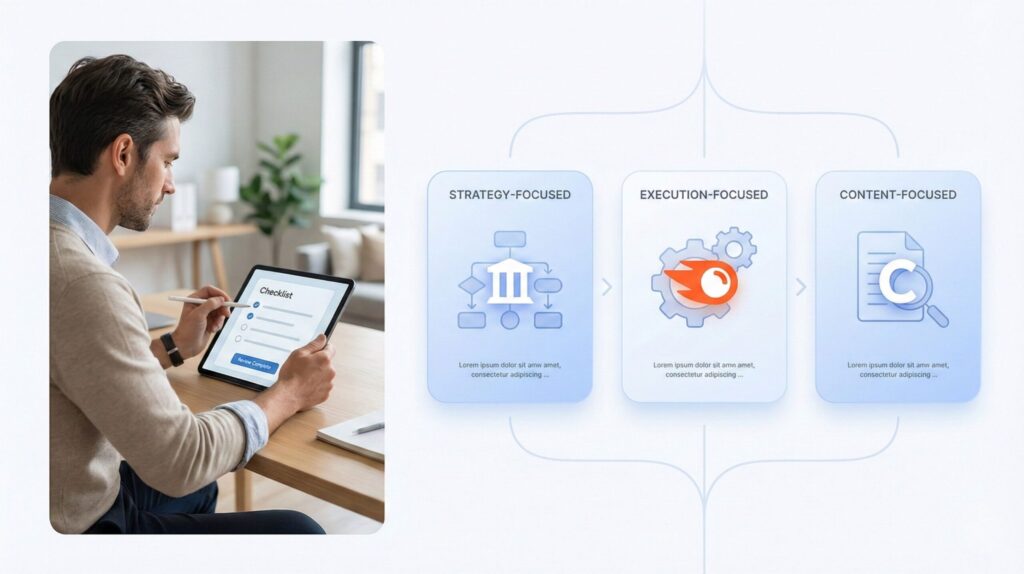
Semrush Copilot works best when SEO is part of a daily routine. In AI SEO workflows where execution speed matters, it helps us understand what to fix, track, or improve next—making it especially useful for teams managing ongoing SEO tasks and monitoring performance consistently.
AthenaHQ fits teams that already have plenty of SEO data but need help interpreting it. It shines when decisions feel scattered and we need a clearer priority order—particularly for strategic planning and choosing where AI SEO efforts should focus first.
Clearscope makes sense when content optimization is the main bottleneck. It doesn’t run SEO for us, but it helps ensure individual pages are aligned with search intent—supporting AI-assisted content optimization without over-automating the process.
Budget and learning curve (what people rarely mention)
Price matters—but so does cognitive cost.
A cheaper tool that adds confusion often costs more in time.
A powerful suite can be excessive if we only need one clear signal.
When evaluating the best AI SEO tools 2026, it’s usually smarter to match the tool to the stage we’re in rather than aiming for the most feature-rich option.
5. Accuracy, ethics, and risks: what AI SEO tools get wrong (and how to stay safe)
By now, most of us have learned this the hard way: AI can be confident and still be wrong.
When we rely on AI SEO tools, the real risk isn’t penalties or “using AI” itself—it’s following recommendations without understanding the context behind them. Search engines care about outcomes, not tools.
The most common risks people run into
Over-optimization
AI suggestions can push pages toward keyword-heavy structures that look optimized but feel unnatural to readers.Outdated or averaged advice
Some models rely on patterns that lag behind how SERPs actually behave today, especially in fast-moving niches.False sense of safety
A green score or “SEO-approved” badge doesn’t guarantee ranking stability.
Search quality guidelines from Google Search Central consistently emphasize helpfulness, originality, and intent match over mechanical optimization. AI tools don’t replace that responsibility—they amplify it.
Where each tool needs extra caution
AthenaHQ
Strategic insights are powerful, but they still require human validation. Priorities should be checked against real search intent, not just performance signals.Semrush Copilot
Task overload can lead to chasing metrics instead of outcomes. Not every recommendation needs immediate action.Clearscope
Content scoring can tempt us to write for the tool, not for readers. That’s where clarity and tone can suffer.
A simple safety checklist we use
| Check before publishing | Why it matters |
|---|---|
| Does this page clearly answer a real user question? | Search engines reward clarity, not density |
| Would this still make sense without AI suggestions? | Prevents over-reliance on automation |
| Are insights supported by real performance data? | Reduces the risk of generic optimization |
The ethical bottom line
Using AI SEO tools isn’t about gaming search engines.
It’s about making better decisions faster—without losing judgment.
When used as assistants, not authorities, these tools can genuinely improve quality, focus, and consistency across modern SEO workflows. When followed blindly, they often do the opposite—flattening insight and pushing content in the wrong direction.
That’s why the real value of the best AI SEO tools 2026 isn’t automation alone, but how well they support human thinking: helping us prioritize, question recommendations, and stay aligned with real search intent.
In the final section, we’ll pull everything together into a clear verdict, with quick recommendations by goal—so you can choose the right AI SEO tool without compromising quality, trust, or long-term strategy.
Optional deep dive: if you want more context on how people turn complex inputs into clear priorities (a useful mindset when working with AI tools), this book is a solid reference.
View book →6. Final verdict: the best AI SEO tool by goal + FAQ
At this stage, the decision usually becomes clearer.
Once we strip away feature lists and marketing language, what matters is what problem we’re trying to solve right now—and how much guidance we want from AI along the way.
The short answer (for quick decisions)
If we want clear, actionable SEO tasks inside a proven platform, Semrush Copilot is the safest and most complete choice.
If our main challenge is deciding priorities and strategy, AthenaHQ is better suited to guide higher-level decisions.
If we focus almost entirely on content quality and on-page relevance, Clearscope does one job—and does it well.
None of these tools is “the best” in absolute terms. The best option depends on whether we need execution help, strategic clarity, or content refinement.
Our practical recommendation
For most growing blogs and small teams, starting with one core tool is usually smarter than stacking multiple subscriptions.
A common, balanced path looks like this:
Use a full SEO suite with AI guidance to understand what to fix and monitor
Add a specialized content tool only if content optimization becomes the bottleneck
That approach keeps costs under control and avoids decision fatigue—two issues that often hurt SEO more than missing features.
If you want to explore the tools we discussed, here’s where each one makes sense to start:
FAQ – What people ask before choosing an AI SEO tool
Q: Is Semrush Copilot worth the price compared to other AI SEO tools?
A: Yes, if SEO is an ongoing activity. Semrush Copilot is most valuable for teams that actively monitor rankings, technical issues, and content performance week after week. For very small or inactive sites, it may be more than needed.
Q: Can AI SEO tools replace manual SEO work?
A: No. AI SEO tools assist with analysis, prioritization, and pattern detection, but human judgment is still required for understanding search intent, quality, and brand tone.
Q: Is using AI SEO tools safe with Google’s guidelines?
A: Yes, when used responsibly. Google evaluates content quality and usefulness, not whether AI was involved. Problems arise only when AI suggestions are followed blindly without human review.
Q: Which AI SEO tool is best for beginners?
A: Tools that provide clear, prioritized recommendations are usually easier for beginners than strategy-only platforms. Beginners benefit most from guidance that explains what to do next and why.
Q: Can I combine more than one AI SEO tool effectively?
A: Yes, but only if each tool has a distinct role. Combining overlapping tools often leads to confusion, duplicated work, and unnecessary costs rather than better results.
If you want to go a step further and build a clearer, more intentional relationship with AI tools — especially when accuracy, trust, and decision-making matter — these guides connect naturally with what we’ve covered here:
→ Why AI Answers Change Every Time (And How to Get Stable Results)
→ Avoid These 5 Dark UI Tricks Used by Popular AI Apps
→ How to Use AI to Turn Notes Into Tasks (Without Losing Context)