
Giorgio
Tech Writer · Compared 4 AI-powered smart locks
📅 Published: January 2026 🔄 Updated: March 2026
Most "smart" locks just add an app to your door — these 4 actually use AI to learn your patterns, flag unusual activity, and send alerts that matter. I compared their real-world security features, app quality, and whether the "intelligence" is worth the price.
📑 In This Comparison
Some links are affiliate links · You support the blog at no extra cost · Details
1. Why Smart Locks Are Replacing Keys in 2026
Smart locks are now in over 30% of US smart homes — but most still work like dumb locks with an app. The difference in 2026? AI that actually understands context. Of course, with smarter devices comes the question of how much data you’re comfortable sharing. Here’s how to think about it:
The Problem
- "Did I lock the door?" — the doubt that never goes away
- Sharing access means keys under the mat or last-minute stress
- Old smart locks = constant notifications for every unlock
The AI Solution
- Locks that learn your routine and only alert when something's off
- Contextual notifications — no spam, just what matters
- Share access without handing out keys or codes
2. How AI Smart Locks Actually Work

When brands say a smart lock is “AI-powered,” it’s fair to be skeptical. For years, that label was used for devices that simply followed basic rules: lock at 10 pm, unlock when the app says so. Nothing intelligent there.
What’s changed — and why AI smart locks finally make sense in 2026 — is how they interpret patterns, not just actions.
Instead of reacting to single events, modern smart locks look at context over time.
For example:
If the door unlocks at unusual hours compared to your normal routine, the lock can flag it as unexpected, not just “opened”.
If repeated failed attempts happen in a short window, AI logic can recognize this as abnormal behavior and trigger stronger alerts.
If you usually unlock the door manually when you’re home, the lock can reduce unnecessary notifications instead of buzzing your phone every time.
This isn’t “thinking” like a human — but it is learning what’s normal for your home, then highlighting what isn’t.
Most AI smart locks combine:
On-device sensors (door position, motion, force detection)
Local or cloud-based pattern analysis
Adaptive alerting, so you’re warned only when something truly looks off
That last point matters more than people expect. Early smart locks failed not because they were unsafe, but because they were annoying. Too many alerts trained users to ignore them. AI helps reduce that noise.
It’s similar to how modern security systems evolved from constant alarms to selective, meaningful warnings. If you want a deeper technical explanation of how behavioral detection works in smart security devices, this overview from IBM explains it well in plain terms: check it out here.
The key takeaway is simple:
AI in smart locks isn’t about flashy features. It’s about better judgment — knowing when to stay quiet and when to tell you something actually needs attention.
In the next section, we’ll look at which smart locks apply this well in real life, and which ones still rely more on marketing than meaningful intelligence.
3. Best Smart Locks With AI Alerts (Quick Picks by Use Case)
If you’re already convinced that smart locks make sense, the real question becomes simpler:
Which one fits your home and habits without creating new problems?
Instead of a long list that feels overwhelming, we’ve grouped the most reliable AI smart locks by real-life use case. These picks focus on how well AI is applied in everyday situations — alerts, access control, and consistency — not just feature lists.
Yale Assure Lock 2
Best for families & shared homes
Detects unusual access across usersEufy Smart Lock
Best for budget-conscious buyers
Adaptive alert timingAqara U400
Best for privacy-focused users
Local AI processing, no cloudNuki Smart Lock
Best for apartments & rentals
Learns access patterns over timeWhat matters here isn’t which lock has more AI features — it’s which one applies them quietly and consistently. The best models don’t interrupt you constantly. They step in only when something feels genuinely off.
Below, I break down each of the four locks in detail: how their AI actually works, what it feels like to use daily, and who each one is best suited for.
Whether you’re renting an apartment, managing a busy household, or just want fewer notifications and more peace of mind — one of these will fit.
Here’s what I’ll cover for each:
- 🤖 How the AI is integrated
- ✓ Pros and cons based on real-world use
- 💰 Pricing and value
Let’s start with the first one.
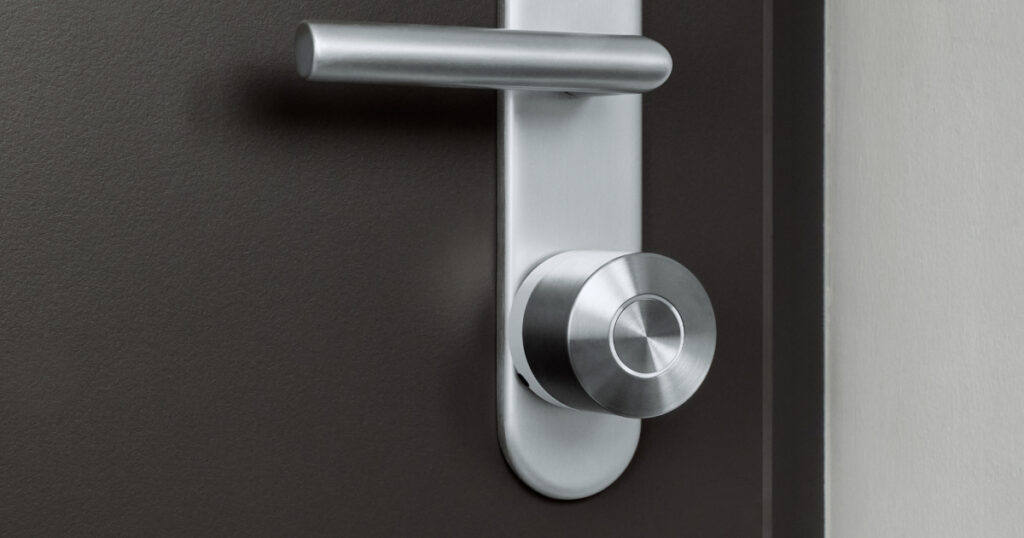
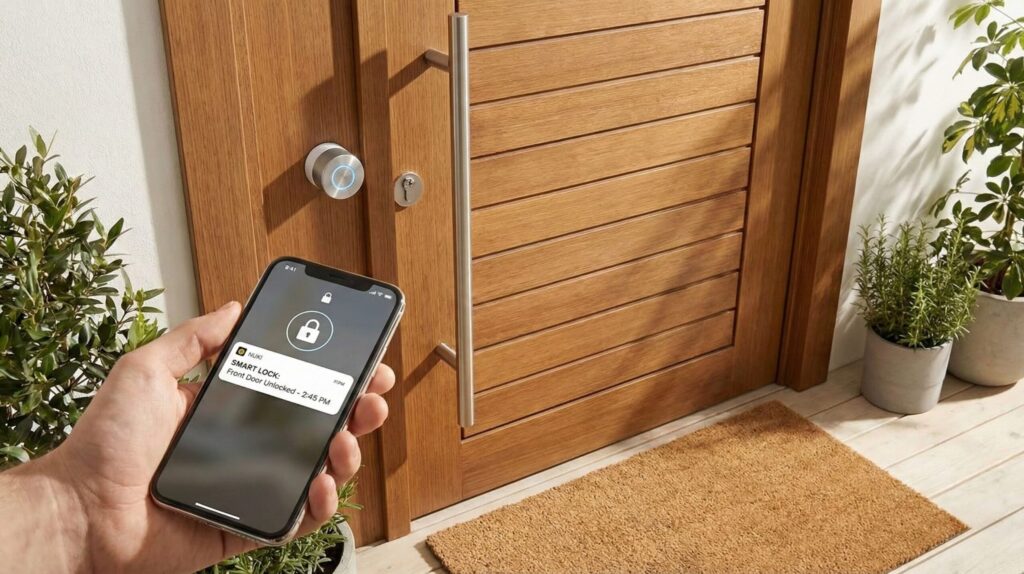
Nuki Smart Lock — AI That Learns Your Routine
Nuki doesn't just unlock your door — it learns when you typically come and go. Instead of alerting you for every unlock, it only notifies you when something breaks the pattern.
- Tracks typical unlock times and frequency
- Flags access outside your normal routine
- Optional bridge enables remote alerts
- No notification spam
- Works with existing locks
- Great for rentals
- Bridge required for remote
- AI limited without bridge
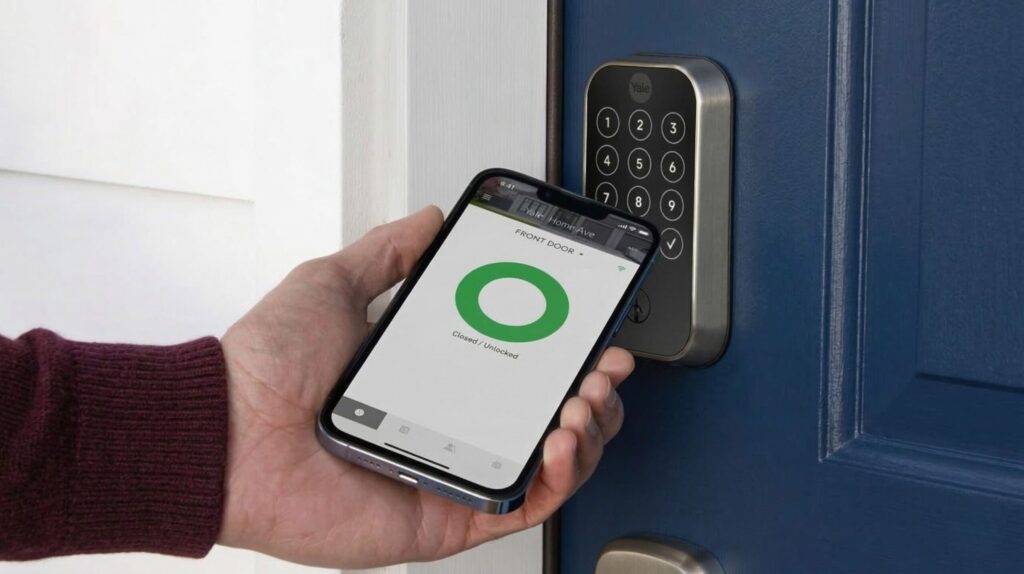
Yale Assure Lock 2 — Best for Families 🏆
Yale Assure stands out for families and shared homes. Its AI tracks multiple users and spots when access behavior differs from the norm — without micromanaging everyone.
- Monitors access patterns per user
- Detects abnormal behavior across accounts
- Integrates with Yale Home app for smart alerts
- Multi-user intelligence
- Strong brand reliability
- Wide smart home support
- Higher price point
- Wi-Fi module sold separately
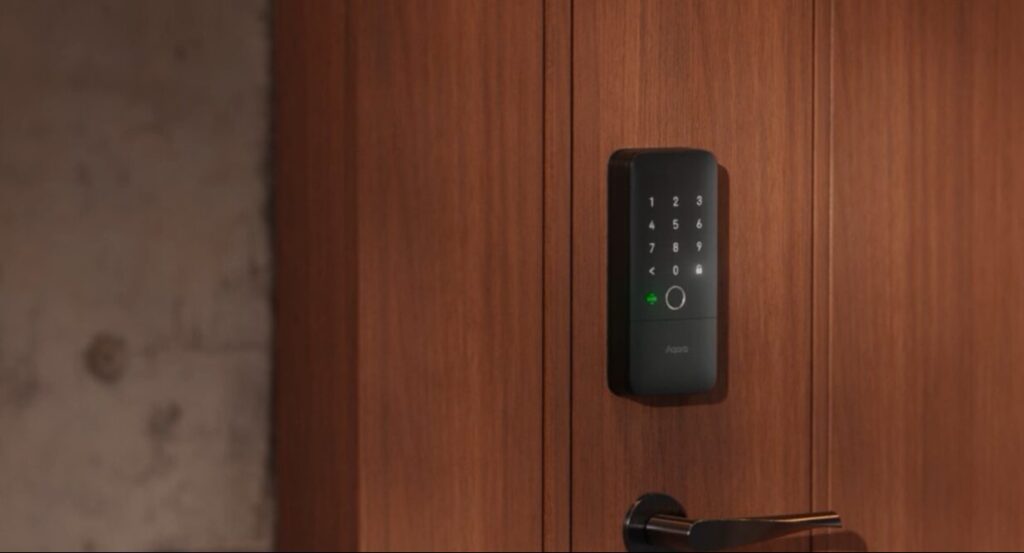
Aqara U400 — Privacy-First AI Processing
Unlike most smart locks, the Aqara U400 processes AI logic locally. Your access patterns stay on-device, with minimal cloud dependency.
- UWB (Ultra-Wideband) for precise positioning
- Behavior analysis runs locally, not in cloud
- Predictable, non-spammy notifications
- Data stays on device
- UWB precision unlocking
- Apple Home compatible
- Premium price
- Requires Aqara hub
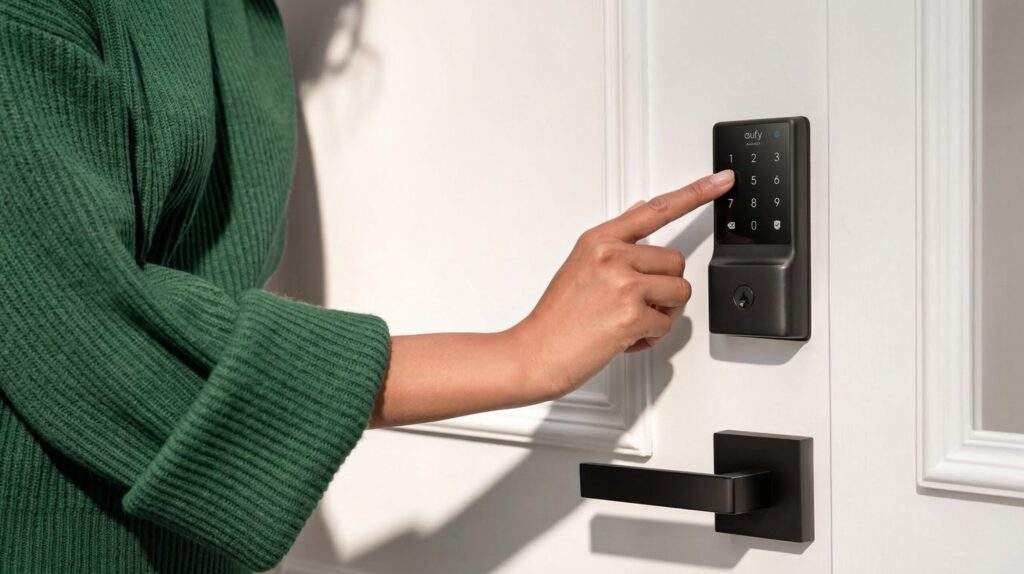
Eufy Smart Lock — Smart Features, Budget Price
Eufy proves you don't need to spend $200+ for smart security. It offers basic AI anomaly detection with adaptive alert timing — at nearly half the price.
- Basic anomaly detection for unusual access
- Adaptive alert timing reduces noise
- Simple setup via Eufy Security app
- Unbeatable price
- Easy installation
- No subscription needed
- Less advanced AI
- Fewer integrations
Taken together, these differences explain why “AI smart lock” isn’t one single category. Some prioritize learning routines, others managing people, and others reliability or simplicity.
4. How to Choose the Right Smart Lock for Your Door & Lifestyle
This is where most people get stuck — not because smart locks are complicated, but because the wrong choice looks fine until it’s installed.
We’ve seen it happen often: a lock looks great online, promises AI features, and then turns out to be incompatible with the door, unreliable in daily use, or overly dependent on the app.
To avoid that, it helps to step back and choose based on how you live, not just on features.
Start with the door, not the lock
Before thinking about AI, check the basics:
Door type (EU cylinder vs deadbolt)
Rental or owned home (some locks are fully reversible, others aren’t)
Indoor vs outdoor exposure
Many returns happen simply because the lock doesn’t physically fit. AI can’t fix that.
Decide how much control you actually want
AI smart locks vary a lot in how involved they are:
Some quietly learn routines and alert you only when something feels unusual
Others notify you for almost every action
If your goal is peace of mind, look for locks where AI is used to filter noise, not create it.
Local intelligence vs cloud dependence
This is where AI implementation really matters.
Local processing means faster reactions and fewer outages
Cloud-based logic can offer richer insights, but depends on internet stability
There’s no “right” answer — just what fits your tolerance for reliance on apps and services.
| What to check | Why it matters | AI-related impact |
|---|---|---|
| Door compatibility | Avoids installation issues and returns | AI features are useless if the lock doesn’t fit properly |
| Alert logic | Prevents notification fatigue | AI should prioritize anomalies, not every action |
| Connectivity type | Affects reliability day to day | Local AI reacts faster than cloud-only systems |
| User management | Important for families or shared homes | AI helps spot unusual access across multiple users |
Think long-term, not just first impressions
A smart lock isn’t something you replace often. Updates, app stability, and AI adaptability over time matter more than flashy features at launch.
The best smart locks are the ones you stop thinking about — because they quietly do their job.
In the next section, we’ll look at the real risks and limitations of AI smart locks, so you know exactly where the boundaries are before deciding.
5. AI Smart Lock Risks You Should Know Before Buying
AI makes smart locks more useful — but it doesn’t make them perfect. Being clear about the limits is important, because most disappointment comes from unrealistic expectations, not from real security failures.
Let’s look at the risks that actually matter in daily use.
AI can misread situations (and that’s normal)
AI in smart locks works by learning patterns. When your routine changes — guests, holidays, late nights — the system may flag behavior that’s unusual but harmless.
This doesn’t mean the lock is “broken”. It means AI needs context over time. The best systems improve by adjusting alerts instead of escalating everything into a warning.
If a lock claims “zero false alerts,” that’s usually a red flag.
Connectivity still matters more than people admit
Even in 2026, no smart lock is fully independent of connectivity:
Bluetooth needs proximity
Wi-Fi depends on network stability
Cloud-based AI depends on external services
A good smart lock should fail safely: stay locked, allow manual access, and keep working even if the app or internet goes down.
This is why we always recommend checking offline access options before buying.
App quality can make or break the experience
The lock itself might be solid, but the app is where AI decisions surface — alerts, access history, permissions.
Poorly designed apps:
Over-notify
Hide important settings
Make it hard to understand why an alert happened
Strong brands invest in software updates, not just hardware launches.
Privacy isn’t about fear — it’s about clarity
AI smart locks collect behavioral data. That’s unavoidable. What matters is:
Where that data is processed
How long it’s stored
Whether you can control or delete it
Transparent privacy settings reduce risk far more than vague promises. If a brand doesn’t explain this clearly, that’s worth noting.
For a broader explanation of how smart devices balance automation and risk, this consumer-focused overview from the FTC is a solid reference (source here).
The real risk: choosing the wrong expectations
Most people don’t regret buying a smart lock. They regret buying one that:
Interrupts too often
Depends too much on the cloud
Doesn’t adapt as promised
AI should support your routine, not demand attention.
You can check out this Wall Street Journal video that talks about Smart Looks and Safety:
6. Final Verdict: Which Smart Lock Is Worth Buying + FAQ
Bottom Line: Smart locks with AI alerts have matured significantly in 2026, offering genuine security improvements over traditional locks. The key is matching the right technology to your specific needs.
If you prioritize seamless family access and robust app integration, the Yale Assure Lock 2 justifies its premium pricing. For budget-conscious buyers who still want AI-powered notifications, Eufy delivers surprising value without sacrificing essential features.
Privacy advocates should gravitate toward the Aqara U400—its on-device AI processing means your access patterns stay local. Meanwhile, renters can finally enjoy smart lock benefits with the Nuki, which installs without permanent modifications.
Before you buy, consider these final factors:
- Existing ecosystem: Do you already use HomeKit, Alexa, or Google Home?
- Door compatibility: Measure your door thickness and check deadbolt specifications
- Wi-Fi reliability: Smart locks with AI alerts depend on stable connectivity
- Battery backup plans: Most models last 6-12 months, but have a backup key ready
The investment in smart locks with AI alerts pays dividends in convenience and peace of mind. You'll never wonder if you locked the door again—and you'll receive instant notifications about unusual access attempts, package deliveries, or when kids arrive home from school.
Ready to upgrade your home security? Start with your specific use case from our recommendations above, then check current pricing and availability before making your final decision.
FAQ
Yes — when configured properly. AI-powered smart locks use encrypted communication and don't store raw access data in the cloud. Models like the Aqara U400 process everything locally, while others like Yale Assure use end-to-end encryption.
The key is choosing a reputable brand and keeping firmware updated. All four locks in this guide meet current security standards.
Any connected device carries some risk, but modern smart locks use AES-128 or AES-256 encryption — the same standard used by banks. The bigger vulnerability is weak passwords or outdated firmware.
All four locks in this guide support two-factor authentication and automatic security updates. For more on securing your smart home, see our guide on disabling privacy-invasive features in AI home devices.
Yes — the core locking function works offline via Bluetooth or physical backup (keypad, fingerprint, or key). However, remote access, real-time alerts, and AI-based anomaly detection require an internet connection.
Nuki and Aqara offer optional bridges for remote features while keeping local processing. This means the AI can still learn your patterns without constant cloud connectivity.
Regular notifications ping you for every unlock — which gets annoying fast. AI alerts are smarter: they learn your patterns and only notify you when something breaks the routine.
For example: your door unlocking at 3am when you're usually home by 7pm. This reduces notification fatigue while keeping you informed when it actually matters.
The Nuki Smart Lock is the best option for renters. It attaches to your existing deadbolt from the inside — no drilling, no replacing the lock cylinder. When you move out, you simply remove it and take it with you.
It also supports temporary access codes, which makes it perfect for Airbnb hosts or anyone who needs to share access without handing out physical keys.
No — all four locks in this guide work without any subscription. AI features, remote access, and alerts are included for free out of the box.
Some brands offer optional premium plans for extended history logs or advanced automation, but the core functionality — including AI-powered alerts — is fully accessible without ongoing fees.
If this guide helped you understand how AI smart locks actually work — beyond the marketing labels — and how AI is quietly changing home access and everyday security, you may also find these related guides useful: