 Published on: June 6, 2025
🕒 Last updated on December 2025
1. Overview: Claude 3 vs ChatGPT-4o at a Glance
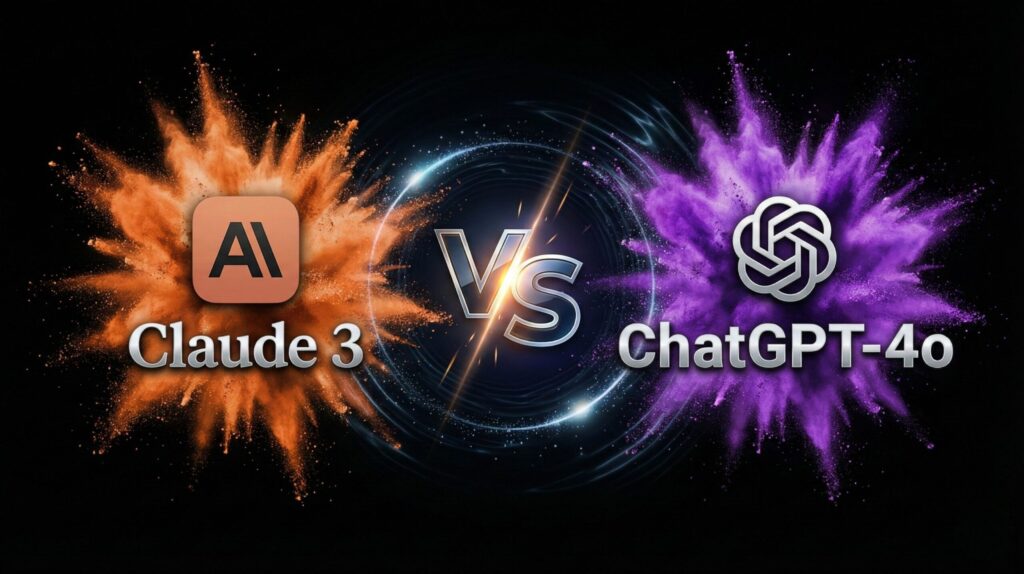
When comparing modern AI assistants, the discussion around Claude 3 vs ChatGPT-4o often starts with one simple question: what are they actually built for?
Both tools aim to be general-purpose assistants, but they approach reasoning, safety, and real-world usage in different ways. This overview sets the foundation for a clear AI assistant comparison before diving into performance and use cases.
ChatGPT-4o (OpenAI)
ChatGPT-4o, released in May 2025, is OpenAI’s flagship multimodal model and a central reference point in any Claude 3 vs ChatGPT performance discussion. It is designed for speed, versatility, and broad accessibility.
Key strengths include:
-
Free access to GPT-4-level reasoning for many tasks
-
Multimodal input and output (text, images, and voice)
-
Faster responses and improved context handling
-
Strong focus on ChatGPT-4o real world use, from writing to everyday productivity
Claude 3 (Anthropic)
Claude 3 is Anthropic’s latest model family, with Claude 3 Opus positioned as the most advanced variant. It is often favored by users who prioritize depth, safety, and long-form reasoning.
Key strengths include:
-
Advanced reasoning and high-quality summarization
-
Very large context window (200k+ tokens), ideal for long documents
-
Careful, structured responses with a strong safety reputation
-
Popular among users looking for a more controlled, thoughtful assistant
At this stage, neither model is objectively “better” in every scenario. Instead, this Claude 3 vs ChatGPT-4o overview highlights why the choice often depends on how you plan to use the tool — whether for speed, depth, or finding the best AI assistant for your daily workflow (see this independent, real-world comparison by DigitalOcean).
2. Claude 3 vs ChatGPT-4o: Head-to-Head Comparison

A direct AI assistant comparison helps clarify where each model performs best in real-world scenarios.
This table highlights the most relevant differences between Claude 3 vs ChatGPT-4o, focusing on strengths that actually affect daily use, performance, and workflow choices.
| Feature | Claude 3 (Opus) | ChatGPT-4o |
|---|---|---|
| Core Strength | Long-context reasoning, safe and structured output | Speed, versatility, multimodal interaction |
| Max Context Length | 200,000+ tokens (ideal for long documents) | ~128,000 tokens (GPT-4o) |
| Multimodal Support | Text and image input | Text, image, voice, and video input |
| Response Style | Structured, factual, cautious | Natural, conversational, adaptive |
| Availability | Paid via Claude Pro | Free tier + GPT Plus ($20/month) |
| API Access | Yes (Anthropic API) | Yes (OpenAI API, wide ecosystem) |
| Memory Support | No persistent memory | Yes, customizable memory features |
| Get Started | Try Claude 3 | Try ChatGPT-4o |
When comparing Claude 3 vs ChatGPT-4o, it becomes clear they serve different priorities.
Claude 3 excels in long-form reasoning and careful analysis, while ChatGPT-4o real world use stands out for speed, accessibility, and everyday flexibility. Choosing the best AI assistant ultimately depends on how you plan to use it.
3. Content Creation and Writing
If you’re using AI to blog, write emails, or create social media content, both tools perform well — but in different ways. This part of the Claude 3 vs ChatGPT-4o comparison focuses on how each model handles writing quality, tone, and creative flexibility in real scenarios.
Claude 3:
Delivers structured, fact-rich writing with a clear logical flow
Well suited for research-heavy and long-form articles
Strong choice when accuracy, citations, and consistency matter most
ChatGPT-4o:
Produces a more creative and human-like tone
Adapts better to informal, persuasive, or engaging styles
Particularly effective for ChatGPT-4o real world use such as blogs, newsletters, and social posts
In terms of Claude 3 vs ChatGPT performance, the difference is less about quality and more about intent. Claude 3 favors depth and rigor, while ChatGPT-4o prioritizes flexibility and voice.
Winner for creators: ChatGPT-4o, especially for those looking for style versatility and everyday content workflows — making it a strong candidate for the best AI assistant in creative tasks.
Related: Top 5 AI Tools to Boost Your Productivity in 2025
4. Coding and Developer Use
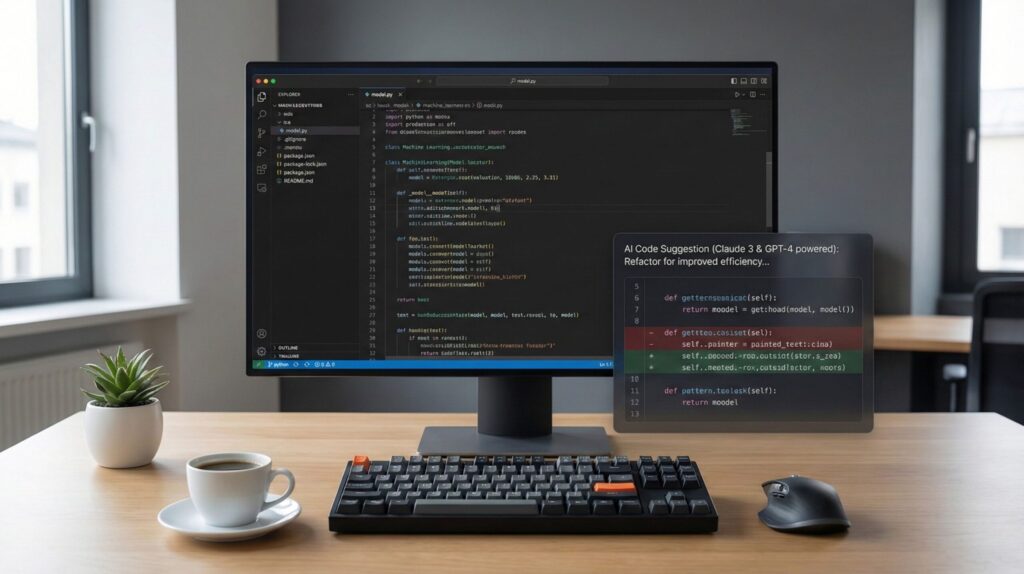
When it comes to programming and developer workflows, the Claude 3 vs ChatGPT-4o comparison becomes more one-sided. Both models can generate and explain code, but their usefulness in real development environments differs.
ChatGPT-4o has a stronger edge for developers thanks to:
• a built-in code interpreter for testing and debugging
• native integration with tools like GitHub Copilot
• better handling of live programming context and iterative fixes
These features make ChatGPT-4o real world use more practical for debugging, refactoring, and learning new languages during active development. This aligns with findings from GitHub’s own research on AI-assisted coding productivity (source here).
Claude 3 is still capable of writing and explaining code, especially in structured or theoretical contexts. However, it is less optimized for fast, real-time development workflows where iteration speed matters most.
In terms of Claude 3 vs ChatGPT performance for coding tasks, the advantage clearly goes to ChatGPT-4o.
Winner for coding: ChatGPT-4o — often the best AI assistant for developers who need speed, context awareness, and hands-on tooling.
5. Accuracy, Reasoning, and Summarization
When accuracy and deep understanding matter, the Claude 3 vs ChatGPT-4o comparison highlights a clear difference in approach.
Claude 3 (Opus) is often preferred for tasks that require careful reading, detailed analysis, or summarizing large documents. Its ability to manage long contexts makes it particularly strong for research, reports, and structured reasoning — areas where consistency matters more than speed.
ChatGPT-4o is fast and generally accurate for everyday tasks, but it may cut corners when dealing with very long, highly technical, or densely layered content. In practical terms, ChatGPT-4o real world use shines in quick explanations, while deeper analytical work can require more verification.
In terms of Claude 3 vs ChatGPT performance, this difference becomes noticeable when working with complexity rather than volume.
Winner for summarization and analysis: Claude 3 — a strong contender for users seeking the best AI assistant for long-form reasoning and document-heavy workflows.
6. User Interface and Experience
User experience plays a bigger role than it might seem in the Claude 3 vs ChatGPT-4o comparison, especially for people who rely on an AI assistant every day.
Claude 3 is available through Anthropic’s web app, with a clean, minimal interface focused on reading, writing, and long-form interaction. It favors simplicity and fewer distractions, which some users prefer for deep work.
ChatGPT-4o is accessible via the ChatGPT app on both web and mobile, offering voice chat, file uploads, memory features, and plugin-style integrations. This flexibility supports broader ChatGPT-4o real world use, from quick questions to complex workflows.
In terms of interface and accessibility, the difference reflects overall positioning rather than quality.
Winner for user experience: ChatGPT-4o — its flexibility and multi-device support make it a strong candidate for the best AI assistant in everyday use.
7. Pricing
Pricing is one of the clearest differentiators in the Claude 3 vs ChatGPT-4o comparison, especially for users deciding which AI assistant to adopt long term.
| Plan | Claude 3 | ChatGPT-4o |
|---|---|---|
| Free | No free tier | Yes (GPT-4o free access) |
| Pro | $20/month (Claude Pro) | $20/month (ChatGPT Plus) |
| Get Started | Try Claude 3 | Try ChatGPT-4o |
From a value perspective, ChatGPT-4o real world use benefits from having a free tier that already delivers strong performance. Claude 3, while powerful, requires a paid plan from the start.
In terms of Claude 3 vs ChatGPT performance relative to cost, accessibility makes a noticeable difference.
Winner on pricing: ChatGPT-4o — for offering top-tier capabilities even before upgrading, making it a compelling option for anyone looking for the best AI assistant on a budget.
8. Final Verdict: Which One Should You Use?
Overall winner: ChatGPT-4o — for flexibility, accessibility, and a smoother everyday experience.
In this Claude 3 vs ChatGPT-4o comparison, the difference isn’t about which model is “better” in absolute terms, but about how we actually use AI day to day. For most workflows, ChatGPT-4o real world use feels more natural thanks to its free access, multimodal features, and polished interface.
Claude 3 Opus remains a strong option when the task demands deep reading, long documents, or careful summarization. That’s where the gap in Claude 3 vs ChatGPT performance becomes noticeable.
If we had to simplify this AI assistant comparison:
Choose ChatGPT-4o for everyday productivity, creativity, and speed
Choose Claude 3 for research-heavy, long-form, or safety-sensitive work
For most users, ChatGPT-4o is still the best AI assistant to start with — while Claude 3 shines in more specialized scenarios.
Related: Fireflies.ai Review: A Game-Changer for Meeting Productivity
If you found this Claude 3 vs ChatGPT-4o comparison useful, these related articles dive deeper into how AI tools actually work in real life and how to use them more consciously:
→ ChatGPT vs Gemini: Which One Wins in Daily Use?
→ AI Hallucinations Explained: Why AI Gets Things Wrong
→ How Voice Assistants Actually Understand You