
Mirko
AI Tech Writer
Most "Rabbit R1 review" posts freeze the device at its rough April 2024 launch, or pretend that never happened. Neither is honest anymore. I went back through what actually shipped in 2025 and 2026 โ the RabbitOS 2 overhaul, the newer feature updates, the pricing that's stayed flat since day one โ to answer the only question that matters now: does $199 buy something real today?
The Rabbit R1 isn't the all-purpose phone replacement it was pitched as, and it never fully became one. But it's also not the dead product its 2024 reputation suggests โ RabbitOS 2 rebuilt the software in September 2025, and the device is still shipping and getting updates as of this year. It's a fair pick for a curious second device, a weak pick for anyone expecting a phone alternative.
Some links are affiliate links ยท they support this site at no extra cost to you ยท Full disclosure
Why the Rabbit R1 Became the Most Talked-About Pocket AI Assistant
Rabbit R1 launched at CES in January 2024 with a pitch nobody else was making: a $199 handheld that acts on your behalf instead of just answering questions. Within a week it had one of the most-watched tech reviews of the year attached to it, and that review is the reason most people still recognize the orange box on sight.
That video was Marques Brownlee's "Rabbit R1: Barely Reviewable," and it's worth watching before anything else here โ it's the clearest, most balanced first-look I found while researching this piece, and it set the tone for how the R1 got covered for the next two years.
Video credit: Marques Brownlee (MKBHD), "Rabbit R1: Barely Reviewable" โ watch on YouTube
That title wasn't a throwaway joke. Brownlee's point was that the R1 shipped as a product still being built in public โ a pattern he's called out across phones, games, and cars โ and it stuck. The device that reached buyers in early 2024 genuinely struggled with basic requests, and The Verge reported in September 2024 that only around 5,000 of roughly 100,000 units sold were active on any given day.
What most "Rabbit R1 review" content skips is what happened after that. Rabbit kept shipping updates through 2025, then rebuilt the operating system from the ground up. If you only know the R1 from its 2024 launch reviews, you're judging a different product than the one shipping today. The rest of this Rabbit R1 review picks up from there.
The Real Problem the Rabbit R1 Promises to Solve

When people search for a Rabbit R1 review, they're usually trying to figure out whether it solves a real problem or is just another gadget. The honest target is app overload โ the small daily tax of unlocking your phone, finding the right app, and tapping through menus just to book a ride or check an order.
Rabbit's answer is what it calls a Large Action Model (LAM): instead of opening an app, you ask the R1 and its "action engine" attempts to carry out the steps itself, the way a person would. That's a different bet than a voice assistant that just answers a question and hands you back to your phone.
There's a useful comparison point here that most reviews from 2024 couldn't make yet: Humane discontinued its AI Pin in February 2025, less than a year after its own rocky launch. Rabbit didn't shut down โ it kept shipping. That's a meaningfully different outcome for two products that got lumped together constantly at launch.
Whether that bet has actually paid off depends entirely on what Rabbit OS can do today, not what it promised in 2024 โ which is where I'd point you next.
Rabbit R1 Review 2026: What This Device Actually Does
The version of Rabbit OS running on the device today isn't the one from the 2024 launch reviews. Rabbit shipped RabbitOS 2 in September 2025 โ a full interface rebuild, not just a patch โ and it's the single biggest reason a 2026 verdict has to be different from a 2024 one.
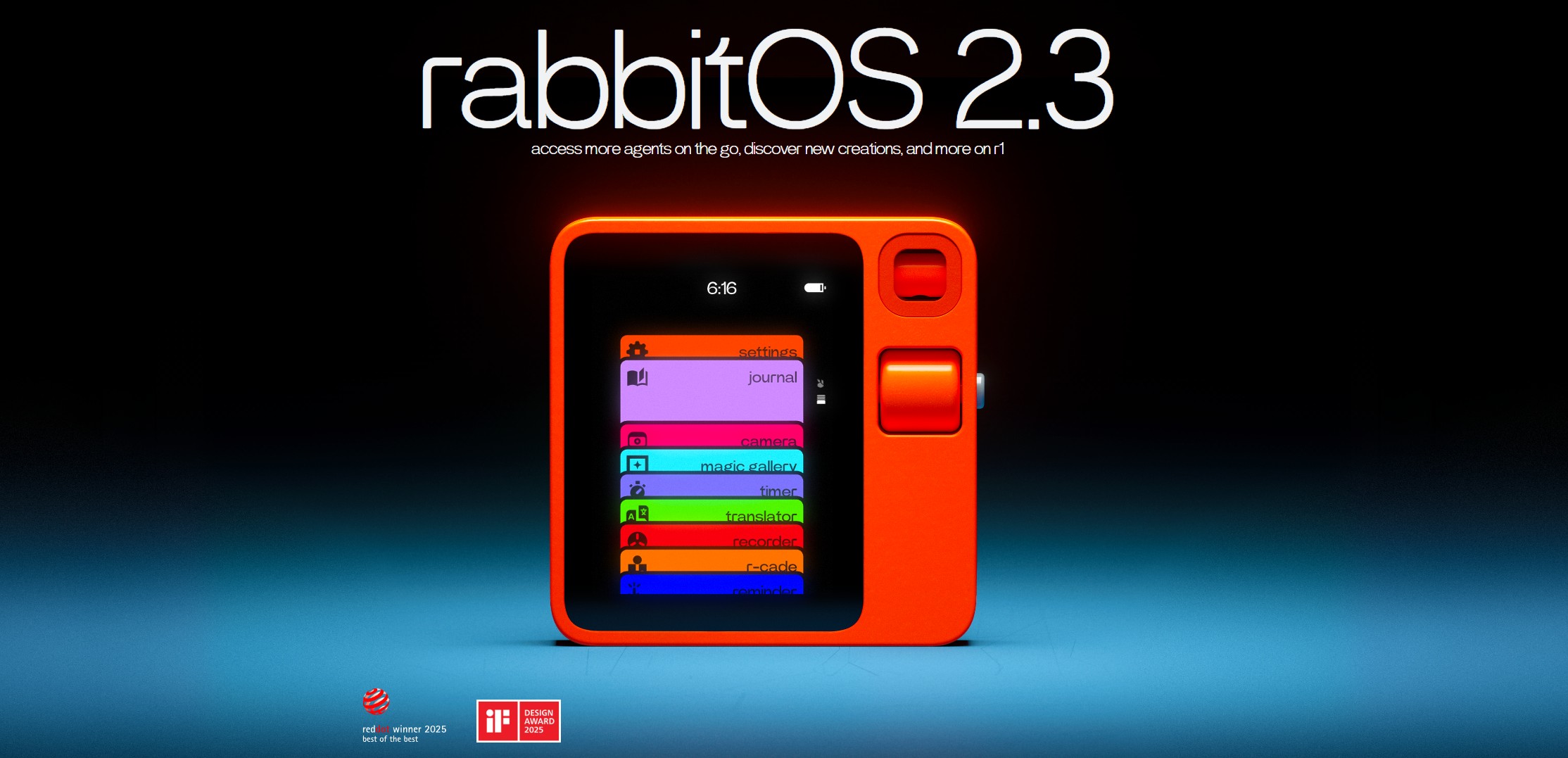
A card-based home screen instead of a menu
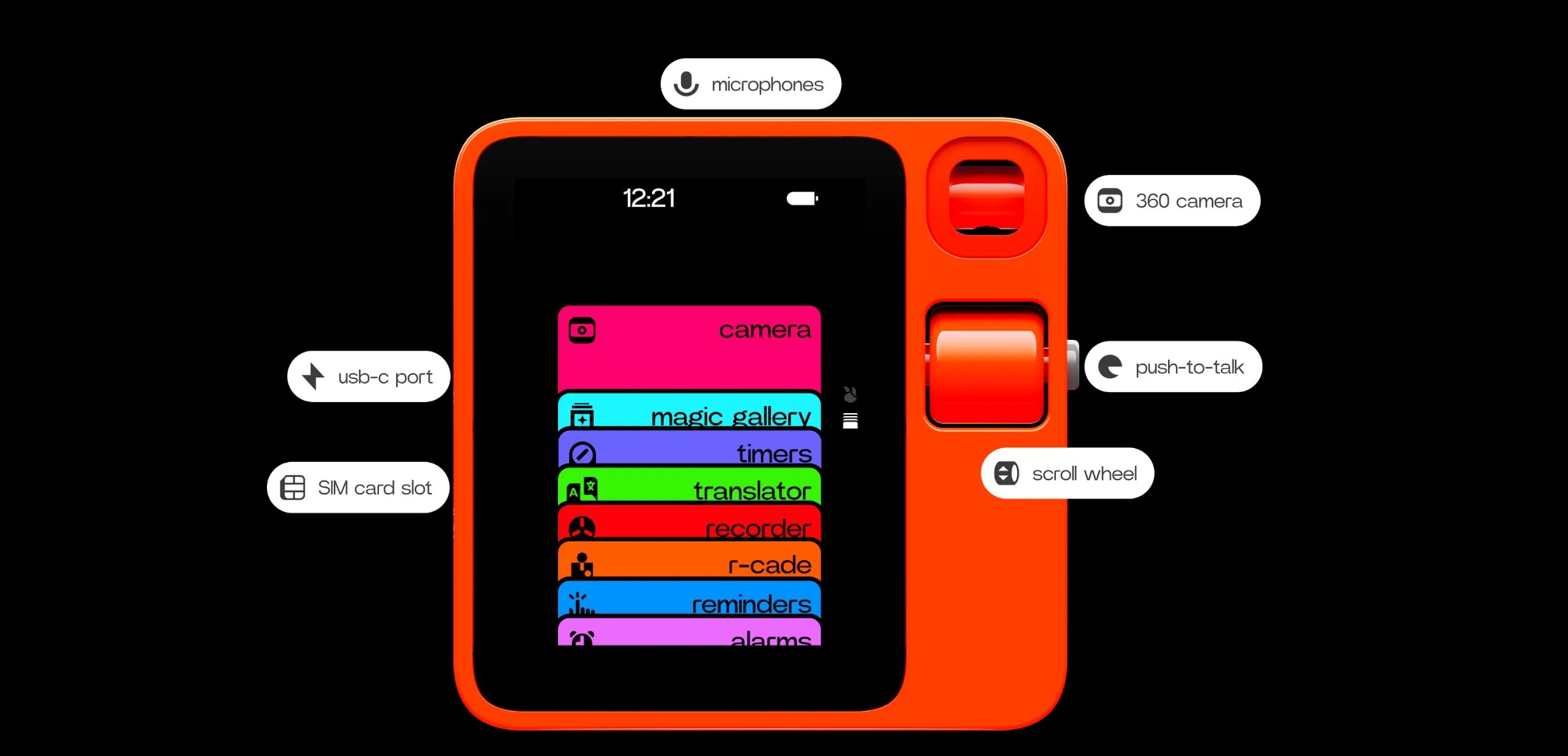
RabbitOS 2 replaced the old scroll-wheel menu with a scrollable "Card Stack" you navigate by touch โ closer to a home screen than the original text-driven interface. Each card opens a function: translation, note-taking, Magic Gallery, or a Creation someone built.
Creations โ build a mini-app with a prompt
The headline feature of the update is Creations: you describe a simple tool, game, or interface in natural language, and Rabbit OS generates a working version you can publish and share with other R1 owners. It's a genuinely new capability, not a rebrand of something the R1 already did.
There's a pricing detail worth flagging here that's easy to miss in Rabbit's own update page: publishing a Creation is free, but running it at any real scale isn't โ heavier automated use through the platform runs $100 a month, or $840 a year, for 30 tasks a month. For a device sold on "no subscription required," that's a caveat worth knowing before you plan a workflow around it.
Smaller updates keep landing
A further OTA update in February 2026 added shortcuts to the device's action model โ custom instructions, memory context, and hotwords you can attach to a repeated task so it runs the same way every time. It's an incremental fix, not a relaunch, but it shows Rabbit is still actively developing the software rather than letting it sit.
How to Use the Rabbit R1 in Daily Routines for Maximum Value
Based on how Rabbit's own Creations library and Skills store are structured, the R1 is built for short, repetitive tasks โ the kind that normally cost you three app switches and a minute of attention. A skill or Creation handles one specific job, and you trigger it with a single voice command.
| Daily Task | How the Rabbit R1 Handles It |
|---|---|
| Ordering a ride | Ask verbally; the action engine follows your usual booking pattern for the ride app you already use. |
| Building a quick tool | Describe it in a sentence; a Creation is generated and saved to your card stack. |
| Live translation | RabbitOS 2 saves a full conversation transcript and syncs it to the Rabbit Hole activity log. |
| Recurring task with a fixed format | A February 2026 shortcut lets you save custom instructions and a hotword so it repeats identically. |
| Quick notes or reminders | Captures the instruction with one command โ no subscription needed for basic recording. |
The R1 isn't trying to replace your phone for anything complex โ it's trying to remove the phone from a handful of tasks you already do on autopilot.
One spec worth a caveat: Rabbit lists roughly 8 hours of continuous use on the device's 1000mAh battery, though I haven't independently timed this myself โ treat it as the manufacturer's figure until a hands-on test says otherwise.
Key Advantages, Limitations, and How It Compares to Other AI Assistants
The R1 is more capable than its launch reputation suggests, but it's still early software wearing a finished piece of hardware. Here's where it actually stands next to Siri, Google Assistant, and phone-based AI apps.
- $199, no subscription for core features
- RabbitOS 2's card interface is genuinely easier to use
- Creations add a real, novel capability
- Reduces phone pickups for small repeat tasks
- Still receiving updates, unlike Humane's discontinued Pin
- App and service coverage is still narrow
- Complex, multi-step requests can lag
- Small screen limits anything beyond a short answer
- Heavier Creations use adds a real cost ($100/mo)
- Never became the general-purpose agent the 2024 demo promised
Rabbit OS vs. Siri and Google Assistant
| Feature | Rabbit OS 2 | Siri / Google Assistant |
|---|---|---|
| Core function | Executes actions on external services | Answers questions, simple device commands |
| App dependency | No apps installed; connects to services directly | Requires the app installed on your phone |
| Custom mini-apps | Yes โ Creations, added Sept 2025 | No equivalent |
| Best for | Reducing app-switching on repeat tasks | Fast queries, calls, timers, basic controls |
The honest takeaway: Rabbit OS is better at doing a narrow set of things than Siri or Google Assistant. It is not yet a substitute for either one across the board โ and it isn't trying to be your only assistant, just a faster path for the handful of tasks you already repeat every day.
Ethical Reflection: What a Pocket AI Means for Data, Privacy, and Control

Data access vs. data ownership
Because the R1 logs into your services to act on your behalf, it temporarily touches parts of your accounts the way you would yourself. That's not unique to Rabbit โ most action-based AI works this way โ but it's worth staying aware of which permissions you've granted and whether you can revoke them at any time.
An action engine carries different risk than a chat window
A chatbot that misunderstands you gives you a wrong answer. An action engine that misunderstands you can book the wrong thing, confirm the wrong option, or trigger a step you didn't fully intend. Rabbit hasn't published a public incident record around this, so I'm not aware of a specific case โ but the structural risk is real by design, not a hypothetical.
Carrying a device that acts on your accounts means staying aware of what it can do โ not fearing it, just not treating it like a passive assistant.
Privacy depends on which integrations you use
Every third-party service the R1 connects to is a separate layer to think about: what Rabbit sees, what the connected service sees, and how long each side keeps a log. If you want the fuller picture of how AI systems track behavior in general, my guide on how AI online tracking actually works breaks that down in more depth than fits here.
Should You Buy the Rabbit R1? Final Insights + Recommended Alternatives
After going through what the R1 shipped with, what RabbitOS 2 actually fixed, and where it still falls short, my take is that it's not a smartphone replacement โ but it is one of the more interesting pocket AI devices you can buy for $199. It earns that mainly on price and on the fact that Rabbit kept building instead of walking away.
- Want a lightweight second device for quick, repeat tasks
- Like voice-first interaction over screens
- Are curious about Creations as a hobby project
- Dislike unlocking your phone for small errands
- Need broad, reliable app coverage today
- Want deep conversational AI, not task execution
- Expected the 2024 launch-demo agent to exist now
- Would rather run ChatGPT, Claude, or Gemini on a phone you already own
Good alternatives worth comparing first
If the idea behind the R1 appeals to you but you want a different form factor or a more mature ecosystem, I'd compare it against these before buying: my breakdown of Rabbit R1 vs. Timekettle W4 Pro and my wider roundup of the best AI wearables right now.
My final read: the R1 isn't the phone-killer it was pitched as in 2024, and it probably never will be. What it is now, two years and one major OS rebuild later, is a genuinely functional $199 experiment in AI that acts instead of just talks โ worth exploring for what it is, not what it was promised to be.
FAQ โ Rabbit R1 Review 2026
Is the Rabbit R1 still worth buying right now?
+For $199 with no ongoing fee, I'd call it a reasonable pick for a curious second AI device โ not for anyone expecting it to replace their phone. RabbitOS 2 fixed a lot of the interface problems that made the 2024 version frustrating, and updates are still landing.
What exactly changed with RabbitOS 2?
+The old scroll-wheel menu was replaced with a touch-friendly card stack, and the update added Creations โ a way to build a small custom tool or game from a text prompt and share it with other R1 owners. It shipped in September 2025.
Is there a monthly subscription fee?
+Core features don't require one, which is still one of its clearer advantages over competing AI wearables. The exception is heavy Creations use โ that tier costs $100 a month, or $840 a year, for 30 tasks a month, which is easy to miss if you only read the headline pricing.
What are Creations, in plain terms?
+Describe a simple tool or game you want, and Rabbit OS builds a working version you can save to your card stack. You can also publish it so other Rabbit R1 owners can install it โ a lightweight, community-driven app store built entirely from prompts.
Is Rabbit R1 dead, or did the company shut down?
+No โ the company is still operating and the device is still shipping, with a further feature update in February 2026. That's a genuine point of difference from the Humane AI Pin, which was formally discontinued back in February 2025.
How does it compare to Siri or Google Assistant?
+Siri and Google Assistant mostly answer questions or run commands inside apps you already have installed. The R1's action engine tries to complete multi-step tasks on services without needing the app at all โ narrower in coverage today, but a different and more ambitious approach.
Is it safe to connect my accounts to the Rabbit R1?
+It accesses your accounts the same way you would to complete a task, which is standard for this category of device but worth managing actively. Check which permissions you've granted periodically and revoke anything you no longer use, the same habit worth applying to any connected AI tool.
What's the real difference between the R1 and the Humane AI Pin?
+Both launched in 2024 to harsh reviews, but they took different paths afterward. Rabbit invested in a full software rebuild through 2025, while Humane shut its AI Pin down in February 2025 after it couldn't find a workable business model.
๐ Compare the Rabbit R1 Against the Rest
If you're still deciding whether a pocket AI device belongs in your routine, here's where I'd look next:

