
Giorgio
AI Tech Writer
📅 Published: November 6, 2025 🔄 Last updated: March 14, 2026
AI wearables are finally here — and they're not just gimmicks anymore. From smart glasses with built-in AI assistants to rings that track your health 24/7, here's everything you need to know before buying in 2026.
📑 In This Article
Some links are affiliate links · You support the blog at no extra cost · Details
1. Why AI Wearables Matter in 2026
The best AI wearables aren’t just another tech trend — they’re quietly becoming part of our everyday routine. From smart glasses that overlay digital information onto the real world, to AI smart rings tracking sleep, heart rate, and recovery in ways that feel effortless, and wearable AI devices that act like real-time translators or productivity assistants — this new generation of technology is changing how we live and work.
At AI Digital Space, we’ve seen this shift growing fast. People aren’t just looking for entertainment anymore. They want tools that simplify daily life, boost productivity, and protect privacy at the same time. That’s exactly where the best AI wearables make the difference: they merge human behavior with intelligent systems that learn and adapt to your habits.
Whether it’s the Meta Ray-Ban Smart Glasses recognizing what you see (check our setup guide to get started), or the Oura Ring Gen 4 predicting your energy levels — these AI wearables bring personalized assistance straight to your wrist, eyes, or ears.
So, which AI wearables are actually worth buying in 2026?
This guide breaks down the best AI wearables on the market right now. We’ll cover what’s practical, what’s overhyped, and how to choose the right wearable AI device for your lifestyle — not just the flashiest one.
Go deeper:
- Ray-Ban Display vs Oakley Vanguard — Which Smart Glasses Win?
- AI Fitness Tracker Comparison — Best for Health & Recovery
For a broader look at wearable trends, check out the analysis by VentureBeat AI, where experts highlight how embedded intelligence is reshaping consumer electronics.
- Smart Glasses — AI-powered vision, hands-free camera, real-time info
- AI Rings — 24/7 health tracking, sleep analysis, recovery scores
- Translation Earbuds — Real-time language translation on the go
- Buying Guide — How to choose the right wearable for your needs
2. AI Smart Glasses – Visual Intelligence in Daily Life
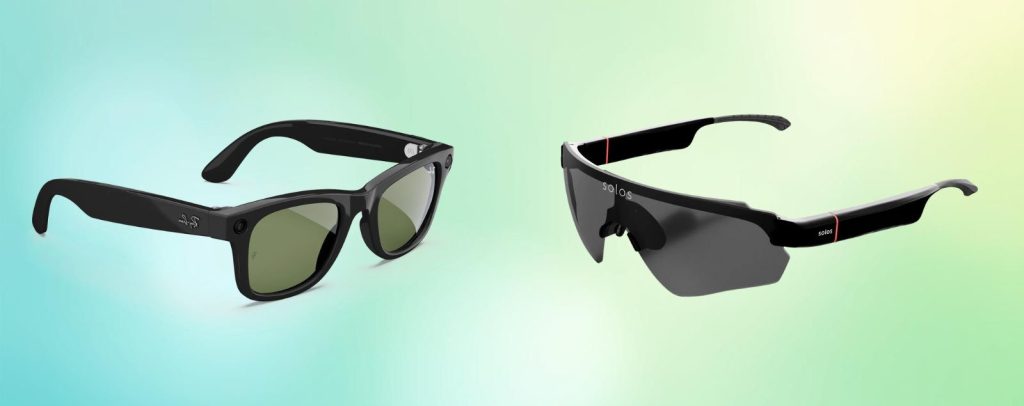
Smart glasses are redefining what “hands-free productivity” really means. They’re not just about taking photos or getting notifications anymore — they’re becoming real AI assistants you wear on your face.
With models like the Meta Ray-Ban Smart Glasses and the Solos AirGo 3, you get instant access to voice-controlled AI, live translations, and camera-based recognition that can identify places, objects, or text in real time.
These AI wearables run on advanced processors and on-device AI models — which means faster responses and a more privacy-friendly experience than traditional cloud-based systems.
What makes these smart glasses stand out?
The Meta Ray-Ban now includes voice-activated ChatGPT-style assistance — perfect for hands-free messaging, quick reminders, and on-the-go searches. Meanwhile, the Solos AirGo 3 focuses on productivity and wellness: it reads notifications, manages calls, and even improves your posture through intelligent sensors.
Wondering which smart glasses are right for you? Check our in-depth comparison: Ray-Ban Display vs Oakley Vanguard — Which Smart Glasses Win?
The evolution from older versions is remarkable. The best AI wearables in 2026 now support continuous micro-interactions — short, frictionless moments that keep you informed without pulling out your phone. This seamless flow is driving adoption among professionals, students, and content creators who value smarter routines.
New to smart glasses? Start with our Meta Ray-Ban Display Setup Guide — it covers pairing, voice commands, and real-world use cases.
First time with smart glasses? Don't buy before reading the Meta Ray-Ban Setup Guide. It covers voice commands, app pairing, and what to realistically expect.
| Model | Key AI Features | Battery | Best For | Verdict | Action |
|---|---|---|---|---|---|
|
🏆 Editor's Choice Meta Ray-Ban Smart Glasses |
✓ Built-in AI assistant ✓ Hands-free 12MP camera ✓ Live translation ✓ Meta AI voice integration |
4–5 hrs +36 hrs with case |
AI + Camera |
Best overall Premium design, top voice AI |
🕶️ Check Price |
|
💼 Best for Productivity Solos AirGo 3 |
✓ Real-time AI assistant ✓ Voice notifications ✓ Posture tracking ✓ Open-ear audio |
~10 hrs USB-C fast charge |
Productivity |
Best battery life Lightweight, no camera needed |
🕶️ Check Price |
📱 Scroll horizontally on mobile to see full table
As top reviewers on platforms like TechCrunch AI point out, the key to long-term success for wearable AI devices is comfort, clear utility, and low cognitive load — not just novelty. That’s the benchmark we use when evaluating every AI gadget in this guide.
3. AI Smart Rings – Wellness & Focus Tracking
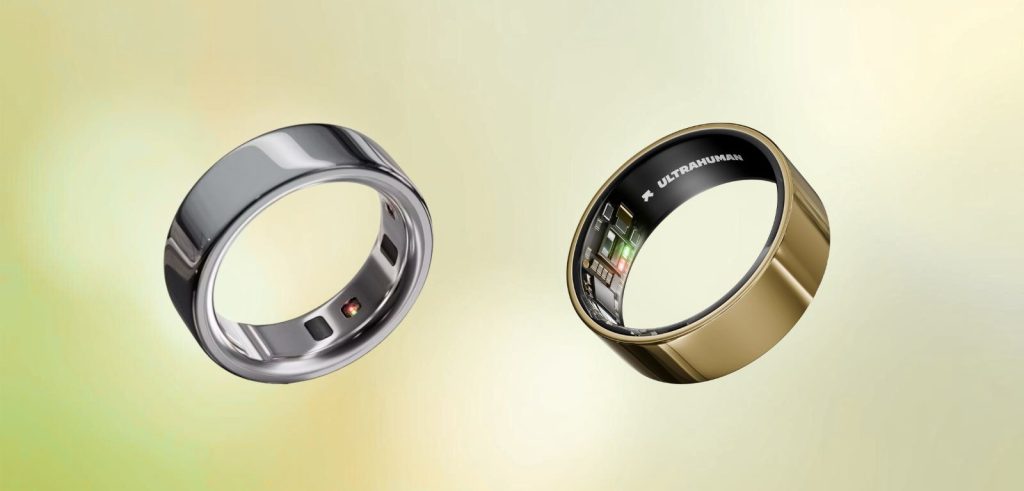
AI smart rings are the most invisible wearables you can own — and that’s exactly the point. No screens, no distractions. Just continuous health tracking that runs quietly in the background while you live your life.
The concept is simple: wear a ring, get actionable health insights. Sleep quality, heart rate variability, body temperature, recovery scores — all delivered to your phone each morning. No charging every night, no bulky design, no fitness-tracker aesthetic.
Why are AI rings gaining traction in 2026?
Unlike smartwatches, AI smart rings focus on what matters most: sleep and recovery. They don’t try to replace your phone. Instead, they track biometrics with medical-grade sensors and translate that data into recommendations you can actually use — like when to push harder, when to rest, or when you might be getting sick.
Two models dominate the market right now:
- The Oura Ring Gen 4 — the industry leader with the most refined AI insights and a 7-day battery life
- The Ultrahuman Ring Air — a strong alternative with real-time metabolic tracking and no subscription fees
Which one should you choose? It depends on whether you prioritize software depth (Oura) or cost transparency (Ultrahuman). We break down both in the table below.
For a deeper look at how these compare to traditional fitness bands, check our AI Fitness Tracker Comparison.
| Model | Key AI Features | Battery | Best For | Verdict | Action |
|---|---|---|---|---|---|
|
🏆 Editor's Choice Oura Ring Gen 4 |
✓ AI readiness scores ✓ Sleep & recovery tracking ✓ Body temperature insights ✓ Stress monitoring |
Up to 7 days Industry-leading |
Sleep & Recovery |
Best overall AI ring Most accurate, premium build |
💍 Check Price |
|
💰 No Subscription Ultrahuman Ring Air |
✓ Metabolic tracking ✓ Energy optimization ✓ Recovery prediction ✓ Sleep analysis |
4–6 days Solid performance |
Metabolic Health |
Best value — no fees One-time purchase, full features |
💍 Check Price |
📱 Scroll horizontally on mobile to see full table
4. AI Ear Wearables – On-the-Go Assistance
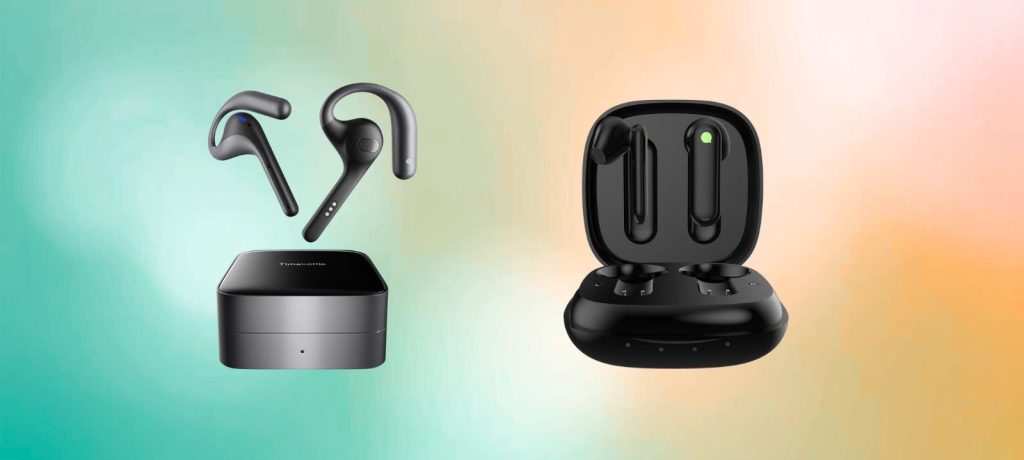
AI ear wearables have moved far beyond music and calls. The newest generation acts as real-time translators, meeting assistants, and voice-controlled AI companions — all sitting discreetly in your ears.
The game-changer? Live translation earbuds. Devices like the Timekettle W4 Pro and Timekettle WT2 Edge can translate conversations in 40+ languages and 93 accents — in real time, with minimal delay. No more fumbling with phone apps or awkward pauses. You speak, they translate, the other person hears.
Who actually needs these?
- Frequent travelers — navigate airports, hotels, and local conversations without language barriers
- International business professionals — handle calls and meetings across languages seamlessly
- Digital nomads and expats — integrate faster into new countries and cultures
These AI wearables use a combination of on-device processing and cloud AI to balance speed with accuracy. The latest models even support offline translation for essential languages — perfect when you don’t have reliable internet.
Beyond translation, AI ear wearables are expanding into meeting transcription, voice coaching, and real-time note-taking. It’s a category evolving fast.
Curious how the technology works? Wired’s coverage on AI translation dives deep into the neural networks powering these devices. And for a broader look at how voice AI is reshaping consumer tech, TechCrunch’s voice assistant coverage is worth following.
We compare both Timekettle models in the table below — including battery life, features, and which one fits your needs.
| Model | Key AI Features | Battery | Best For | Verdict | Action |
|---|---|---|---|---|---|
|
🏆 Editor's Choice Timekettle W4 Pro |
✓ 40+ languages, 93 accents ✓ Real-time conversation translation ✓ Meeting transcription ✓ Dual-mic noise reduction |
6 hrs +18 hrs with case |
Business & Travel |
Best for professionals Top accuracy, meeting-ready |
🎧 Check Price |
|
✈️ Best for Travelers Timekettle WT2 Edge |
✓ 40 languages, 93 accents ✓ Two-way real-time translation ✓ Offline translation mode ✓ Compact travel design |
3 hrs +12 hrs with case |
Travel & Casual |
Best value translator Affordable, offline-ready |
🎧 Check Price |
📱 Scroll horizontally on mobile to see full table
Both models showcase how AI wearables are shifting from passive tracking to active communication assistance. The W4 Pro is ideal for business travelers or professionals needing seamless, accurate translation during meetings. The WT2 Edge offers a lighter, budget-friendly way to break language barriers in everyday use.
5. Quick Comparison Table – Features, Battery & Ideal Use
Still not sure which AI wearable fits your lifestyle? Here’s the complete side-by-side breakdown.
We’ve tested smart glasses, AI rings, and translation earbuds — each excels in different areas. Some prioritize all-day battery life, others focus on real-time AI features. The right choice depends on what you actually need, not what has the most hype.
Use this table to compare the best AI wearables at a glance:
- Best for productivity? Smart glasses win
- Best for health tracking? AI rings dominate
- Best for travel and language? Translation earbuds, no contest
Quick tip: If you’re choosing between categories, think about where you’ll use it most. Daily commute? Go glasses. Sleep optimization? Get a ring. International trips? Earbuds are a must.
Below is the full comparison — features, battery, and ideal use case for each device.
| Category | Model | Core AI Features | Battery | Price | Best For | Action |
|---|---|---|---|---|---|---|
| 🕶️ Smart Glasses | ||||||
| 🏆 Top Pick | Meta Ray-Ban Smart Glasses | AI assistant, hands-free camera, live translation |
4–5 hrs +36 hrs case |
$299+ | Creators & Travel | Check Price |
| 💼 Productivity | Solos AirGo 3 | AI audio assistant, posture tracking, calls |
~10 hrs USB-C charge |
$249+ | Remote Work | Check Price |
| 💍 AI Smart Rings | ||||||
| 🏆 Top Pick | Oura Ring Gen 4 | AI readiness scores, sleep & recovery tracking |
7 days ★ Best in class |
$299+ +subscription |
Sleep & Health | Check Price |
| 💰 No Sub Fee | Ultrahuman Ring Air | Metabolic tracking, energy optimization |
4–6 days Solid battery |
$349 One-time only |
Biohackers | Check Price |
| 🎧 Translation Earbuds | ||||||
| 🏆 Top Pick | Timekettle W4 Pro | 40+ languages, real-time translation, transcription |
6 hrs +18 hrs case |
$499 | Business Travel | Check Price |
| ✈️ Budget Travel | Timekettle WT2 Edge | 40 languages, offline mode, two-way translation |
3 hrs +12 hrs case |
$349 | Casual Travel | Check Price |
📱 Scroll horizontally on mobile · Prices checked March 2026
How to Choose the Right AI Wearable
Need visual and creative control? → Smart Glasses
Want discreet health tracking? → Smart Rings
Travel or work across languages? → AI Translator Earbuds
Each device serves a unique function within the growing ecosystem of AI wearables, so the “best” one depends on your daily habits and goals rather than specs alone.
6. Ethical AI Reflection – When Wearables See, Hear & Learn
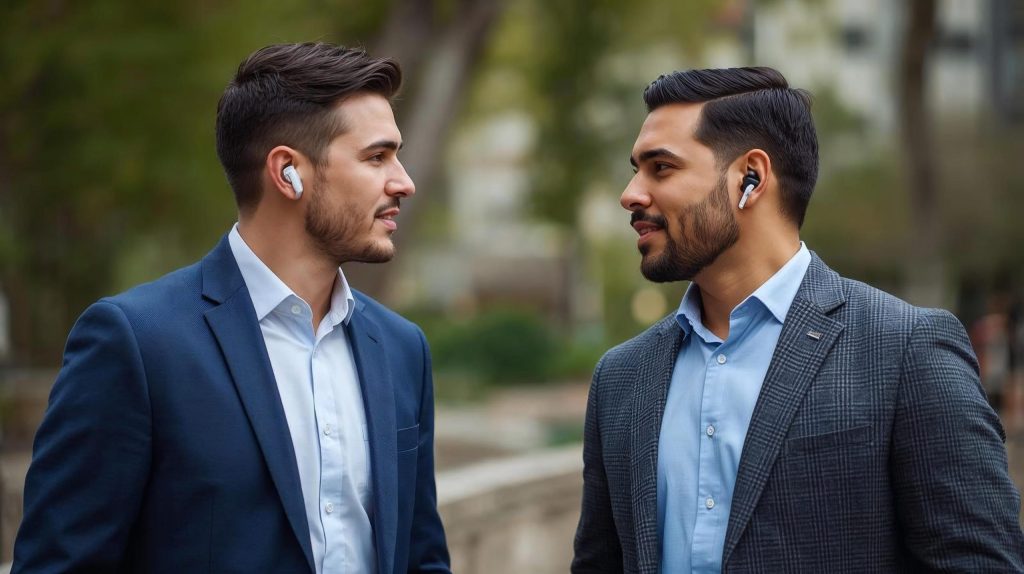
AI wearables are always on — and that’s exactly what makes them powerful. But it also raises real questions about privacy, consent, and data ownership.
When your smart glasses record video, your AI ring tracks biometrics 24/7, or your translation earbuds process conversations — where does that data go? Who owns it? And how long is it stored?
These aren’t hypothetical concerns. They’re practical decisions you should make before buying.
Three things to consider:
- Camera-equipped wearables — Devices like the Meta Ray-Ban Smart Glasses have LED indicators when recording. But not everyone around you knows what that light means. Always inform others when capturing audio or video in shared spaces.
- Health data sharing — AI rings collect sensitive biometrics: heart rate, sleep patterns, body temperature. Check your app settings and disable unnecessary cloud sync if you prefer local-only storage.
- Voice processing — Translation earbuds process real-time speech. Some use cloud AI, others work offline. If privacy is a priority, look for devices with offline mode like the Timekettle WT2 Edge.
The goal isn’t to avoid AI wearables — it’s to use them intentionally.
Want to take control of your data? Read our guide: How to Stop AI from Reading Your Private Data.
For a deeper dive into wearable privacy standards, EFF’s privacy resources offer a solid framework for understanding your rights in an AI-first world.
7. Conclusion & Takeaway – Choosing Smarter, Living Freer
Here’s the truth: AI wearables aren’t about owning the coolest gadget. They’re about removing friction from your daily life — one small interaction at a time.
The best AI wearables in 2026 don’t scream for attention. They work quietly in the background: tracking your sleep, translating conversations, capturing moments hands-free, and keeping you informed without pulling out your phone every five minutes.
So, which one should you actually buy?
It depends on what matters most to you:
- Want an AI assistant on your face? → The Meta Ray-Ban Smart Glasses are the most polished option right now — camera, voice AI, and style in one package.
- Want to optimize sleep and recovery? → The Oura Ring Gen 4 remains the gold standard for invisible health tracking.
- Want to break language barriers instantly? → The Timekettle W4 Pro delivers professional-grade translation that actually works.
Don’t overthink it. Pick one category, start there, and see how it fits your routine. You can always expand later.
One final thought:
We’re still in the early days of wearable AI. The devices we covered today will look basic in three years. But the habits you build now — using AI to simplify rather than complicate — will compound over time.
The best tech isn’t the most advanced. It’s the tech you actually use.
Discover our latest reviews and insights on AI devices that actually make life easier.
FAQ Section – AI Wearables
AI wearables are smart devices you wear on your body that use artificial intelligence to provide real-time insights, assistance, or automation. This includes smart glasses with built-in AI assistants, AI rings that track health metrics, and translation earbuds that convert speech in real time.
Unlike traditional wearables, AI wearables learn from your behavior and adapt to your habits — making them more useful over time.
Yes — if you choose the right device for your needs. AI wearables have matured significantly: smart glasses now offer real AI assistants, AI rings provide medical-grade health tracking, and translation earbuds work accurately in 40+ languages.
The key is matching the device to your lifestyle. If you travel frequently, translation earbuds are worth it. If you want to optimize sleep, an AI ring pays off quickly.
Start with your biggest pain point:
For health and sleep: The Oura Ring Gen 4 is the best entry point — it's invisible, lasts 7 days, and delivers actionable insights.
For productivity: The Meta Ray-Ban Smart Glasses let you stay connected without pulling out your phone.
For travel: The Timekettle W4 Pro breaks language barriers instantly.
It depends on the device. AI rings like Oura and Ultrahuman collect data independently but sync to your phone for analysis. Smart glasses typically require a phone connection for AI features. Translation earbuds vary — some like the Timekettle WT2 Edge offer offline translation for core languages.
For fully phone-free use, check each device's offline capabilities before buying.
Yes — modern AI rings are surprisingly accurate. The Oura Ring Gen 4 has been validated in multiple studies for sleep tracking and heart rate variability. It's not a medical device, but it's close enough for daily wellness decisions.
For serious health conditions, always consult a doctor. But for optimizing sleep, recovery, and energy levels, AI rings provide reliable, actionable data.
Oura Ring Gen 4: Best for sleep and recovery tracking. More polished app, larger community, 7-day battery. Requires a monthly subscription ($5.99/month) for full features.
Ultrahuman Ring Air: Best for metabolic health and biohacking. No subscription fees — one-time purchase includes all features. Slightly shorter battery (4-6 days).
If you want the most refined experience, go Oura. If you hate subscriptions, go Ultrahuman.
Not yet — but they can reduce how often you use it. Smart glasses like the Meta Ray-Ban handle voice commands, quick photos, calls, and AI queries hands-free. But for typing, browsing, or complex tasks, you still need your phone.
Think of smart glasses as a phone companion, not a phone replacement. They're best for moments when pulling out your phone isn't practical.
Some do. The Timekettle WT2 Edge supports offline translation for 8 major languages — useful when traveling without reliable internet. The Timekettle W4 Pro primarily uses cloud AI for best accuracy but has limited offline support.
If offline translation is critical (remote travel, poor connectivity areas), check which languages are supported before buying.
Battery life varies by category:
AI Rings: 4–7 days (Oura leads with 7 days)
Smart Glasses: 4–10 hours active use (Solos AirGo 3 leads with ~10 hrs)
Translation Earbuds: 3–6 hours (plus charging case extends to 12–18 hrs total)
For most users, AI rings require the least charging attention. Smart glasses need daily charging if used heavily.
It depends on how you configure them. AI wearables collect sensitive data — biometrics, voice recordings, location, and in some cases video. Most reputable brands offer privacy controls: disabling cloud sync, limiting data retention, and using on-device processing.
Before buying, review the privacy policy and app permissions. For a deeper guide, read our article on how to stop AI from reading your private data.