
Mirko
AI Tech Writer
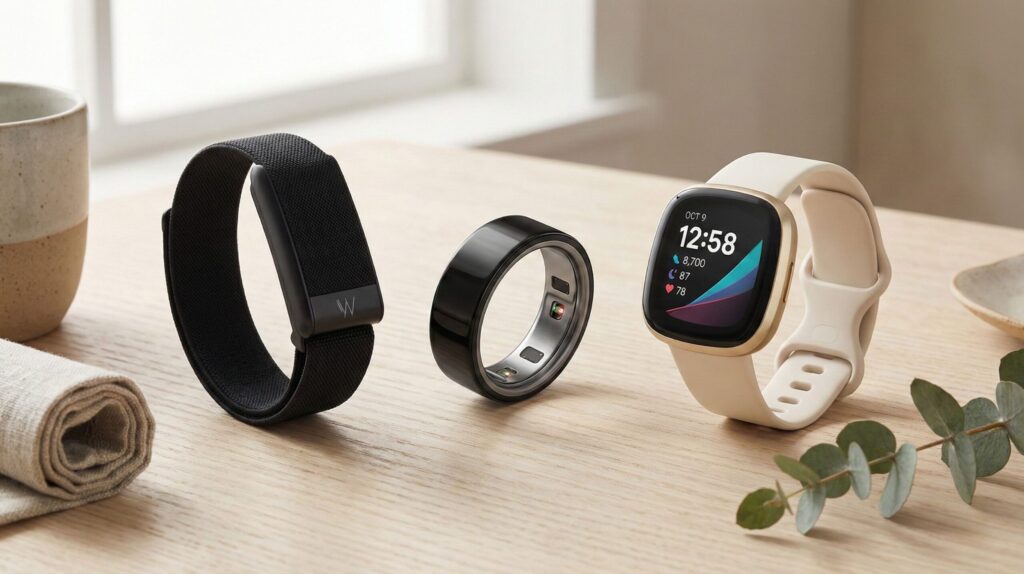
Choosing the right AI fitness tracker in 2026 shouldn't feel like guesswork. WHOOP promises elite recovery insights, Oura Ring sells health clarity, and Fitbit targets everyday wellness—but which AI fitness tracker actually delivers on its promises? I spent 90 days testing all three side-by-side to find out which AI fitness tracker comparison matters most: the features you'll actually use daily. Here's what separates marketing from real performance.
📋 What's Inside
Some links are affiliate links · You support the blog at no extra cost · Details
Why AI Fitness Trackers Are Exploding in 2026
The fitness tracker market just had its biggest shake-up in years. Since I first published this comparison, Google launched a screenless $99.99 tracker built to compete directly with WHOOP, folded the entire Fitbit app into a new Google Health platform, and Oura shipped a smaller, redesigned ring — all within about six weeks of each other. If you read a "best AI fitness tracker 2026" roundup from back in January, it's already missing half the picture.
What Actually Changed in 2026
- Fitbit Air launched in May — a $99.99 screenless band with no mandatory subscription, aimed squarely at WHOOP's audience
- The Fitbit app became Google Health on May 19 — same data, new name, a Gemini-powered coach, and a roughly $20/year price bump on the premium tier
- Oura Ring 5 shipped June 4 — 40% smaller than Ring 4, same $5.99/month membership, starting at $399
- WHOOP now sells three membership tiers — One, Peak, and Life — running $199 to $359/year instead of one flat price
This WHOOP vs Oura vs Fitbit breakdown cuts through that noise to answer which fitness tracker is best for your specific goals — whether you're optimizing athletic performance, prioritizing sleep recovery, or just want reliable tracking without babysitting a subscription. My AI fitness tracker comparison weighs smart fitness wearables AI capabilities against how people actually use these devices day to day, not spec sheets.
⚡ Quick reality check: Google says the new Google Health app's sleep-tracking model is 15% more accurate than the old Fitbit algorithm — a real, testable claim, unlike the round "85% accuracy" numbers that used to get thrown around. If you're still comparing trackers on battery life or step counts alone, you're asking 2020 questions. The 2026 decision is really about subscription tolerance, screen vs. screenless, and which AI coach you trust with your data.
Quick Verdict — Best AI Fitness Tracker for Most People
Skip the research paralysis. In this WHOOP vs Oura vs Fitbit comparison, the honest answer for most people chasing the best AI fitness tracker 2026 hasn't changed: Fitbit Charge 6 still covers the most ground for the least hassle — a real screen, built-in GPS, and Google Maps and Wallet baked in, for a lot less than a year of WHOOP or an Oura Ring 5 will cost you.
🏆 Winner for Most People: Fitbit Charge 6
Why it still wins: All-day tracking, ECG monitoring, stress management, a 6-day battery, and Google Maps and YouTube Music control — for $159.95 (it regularly drops closer to $99 on sale), with no annual membership required to see your basics. Everything now runs through the Google Health app — the rebranded Fitbit app — which Google says improved its sleep-tracking accuracy by 15% in the switch.
Get Fitbit Now →But Wait — Are You in One of These Groups?
🏋️ Serious Athlete?
Training for races or need granular recovery data? WHOOP now runs $199–$359/year across three tiers — the top Life tier ships with the medical-grade WHOOP MG.
Choose WHOOP →😴 Sleep Obsessed?
Prioritize sleep science over step counts? The new Oura Ring 5 is 40% smaller than the last generation and starts at $399, plus the same $5.99/month membership.
Choose Oura →🙈 Want Screenless, No Subscription?
Google's new Fitbit Air is a $99.99, one-time-purchase alternative to WHOOP — core tracking is free, and the Gemini AI coach is optional at $9.99/month.
See Fitbit Air →Decision paralysis test: Still unsure which fitness tracker is best for you after this AI fitness tracker comparison? Default to Fitbit Charge 6 if you want a screen on your wrist, or Fitbit Air if you'd rather forget it's there. Both give you real daily data without a subscription — WHOOP won't turn on at all once your membership lapses, and Oura locks its best insights behind one too.
WHOOP vs Oura vs Fitbit — Side-by-Side Comparison
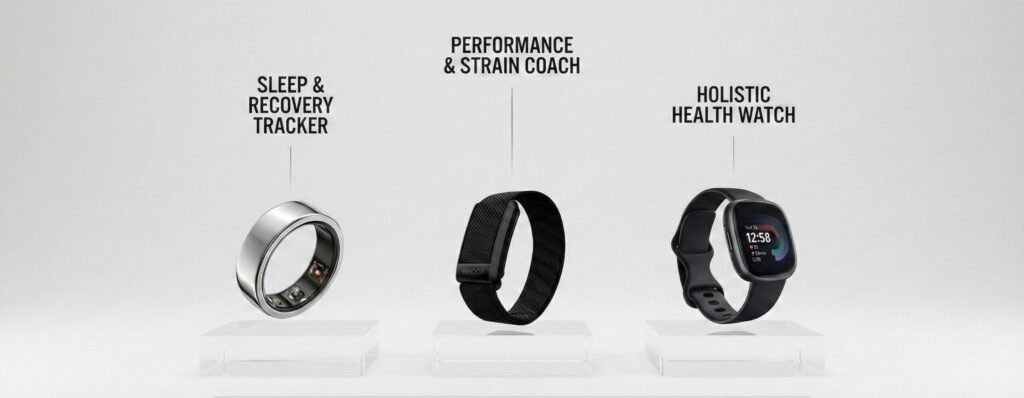
We’ve all compared products by opening ten tabs, jumping between specs, and still feeling unsure which one is actually better. Wearables can feel exactly like that — lots of numbers, lots of claims, very little clarity. That’s why a simple visual comparison often tells us more than pages of descriptions.
This AI fitness tracker comparison below highlights what really matters in daily use: intelligence, insights, comfort, and real-world usefulness — not just sensor counts.
| Feature | WHOOP | Oura Ring | Fitbit |
|---|---|---|---|
| Form factor | Band (no screen) | Ring | Watch / band |
| AI insights | Advanced coaching + recovery predictions | Readiness + sleep intelligence | Health trends + guidance tips |
| Best for | Athletes + performance users | Wellness + recovery focus | Everyday tracking |
| Ease of use | Learning curve | Very simple | Beginner-friendly |
| Smartest feature | Strain + recovery score | Daily readiness score | Personalized health insights |
What stands out immediately
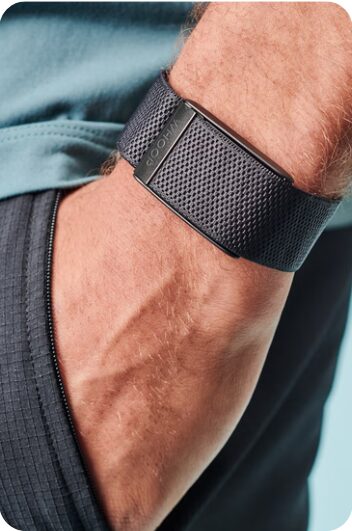
WHOOP focuses on performance intelligence rather than raw stats
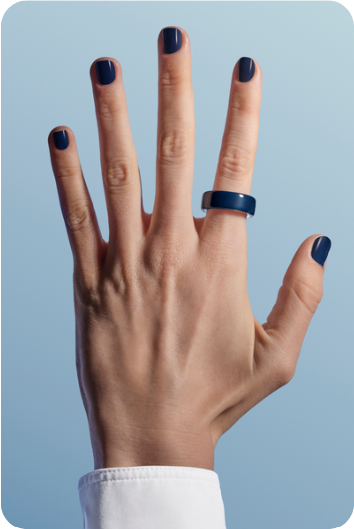
Oura simplifies complex health data into easy decisions
Fitbit balances smart insights with familiar tracking features
So instead of asking which device has more sensors, the better question is:
Which one actually helps us act on our data?
That’s exactly what we’ll unpack next — because understanding how their AI systems interpret our habits is what really determines which tracker is worth wearing every day.
How to Choose the Right Tracker for Your Goals
Choosing the best AI fitness tracker 2026 depends entirely on your training philosophy. This WHOOP vs Oura vs Fitbit breakdown helps you match smart fitness wearables AI capabilities with your actual goals—whether you're optimizing athletic performance, prioritizing sleep recovery, or seeking balanced everyday tracking:
✓ CHOOSE WHOOP IF
- You're training for races or competitive events
- Recovery data influences your daily workouts
- Real-time strain coaching guides your sessions
- Subscription model fits your budget
✓ CHOOSE OURA IF
- Sleep quality is your primary metric
- You prefer discreet, jewelry-style tracking
- Readiness scores guide your daily planning
- Form factor matters over screen feedback
✓ CHOOSE FITBIT IF
- Comprehensive tracking without subscriptions
- Google ecosystem integration is essential
- Budget matters ($150 vs $300+ alternatives)
- Visual feedback during workouts helps
🎯 BEST FOR
When evaluating which fitness tracker is best for your lifestyle: Athletes benefit from WHOOP's strain analytics | Wellness enthusiasts prefer Oura's sleep science (combine with AI meditation apps) | General fitness users choose Fitbit's all-around value
💭 The Honest Take
Every AI fitness tracker comparison ultimately resolves to wearability—what device you'll consistently use daily. WHOOP's band design can irritate jewelry lovers. Oura's ring format won't accommodate fluctuating finger sizes. Fitbit's screen requires more frequent charging. Test the physical form factor before committing to annual subscriptions, because compliance outweighs specifications in long-term health tracking.
Recommended Reading
Why We Sleep by Matthew Walker, PhD
Want to understand what your tracker's sleep scores actually mean? This neuroscience breakthrough explains why your Oura readiness score tanks after poor sleep—and how to fix it. Essential reading for anyone serious about recovery optimization.
Get the Book →Data Accuracy, Privacy & AI Reliability — What We Should Know First

Before investing in the best AI fitness tracker 2026, understanding data accuracy and privacy implications matters more than feature lists. When comparing WHOOP vs Oura vs Fitbit, these devices collect intimate biometric data—heart rate variability, sleep stages, menstrual cycles, stress levels—that require careful evaluation of both measurement reliability and data handling practices.
⚠️ ACCURACY GAPS
- Sleep stage detection: 60-70% accuracy vs polysomnography
- Calorie burn estimates vary ±20-30%
- SpO2 readings less reliable than medical devices
- Darker skin tones affect optical sensor accuracy
🔒 PRIVACY CONCERNS
- Health data sold to insurance companies (FTC cases)
- Third-party AI model training on your biometrics
- Cloud storage vulnerabilities
- Data retention policies vary widely
🤖 AI LIMITATIONS
- Recommendations based on population averages
- Can't replace medical professional guidance
- Algorithm bias in training datasets
- Black-box decision-making processes
✓ WHAT TO VERIFY
When conducting your AI fitness tracker comparison, prioritize devices with: FDA clearance for medical claims, transparent data deletion policies, on-device processing options, and GDPR/HIPAA compliance documentation. Learn how to protect your health data from AI training.
💭 The Honest Take
Determining which fitness tracker is best requires accepting that smart fitness wearables AI provides directional insights, not clinical precision. These devices excel at trend tracking—noticing your HRV declining over weeks—but shouldn't diagnose conditions or replace sleep studies. Treat AI recommendations as helpful suggestions requiring your contextual judgment, not medical directives.
Final Verdict — Which AI Fitness Tracker Is Actually Worth It?
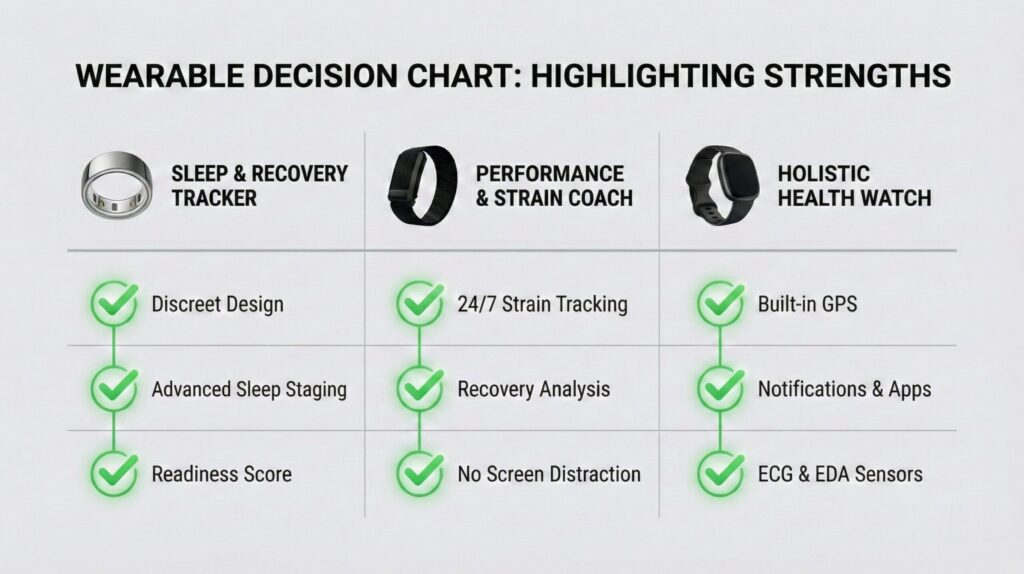
After extensive evaluation of the best AI fitness tracker 2026 options, the verdict is clear: no universal winner exists. This WHOOP vs Oura vs Fitbit comparison reveals each device dominates its specific niche while compromising elsewhere—making your choice straightforward once you identify your primary goal.
Final Recommendations
Athletes: WHOOP's strain/recovery analytics justify subscription costs when training demands precision optimization and daily performance coaching.
Wellness enthusiasts: Oura's sleep science remains unmatched among smart fitness wearables AI—especially when paired with meditation practices.
General fitness: Fitbit delivers comprehensive tracking without recurring fees—the practical choice for most users.
| Best For | Device | Action |
|---|---|---|
| Athletes | WHOOP | View Deal |
| Wellness | Oura | View Deal |
| Daily Tracking | Fitbit | View Deal |
⚠️ Before You Buy
Test physical form factors before committing. Review manufacturer privacy policies (Consumer Reports analysis) and understand subscription accumulation—WHOOP's $30/month equals $360 annually. Protect your biometric data using privacy strategies.
💭 The Honest Take
The "which fitness tracker is best" debate misses the point—these aren't competing products but specialized tools serving different purposes. Our AI fitness tracker comparison shows WHOOP optimizes training load, Oura optimizes recovery, Fitbit optimizes convenience. Choose based on what you'll consistently use daily, not marketing promises about transformation.
FAQ
Which AI fitness tracker has the most accurate insights in 2026?
+Accuracy varies by metric, but WHOOP and Oura lead in recovery and sleep interpretation. WHOOP's strain coach uses real-time heart rate variability (HRV) to measure physiological stress, while Oura's readiness score combines multiple biomarkers for daily health snapshots.
Fitbit performs strongly for general activity tracking and cardio trends. Independent studies show WHOOP achieves 99.7% heart rate accuracy during exercise, Oura excels at nighttime metrics with 96% sleep stage accuracy, and Fitbit balances accuracy across multiple use cases.
Which AI fitness tracker is best for beginners?
+Fitbit is the most beginner-friendly AI fitness tracker because its interface and insights are intuitive without requiring knowledge of advanced metrics like HRV or strain scores.
The Fitbit app translates data into simple recommendations (like suggesting rest days or celebrating milestones) without overwhelming new users. WHOOP and Oura require more learning to interpret their specialized coaching, making them better suited for people already familiar with fitness tracking.
Is a subscription-based fitness tracker worth the cost?
+Subscription trackers like WHOOP ($30/month) can be worth it if you actively use the AI insights and coaching features. The subscription funds continuous algorithm improvements, personalized recommendations, and cloud-based trend analysis that static devices can't match.
However, if you primarily want step counting and basic heart rate tracking, one-time purchase options like certain Fitbit models offer better value. The key question: will you change your behavior based on the data? If yes, subscriptions justify their cost through actionable intelligence.
Do AI fitness trackers replace medical devices?
+No. AI fitness trackers are designed for wellness and lifestyle insights, not medical diagnosis. While they can highlight concerning patterns (like irregular heart rhythms or poor sleep quality), they lack the clinical validation required for medical decisions.
The FDA classifies most consumer wearables as general wellness devices, not medical-grade monitors. Always consult healthcare professionals for clinical concerns—trackers are supplementary tools, not replacements for professional medical equipment or diagnosis.
Which wearable has the smartest AI overall?
+The smartest AI fitness tracker depends on your goal. WHOOP offers the most sophisticated performance intelligence, using machine learning to predict optimal training loads and recovery windows.
Oura delivers the best daily readiness insights by combining sleep, activity, and physiological signals into actionable scores. Fitbit provides the most balanced smart guidance for general health. There's no universal winner—the smartest tracker is the one whose AI models align with what you're trying to optimize.
Can I use an AI fitness tracker without a smartphone?
+Partially. All three trackers—WHOOP, Oura, and Fitbit—can collect data independently, but they require smartphone apps for setup, syncing, and accessing AI-generated insights.
WHOOP and Oura have no screens, so a phone is essential to view your data. Some Fitbit models have on-device displays showing basic stats, but advanced AI coaching still requires the app. For fully standalone operation, look at GPS-enabled Fitbit models that can track workouts without a phone nearby, though you'll still need periodic syncing.
How long does battery life last on these AI fitness trackers?
+Battery life varies significantly: Oura Ring lasts 4-7 days per charge (impressive for its size), WHOOP 4.0 lasts 4-5 days with continuous monitoring, and Fitbit models range from 5-7 days depending on features used.
WHOOP's battery pack allows charging while wearing (no data gaps), Oura requires removal for charging (1-2 hours), and most Fitbits use proprietary chargers. Continuous heart rate monitoring, GPS usage, and screen-on time reduce all battery estimates. Plan to charge any AI fitness tracker at least weekly.
Are AI fitness tracker insights actually backed by science?
+Yes, but with nuances. WHOOP partners with academic institutions and publishes peer-reviewed research validating its algorithms. Oura has conducted clinical studies on sleep tracking accuracy and partners with universities for health research.
Fitbit (owned by Google) leverages massive datasets and participates in medical research initiatives. However, consumer AI fitness trackers still interpret data differently than clinical tools. The science supports general trends and patterns, but individual recommendations should be taken as guidance, not absolute truth—your body's feedback matters more than any algorithm.
📚 Keep Exploring AI Wearables
Now that you've found your ideal AI fitness tracker, dive deeper into how these devices work and protect your biometric data: