
Mirko
AI Tech Writer · AIDigitalSpace
Acquiring a new customer costs 5–7× more than keeping one — yet most businesses still pour budget into acquisition while loyal customers quietly churn, taking lifetime value, repeat revenue, and referrals with them.
The right AI tools for customer retention change that equation entirely. Modern AI CRM tools don't just track behavior — they predict churn before it happens, surface upsell opportunities at the perfect moment, and automate personalized loyalty campaigns that actually convert.
We tested the leading AI upsell software, customer loyalty AI platforms, and retention marketing AI solutions available today — ranked by real performance, pricing, and ease of integration. Here's everything you need to stop losing customers and start growing revenue.
Some links are affiliate links · You support us at no extra cost · Full disclosure
1. Introduction – Why Customer Retention Beats Acquisition
Most businesses funnel 80% of their marketing budget into acquisition — while their best customers quietly slip away. That gap is where revenue goes to die, and most companies never even see it happening.
Research from Harvard Business Review makes the case hard to ignore: acquiring a new customer costs 5–7× more than keeping an existing one, while a 5% lift in retention can grow profits by up to 95%. Yet the average business still loses roughly one in five customers every year — not because of price, but because of poor follow-up and zero personalization.
This is exactly where AI tools for customer retention are reshaping how smart businesses compete. Modern AI CRM tools and retention marketing AI platforms don't wait for customers to leave — they predict churn before it happens, trigger hyper-personalized re-engagement, and automate loyalty workflows that used to require an entire team.
Businesses deploying customer loyalty AI and AI upsell software consistently report lower churn, higher average order values, and stronger lifetime revenue — often without adding a single new hire.
2. Quick Picks – Best AI Tools for Customer Retention & Upsells

Not all AI CRM tools perform the same — and picking the wrong one can quietly derail your entire retention strategy. After evaluating over a dozen platforms on three criteria — churn prediction accuracy, upsell automation, and ease of integration — we identified the five AI tools for customer retention that consistently deliver measurable results. G2's 2026 CRM rankings independently rate each of these among the highest-performing solutions in their category.
| Tool | Best For | Why It Stands Out |
|---|---|---|
| ⭐ Top Pick HubSpot AI | All-In-One CRM |
AI contact scoring, automated re-engagement sequences, and deal forecasting — all in one platform. The easiest entry point for teams new to retention automation, with a free CRM tier to start. → Includes free plan · Best all-rounder |
| Salesforce Einstein | Enterprise & Scale |
Predictive analytics surfaces upsell opportunities before your team would ever spot them manually. Best suited for enterprises managing complex, multi-touchpoint customer lifecycles. → Deep AI upsell engine · Advanced forecasting |
| RetentionX | eCommerce & DTC |
Built specifically for Shopify and DTC brands — analyzes purchase patterns, flags at-risk customers, and triggers automated win-back campaigns. No-code setup means it's live in hours. → Customer loyalty AI for online stores |
| Optimove | Personalized Journeys |
Orchestrates retention marketing AI campaigns across every channel, adapting timing and message per customer. Reduces opt-outs while consistently lifting lifetime value. → Ideal for SaaS & subscription models |
| Zendesk AI | Support Retention |
Proactive support AI resolves friction before it becomes churn. Smart ticket routing and response suggestions cut resolution times by up to 40% — making it the best AI upsell software for support-led growth. → Best for service-heavy retention models |
← Swipe to see full table →
3. What to look for in AI retention and upsell software
Popular doesn't mean right for your business. With dozens of platforms competing for your budget, the real question is which one actually solves your specific retention problem. The best AI tools for customer retention share six core capabilities — and missing even two of them means paying for a tool that generates dashboards but fails to stop churn. According to Gartner, companies that evaluate AI CRM tools against structured criteria see up to 3× higher ROI in the first year compared to those who choose based on brand alone.
Flags at-risk customers automatically using real behavioral signals — not just inactivity. The earlier it fires, the more revenue you save.
Must connect cleanly with your existing CRM, email stack, and eCommerce platform without custom dev work or costly middleware.
True customer loyalty AI adapts to each person's behavior individually — not just broad demographic segments that miss the nuance.
Fires the right offer at the optimal moment using purchase history and real-time intent signals — the core of any strong retention marketing AI platform.
Shows revenue impact clearly — not just opens, clicks, or vanity metrics. You need to know what's reducing churn, not what looks good in a slide deck.
GDPR and CCPA compliant out of the box — non-negotiable if you serve EU or US audiences. A data breach erases any retention gain overnight.
4. Top AI Tools for Customer Retention (Detailed Reviews)
Here’s where we go deeper into the platforms we listed earlier. Each review highlights what the tool does best, who it’s for, and why it can make a difference in keeping customers engaged and open to upsells.
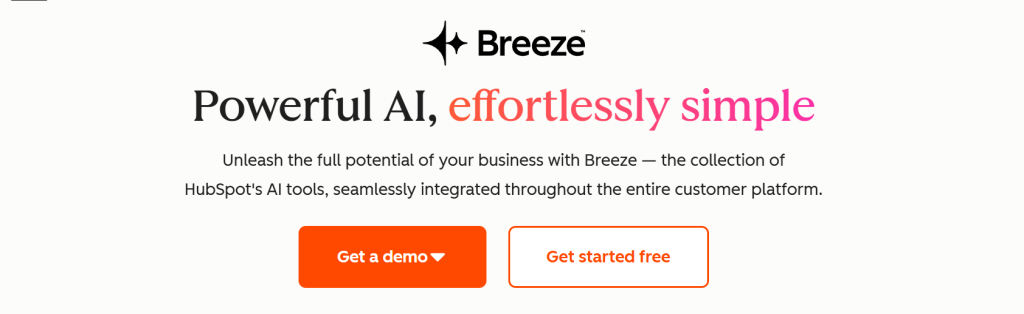
HubSpot AI – All-in-One CRM With Retention Focus
Type: AI-powered CRM and marketing automation.
Key AI Features: Predictive lead scoring, churn alerts, automated follow-ups, customer journey mapping.
Strengths: Easy to use and accessible for SMEs, with strong integrations across marketing, sales, and support.
Limitations: Advanced AI features are locked into higher-tier plans, which can be expensive for very small teams.
Integrations: Gmail, Outlook, Shopify, WooCommerce, Slack, Zapier.
Pricing Insight: Free tier available; paid plans start from around $20/month, with AI tools included in higher packages.
Use Case Example: An online fitness coach uses HubSpot AI to identify clients likely to cancel after three months, sending automated offers that improve retention by 20%.
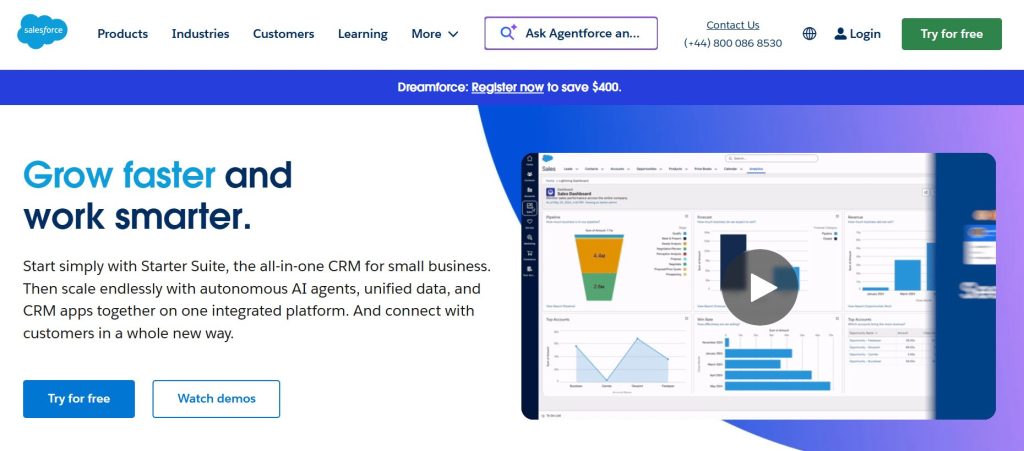
Salesforce Einstein – Predictive Upsells at Scale
Type: AI add-on within Salesforce for enterprise CRM.
Key AI Features: Predictive sales recommendations, customer intent insights, and lead prioritization.
Strengths: Salesforce Einstein is one of the most advanced AI tools for customer retention and upsells, leveraging massive CRM datasets to deliver precise predictions.
Limitations: High cost and complexity, designed mainly for enterprise-level teams with trained staff.
Integrations: Fully integrated with Salesforce modules and AppExchange apps.
Pricing Insight: Enterprise-level pricing; bundled into Salesforce CRM packages with custom quotes.
Use Case Example: A telecom company uses Einstein to detect customers most likely to upgrade their plan. Targeted upsells increase average revenue per user by over 15%.
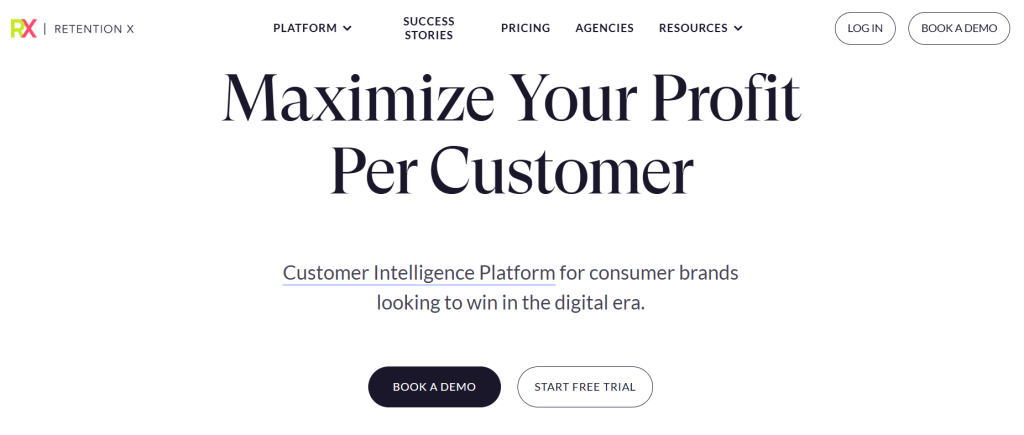
RetentionX – E-Commerce Retention Specialist
Type: AI-powered retention and loyalty platform tailored for online stores.
Key AI Features: Customer churn prediction, lifecycle analysis, loyalty campaign automation, and segmentation.
Strengths: RetentionX is built exclusively for merchants, making it one of the most direct AI tools for customer retention in e-commerce. It is quick to set up, with dashboards that translate data into action without technical complexity.
Limitations: Limited to retail and online sales; not useful for service-driven businesses.
Integrations: Shopify, WooCommerce, Klaviyo, Google Ads, Meta Ads.
Pricing Insight: Plans start around $99/month and scale based on order volume.
Use Case Example: A fashion retailer predicts seasonal churn after sales peaks and sends personalized loyalty offers, successfully reactivating 30% of at-risk customers.
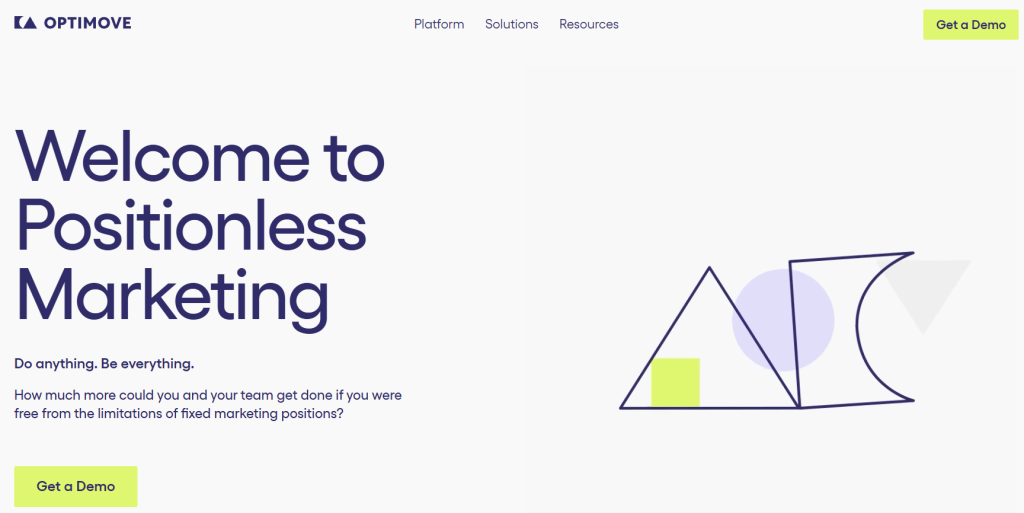
Optimove – Personalized Customer Journeys
Type: AI-driven Customer Data Platform (CDP).
Key AI Features: Predictive segmentation, multichannel personalization, journey orchestration, and campaign testing.
Strengths: Optimove stands out for personalization, making it one of the most reliable AI upsell software solutions. It keeps upsell offers relevant and avoids customer fatigue.
Limitations: Positioned at enterprise level with custom pricing; may not be affordable for startups.
Integrations: Email providers, SMS platforms, push notifications, Facebook Ads, Google Ads.
Pricing Insight: Enterprise pricing with custom quotes based on data volume.
Use Case Example: A subscription box company uses Optimove to design upsell campaigns with personalized add-on products, boosting customer lifetime value significantly.
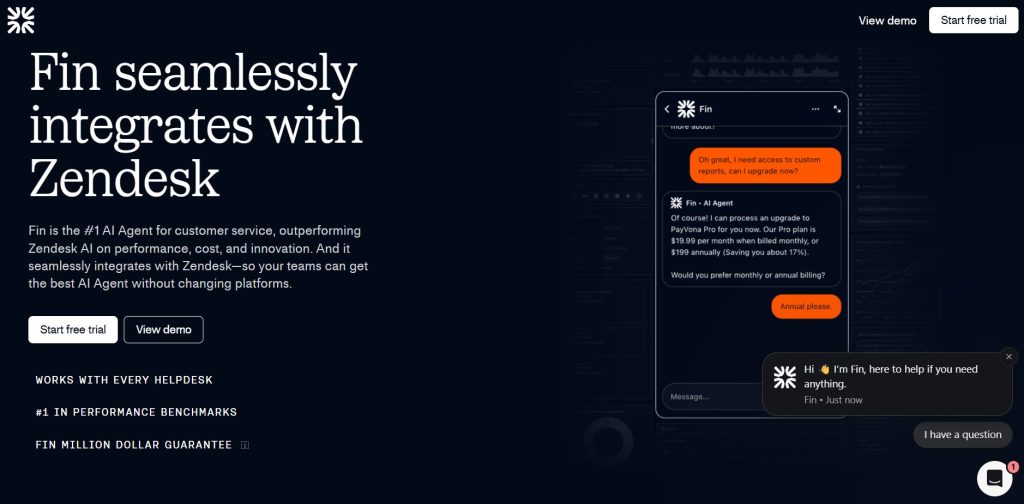
Zendesk AI – Retention Through Better Support
Type: AI-powered enhancement for Zendesk customer service platform.
Key AI Features: Predictive ticket triage, automated agent suggestions, and customer sentiment analysis.
Strengths: Zendesk AI improves customer experience through faster, smarter support. This makes it one of the most effective AI tools for customer retention in support-driven industries.
Limitations: Works best for companies already using Zendesk; costs rise with agent seats and add-ons.
Integrations: Slack, Jira, Shopify, Salesforce, plus the wider Zendesk ecosystem.
Pricing Insight: Plans start at about $55/month per agent, with AI features as paid add-ons.
Use Case Example: A SaaS company uses Zendesk AI to automatically prioritize high-value accounts in its support queue, reducing churn by 18% thanks to faster problem resolution.
5. Predictive Analytics – How AI Knows When to Upsell

Most businesses react to churn and missed upsells after the decision is already made. AI upsell software works differently — it runs continuously in the background, analysing dozens of behavioral signals at once to calculate a propensity score: a real-time indicator of how likely each customer is to buy more, downgrade, or leave. According to McKinsey, brands using predictive personalization report revenue uplifts of 10–30% within the first six months.
When these signals converge into a high propensity score, the AI tools for customer retention trigger an automated response — a targeted discount, a product upgrade prompt, or a proactive support message. The timing isn't arbitrary. AI CRM tools and retention marketing AI platforms fire these triggers at statistically optimal windows, making each touchpoint feel personal rather than scheduled. The result: higher conversion rates, lower opt-outs, and stronger customer loyalty AI outcomes compared to any manual campaign.
6. Case Studies & Real-World Results from Leading Brands
Feature lists are easy to write. Results are harder to fake. Across every industry, brands deploying AI tools for customer retention are reporting outcomes that manual processes simply can't replicate — faster, at scale, and without adding headcount. Salesforce's State of Marketing report found that AI-adopting companies are 2.8× more likely to exceed revenue targets than those still running traditional AI CRM tools in rule-based mode. Here's what that looks like in practice.
"28% annual churn with zero visibility into which customers were about to leave before they already had."
Churn reduction in 90 days.
$2.1M in recovered revenue from win-back campaigns.
"Manual re-engagement campaigns averaging under 8% conversion — and a growing backlog of untouched at-risk accounts."
Upsell conversion rate increase.
CAC payback period cut by 40% in 6 months.
"Support escalations driving silent churn across 200K+ customer accounts — with no early warning system in place."
NPS points gained in one quarter.
Retention rate up 18% year-over-year.
7. Comparison Table – Retention vs Upsell AI Features
Sometimes the easiest way to choose is to see the differences side by side. Below is a comparison of the leading AI tools for customer retention and upsells, highlighting their focus, pricing range, and best use cases.
| Tool | Best For | Key Strength | Pricing Insight |
|---|---|---|---|
| HubSpot AI | SMEs needing retention + marketing automation | User-friendly CRM with churn alerts & follow-ups | Free tier; paid plans from ~$20/month |
| Salesforce Einstein | Enterprises managing large sales pipelines | Advanced predictive analytics for upsells | Enterprise pricing; bundled into Salesforce |
| RetentionX | E-commerce stores (Shopify, WooCommerce) | Churn prediction & loyalty campaign automation | From ~$99/month, scales with order volume |
| Optimove | Retail & subscription businesses | Personalized journeys across multiple channels | Custom enterprise pricing |
| Zendesk AI | Support-driven businesses | Faster resolutions with predictive triage | From ~$55/month per agent + AI add-ons |
This table makes the choice clearer:
If you’re a small business, HubSpot AI gives the best balance of features and cost.
For enterprise-level predictive upsells, Salesforce Einstein stands out.
E-commerce stores will get the fastest results with RetentionX.
Companies focused on personalization at scale can rely on Optimove.
And if support quality drives retention, Zendesk AI is the smarter choice.
8. Ethical AI Reflection – Where to Draw the Line in Persuasion
When we look at AI tools for customer retention, it’s clear they can do more than just help businesses grow—they also shape customer behavior in subtle ways. Predictive analytics and upsell automation can be extremely effective, but they raise an important question: where does helpful personalization end and manipulation begin?
A loyalty reminder that saves a customer money feels like added value. But constant nudging to buy more—even when the product isn’t needed—can erode trust. Over time, that damages the very retention these tools are meant to build. This is why ethical use of AI upsell software matters as much as technical accuracy.
Transparency helps strike the balance. When companies are open about how recommendations are generated and give customers control over preferences, retention efforts become a partnership instead of a one-sided push. Respecting privacy and avoiding over-targeting isn’t just good practice—it’s what makes long-term loyalty possible.
As users of digital space, we believe the most effective use of retention AI is the one that creates genuine win-win outcomes: businesses grow revenue, while customers feel supported and understood. Ethical AI isn’t about saying “no” to upsells; it’s about ensuring every upsell is timely, relevant, and truly useful.
9. Practical Tips – How to Integrate AI Retention Tools in Your Business
Adding AI tools for customer retention to your workflow doesn’t need to be overwhelming. The key is to start small, measure impact, and scale only once you see results. Here’s a simple path any business can follow.
Step 1 – Map your customer data
Before choosing a tool, check where your data lives: CRM, e-commerce platform, support desk, or spreadsheets. Clean, connected data is the foundation of accurate AI predictions.
Step 2 – Define retention goals
Decide what success looks like. Do you want to reduce churn, increase subscription renewals, or boost repeat orders with upsells? Clear goals will guide tool selection.
Step 3 – Start with one AI tool
Pick a platform that matches your size and needs. For example, RetentionX for Shopify, HubSpot AI for SMEs, or Zendesk AI if support drives loyalty. Avoid piling on multiple tools at once.
Step 4 – Automate small but high-impact flows
Set up one or two workflows: a churn alert email, a loyalty discount, or a personalized upsell suggestion. Prove that the system works before expanding.
Step 5 – Test and measure
Track churn rate, customer lifetime value, and upsell acceptance. If metrics don’t improve, adjust the triggers or the messaging. Tools like Optimove are strong in testing different campaigns.
Step 6 – Integrate across channels
Once basics work, expand into SMS, push notifications, and personalized web banners. Customers should receive consistent messages without feeling spammed.
Step 7 – Keep it ethical
Always ensure upsells feel like recommendations, not pressure. A good rule of thumb: if you wouldn’t want the message in your own inbox, don’t send it to your customers.
Internal note: we’ve already explored automation setups in our Bardeen AI revie, and the same step-by-step approach applies here. Start lean, scale gradually, and use AI as an assistant—not a replacement—for real customer relationships.
10. Final Takeaways & Next Steps
The data is clear, the tools are proven, and the window to act before your competitors do is still open — but narrowing. Businesses that deploy AI tools for customer retention today are building a compounding advantage: every week the AI learns more, every campaign improves, and every recovered customer reduces pressure on acquisition. According to HubSpot's retention research, companies that prioritize retention grow revenue 2.5× faster than those focused purely on new customer acquisition.
- ✓ Retention is 5–7× cheaper than acquisition — and the gap widens further when AI automates the work.
- ✓ AI tools for customer retention work best when deployed proactively — before customers show visible signs of churning.
- ✓ AI CRM tools like HubSpot and Salesforce Einstein handle both prediction and automation — no separate stack required to start.
- ✓ Customer loyalty AI compounds over time — the longer the model runs, the more accurate and profitable every upsell trigger becomes.
- ✓ AI upsell software performs best when triggered by behavioral signals — not fixed calendar schedules that ignore individual context.
- ✓ Start with one tool, measure ROI within 90 days, then build the full retention marketing AI stack from a proven base.
Ready to stop losing customers? Start with the tool that makes it easiest.
HubSpot AI is our top pick for most teams — free to start, no dev required, and live retention automation in under an hour. Or explore how leading small businesses build their full AI stack:
Frequently Asked Questions — AI Tools for Customer Retention
What are the best AI tools for customer retention in 2026?
+The best AI tools for customer retention in 2026 are HubSpot AI (best all-in-one CRM with a free tier), RetentionX (best for eCommerce and DTC brands), Optimove (best for multi-channel campaigns), Salesforce Einstein (best for enterprise scale), and Zendesk AI (best for support-led retention).
For teams new to retention automation, HubSpot AI is the recommended entry point — it has the lowest learning curve, the broadest feature set at entry level, and a free CRM plan that lets you start without upfront investment.
How does AI predict customer churn before it happens?
+AI predicts churn by continuously monitoring behavioral signals — purchase frequency drops, email engagement decline, support ticket increases, app login gaps, and changes in spending patterns. These feed into a predictive model that assigns each customer a real-time propensity score.
When the score crosses a set threshold, the platform automatically triggers a retention action — a personalized offer, a re-engagement email, or a proactive support message — before the customer has consciously decided to leave. The earlier the system fires, the higher the recovery rate.
What is the difference between AI retention tools and a standard CRM?
+A standard CRM stores customer data and helps teams manage relationships manually. AI CRM tools go further — they analyze that data in real time, predict future behavior, and trigger automated responses without human input.
The key difference is proactivity: a CRM shows you what happened, while AI retention software acts on what is likely to happen next. Platforms like Salesforce Einstein and HubSpot AI combine both capabilities in one place, eliminating the need for a separate retention stack alongside your CRM.
Can small businesses afford AI tools for customer retention?
+Yes — several platforms offer free plans or low-cost entry tiers. HubSpot AI includes a free CRM with basic retention marketing AI features. RetentionX has plans designed for growing eCommerce stores, and Zendesk AI offers a 14-day free trial with full feature access.
The most effective approach for small teams: start with one tool focused on your highest-churn segment, measure the revenue impact, then expand. Most small businesses report a positive return within 60–90 days of deployment.
How long does it take to see results from AI retention software?
+Most businesses see initial results within 30–90 days of deployment. Quick wins — automated win-back campaigns, churn alert triggers, and personalized upsell sequences — typically show measurable impact within the first month.
Deeper personalization results compound over time as the AI learns from more customer interactions. HubSpot AI and RetentionX offer the fastest time-to-value, both providing pre-built templates that activate without any technical setup or custom integration work.
What is the best free AI tool for customer retention?
+HubSpot AI offers the most comprehensive free tier — including contact management, email sequences, deal tracking, and basic AI-powered customer insights. For eCommerce brands, RetentionX provides a free trial covering churn prediction and segmentation.
While free plans have limits, they are more than sufficient to run initial retention campaigns, measure real results, and build a business case for upgrading. Most teams outgrow the free tier within 90 days — which is a sign the tool is working, not a downside.
How does AI upsell software decide what to offer each customer?
+AI upsell software analyzes each customer's purchase history, browsing behavior, and engagement patterns to identify the products or upgrades most likely to convert. It then calculates the optimal moment to fire the offer — based on lifecycle stage and real-time intent signals.
Platforms like Salesforce Einstein and Optimove use machine learning models that improve with every interaction — the longer the tool runs, the more accurate each recommendation becomes.
Is investing in AI tools for customer retention worth it for eCommerce?
+For eCommerce brands, customer loyalty AI consistently delivers strong ROI. Retained customers spend on average 67% more than new ones, and even a 5% improvement in retention can increase profits by up to 95%.
The cost of most AI retention platforms — typically $50–$300/month — is recovered within weeks when even a small percentage of at-risk customers are successfully re-engaged. For brands experiencing 15%+ annual churn, the investment pays for itself many times over in the first quarter alone.
Your Retention Strategy Starts Now
You now have the complete picture — the tools, the signals, the real-world results, and the exact criteria that separate platforms that actually reduce churn from ones that just generate reports. The market for AI tools for customer retention is moving fast, and brands that deploy today build a compounding advantage that gets harder to close every month.
Do not try to implement everything at once. Pick the tool that matches your business model — HubSpot AI if you are starting fresh, RetentionX if you run eCommerce, Optimove if you need multi-channel campaigns. Run it for 90 days. Measure churn, upsell rate, and lifetime value. Then expand the stack.
The difference between brands that grow through retention and those that churn their way to stagnation is not budget — it is timing. The customer loyalty AI tools are here, the data is clear, and the results are proven. What happens next is up to you.
Start with one customer segment. Measure everything. Build from there. Now go keep your customers.
🔁 Go Deeper Into AI Customer Retention
You have the retention foundation. Take your strategy further with these guides: