
Mirko
AI Tech Writer
Two out of three businesses never appear in AI search — not because they lack a website, but because AI tools can't understand, verify, or trust what's on it. I researched what ChatGPT, Gemini, Perplexity, and Google AI Mode look for when they decide which businesses to recommend — and turned it into a step-by-step plan any small-business owner can follow.
Some links are affiliate links · they support this site at no extra cost to you · Full disclosure
What AI Search Is and Why It Matters for Your Business
When someone types "best wedding photographer in Austin" into ChatGPT, Perplexity, or Google AI Mode, they don't get a list of blue links. They get a direct answer — a short paragraph naming specific businesses, with reasons why each one fits. That's the moment your business either does or doesn't appear in AI search.
That answer is assembled from information the AI can find, read, and verify across the web. Your website, your Google Business Profile, your reviews, your mentions on other sites — all of it feeds into whether the AI includes you or skips you entirely. Get any of this wrong, and you simply won't appear in AI search — no matter how good your business actually is.
Each platform works differently. Google AI Mode and AI Overviews pull from Google's own search index. ChatGPT relies heavily on Bing's index plus its own web crawling. Perplexity actively searches the live web and cites its sources visibly. Gemini draws from Google's systems and training data. But all four reward the same underlying qualities: clarity, specificity, and verifiable trust signals — the same three things that decide whether you appear in AI search on any of them.
Here's the number that should get your attention: a MentionLayer study across nearly 100,000 data points found that 65.9% of businesses are invisible in AI search — two in three never surface when a buyer asks an AI tool for a recommendation. If that's you, the fix isn't complicated. What it takes to appear in AI search is the rest of this post.
65.9% of businesses are invisible in AI search. The other 34.1% did the same foundational work covered in this post — nothing more exotic than that.
"AI search doesn't rank your website — it decides whether to mention it at all."
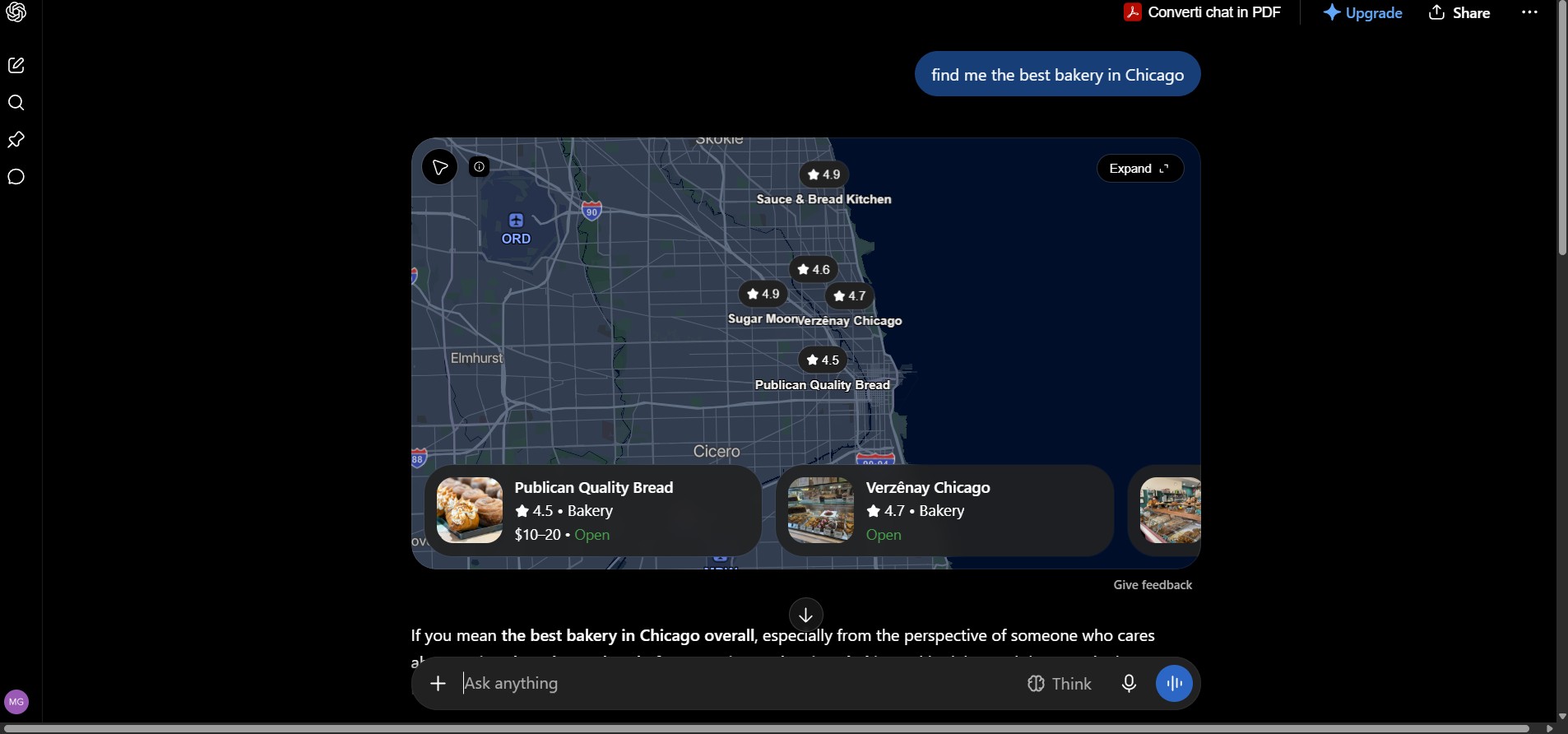
A real ChatGPT answer, naming specific businesses instead of listing links.
Test Your AI Search Visibility Right Now
Before fixing anything, find out whether you currently appear in AI search at all. Open ChatGPT, Perplexity, or Google AI Mode — the tools your customers already use — and type prompts they would type. Try these, replacing the brackets with your actual business details:
🔍 Prompts to test whether you appear in AI search:
- "What are the best [your service] providers in [your city]?"
- "Who offers [your product/service] near [your area]?"
- "Compare [your type of business] options in [your region]"
- "[Your business name] review"
Write down what you find. Does your business appear in AI search at all? Is the information accurate? Is it described the way you'd describe it — or is the AI guessing, getting it wrong, or ignoring you entirely?
Action: Run these prompts across at least two AI platforms. Screenshot the results. This becomes your baseline — the "before" you'll measure your progress against in 30 days.
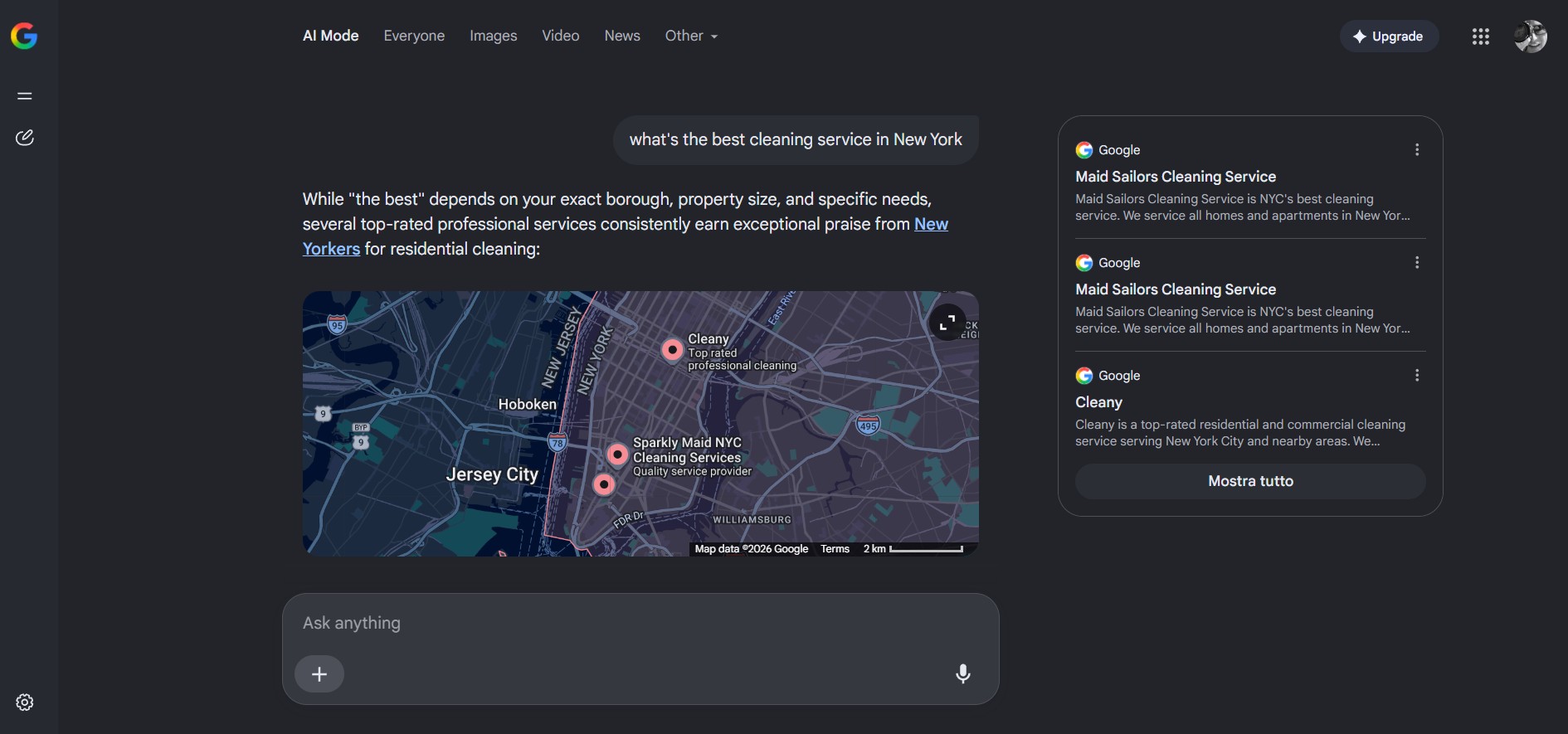
Google AI Mode answering the same kind of question — with sources named directly in the response.
"If you can't find yourself in AI search, neither can your customers."
Make Your Website Clear for AI Search (and Humans)
This is the single fastest way to affect whether your business will appear in AI search. AI reads your website the way a busy stranger would — quickly, looking for specific facts. If your homepage buries what you do under vague slogans, it moves on to a competitor whose page states it plainly.
The Five Facts Every Page Needs
Every website should clearly state these five things within the first scroll of the homepage, and again on key service or product pages — whether you appear in AI search often comes down to exactly this:
"We design custom Shopify stores for DTC brands"
"Freelancers, small e-commerce teams, and solopreneurs"
"Based in Portland, OR — serving clients across the US"
"Avg launch time: 3 weeks. 97% client retention rate"
"[email protected] · (555) 123-4567"
Action: Open your homepage right now. Can a complete stranger identify all five facts within 10 seconds? A clear homepage is the single biggest lever for making your business appear in AI search — if any fact is missing or buried, that's your first fix.
"Clear beats clever — every time, in AI search."
Create Content AI Search Wants to Cite
AI search doesn't cite content that restates what every competitor already says. It cites content that directly answers a specific question better than anything else available. The pattern is straightforward: answer the question your customer would ask, right at the top of the page, in 2–3 clear sentences. Then expand below with details, examples, and evidence.
Pages Worth Building
A bakery in Denver wondering why Perplexity never recommends them might be missing any of these: a page explaining their custom cake ordering process, an FAQ answering "How far in advance should I order a wedding cake?", a comparison of buttercream vs. fondant with real photos and prices, or a guide like "Best dessert options for a 50-person corporate event." Pages like these are exactly what lets a small, local business appear in AI search next to much bigger competitors.
Each of those pages answers a real question someone is asking right now. Service pages, product pages, FAQs, guides, and honest comparisons — these are the content types AI search pulls from most often. According to large-scale citation research, ranked "Top N" lists and content with original, verifiable data points see the highest citation rates across platforms. Publish enough of these and you'll consistently appear in AI search for the questions that matter to your business.
"The page that answers the question best wins the citation — not the page that's been live longest."
Action: List the 10 questions your customers ask most. Check whether your website has a clear, dedicated answer for each one. Start with the three your site doesn't cover at all — content like this is what actually helps a page appear in AI search.
Add Proof AI Search Can Verify
An AI tool generating a recommendation is doing something surprisingly similar to what a person does before recommending a business to a friend — it checks whether the claims hold up outside the business's own website. If the only place that says you're great is your own About page, the AI treats that as a claim, not evidence.
Proof Signals That Move the Needle
Reviews and ratings on Google, Yelp, Trustpilot, or industry-specific directories are the most accessible trust signal for any small business trying to earn visibility in AI search. Google confirmed at I/O 2026 that Google Business Profiles directly feed into AI Overview and AI Mode recommendations — 97% of consumers read reviews for local businesses according to BrightLocal's current data. Ask every happy customer to leave one — reviews like these are consistently one of the strongest signals that let a business appear in AI search.
Author and team information matters more than it used to. A real About page with named people, their qualifications, and how long they've worked in the field tells AI systems that a real, verifiable person stands behind the content. Add a professional headshot, a short bio, and links to any professional profile you maintain — details like these are part of what lets a small business appear in AI search next to established competitors.
Third-party mentions carry weight even without a link. Being quoted in a local news article, mentioned in a Reddit thread, featured on a partner's website, or reviewed on an independent blog all function as external verification that your business exists and does what it says. Signals like these are a major reason some businesses appear in AI search and similar ones don't.
Action: This week, ask your three most recent satisfied customers to leave a Google review. Update your About page with real names, qualifications, and a photo — that's often the proof missing before a business can appear in AI search.
Improve Local Visibility in AI Search
AI search cross-references your business information across multiple sources. If your address says one thing on Google, something slightly different on Yelp, and a third variation on your website, the AI isn't sure which one is correct — so it trusts none of them.
The industry shorthand for this is NAP consistency: Name, Address, Phone. Every place your business appears online should use the exact same spelling, formatting, and details. "123 Main St" on your website and "123 Main Street" on Google might seem trivial — but to an AI cross-referencing entities, it's a mismatch. Getting this right is one of the fastest ways for a local business to appear in AI search.
Platforms to Check and Update
Getting listed and consistent across these platforms is what lets your business appear in AI search for local, in-person searches specifically:
- Google Business Profile — the single most important local signal for whether you appear in AI search via Google AI Mode
- Bing Places — feeds directly into ChatGPT's search results
- Yelp, Trustpilot, and industry directories — Perplexity draws from these
- Social profiles (LinkedIn, Instagram, Facebook) — AI uses these to verify entity identity
- Apple Business Connect — relevant if you serve local, walk-in customers
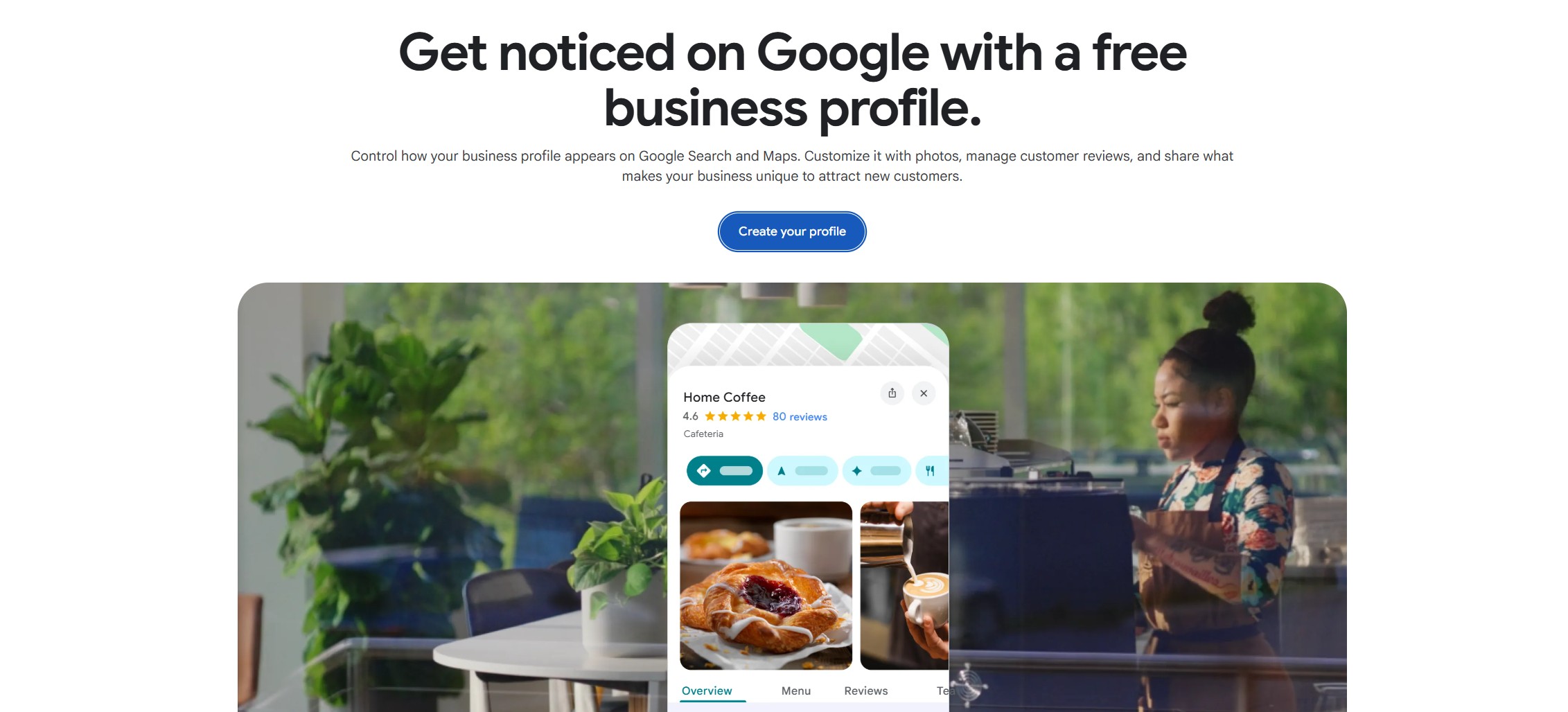
Your Google Business Profile is the single field-level source most AI search tools check first.
Action: Search your business name on Google. Click through every listing in the first two pages of results. Fix any inconsistency in name, address, phone, or business hours — consistency like this is often the deciding factor in whether a local business can appear in AI search.
What Not to Do — Tactics That Backfire
I need to be direct here because there's a lot of bad advice circulating. None of the following will help your website appear in AI search, and some can actively hurt it.
🚫 Skip These Entirely
Keyword stuffing. Repeating the same phrase 40 times doesn't impress AI systems — it makes your page harder to extract a clear answer from.
Fake or incentivized reviews. Google's fraud detection is better than ever, and AI systems cross-reference review patterns. A sudden spike of five-star reviews with generic text can trigger a penalty, not a boost.
Mass AI-generated pages. Publishing 200 thin, cookie-cutter pages doesn't build authority — it dilutes it. One excellent service page outperforms fifty auto-generated ones. None of these tricks will help you appear in AI search — only real substance does.
Relying on llms.txt. Google confirmed in June 2026 that llms.txt files have zero effect on Google Search rankings, AI Overviews, or AI Mode. Google Search doesn't read them at all. Focus your time on the content and trust signals that matter instead.
Google's own updated guidance is clear: there is no special AI-specific markup, no separate optimization track, and no shortcut. The same core principles — helpful content, strong structure, genuine expertise, and technical crawlability — are what earn both a regular ranking and an AI citation. Follow them consistently, and you'll appear in AI search the honest way — the only way that lasts.
Your 30-Day AI Search Visibility Plan
Everything above is a lot to process. Here's the same work broken into four weeks, one manageable batch at a time — by the end, you'll have a clear, current answer for whether your business can appear in AI search.
Week 1
Test & Benchmark
Run the test prompts from Section 2 across ChatGPT, Perplexity, and Google AI Mode. Screenshot every result. Note where you appear, where competitors appear instead, and where the AI gets your details wrong.
Week 2
Fix Your Pages
Update your homepage and top 3 service pages with the five facts from Section 3. Answer your customers' most common question on a dedicated page. Make sure every page opens with a clear, self-contained answer — that's what makes a page appear in AI search.
Week 3
Build Proof & Profiles
Ask 5 recent customers for Google reviews. Update your Google Business Profile, Bing Places, and Yelp with consistent NAP details. Refresh your About page with real names, qualifications, and a photo.
Week 4
Retest & Track
Run the same test prompts again. Compare results to your Week 1 screenshots. Note improvements, gaps that remain, and new questions worth answering next. Set a monthly reminder so you continue to appear in AI search long after this checklist is done.
Most businesses start to appear in AI search within 4–8 weeks of implementing these steps. Perplexity picks up site changes fastest (it crawls live). Google AI Mode follows once its index refreshes. ChatGPT can take longer for training-data-based responses, but its search feature reflects Bing index changes within weeks.
Free Download
📋 AI Search Visibility Checklist for Small Businesses
Every step from this post in a printable one-page checklist — test, fix, build proof, retest, and appear in AI search.
You can't force AI systems to mention your website. But you can make your business clearer, more useful, more credible, and easier to verify — and that's what separates the businesses AI recommends from the ones it skips.
Frequently Asked Questions — Website Visibility in AI Search
🔍 Go Deeper on AI Search & Visibility
You've got the foundation to appear in AI search. Here's where I'd go next to tighten it: