
Mirko
AI Tech Writer
Most "future skills" lists read the same: critical thinking, creativity, emotional intelligence, repeat. So instead of writing another one, I put the question straight to an AI system — which future-proof skills will still be worth having in 2045? — and spent the following weeks checking its answer against real labor data, and against my own doubts about it. One rule came out of that process that mattered more than any single skill on the list.
Some links are affiliate links · they support this site at no extra cost to you · Full disclosure
The One Rule Behind Every Skill Here
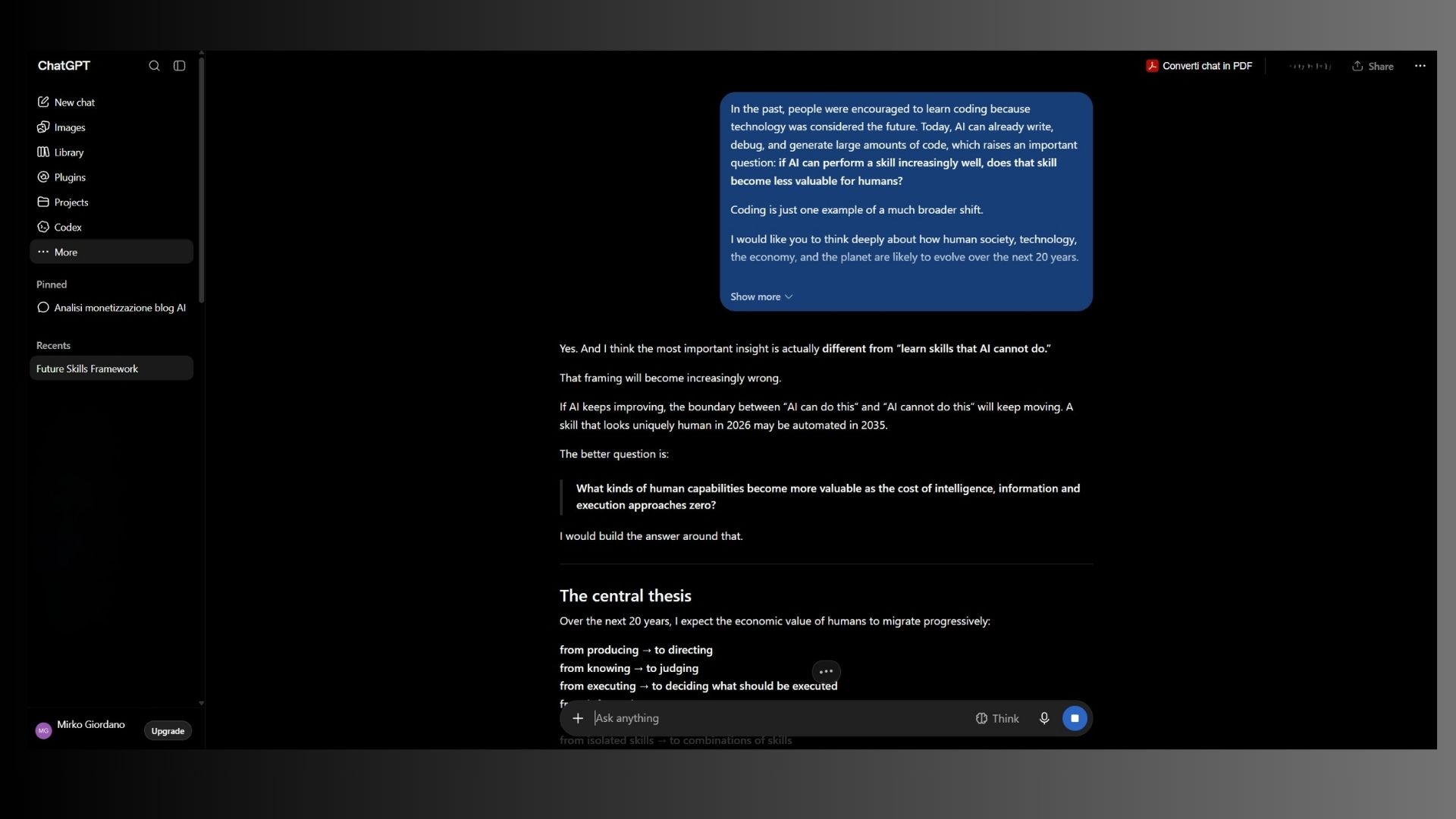
Every conversation about future-proof skills eventually runs into the same pattern. Over the last two centuries, physical strength lost its premium to machines. Raw calculation lost its premium to computers. Information access lost its premium to the internet. Writing, basic code, and first-draft analysis are losing their premium to AI right now.
Each time, a capability that used to be scarce became cheap and common, and the people who kept betting on that capability alone lost ground. The rule I took from asking an AI this question wasn't a skill at all — it was a filter: don't build a career around something that's about to become abundant. Build around deciding what's worth doing with the abundance instead.
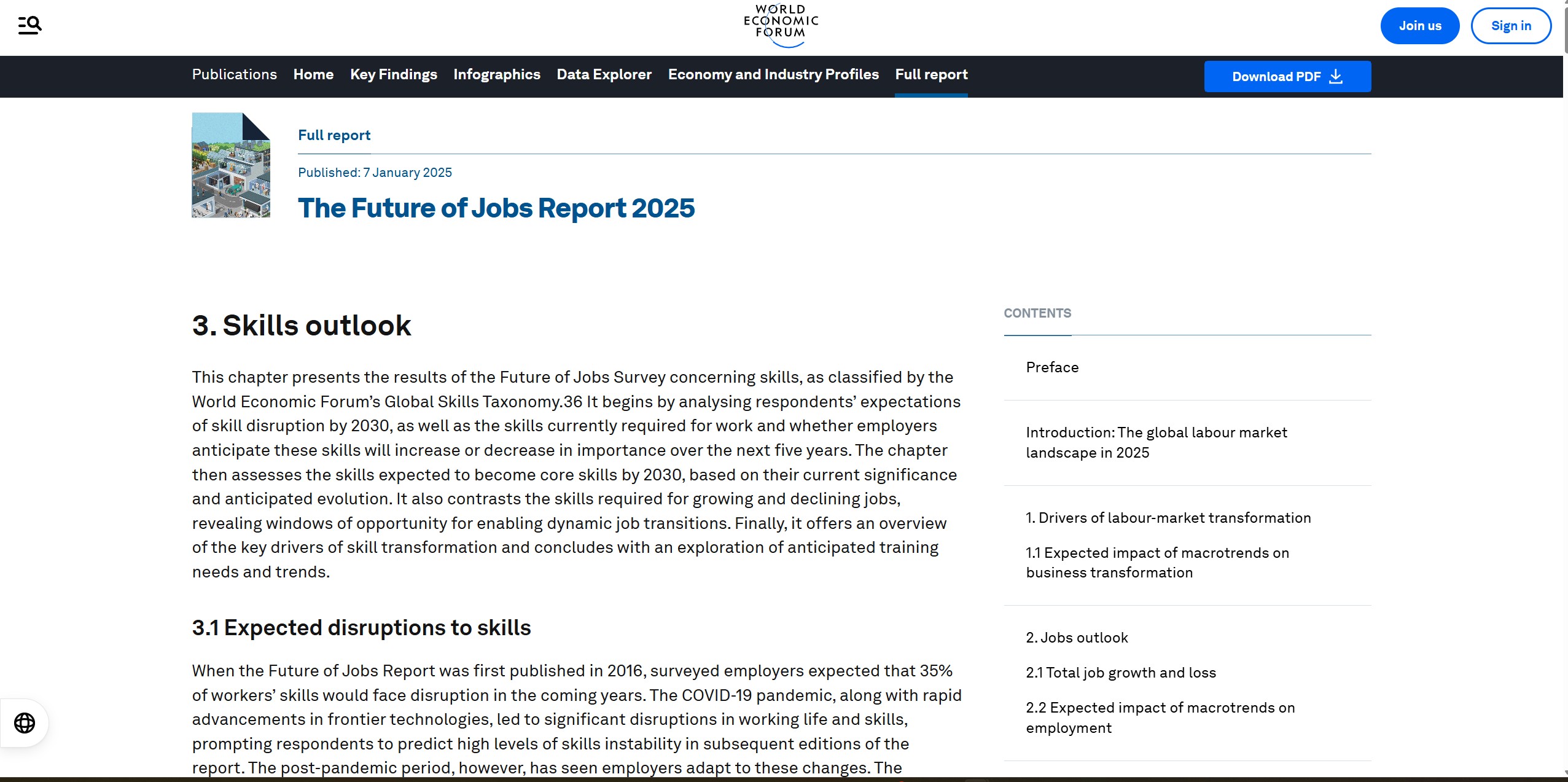
That filter matters more than usual right now. The World Economic Forum's Future of Jobs Report 2025 — built on responses from over 1,000 employers across 55 economies — found that 39% of core workplace skills are expected to change by 2030, down from 44% in the 2023 edition. Whether AI displaces your specific role or not, I'd rather plan future-proof skills for the version of the next twenty years where the ground keeps moving under every job, including mine. I've dug into whether AI will actually take jobs away separately — the short version is: some, not all, and not evenly.
Judgment Beats Production
Ask an AI for business strategies today and you can have a hundred within minutes. Ask for ad concepts and you'll get five hundred before lunch. The bottleneck isn't production anymore — it's deciding which of those hundred ideas is actually worth building, and that's the piece most future-proof skills conversations skip right past.
That's judgment: reading incomplete information, spotting the plausible-sounding answer that's actually wrong, and making a call anyway. One 2026 workplace survey found six in ten employees feel pressured to use AI whether or not the task calls for it, and seven in ten admit leaning on it for decisions that needed real, human judgment instead. That's the exact gap judgment fills.
I built a four-step filter for exactly this reason — a way to separate a tool's real capability from its demo reel before committing to it. Filtering AI hype from AI reality is judgment turned into a repeatable habit rather than a one-off gut check — which is what most future-proof skills come down to once the buzzwords get stripped away.
This is also why checking AI output before shipping it has quietly become a core job skill on its own. I've covered how often AI systems produce confident, wrong answers — the fix isn't avoiding AI, it's never skipping the review step.
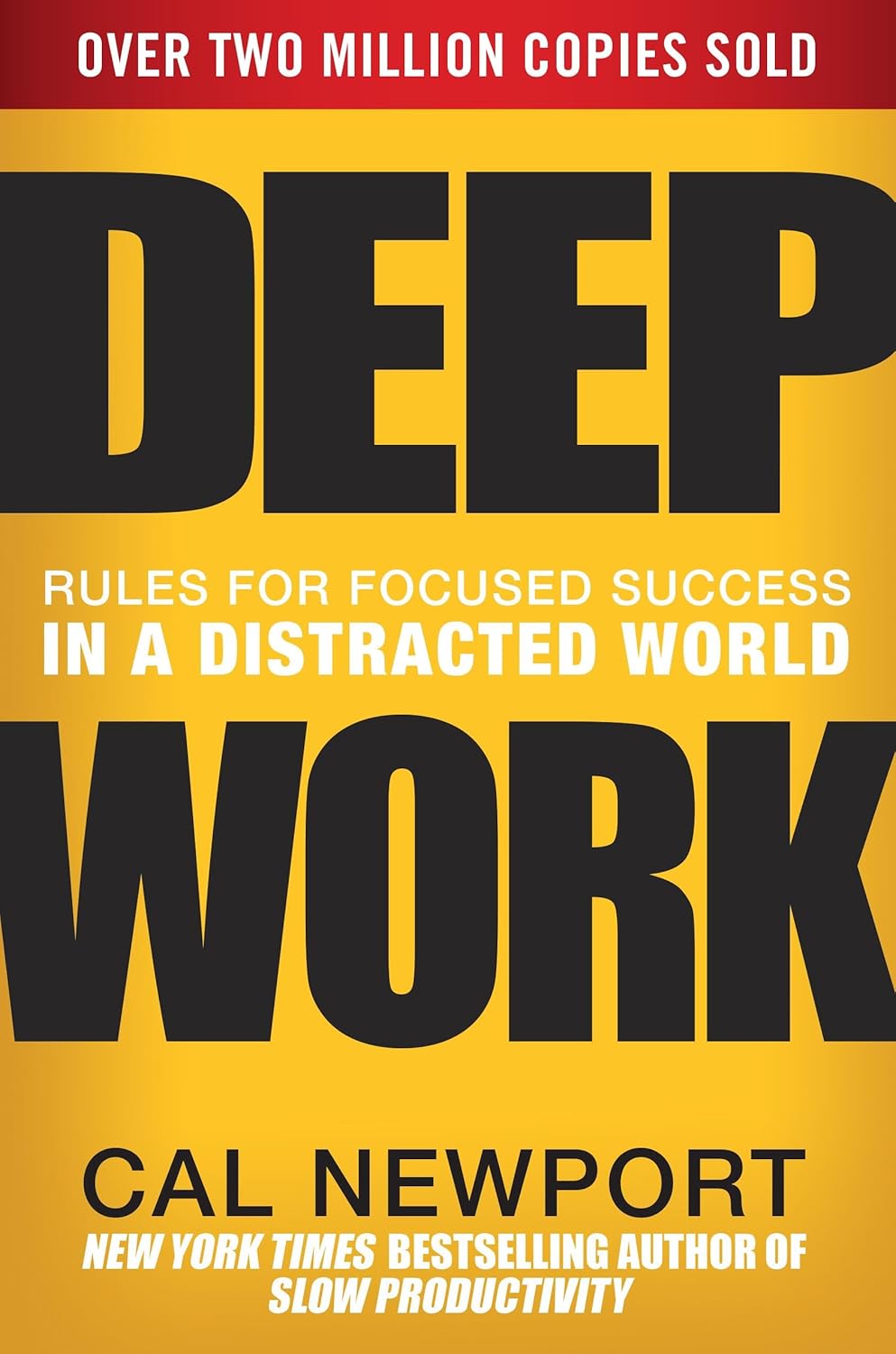
Deep Work: Rules for Focused Success in a Distracted World
by Cal Newport
Newport's case for treating focus as a trainable skill rather than a personality trait — the same "judgment muscle" argument from the section above, just with a full training plan behind it.
Learning How to Learn Is the Real Skill
A Python course teaches Python. That's the difference between a single skill and the future-proof skills this piece is actually about: one expires, the other compounds. Learning how to pick up any new tool quickly keeps paying out for decades, because most careers between now and 2045 will change tools more times than anyone can predict today.
The WEF's 2025 report lists curiosity and lifelong learning among the fastest-rising future-proof skills for exactly this reason — not because either is trendy, but because reskilling itself is becoming the actual job requirement, not a one-time event before it starts.
Specialization still matters — a generalist who knows a little of everything rarely out-competes someone with real depth. The difference now is that the depth needs to sit on top of adaptability, not instead of it, and small daily habits build that muscle faster than one big relearning push every few years.
Building future-proof skills rarely needs a dramatic career pivot. If you want a low-effort way to practice that muscle daily, I put together nine free AI-assisted study habits that work whether you're relearning a spreadsheet formula or an entire new field.
Working With AI, Not Just Prompting It
Prompt engineering had a moment, but it's turning into a commodity skill fast — models keep getting better at understanding plain, messy questions on their own. The skill replacing it is knowing what to hand off, what to keep, and how to check the handoff.
That's closer to knowing how to use the internet well than knowing how to build it. You don't need to understand a model's architecture. You need to know when an AI-drafted email is ready to send and when it needs a human pass, when a generated dataset needs a source check, and when a confident-sounding answer is actually a guess dressed up as one — that check alone is one of the more overlooked future-proof skills on this whole list.
I've written about where an AI assistant genuinely speeds up daily work and about how autonomous AI agents are starting to change what "delegating" even means — both come down to the same underlying skill: deciding what a machine should own and what stays yours.
For research and verification specifically, a tool built to show its sources next to its answer — Perplexity AI is the one I keep coming back to — makes the checking step almost automatic instead of an afterthought squeezed in at the end.
Original Ideas Beat Original Output
Of all the future-proof skills people ask me about, creativity is the most misread. AI is making production close to free — images, video, music, articles, code can all be generated in seconds now, which means the question stops being "can you make this?" and starts being "do you have anything worth making?"
Execution is getting automated. Original thinking isn't. Creativity used to mean craft — knowing how to draw, edit, or write well enough to execute an idea. Seeing a connection between two things nobody else has put together yet is still a distinctly human move, and it's the part no model does on its own.
That shift is already visible in how creators actually work. I mapped a few of those AI-assisted creative workflows where the human is doing less production and more direction.
The craft skills aren't worthless — they're just no longer the moat. The moat is having a point of view worth executing in the first place.
What AI Still Can't Manufacture
Three future-proof skills came up while I was checking that AI-generated answer, and none of them are a tool or a technique. They're the three I trust most, because they're the hardest to fake at scale.
Trust Doesn't Scale
Anyone can generate ten thousand personalized emails with one click now. That makes the handful of people readers actually trust worth more, not less. Communication, negotiation, and the plain ability to make someone believe you're being straight with them keep getting scarcer as the noise around them gets cheaper — quietly one of the least talked-about future-proof skills of the next twenty years.
Own What You Build
If one person's output can now match what used to take a small team, the real leverage shifts from doing the work to owning what the work produces — a brand, an audience, a piece of software, a system that keeps running without you in the room. I put together a breakdown of what a solo, AI-powered business stack actually looks like if that shift interests you — ownership is one of the more overlooked future-proof skills in this entire piece.
The Meta-Skill Is Comfort With Change
Every skill above assumes something uncomfortable: that the tools, and maybe the job title, will look different again in five years. The people doing best with that aren't the ones with the deepest expertise — they're the ones who've made peace with rebuilding their expertise on a schedule.
Frequently Asked Questions — Future-Proof Skills for 2045
What is the most future-proof skill against AI?
+No single skill covers everyone. What holds up best across roles is judgment — deciding which of several AI-generated options is actually worth acting on.
Production is getting cheap fast. Deciding what's worth producing isn't, and judgment underlies nearly all of the future-proof skills covered in this piece.
Will critical thinking become more valuable because of AI?
+The data points that way. Analytical thinking already sits near the top of the World Economic Forum's core-skills list for employers today, and it stays there in their 2030 projections.
As AI produces more raw output for less effort, the scarce part shifts to whoever can tell which of that output is actually correct.
Is prompt engineering still worth learning in 2026?
+The basics are worth knowing, but it's stopped being a career anchor. Models keep getting better at parsing plain, messy questions without special phrasing.
The more durable version of this skill is deciding what to delegate, what to keep for yourself, and how to verify whatever comes back.
Which skills will still matter by 2045?
+Six future-proof skills hold up best across both the labor data and the pattern behind past automation waves: judgment, fast learning, working with AI as a collaborator, original creative thinking, trust-based communication, and ownership.
None of these are single "jobs" — they're capacities that transfer across whatever job titles exist by then.
How many jobs will AI create by 2030, according to the World Economic Forum?
+Their Future of Jobs Report 2025 projects 170 million new roles created against 92 million displaced by 2030 — a net gain of about 78 million jobs worldwide.
That figure comes from surveying over 1,000 employers across 22 industries and 55 economies, representing more than 14 million workers.
Can creativity actually be automated?
+The execution side already is, largely — AI generates images, drafts, and music on demand now, at close to zero marginal cost.
What isn't automated is deciding which idea deserves that execution in the first place — that gap is quickly becoming one of the more valuable future-proof skills for creative work specifically.
Where should I start building future-proof skills today?
+Pick a daily habit over a one-time course. Practice checking one AI tool's output critically instead of accepting it at face value — that's judgment, in reps.
Stack a learning-how-to-learn habit on top of it. Twenty minutes a day compounds faster than an intensive weekend course every few months.
Is owning a business more future-proof than having a job in an AI economy?
+Ownership tends to capture more of the value AI creates than employment does — a single person with the right AI stack can now run what used to take a small team.
That doesn't mean jobs disappear. It means the gap between owning a system and operating one is widening either way — and ownership is exactly why it belongs on this list of future-proof skills.
🧭 Keep Testing the Rule
The rule behind these future-proof skills was never "predict the right skill." It was "don't compete with what's about to become abundant." Here's where I'd keep pressure-testing that against real tools and real data: