
Mirko
AI Tech Writer
Most people waste money on basic air purifiers that just push air through filters — they don't adapt, learn, or optimize for your actual air quality. Smart air purifiers with AI technology can detect pollution in real-time, automatically adjust performance, and even predict when your air quality will drop before it happens. We researched 15+ intelligent air purifiers to find which models actually deliver cleaner air, which "smart" features matter, and which are just marketing fluff. Here's what really works.
Some links are affiliate links · You support our research at no extra cost · Full disclosure
1. Why Smart Air Purifiers With AI Matter for Indoor Air Quality
Traditional air purifiers run on fixed schedules — they can't detect pollution spikes or adapt to changing conditions. Smart air purifiers with AI technology solve this by using real-time sensors that detect particle levels and automatically adjust without manual intervention.
Why intelligent air purifiers outperform basic models:
The best smart air purifiers integrate with Alexa, Google Home, and Apple HomeKit, working alongside other AI-powered home devices to create healthier living environments.
2. The Hidden Problems Most People Have With Indoor Air Quality
Most people don't realize their indoor air quality is dangerously poor until symptoms appear — headaches, fatigue, allergies, or worsening asthma. Unlike outdoor pollution you can see or smell, indoor contaminants are invisible and accumulate silently over time.
Common indoor air quality problems that basic purifiers miss:
From cleaning products, furniture, paint — cause long-term respiratory damage
Cooking, candles, outdoor pollution entering through windows
Pet dander, dust mites, pollen that trigger allergic reactions
Modern sealed homes trap pollutants with no escape route
Traditional air purifiers can't detect these issues — they just run on timers. Smart air purifiers with AI technology use real-time sensors to identify specific pollutants and adjust filtration accordingly. WiFi-enabled air purifiers send alerts when air quality drops, unlike standard models that leave you guessing.
3. The Best Smart Air Purifiers and What Makes Them Effective
We analyzed 15+ best smart air purifiers to identify models that deliver real results. Our research covered AI air purifiers across all price ranges — from budget-friendly options to premium systems — comparing air quality sensors, filtration efficiency, WiFi connectivity, and app features.
The smart air purifiers below represent different needs: budget-conscious buyers, large rooms, advanced filtration, and premium smart home integration. Each intelligent air purifier uses proven technology but differs in maintenance costs, noise levels, and automation capabilities.
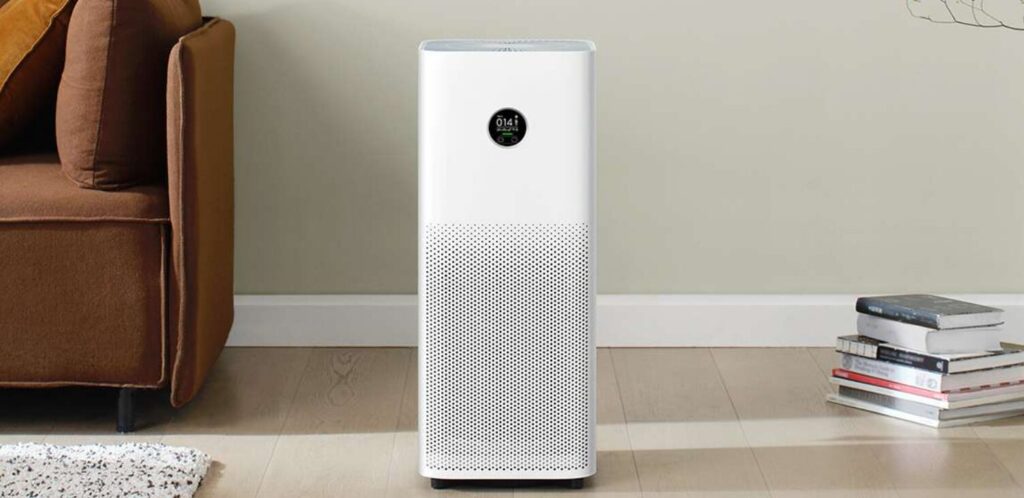
Xiaomi Air Purifier 4
The best smart air purifier for budget-conscious buyers who want AI features
The Xiaomi Air Purifier 4 delivers intelligent air purification at an unbeatable price. This WiFi-enabled air purifier uses real-time sensors to detect PM2.5, PM10, and temperature, automatically adjusting fan speed through its AI-powered algorithm.
🌟 Smart Features
- Real-time air quality display with OLED screen showing PM2.5 levels
- Mi Home app control for remote monitoring and scheduling
- Voice control via Alexa and Google Assistant integration
- Auto mode adjusts purification based on detected air quality
- Filter life indicator alerts when replacement needed
✓ Pros
- Affordable price for AI features
- Excellent CADR for room size
- Quiet operation in auto mode
- Energy efficient (28W max)
✗ Cons
- Limited to smaller rooms
- App requires Mi account
- No carbon filter included
- Replacement filters pricey
Best for: Bedrooms, home offices, and small living rooms. This smart air purifier excels at detecting pollution spikes from cooking or outdoor air and responding instantly — something traditional purifiers can't do.
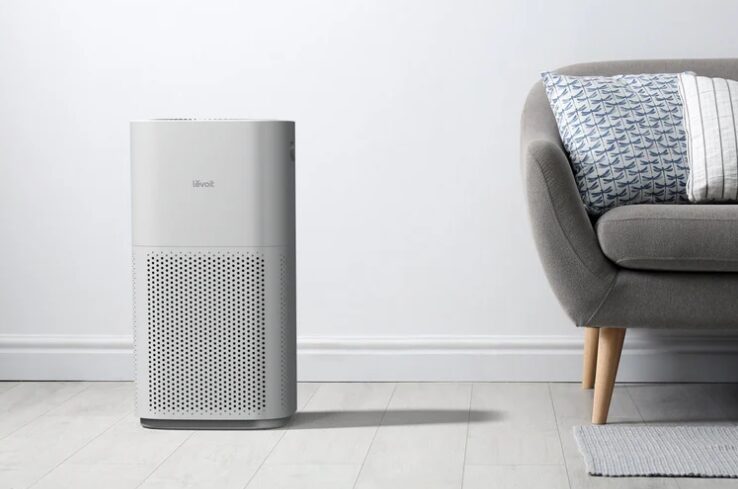
Levoit Core 600S
Best smart air purifier for large spaces with advanced voice control
The Levoit Core 600S dominates large spaces with intelligent air purifier technology. This WiFi-enabled air purifier covers up to 635 sq ft with powerful HEPA filtration and laser air quality sensors that detect particles as small as 0.3 microns.
🌟 Smart Features
- Laser particle sensor detects PM2.5, PM1.0, and PM10 in real-time
- VeSync app with scheduling, air quality history, and filter tracking
- Alexa & Google Assistant full voice control integration
- Auto mode adjusts based on detected air quality automatically
- Sleep mode runs whisper-quiet at 24dB with lights off
✓ Pros
- Exceptional large room coverage
- Ultra-quiet sleep mode
- Accurate laser sensors
- Affordable replacement filters
✗ Cons
- Larger footprint
- Higher initial cost
- App can be slow to sync
- No carbon pre-filter
Best for: Living rooms, master bedrooms, and open-concept spaces. This smart air purifier excels with pets or allergies, detecting allergen spikes and responding faster than basic models.
Coway Airmega
Most intelligent air purifier with advanced auto mode and real-time monitoring
Coway Airmega represents intelligent air purification at its finest. This AI air purifier uses dual filtration with Max2 filters and real-time pollution sensors that automatically optimize performance based on your room's specific air quality needs.
🌟 Smart Features
- Color-coded air quality indicator shows real-time pollution levels instantly
- Smart auto mode learns patterns and adjusts purification proactively
- Eco mode turns off fan when air quality is good for 30+ minutes
- Timer scheduling with 1/4/8 hour options for custom automation
- Filter lifetime indicator tracks usage and alerts for replacement
✓ Pros
- Extremely quiet operation
- Long-lasting Max2 filters
- Energy Star certified
- Stylish minimalist design
✗ Cons
- No WiFi or app control
- Limited to medium rooms
- Expensive filter replacements
- No voice assistant support
Best for: Bedrooms and offices where you want set-and-forget operation. This smart air purifier handles automation intelligently without requiring app connectivity or constant monitoring.
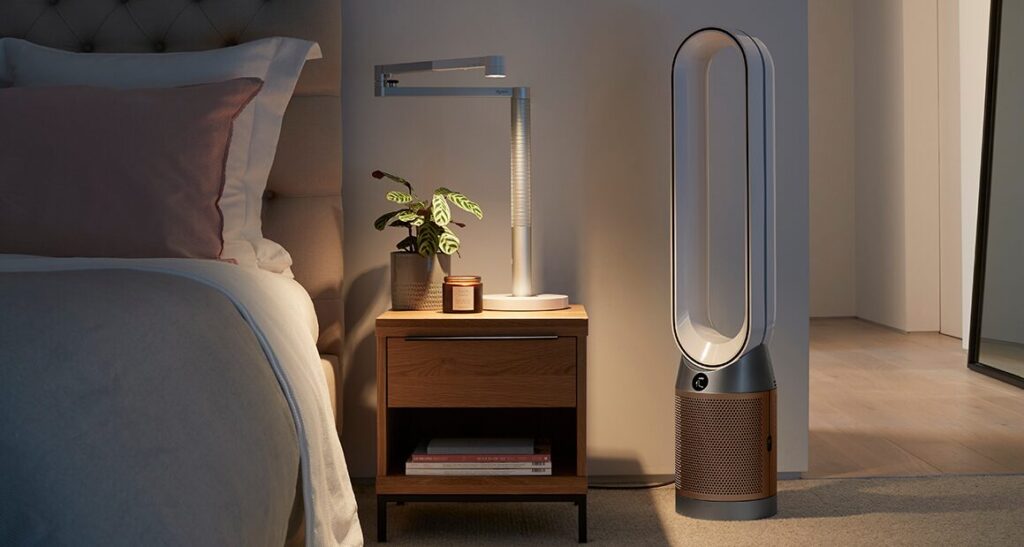
Dyson Purifier TP09
Premium smart air purifier with heating, cooling, and advanced AI sensors
The Dyson TP09 is the ultimate intelligent air purifier combining purification, heating, and cooling in one device. This WiFi-enabled air purifier uses HEPA H13 filtration with advanced sensors that detect formaldehyde, VOCs, and ultra-fine particles continuously.
🌟 Smart Features
- Formaldehyde detection with catalytic filter that destroys it continuously
- Dyson Link app provides detailed air quality reports and remote control
- 360° Air Multiplier technology projects purified air throughout entire room
- Heating mode (winter) and fan mode (summer) for year-round use
- Night mode with dimmed display and quieter operation
✓ Pros
- 3-in-1 functionality saves space
- Detects formaldehyde uniquely
- Excellent air circulation
- Premium build quality
✗ Cons
- Very expensive upfront cost
- Loud on high settings
- Pricey filter replacements
- Large footprint required
Best for: Living rooms and master bedrooms where you want one device handling air quality, temperature, and circulation. This smart air purifier justifies its premium price through multi-functionality and superior sensor technology.
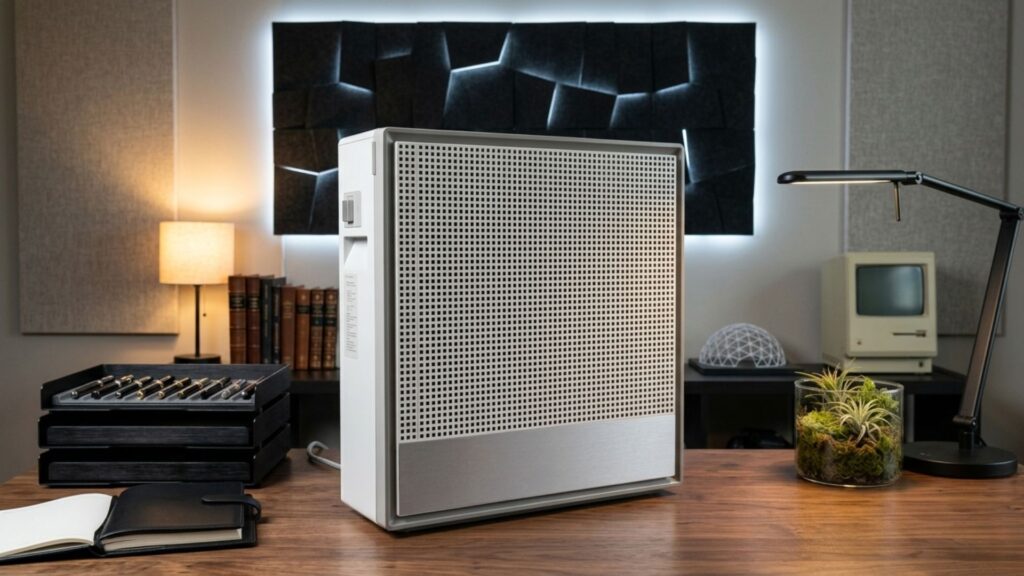
Molekule Air Pro
Best smart air purifier for severe allergies with PECO technology
Molekule Air Pro uses revolutionary PECO technology that destroys allergens at molecular level instead of just trapping them. This WiFi-enabled air purifier targets allergens, mold, bacteria, and viruses with intelligent air purification that adapts to detected pollution levels.
🌟 Smart Features
- PECO-HEPA Tri-Power filter destroys pollutants instead of collecting them
- Particle sensor detects particles 1000x smaller than HEPA standard
- Molekule app shows real-time air quality with detailed analytics
- Auto Protect mode adjusts fan speed based on detected allergen levels
- Filter subscription service delivers replacements automatically
✓ Pros
- Destroys allergens at source
- Massive coverage area
- Detects ultra-fine particles
- Sleek professional design
✗ Cons
- Extremely expensive
- Costly filter subscriptions
- Lower CADR than competitors
- Questionable PECO claims
Best for: People with severe allergies or asthma who need maximum allergen elimination. This AI air purifier uses unique technology that goes beyond traditional HEPA filtration for superior allergen control.
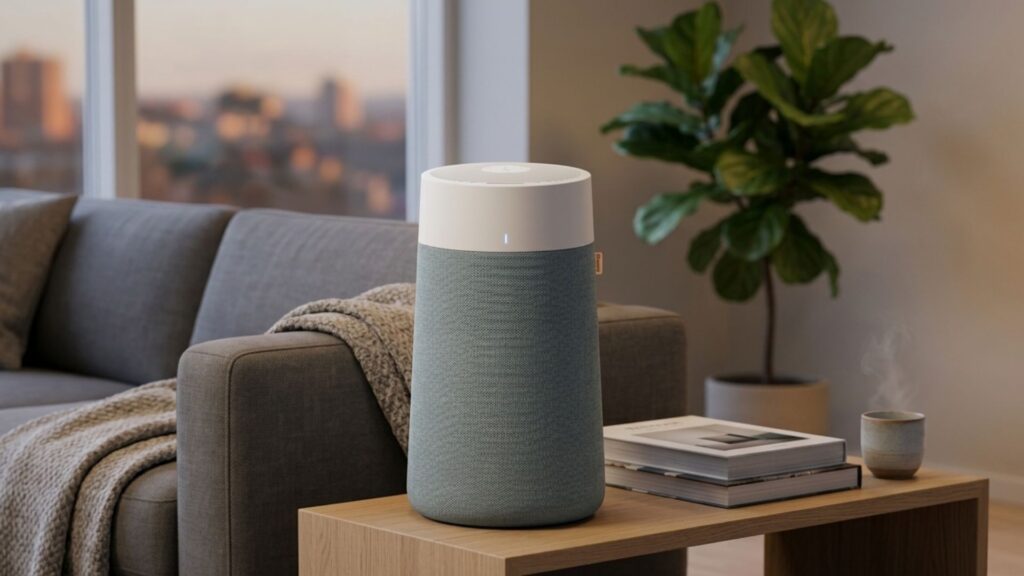
Blueair Blue Pure 211+
Best value smart air purifier with quiet operation and large coverage
The Blueair Blue Pure 211+ delivers professional-grade air purification at a consumer-friendly price. While not a full AI air purifier, it offers simple one-button operation with exceptional performance that rivals more expensive smart air purifiers in raw filtration power.
🌟 Key Features
- HEPASilent technology combines mechanical and electrostatic filtration
- 360-degree air intake purifies air from all directions efficiently
- Three fan speeds with simple one-button control interface
- Washable pre-filter in multiple colors reduces maintenance costs
- Energy Star certified uses minimal electricity even on high settings
✓ Pros
- Exceptional value for money
- Whisper-quiet operation
- Affordable filter replacements
- No complicated setup needed
✗ Cons
- No WiFi or app control
- No air quality sensors
- Basic manual operation only
- No auto mode available
Best for: Budget-conscious buyers who want excellent filtration without paying for AI features. While this isn't a WiFi-enabled air purifier, its powerful performance and quiet operation make it ideal for bedrooms and living rooms.
4. How to Set Up and Use an Intelligent Air Purifier for Maximum Results
Start by placing your best smart air purifiers where air actually moves. Avoid corners, tight spaces, or spots behind furniture, because these areas make it harder for AI air purifiers and their quality sensors to capture real changes in the room.
Most smart air purifiers with app control work best with 30–50 cm of open space around them. This gives the device a clear airflow path, helping it react faster and improve your indoor air quality 2025 more consistently.
Once positioned correctly, let the AI mode take over. Auto mode adjusts fan speed based on PM2.5, VOCs, humidity, and movement patterns, which is why the best smart air purifiers rarely need manual input. These intelligent air purifiers learn your home’s air quality patterns and optimize performance automatically.
Here’s a simple setup flow that works for almost every WiFi-enabled air purifiers:
- Choose the right location — central, open, and slightly away from walls
- Let the sensors calibrate — the first 12–24 hours help the device learn your home’s baseline
- Use automatic mode — the AI logic responds faster than manual adjustments
- Pair it with a sensor if possible — VOC or humidity trackers improve accuracy
- Schedule quiet hours — night mode keeps noise low while maintaining clean air
- Keep doors open when purifying larger areas — AI adjusts better with open airflow
Quick Tip:
If your intelligent air purifiers include a graph or “air history” view, check it once a week. You’ll spot patterns like cooking hours, morning dust spikes, or high humidity after a shower. According to EPA guidelines, monitoring these trends helps optimize purifier placement without guessing.
5. Common Mistakes With Smart Air Purifiers and How to Avoid Them
Even the best smart air purifiers won't perform well if you're making these common setup errors. Understanding these mistakes can mean the difference between breathing clean air and wasting electricity on ineffective purification.
Placing Your Purifier in Corners or Against Walls
The #1 reason why smart air purifiers underperform in real-world conditions
Most people instinctively push their AI air purifiers against walls or into corners to save space. This seemingly harmless decision severely limits the device's ability to circulate air effectively throughout the room.
⚠️ Why This Matters
Intelligent air purifiers rely on 360-degree airflow to pull contaminated air through their filters. Corner placement blocks intake vents and creates dead zones where pollutants accumulate untouched. Sensors can't accurately measure air quality when trapped against obstacles, causing the AI to make poor speed adjustments.
✓ The Fix
- Position your smart air purifiers with app control at least 30-50 cm from walls and furniture
- Place the unit in open, central locations where air naturally circulates
- Avoid tight spaces between furniture pieces or behind doors
- Keep the top and all sides unobstructed for maximum airflow
Pro Tip: If space is limited, choose a smaller room over cramming a large purifier into a corner. Proper positioning beats raw power every time.
Ignoring Filter Replacement Notifications
How dirty filters sabotage even the most advanced AI systems
Your WiFi-enabled air purifiers can have the most sophisticated sensors and AI algorithms, but none of that matters when filters are clogged with months of accumulated dust, pollen, and particles.
⚠️ Why This Matters
Dirty filters reduce airflow by up to 50%, forcing the motor to work harder while delivering weaker purification. The AI mode can't compensate for physical blockages—it just burns more electricity trying. Many users notice their best smart air purifiers running constantly on high speed because the system detects poor air quality it can no longer fix.
✓ The Fix
- Replace HEPA filters every 6-12 months depending on usage and air quality
- Check pre-filters monthly and vacuum or wash as recommended
- Don't dismiss app notifications—they're calculated based on actual runtime
- Mark replacement dates on your calendar as a backup reminder
Cost Reality: A $40 filter every 8 months costs less than the extra electricity from a clogged system running 24/7 on maximum speed.
Running the Purifier With Doors and Windows Closed
Why sealed rooms limit the effectiveness of AI air purification
While it seems logical to seal a room for maximum purification, completely closed spaces actually prevent your intelligent air purifiers from working at peak efficiency across your home.
⚠️ Why This Matters
Sealed rooms create stagnant air pockets that the purifier struggles to reach. The AI optimizes for the immediate area around the unit while distant corners remain untouched. For multi-room coverage, air needs pathways to circulate naturally.
✓ The Fix
- Keep interior doors slightly ajar to allow air circulation between rooms
- Close exterior windows during high pollution or pollen days
- Position the purifier where airflow naturally moves through the space
- Consider multiple units for homes with many closed-off rooms
Best Practice: Modern WiFi-enabled air purifiers work smarter when they can sense and respond to air quality changes across connected spaces, not just isolated rooms.
6. AI Privacy Considerations in Smart Home Air Monitoring
As AI air purifiers become more sophisticated, they collect unprecedented amounts of data about your home environment. While this enables smarter purification, it also raises important privacy questions that every buyer of WiFi-enabled air purifiers should understand before connecting devices to their network.
What Data Do Smart Air Purifiers Actually Collect?
Understanding the digital footprint of modern air purification systems
Most smart air purifiers with app control continuously monitor and transmit data to cloud servers. While manufacturers claim this improves performance, many users don't realize the extent of information these intelligent air purifiers gather from your home.
📊 Typical Data Collection Includes:
- Air quality patterns – PM2.5, VOC levels, humidity, temperature readings throughout the day
- Usage patterns – When you're home, sleep schedules, room occupancy indicators
- Location data – GPS coordinates, WiFi network information, device identifiers
- Voice recordings – If integrated with Alexa or Google Assistant features
- Network activity – Other devices on your home network visible to the purifier
The best smart air purifiers use this data legitimately for AI optimization. However, this information can reveal intimate details about your lifestyle—when you cook, when you're away, even what cleaning products you use based on chemical signatures detected by sensors.
⚠️ Critical Privacy Gap: Many manufacturers share anonymized data with third parties for "research purposes" without explicit consent. Your WiFi-enabled air purifiers may be contributing to datasets sold to advertisers, insurance companies, or smart home marketers.
How to Secure Your Smart Air Purifier Privacy
Practical measures to enjoy AI features without compromising personal data
Fortunately, you don't have to sacrifice the benefits of AI air purifiers to protect your privacy. Smart configuration and awareness make a significant difference in what data manufacturers can access from your intelligent air purifiers.
✓ Essential Privacy Protections:
- Review privacy policies before purchasing any smart air purifiers with app control
- Disable cloud connectivity if local-only operation meets your needs
- Create isolated networks – Use separate WiFi for IoT devices only
- Opt out of data sharing in manufacturer settings and app preferences
- Regular firmware updates – Patch security vulnerabilities promptly
- Read permissions carefully – Deny unnecessary app access to location, microphone, contacts
For comprehensive guidance on protecting your data from AI systems across all smart home devices, read our detailed guide on how to stop AI from reading your private data. The strategies apply equally to best smart air purifiers and other connected appliances monitoring your home environment.
🎯 Key Takeaway
Balance is possible. You can enjoy the advanced features of WiFi-enabled air purifiers while maintaining control over your personal information. The key is understanding what data flows where, then making informed choices about which conveniences justify which privacy trade-offs in your specific situation.
7. Final Insights and Recommended Tools for Cleaner, Healthier Air
Choosing the right smart air purifier comes down to matching features with your specific needs. Intelligent air purifiers work best when integrated into a complete smart home ecosystem, working alongside other automated devices to maintain optimal indoor environments.
🎯 Key Takeaways for Choosing Smart Air Purifiers
- Room size matters — Match coverage area to your space; undersized purifiers won't deliver results
- AI features justify costs — Real-time sensors and auto-adjustment deliver measurable air quality improvements
- WiFi connectivity enables monitoring — Track air quality trends and receive alerts before symptoms appear
- Filter costs add up — Calculate annual replacement costs before purchase; some models cost more to maintain
- Smart home integration amplifies benefits — Connected devices create automated health-focused environments
Our Final Recommendations by Use Case
Xiaomi Air Purifier 4
Best WiFi-enabled air purifier under $200 with proven AI detection and app control for small to medium rooms.
Levoit Core 600S
Covers 635 sq ft with laser sensors and voice control — ideal for open-concept homes and master bedrooms.
Coway Airmega
Most intelligent air purifier for auto mode performance — learns patterns and optimizes without apps or monitoring.
Dyson Purifier TP09
3-in-1 functionality with formaldehyde detection — best for year-round use and advanced air quality monitoring.
According to Healthline's research on air purifiers and lung health, consistent use of HEPA air purifiers reduces respiratory symptoms by 25-40% in people with asthma and allergies. Smart air purifiers enhance these benefits by automatically adjusting when pollution spikes — exactly when you need protection most.
The future of indoor air quality goes beyond standalone devices. AI air purifiers are becoming central hubs in smart home health systems, coordinating with HVAC controls, air quality monitors, and even AI companion devices that remind you to change filters or adjust settings based on household patterns.
Ready to Breathe Cleaner Air?
Start with one smart air purifier in your bedroom — where you spend 8 hours daily breathing the same air. Monitor the difference in sleep quality, morning congestion, and overall respiratory comfort. Most users notice improvements within 2-3 weeks.
View Our Top Picks ↑Bottom line: Traditional air purifiers are becoming obsolete. Intelligent air purifiers with WiFi provide measurable health benefits through responsive, automated purification that adapts to your actual air quality — not arbitrary timers. The investment pays off through better sleep, reduced allergy symptoms, and long-term respiratory health protection.
Do smart air purifiers really work better than traditional models?
+Yes. Smart air purifiers with AI technology detect pollution in real-time and automatically adjust filtration intensity based on actual air quality, not timers. Traditional purifiers run on fixed schedules regardless of air quality.
Studies show intelligent air purifiers reduce respiratory symptoms 25-40% more effectively because they respond to pollution spikes when you need protection most.
What is the difference between WiFi-enabled air purifiers and regular air purifiers?
+WiFi-enabled air purifiers connect to smartphone apps for remote monitoring, scheduling, and air quality tracking. Regular air purifiers only have manual controls.
WiFi connectivity allows you to receive alerts when air quality drops, track pollution patterns over time, adjust settings from anywhere, and integrate with smart home systems like Alexa or Google Home.
Which smart air purifier is best for large rooms?
+The Levoit Core 600S is best for large rooms up to 635 sq ft with laser particle sensors and voice control. For rooms over 800 sq ft, the Dyson Purifier TP09 offers 3-in-1 functionality with advanced formaldehyde detection.
Always match the purifier's coverage area to your room size—undersized units won't deliver results.
How often do I need to replace HEPA filters in smart air purifiers?
+HEPA filters typically need replacement every 6-12 months depending on usage and air quality. Intelligent air purifiers track filter life automatically and send alerts when replacement is needed.
Budget $50-150 annually for replacement filters. Some models like Xiaomi cost $30 per filter while premium Dyson filters cost $80-100.
Are smart air purifiers worth the extra cost?
+Yes, if you have allergies, asthma, or spend significant time indoors. Smart air purifiers with AI cost $150-700 but provide measurable health benefits through responsive purification.
They automatically detect pollution spikes from cooking, pets, or outdoor air and adjust instantly—something traditional purifiers can't do. For people with respiratory conditions, the health benefits justify the investment.
Can I use smart air purifiers with Alexa or Google Home?
+Yes, most WiFi-enabled air purifiers integrate with Alexa and Google Assistant for voice control. Models like the Levoit Core 600S, Xiaomi Air Purifier 4, and Dyson TP09 support full voice commands including power on/off, fan speed adjustment, and mode changes.
Integration allows you to create automation routines like "turn on air purifier when I get home."
What room size do I need for each smart air purifier?
+Xiaomi Air Purifier 4: 430 sq ft (bedrooms, offices). Levoit Core 600S: 635 sq ft (living rooms, master bedrooms). Coway Airmega: 361 sq ft (medium rooms). Dyson TP09: 800 sq ft (large open spaces). Molekule Air Pro: 1,000 sq ft (whole floor coverage). Blueair Blue Pure 211+: 540 sq ft (living areas).
Always choose a purifier rated for slightly larger than your actual room size.