The TikTok algorithm doesn't care how many followers you have. TikTok says so in its own documentation, yet most growth advice still starts with "build your audience first." I went through TikTok's own explanations and the two latest changes to answer one question: what decides whether a video spreads?
⚡ Short answer: TikTok shows each new video to a small group, measures whether they finish, rewatch, share or comment, and widens the audience only when those signals beat similar videos. Captions, sounds and on-screen text tell it who to test with. Follower count is not a direct factor, and device settings carry little weight.
Some links are affiliate links · they support this site at no extra cost to you · Full disclosure
How does the TikTok algorithm work?
In one line: the TikTok algorithm ranks every video for every viewer by predicted interest, using what you do in the app, what the video contains, and a little device context, then keeps re-ranking as you scroll.
In its official explainer, TikTok groups its inputs into three buckets. User interactions cover likes, shares, follows, comments and the videos you create. Video information covers captions, sounds and hashtags. Device and account settings cover language, country and device type, and TikTok says those carry lower weight because nobody chooses them as a preference.
For creators, the useful part is how the TikTok algorithm handles a new upload. It goes out to a small set of viewers whose past behavior matches its topic. If they finish it, rewatch it or send it to someone, the next batch is bigger. If they swipe away, distribution stalls.
That loop explains why a first post from a new account can reach thousands of people, and why a big account can still post a dud. TikTok states plainly that follower count and past viral hits are not direct ranking factors. Followers raise your starting odds; they don't guarantee the next batch.
What are the 7 signals the TikTok algorithm weighs?
TikTok won't publish a points table, so treat any "saves are worth 5x likes" claim as a guess. What TikTok does confirm is that the TikTok algorithm weighs strong signals above weak ones. Finishing a longer video is its own example of a strong one. Here's how I group the signals that matter to a creator.
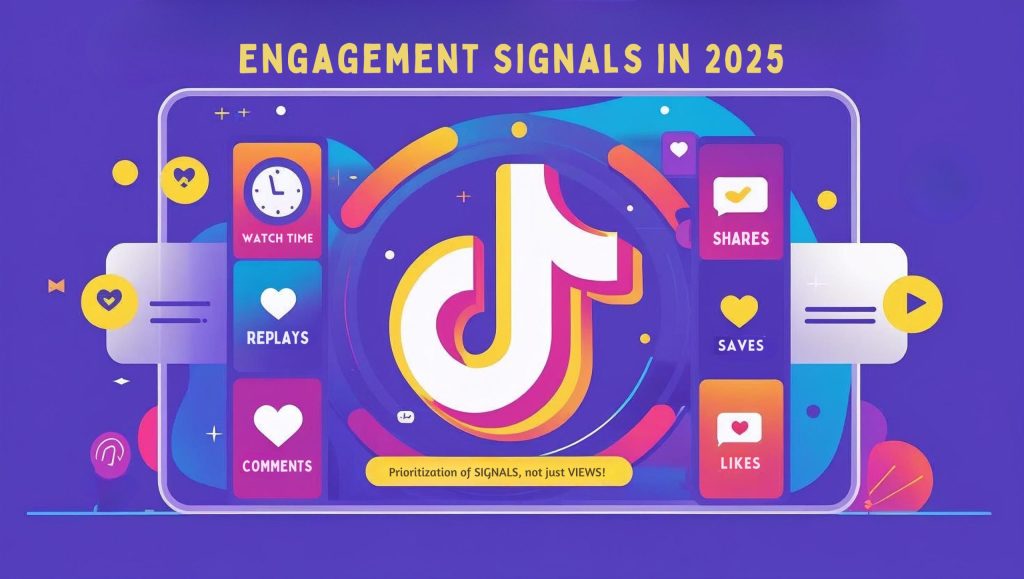
- Completion. Viewers who watch to the end tell the system the video delivered.
- Rewatches. A loop or a second view is a strong interest signal on short clips.
- Shares and saves. Sending a video to a friend or keeping it for later shows intent beyond a passive like.
- Comments. Replies, and your replies to them, mark a video worth talking about.
- Early swipe-aways. If the first viewers leave in the first seconds, the next batch never comes.
- Video information. Captions, on-screen text, sounds and hashtags decide which viewers get the first test.
- Negative feedback. "Not interested," hiding a creator or hiding a sound pushes a video and similar ones down.
Two quieter rules in the TikTok algorithm shape reach too. The For You feed generally avoids showing two videos in a row from the same creator or with the same sound. It also skips duplicated content and spam, so reposting the same clip rarely earns a second run.
What's new: a US-retrained model and AI controls
In one line: the TikTok algorithm in the US is now a licensed copy being retrained on US data, and viewers everywhere are getting a dial for how much AI-generated content they see.
On January 22, 2026, TikTok's US operations moved into a joint venture led by Oracle, Silver Lake and MGX, with ByteDance keeping 19.9%. ByteDance licenses the recommendation model to the new company, which retrains, tests and updates it on US user data inside Oracle's cloud.
Marketing analysts warned that creator reach could swing while that retraining settles. If you're a US creator comparing numbers from before and after the switch, you're comparing two slightly different systems. Outside the US, the global TikTok algorithm keeps running under ByteDance.
The second change touches every market. TikTok added an AI-generated content control to Manage topics, next to the existing sliders for Dance, Sports or Food. I cover the ownership side and what it means for your data in how AI controls what you see on TikTok and Instagram.
Does the TikTok algorithm penalize AI-generated videos?
In one line: not as a blanket rule, but viewers can now turn AI content down, unlabeled realistic AI clips risk removal, and labels are getting harder to strip.
There's no published "AI penalty" in the TikTok algorithm. The pressure comes from the demand side. Once a viewer drags the AI slider down, your AI clip reaches fewer of those people, however good its completion rate. TikTok says the slider reduces AI content rather than blocking it entirely.
Labeling is the part you control. TikTok requires creators to label realistic AI-generated content. It is also adding invisible watermarks to clips made with its own AI tools and to uploads that carry C2PA Content Credentials, so a label removed elsewhere can still be read.
My take for creators who use AI video tools: label every realistic clip, and put a human element on screen. Your voice, your face or your reasoning gives viewers who dislike "AI slop" a reason to stay past the first seconds. If you make AI images for TikTok, my walkthrough of the viral AI image trick shows what that looks like in practice.
Why are my TikTok views dropping?
In one line: most drops trace back to the first test batch losing interest early, a topic the system can't place, or an outside shift such as a retrain. Pick your symptom below.
Before changing anything, open the video's analytics and check two things: where viewers drop off on the retention curve, and the traffic-source split. If For You traffic is near zero, the TikTok algorithm's test batch rejected the video. If Search brings steady views, your captions are doing their job even when the feed isn't.
What my own TikTok analytics show
These are the two screens I check first on the AIDigitalSpace account. The retention curve shows the exact second viewers leave, which is the clearest read on how the TikTok algorithm's first test batch judged the hook.
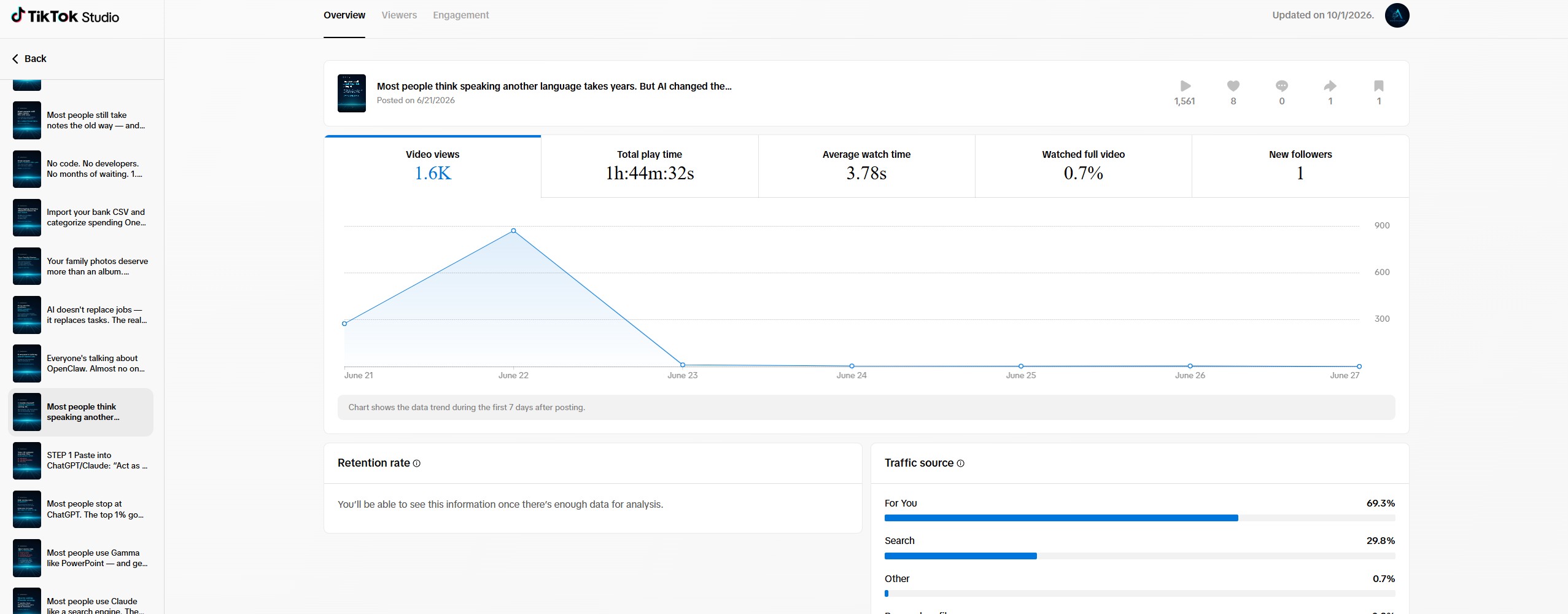
Retention curve from my own TikTok analytics (@ai.digital.space), October 2026.
The traffic-source split tells you which door the views came through. For You traffic means the feed kept widening the audience; Search traffic means people typed a query your caption matched.
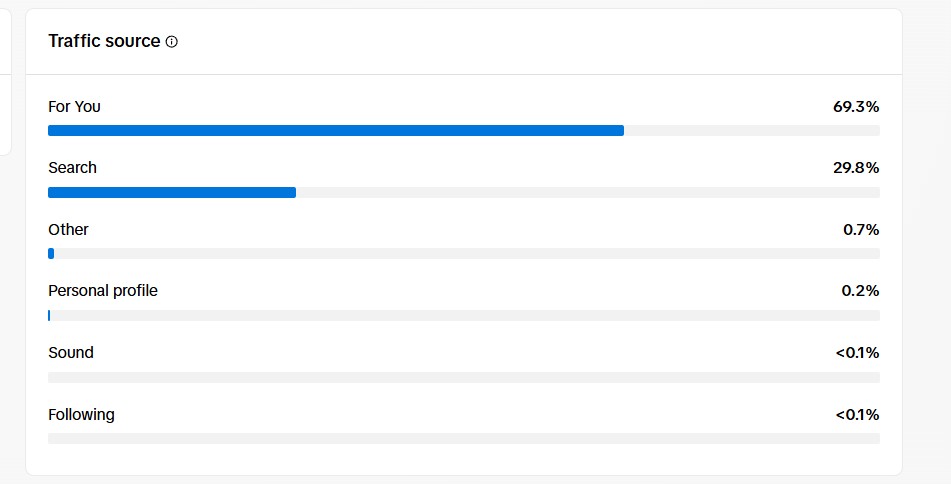
Traffic-source split from my own TikTok analytics (@ai.digital.space), October 2026.
Which TikTok algorithm myths can you drop?
| ❌ Myth | ✅ Reality |
|---|---|
| "You need followers before you can go viral." | TikTok says follower count and past hits aren't direct ranking factors. New accounts get tested too. |
| "The right hashtags make a video go viral." | Hashtags help the TikTok algorithm classify a video for its first test. Viewer behavior decides what happens next. |
| "Longer videos always win." | Finishing a longer video is a strong signal, but a short clip people rewatch can beat a long one they abandon. |
| "Low views mean I'm shadowbanned." | Usually it's a weak first batch. Check retention before assuming suppression, and see my notes on shadow bans. |
How do you work with the TikTok algorithm? A 7-step checklist
None of this is a hack. Each step feeds one of the seven signals the TikTok algorithm reads, so you can trace why it works.
- Open with the payoff. Put the result, the question or the surprise in the first three seconds, as text on screen and out loud.
- Cut until it loops. Trim every pause. An ending that flows back into the opening invites the rewatch.
- Write for search, not just the feed. Say your topic in plain words in the caption and in on-screen text, the way someone would type it.
- Stay in one lane. A consistent topic makes the first test batch easier to pick, so your videos land in front of the right viewers sooner.
- Give people a reason to share. A tip someone wants to send a friend beats a clip they only like.
- Reply in the first hour. Answering comments, or replying with a video, keeps the conversation and the signals going.
- Label AI, post originals. Tag realistic AI clips and skip reposting the same file.
For step 1, I plan hooks before I film, because writing ten openers takes less time than reshooting one. StoryLab AI generates hook and caption options from a topic, which gives me a list to cut down rather than a blank page.
For step 2, if you already film long videos, a clipping tool can find the moments worth a short. Opus Clip scores each clip it cuts, which works as a rough pre-check before the real test batch decides.
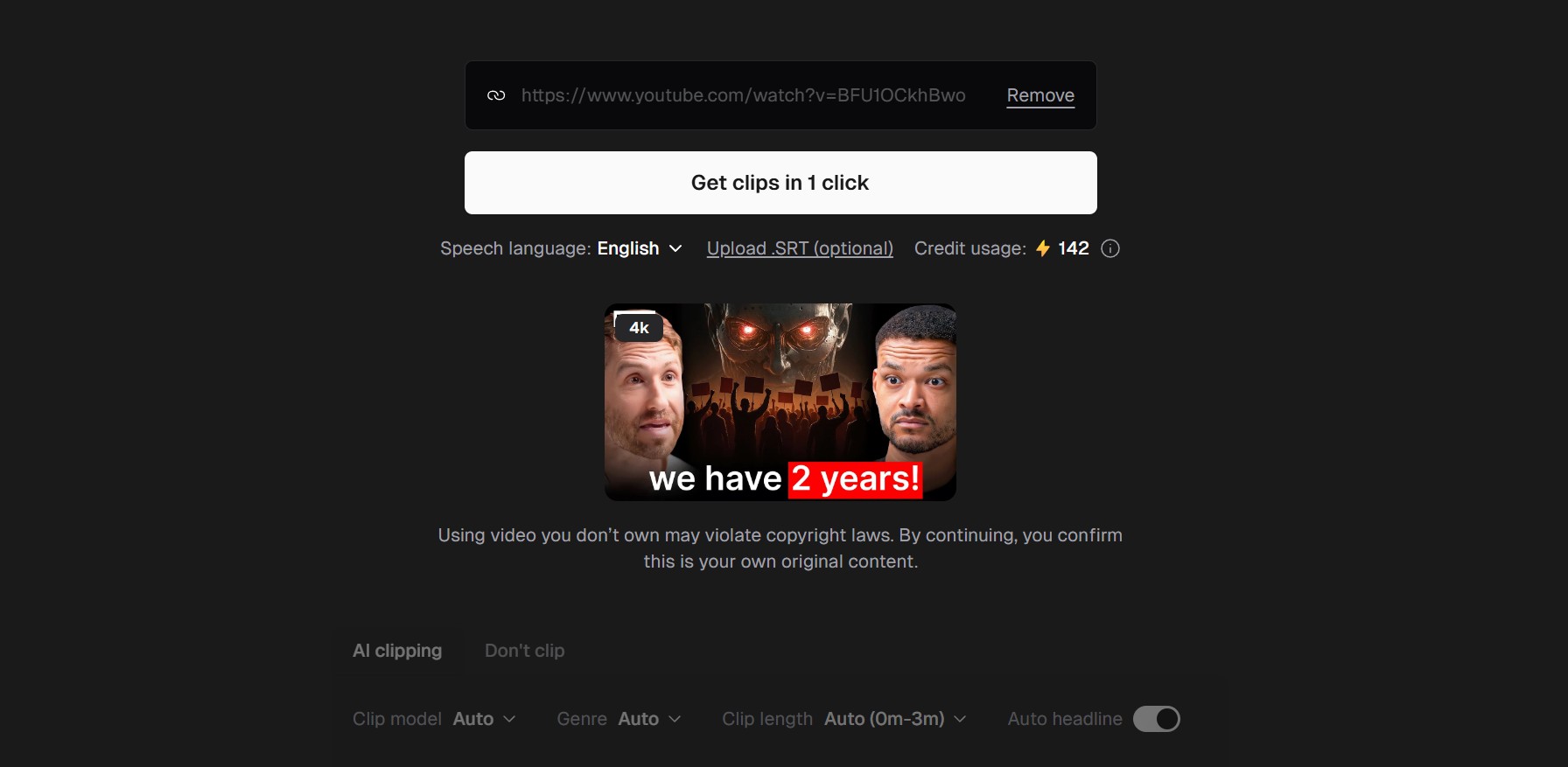
Opus Clip ranks each generated clip with a virality score. See Opus Clip
Before you pay for several creator tools, add them up. My free AI subscription cost calculator shows the yearly total in under a minute. For a wider shortlist, my roundup of AI tools for Instagram and TikTok and the guide to how influencers use AI on their phones cover editing, captions and scheduling.
Just want a cleaner For You feed?
Viewers can steer the TikTok algorithm more than most people realize: long-press for "Not interested," adjust the sliders in Settings → Content preferences → Manage topics, or refresh the For You feed from the same menu. I wrote the full viewer-side guide, with exact menu paths for TikTok and Instagram, in how to take back control of your feed.
Frequently Asked Questions — TikTok Algorithm
🧠 See the rest of the machine
Knowing what the first test batch wants is half of it. These pick up where this guide stops.