
Mirko
AI Tech Writer
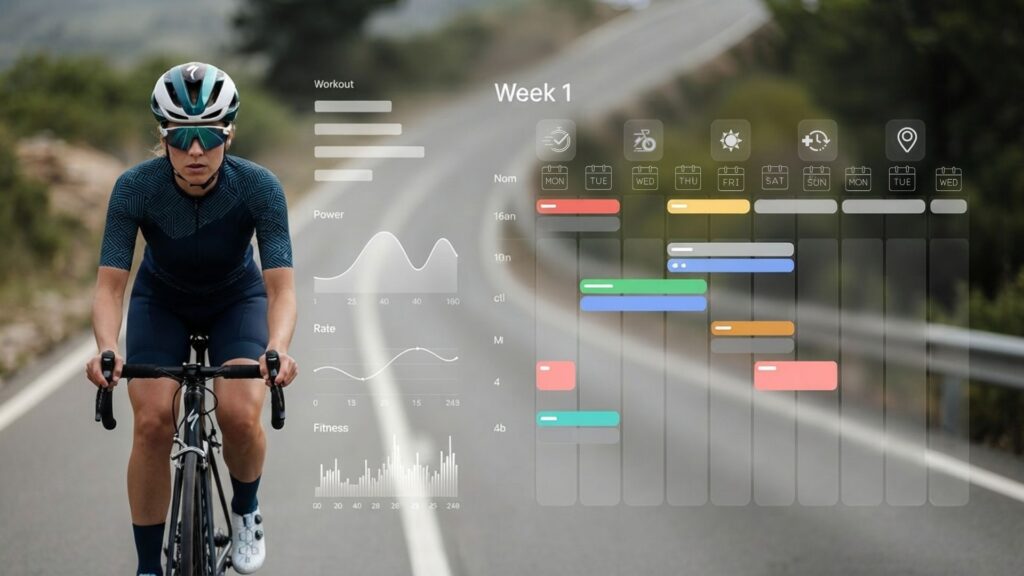
A rider on our team swapped a phone mount for a dedicated AI cycling computer — and stopped missing turns, losing signal, and draining his phone mid-ride.
Some links are affiliate links · You support us at no extra cost · Full disclosure
What Makes a Cycling Computer "AI-Powered" in 2026?
An AI cycling computer does more than display numbers — it predicts, adapts, and reacts on its own, running climb detection, dynamic rerouting, and battery-saving logic quietly in the background.
Garmin, Wahoo, and Hammerhead each take a different approach, and the gap between them shows up exactly when you need it most: on a long climb, in bad weather, or the moment your signal drops.
That's part of a bigger shift, too — most of the best Amazon AI gadgets right now share this same instinct to react instead of just report.
Where AI Actually Shows Up on a Smart Bike Computer
- Adaptive routing — reroutes around closures without manual input
- Climb prediction — flags gradient changes before you feel them
- Power-aware battery management — stretches runtime on longer rides
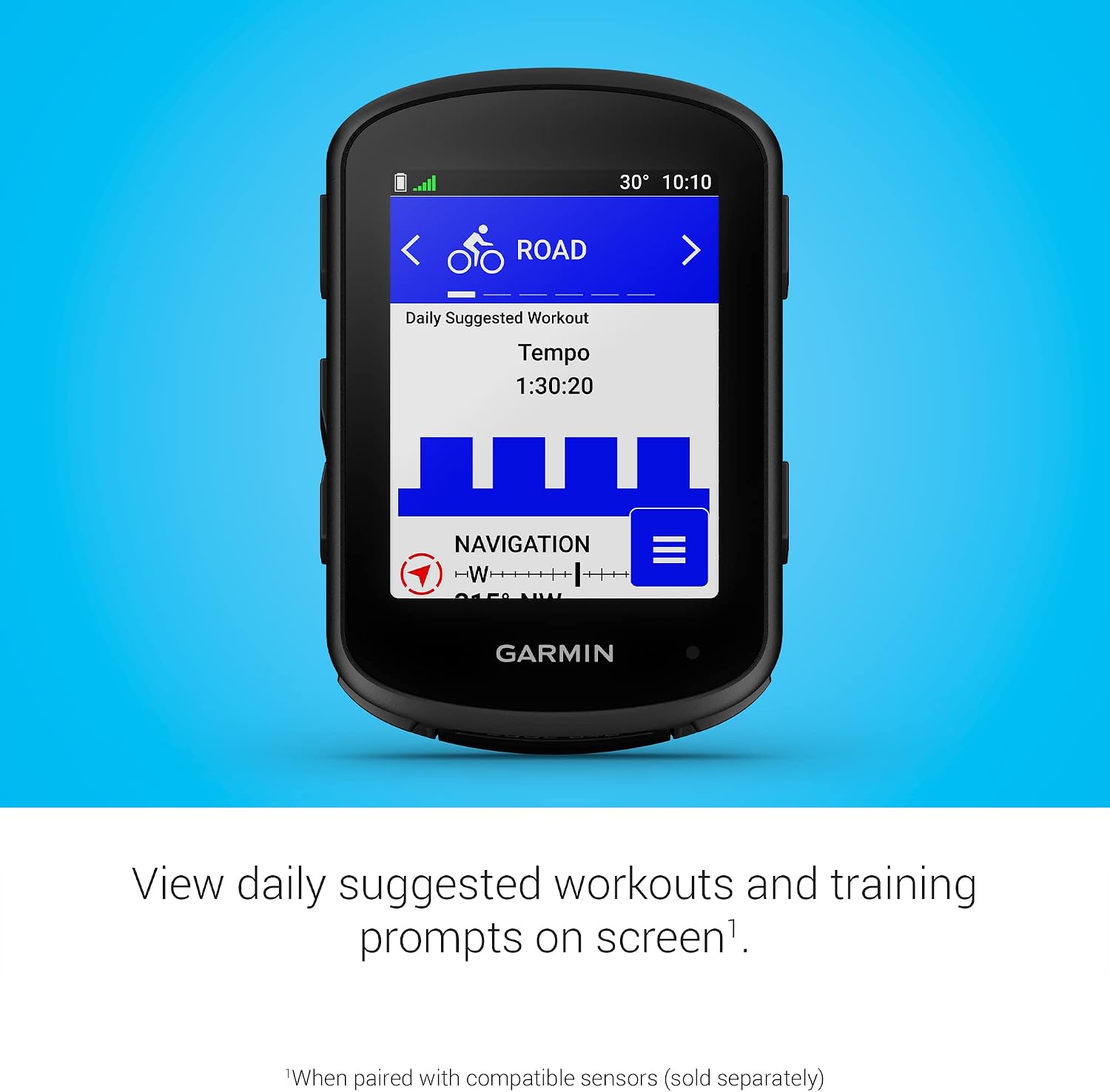
Garmin Edge 1050 — Our Hands-On Pick
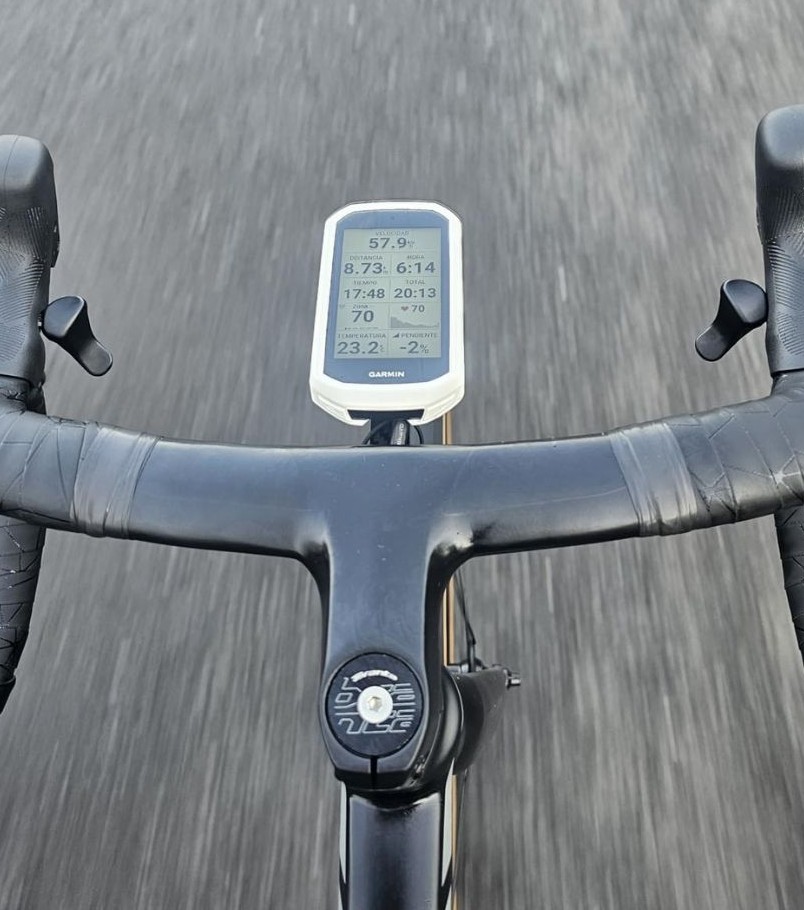
We used the Garmin Edge 1050 on real rides for weeks, and the battery life is what surprised us most — it kept going long after we expected to reach for a charger.
It lasted 40+ hours on a single charge in our testing, well past Garmin's own estimate and long enough to skip a mid-week top-up entirely.
What Stood Out in Our Testing
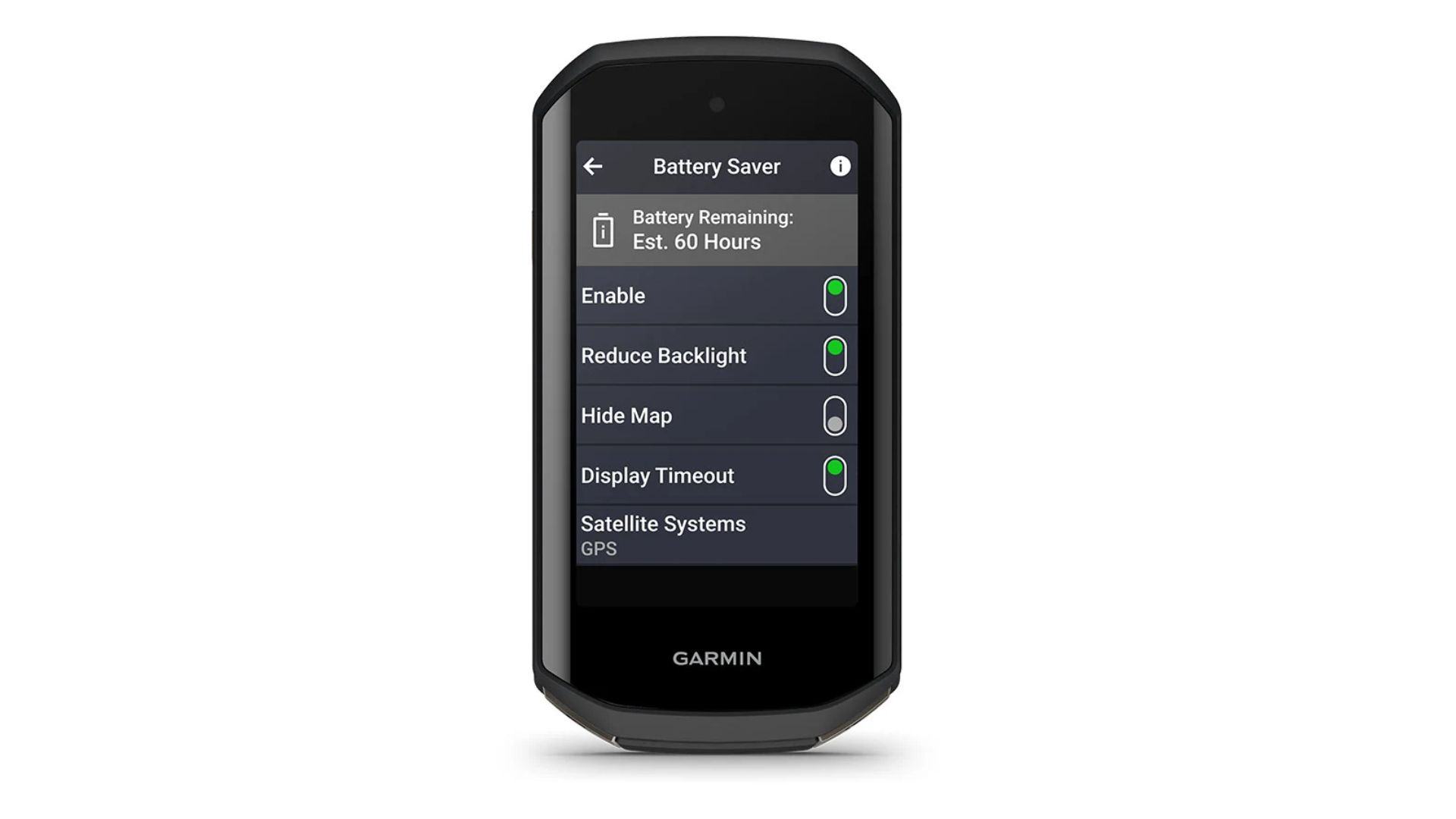
Our own battery reading after a multi-day test — 40+ hours and counting.
- Battery life: 40+ hours per charge, well beyond most riders' expectations
- Smart GPS navigation: turn-by-turn directions with automatic rerouting off-course
- Sensor pairing: connects to power meters, heart rate monitors, smart trainers, electronic shifting, radar, and lights
Pairing was the second win — one Edge 1050 talked to every sensor on the bike over ANT+, with no dropouts and no re-pairing between rides.
What We Liked
- 40+ hour battery in real-world testing
- Zero sensor dropouts across weeks of rides
- Solar charging stretches battery even further
Worth Knowing
- $650–$700 is a serious investment
- Menu navigation has a learning curve
At $650–$700 it's not cheap, but it replaces a phone mount, a separate GPS unit, and a training app in one device — that's the pick we'd point a serious rider toward first.
Wahoo ELEMNT ACE vs Hammerhead Karoo 3
We researched both computers closely, and neither tries to be the Edge 1050 — each one solves a different problem for a different kind of rider.
Wahoo ELEMNT ACE — Easiest Setup
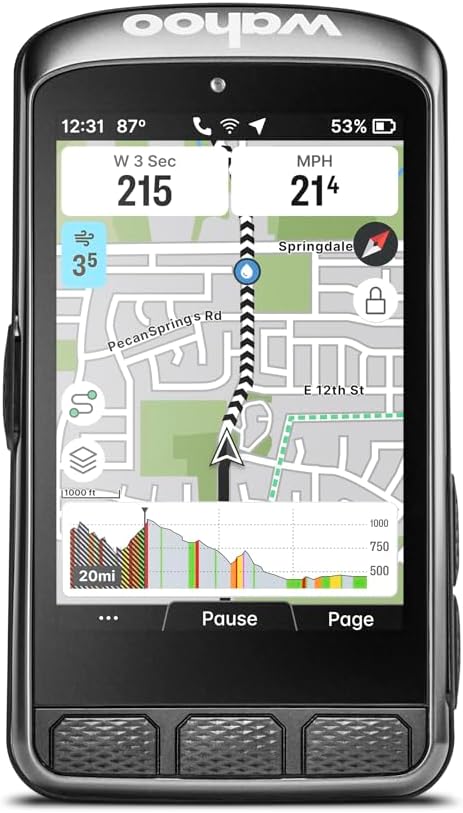
The Wahoo ELEMNT ACE pairs sensors automatically and syncs routes without the extra steps Garmin's menus require.
At around $500, it trades some of Garmin's mapping depth for a setup that works right out of the box — plug in, ride, done.
Best for: fastest setupHammerhead Karoo 3 — Best Screen for Mapping
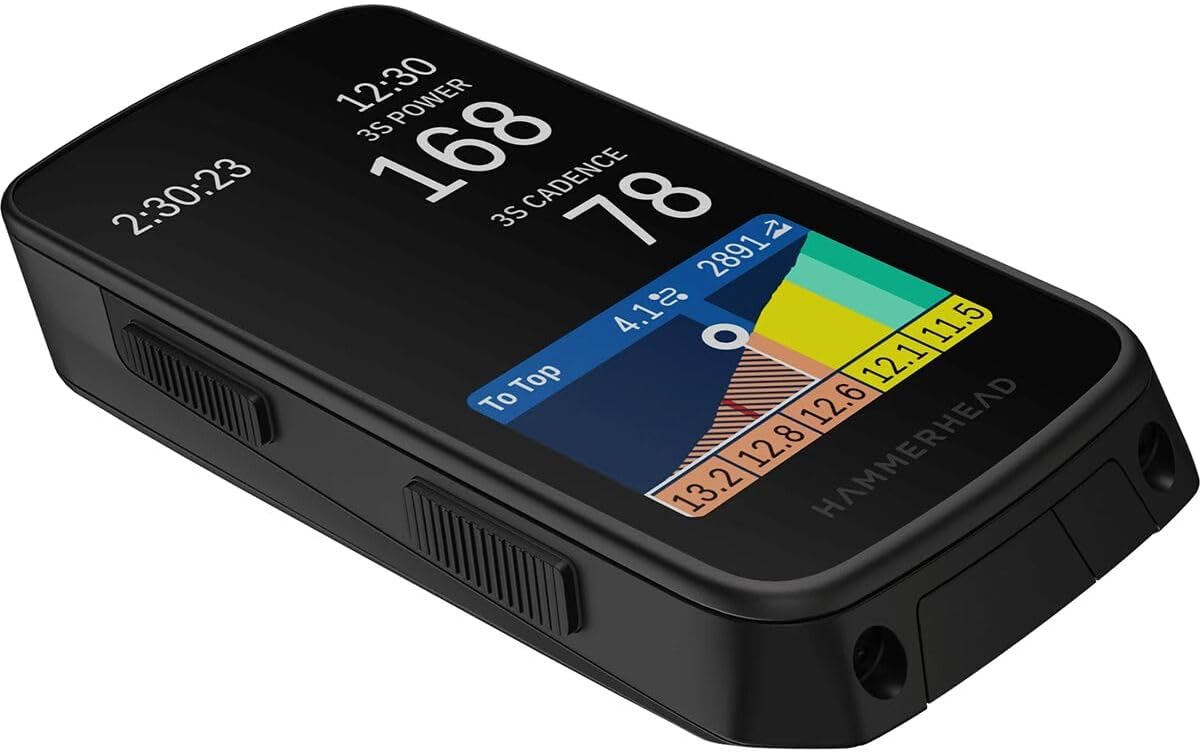
The Hammerhead Karoo 3 runs a 3.2-inch, Android-based touchscreen that reviewers consistently rank as the sharpest in the category, and it shows the moment you turn it on.
It's worth a look if you ride unfamiliar routes often and want a screen you can actually read in direct sunlight.
Best for: unfamiliar routes & mappingAI Cycling Computer Comparison Table
Here's how the three stack up on the details that matter most for daily riding.
| Computer | Battery Life | Best For | Price | Winner |
|---|---|---|---|---|
| Garmin Edge 1050 | 40+ hrs (tested) | Serious, data-focused riders | $650–$700 | 🏆 Battery Life |
| Wahoo ELEMNT ACE | 15–17 hrs | Fastest setup | ~$500 | 🏆 Ease of Use |
| Hammerhead Karoo 3 | 10–12 hrs | Navigation-heavy rides | ~$475 | 🏆 Display Quality |
| Garmin Edge 840 | 26 hrs | Budget-conscious riders | ~$350 | 🏆 Best Value |
How to Choose the Right One for Your Riding Style
Match the computer to how you actually ride — not the spec sheet with the most checkmarks. Here's a quick way to think about it as a smart bike computer buyer.
Whichever you pick, an AI cycling computer only pays off if you actually use the data it collects.
Frequently Asked Questions — AI Cycling Computers
What is an AI cycling computer?
+An AI cycling computer is a GPS bike device that predicts and adapts on its own — rerouting around closures, flagging climbs ahead, and managing battery use automatically.
Garmin, Wahoo, and Hammerhead each build this into their current flagship models in a different way.
Is the Garmin Edge 1050 worth the price in 2026?
+In our own testing, yes. The Garmin Edge 1050 delivered over 40 hours of battery life and paired with every sensor on the bike without a single dropout.
At $650–$700 it's a real investment, but it replaces a phone mount, a GPS unit, and a training app in one device.
Which AI cycling computer has the best battery life?
+The Garmin Edge 1050 leads at 40+ hours per charge in our testing. The Edge 840 follows at around 26 hours.
The Wahoo ELEMNT ACE runs 15–17 hours, and the Hammerhead Karoo 3 sits around 10–12 hours.
Wahoo ELEMNT ACE vs Garmin Edge — which is easier to use?
+The Wahoo ELEMNT ACE is generally easier to set up — sensors pair automatically and routes sync with fewer steps than Garmin's menus require.
Garmin's Edge line trades some of that simplicity for deeper mapping and training analytics.
Does the Hammerhead Karoo 3 work with SRAM AXS shifting?
+Yes. The Hammerhead Karoo 3 integrates with SRAM AXS, including AXS Blips and bonus-button shifter controls.
It's one of the clearest advantages for riders already running an AXS drivetrain.
Do I need a separate power meter and heart rate monitor?
+Yes — an AI cycling computer displays and analyzes the data but doesn't generate it. You still need a power meter and a heart rate source.
See our AI fitness tracker comparison if you want one device that covers both.
What is the best budget AI cycling computer?
+The Garmin Edge 840 at around $350 is the strongest budget pick — it runs the same core training features as the flagship 1050 in a smaller unit.
Can I just use my phone instead of a dedicated AI cycling computer?
+You can, but you'll trade battery life, sunlight visibility, and weatherproofing for convenience.
A dedicated head unit is built to survive rain and vibration and lasts far longer per charge than a phone running a GPS app.
🚴 Round Out Your Training Setup
Your AI cycling computer is just one piece. These cover the rest of the stack:

