
Giorgio
AI Tech Writer
The average professional spends 28% of their workweek managing email. Not closing deals. Not building things. Just triaging an inbox that refills the moment you clear it.
Perplexity Email Assistant is one of the first AI email assistants that doesn't just suggest what to write — it acts. Connected directly to Gmail and Outlook, it drafts replies in your own voice, auto-labels messages by priority, and handles meeting scheduling from start to finish.
The catch? It's exclusive to the $200/month Perplexity Max plan. In this review we test every feature, walk through the full Gmail AI assistant and Outlook AI assistant setup, compare it against the competition, and give you a straight answer on whether it's worth it.
Some links are affiliate links · You support us at no extra cost · Full disclosure
1. Why Email Overwhelm Won't Fix Itself
The average professional receives 121 emails a day — and spends nearly three hours managing them. Not strategizing. Not creating. Just triaging. According to McKinsey, email and messaging alone consume 28% of the average workweek. That's not a productivity gap. It's a structural drain hiding in your inbox.
- 121 emails received daily by the average professional
- 28% of the workweek lost to email and messaging (McKinsey)
- Only 38% of that email time is genuinely productive
- Email volume has doubled in five years — yet filters haven't kept up
The rise of AI tools hasn't simplified this. If anything, it's made it worse. More automation means more outreach, more content, and more messages demanding a reply. The traditional inbox management tools — filters, labels, snooze buttons — were built for a slower era. They patch the symptom. They don't fix the cause.
This is exactly the problem a new generation of AI inbox automation tools was built to solve. Perplexity Email Assistant is not a passive filter — it's an active agent working inside your existing Gmail or Outlook account, drafting replies, labeling messages, and handling scheduling end-to-end. If you're still relying on workarounds, our guide to email automation workflows shows exactly where most setups break down — and why a dedicated AI email assistant changes everything.
2. What Is Perplexity Email Assistant and How It Works
Perplexity Email Assistant is an AI-powered inbox agent built into the Perplexity Max plan ($200/month). Unlike a traditional inbox management tool that filters or flags messages, this is a fully agentic system — it reads, drafts, labels, and acts on your behalf inside your existing Gmail or Outlook account, without switching apps.
What separates Perplexity Email Assistant from other AI email assistants is its CC-based scheduling agent. Add [email protected] to any thread and it handles the entire back-and-forth — checking your calendar, proposing times, and sending invites — without you touching a single reply. That's AI inbox automation, not just suggestions.
- Draft replies in your tone & style
- Auto-label and prioritize messages
- End-to-end meeting scheduling via CC
- Summarize long email threads
- Search inbox history by contact
- Works as Gmail AI assistant & Outlook
To understand Perplexity's broader ecosystem before committing to Max, our full Perplexity AI review covers everything from search to the Comet browser — and puts the $200/month price in context.
3. Setup Guide for Gmail Users
Setting up Perplexity Email Assistant on Gmail takes under two minutes. There's no browser extension to install and no third-party app — it connects directly through Google's secure OAuth, giving you a fully active Gmail AI assistant from your first session.
Pro tip: start with Suggest mode for the first week. This lets you verify the assistant has matched your tone correctly before enabling fully autonomous replies. For a broader look at how AI scheduling tools compare, our guide to AI meeting productivity tools covers every option in this category.
4. Setup Guide for Outlook Users
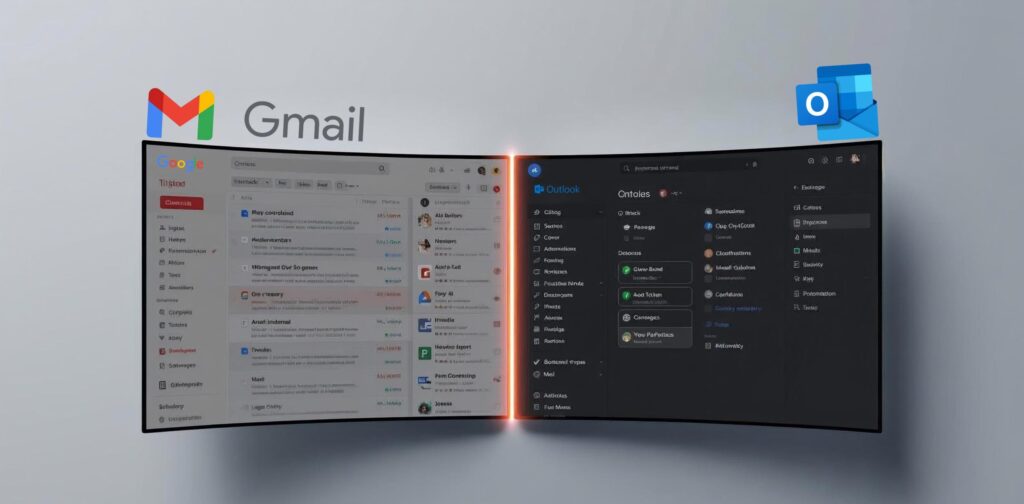
If you’re using Outlook, Perplexity Email Assistant integrates just as smoothly, though the screens look slightly different compared to Gmail. Here’s what to do:
Log in via Microsoft Account
From the Perplexity Email Assistant dashboard, select “Connect Outlook.” You’ll be redirected to Microsoft’s secure login page. Enter your Outlook or Office 365 credentials.Confirm Permissions
Microsoft will display a consent form asking if you want to let the assistant read, manage, and draft emails. Approve all — this access is what allows the tool to prioritize messages and suggest quick replies.Customize Notifications
Outlook users can enable desktop or mobile alerts when Perplexity flags a high-priority email. This feature is optional but useful if you’re juggling projects and don’t want to miss urgent messages.Review Smart Categories
Once synced, the assistant will automatically create categories such as “Urgent,” “Meetings,” and “Updates.” You can rename or merge these categories to fit your workflow. For example, if you manage clients, renaming “Updates” to “Client Updates” keeps things crystal clear.Start Using the Digest
Just like Gmail, Outlook users receive a daily or weekly digest depending on settings. The digest shows priority messages first, with short summaries of everything else. It’s the fastest way to start the day without scrolling through endless notifications.
For Outlook professionals handling dozens of threads daily, this setup transforms the inbox into a more strategic workspace — less noise, more signal.
5. Key Features That Boost Productivity
Once Gmail or Outlook is connected, Perplexity Email Assistant reveals its real power. Instead of just moving emails into folders, it actively reduces the time we spend thinking about what to open first. These are the standout features that make a difference in daily work:
-
Smart Prioritization: Learns from our habits and keeps high-value emails at the top.
-
Digest Summaries: Bundles newsletters and updates into short, readable notes.
-
Draft Assistance: Suggests replies for routine confirmations or scheduling.
-
Adaptive Filtering: Evolves with our behavior instead of relying on static rules.
-
Cross-Platform Sync: Works across Gmail and Outlook without duplicating settings.
To make the differences crystal clear, here’s a quick breakdown:
| Feature | What It Does | Why It Matters |
|---|---|---|
| Smart Prioritization | Highlights urgent emails automatically | Saves hours spent digging through inbox clutter |
| Digest Summaries | Groups low-priority messages into short overviews | Keeps inbox lean and easy to scan |
| Draft Assistance | Suggests quick replies for repetitive tasks | Cuts response time without losing accuracy |
| Adaptive Filtering | Learns from user actions continuously | Inbox improves automatically over time |
| Cross-Platform Sync | Works across Gmail and Outlook accounts | Consistency for users managing multiple inboxes |
6. Comparison: Perplexity vs Other AI Email Tools

While Perplexity Email Assistant is one of the newest players, it’s not the only AI trying to clean up our inboxes. Alternatives like SaneBox and Superhuman have been popular with professionals for years, each offering a different approach. Comparing them helps us understand where Perplexity stands out and where others may still be useful.
| Tool | Key Strength | Best For | Pricing Insight | Get It |
|---|---|---|---|---|
| Perplexity Email Assistant | Adaptive AI prioritization, summaries, quick replies | Professionals buried in Gmail/Outlook inboxes | Starts around $200/month (Pro tier) | ✨ Try Perplexity |
| SaneBox | Rule-based smart folders, integrates with any email client | Users who want lightweight filtering without switching apps | From $7/month, flexible plans | 🚀 Get SaneBox |
| Superhuman | Fastest email client with AI shortcuts and reminders | Power users who live inside email and value speed | $30/month (invite-based entry) | ⚡ Try Superhuman |
What’s clear here is that Perplexity isn’t just another filter — it combines filtering with learning. SaneBox and Superhuman still have strong niches, but neither provides adaptive AI that evolves with your workflow the way Perplexity does.
7. Pricing and Plans Explained
When considering an AI email tool, pricing often determines whether it feels like a helpful assistant or an unnecessary expense. Perplexity Email Assistant is positioned as a premium service, starting around $200/month with its Pro tier. The justification is that it offers more than filtering — it’s a fully adaptive inbox manager with digest creation, prioritization, and AI-driven responses. For users managing hundreds of daily messages, the time savings can justify the higher subscription.
In comparison, SaneBox keeps things budget-friendly, with plans beginning at about $7/month. It doesn’t have AI-driven summaries, but for users who just need smart folders and a cleaner inbox, it’s one of the most cost-effective solutions. Superhuman, on the other hand, sits in the middle: $30/month, invite-only, and focused on speed. It’s a polished experience but doesn’t learn from habits in the same way Perplexity does.
The bottom line? Perplexity targets professionals and teams ready to pay for maximum productivity. If budget is a concern, SaneBox and Superhuman still cover essential needs — but they won’t provide the adaptive intelligence that sets Perplexity apart.
| Tool | Starting Price | Model | Notable Value |
|---|---|---|---|
| Perplexity Email Assistant | ≈ $200/month | Pro subscription | Adaptive AI inbox + digests + quick replies |
| SaneBox | From $7/month | Flexible plans | Smart folders, works with any email client |
| Superhuman | $30/month | Invite-only | Fast client + AI shortcuts for power users |
8. Ethical AI Reflection: Should We Trust AI With Our Inbox?

AI in email management raises an important question: how much of our private communication should we let algorithms handle? With Perplexity Email Assistant, the benefits are obvious — less noise, faster decisions, and reclaimed time. But the trade-off is giving a third party access to sensitive information.
The ethical challenge isn’t just about data privacy but also decision-making. When AI decides what’s important, we risk missing context that a human would catch. Imagine an automated digest shortening a client’s detailed request into a summary that downplays urgency — efficiency could turn into oversight.
At AI Digital Space, we believe the balance comes from transparency and control. Users should be able to see how emails are prioritized and override decisions quickly. Providers like Perplexity must continue to emphasize strong encryption, limited data retention, and clear consent. For professionals, it’s about making sure AI is a partner — not the gatekeeper of critical communication.
Ultimately, these tools are most powerful when we stay in the loop. AI can streamline the inbox, but responsibility for final judgment should remain with us.
9. Try Perplexity Email Assistant Today
If your inbox is stealing hours from your day, now is the right time to see how Perplexity Email Assistant can change the way you work. With adaptive prioritization, smart digests, and quick reply suggestions, it’s built for anyone who wants to reclaim time and reduce stress.
With Perplexity, your inbox turns into a tool that works for you, not against you.
10. Final Thoughts: Is Perplexity Worth It for Your Workflow?
Perplexity Email Assistant is one of the most capable AI email assistants available right now. It doesn't just suggest — it acts. For professionals drowning in inbox volume, it solves a real, daily problem. The question isn't whether it works. It's whether it's worth $200/month for your workflow specifically.
- You handle 100+ emails daily
- You're already a Perplexity Max subscriber
- You use Gmail or Outlook professionally
- Scheduling and triage eat your mornings
- Time is worth more than $200/month to you
- You send fewer than 20 emails a day
- $200/month is a stretch for your budget
- You don't use Gmail or Outlook
- You're happy with Gemini or Copilot
- You need a standalone free tool
As an AI inbox automation tool, it leads the category — especially for its agentic scheduling and tone-matching. If you want a deeper look at Perplexity as a platform before committing, our full Perplexity AI review covers everything beyond email.
Ready to reclaim your inbox? Try Perplexity Email Assistant on the Max plan — available for Gmail and Outlook today.
🚀 Try Perplexity Email Assistant →Frequently Asked Questions — Perplexity Email Assistant
What is Perplexity Email Assistant?
+Perplexity Email Assistant is an AI-powered inbox agent built into the Perplexity Max plan. It connects directly to Gmail and Outlook to draft replies in your tone, auto-label messages, summarize threads, and manage meeting scheduling end-to-end — without leaving your inbox.
Is Perplexity Email Assistant free?
+No. Perplexity Email Assistant is exclusive to the Perplexity Max plan at $200/month. The base and Pro plans do not include email assistant access. If you're already on Max, it's included — no extra charge.
Does it work with both Gmail and Outlook?
+Yes. Perplexity Email Assistant supports both Gmail and Outlook on desktop and mobile via one-click setup. It integrates directly into your existing inbox — no browser extension or third-party app required.
How does it compare to Gemini for Gmail or Copilot for Outlook?
+The key difference is agentic action. While Gemini and Copilot mostly suggest and summarise, Perplexity Email Assistant can CC its own address into threads, check your calendar, propose meeting times, and send invites — fully autonomously. It's an AI inbox automation tool, not just an assistant.
Is my email data safe with Perplexity?
+Perplexity states that email data is never used to train AI models and is deleted from servers after 14 days. The platform is SOC 2 and GDPR compliant. As with any AI email assistant, review their privacy policy before connecting sensitive accounts.
Can I use Perplexity Email Assistant on mobile?
+Yes — it works on both desktop and mobile for Gmail and Outlook. Setup takes under two minutes directly inside your Perplexity Max account. Start here →
Who is Perplexity Email Assistant actually built for?
+It's built for executives, consultants, and high-volume email users who already use Perplexity Max and need a single tool for drafting, triage, and scheduling. If you send fewer than 20 emails per day, the $200/month price point is hard to justify — a lighter inbox management tool will serve you better.
📬 Your Inbox Is Fixed — Now Automate Everything Else
Perplexity Email Assistant handles your inbox. These posts show you how to build the rest of your AI productivity stack — from meeting notes to full workflow automation: