Mirko
AI Tech Writer
Wearable companies spent a decade making screens bigger, brighter, and more powerful. Google just built a $99 fitness tracker with no screen at all.
That decision might signal the beginning of an entirely new era in health technology — and it's worth paying attention to why.
Some links are affiliate links · You support us at no extra cost · Full disclosure
What Is the Google Fitbit Air?
12 grams. That's the total weight of the Google Fitbit Air — band included.
That number matters because it changes behavior. At 12 grams, you forget it's on your wrist. You wear it to bed without thinking twice. And that's exactly the point.
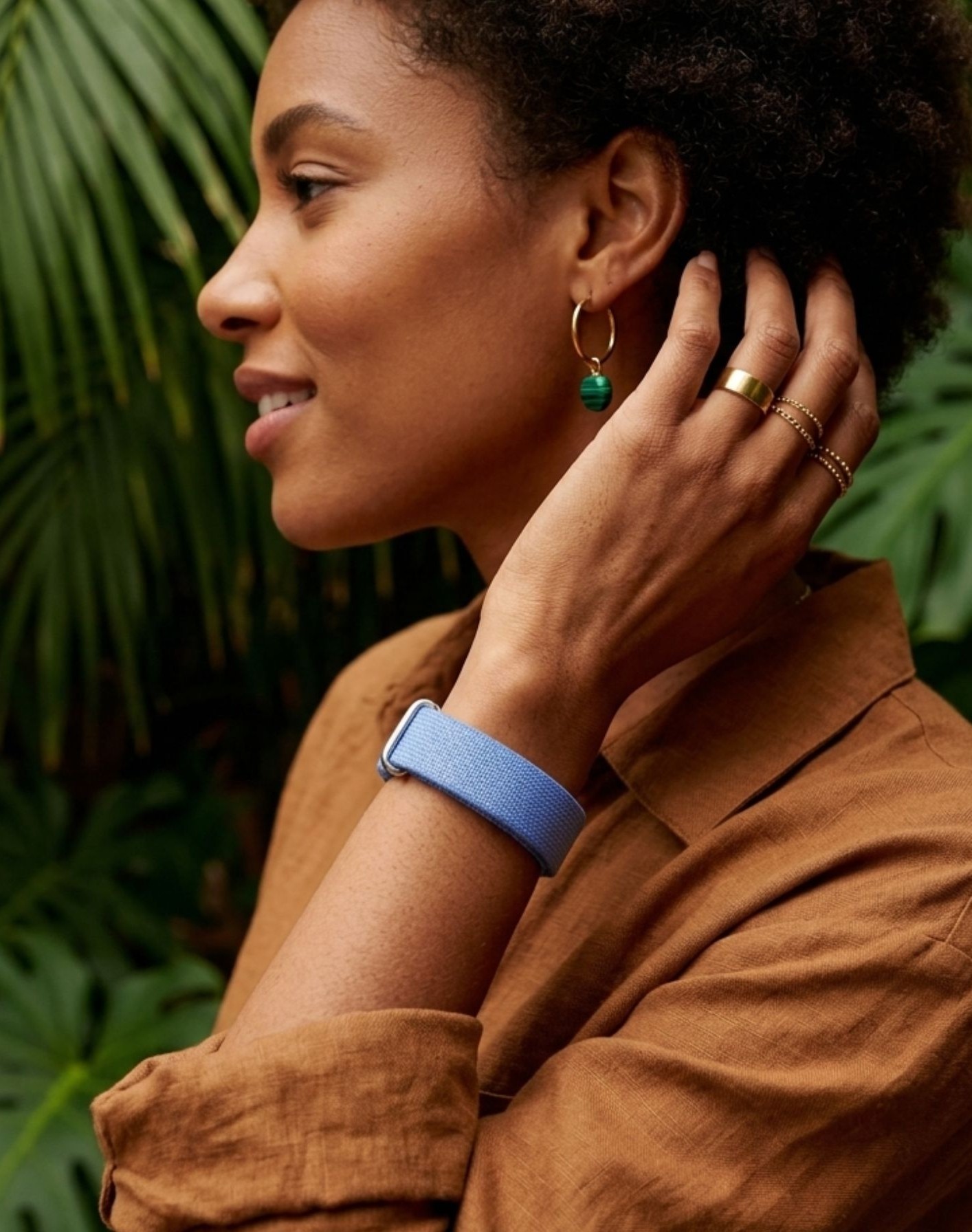
- Price: $99.99 · Stephen Curry edition $129.99
- Design: Pebble pod · 5.2 g pod · 12 g with band
- Battery: Up to 7 days · 5-min charge = 1 full day
- Health tracking: Heart rate, SpO2, HRV, AFib alerts, sleep stages, skin temperature, steps, workouts
- AI coach: Gemini-powered Google Health Coach
- Subscription: Core tracking free · Full AI: $9.99/month after 3-month trial
- Compatibility: Android & iOS
- No GPS, no screen, no contactless payments
The Google Fitbit Air launched on May 26, 2026. It's Fitbit's smallest and most affordable tracker ever — roughly 25% smaller than the Fitbit Luxe.
Core health tracking — heart rate, sleep, blood oxygen, HRV, steps — works without any paid subscription.
The Gemini AI Health Coach layer unlocks with Google Health Premium at $9.99/month. Three months are included free with every purchase.
That distinction matters more than it sounds. The Google Fitbit Air is functional from day one, without a single recurring charge. You pay more to get smarter — not to get started.
Curious how it stacks up against other AI fitness devices? Our roundup of the best AI fitness gadgets on Amazon covers the full landscape.
Why Google Removed the Screen
Most wearable brands compete on display. Bigger bezels. Brighter pixels. Always-on AMOLED. The Google Fitbit Air goes the other direction — deliberately.
That's not a cost-cutting decision. It's a product philosophy.
Notification fatigue is well-documented. Research from the American Psychological Association consistently links constant digital interruptions to elevated stress and reduced cognitive performance.
A screenless wearable sidesteps that problem entirely. The Google Fitbit Air collects data silently. You check it when you want to — in the Google Health app — not when it buzzes at you.
- Better sleep compliance: No bright display waking you at 2am
- All-day wear: Lightweight enough to forget — so people actually keep it on
- Richer data: Consistent wear means more accurate long-term patterns
- Less distraction: Health insight arrives at the right moment, not constantly
- Intentional UX: AI handles interpretation so the device stays invisible
There's also a strategic layer. Google is shifting the value proposition of the Google Fitbit Air from hardware to software.
If the AI coach is the product, the physical tracker just needs to collect good data. It doesn't need a screen. It doesn't need apps. It needs sensors, battery life, and a comfortable fit.
This is why the Google Fitbit Air sits inside a trend, not outside one. Explore our guide to best AI wearables to see how other brands are navigating the same shift.
Digital Minimalism — Cal Newport
The philosophy behind choosing less technology for more focus and clarity. A natural companion to what Fitbit Air is attempting by design.
View Book →
Gemini AI Coach: The Real Innovation
The hardware of the Google Fitbit Air is impressive for $99. But the hardware isn't the product.
The Gemini AI Health Coach is. And that's a meaningful distinction.
Raw wearable data is noise. Heart rate numbers, sleep scores, HRV readings — they're useless without context. The Gemini coach converts that noise into signal: patterns, trends, and recommendations that are actually personalized to you.
- Adaptive fitness plans that evolve based on your recovery data
- Sleep analysis with actionable changes, not just scores
- Recovery insights using HRV and resting heart rate trends
- Conversational health Q&A — ask it anything about your data
- Medical records integration (select regions) — the coach factors in your actual health history
- AFib alert context — explains what a reading means and when to act
The medical records integration is a bigger differentiator than it first appears. No other consumer wearable platform currently offers this at the $99 price point.
Sleep quality underpins almost every other health metric.
The CDC recommends adults get 7 or more hours per night. Consistent, quantified sleep data is where the Google Fitbit Air earns its keep most visibly.
The Gemini Health Coach has been in beta since October 2025. By the time the Google Fitbit Air launched, it had months of refinement behind it. That matters for a feature you'll use every day.
For a deeper look at how Gemini integrates with your personal health data, our Gemini Personal Intelligence privacy and setup guide walks through what the AI accesses and how to control it.
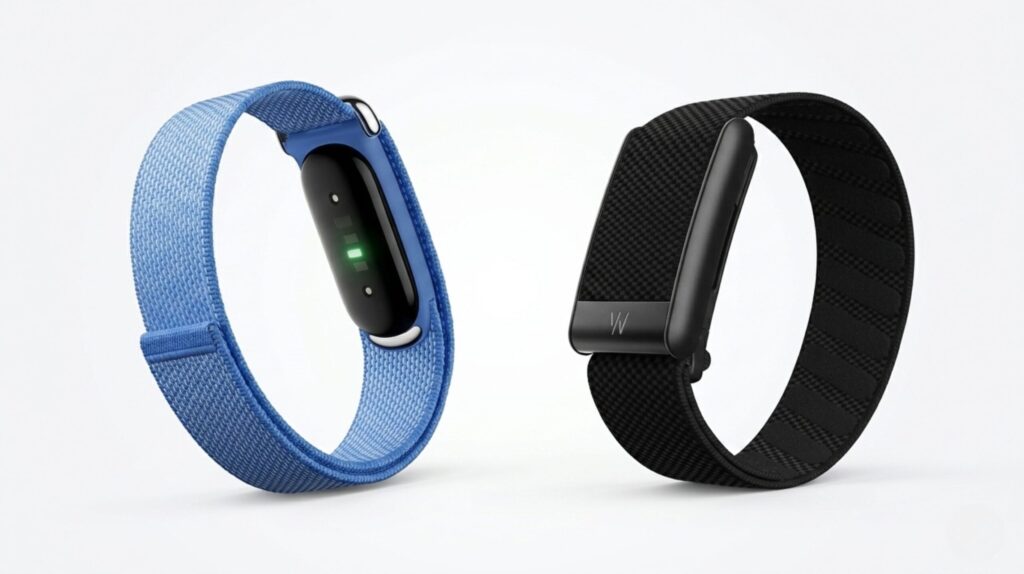
Fitbit Air vs WHOOP: How They Compare
The Google Fitbit Air is positioned as a direct challenge to WHOOP — the screenless tracker that popularised serious biometric monitoring among athletes and wellness enthusiasts.
The business model difference alone reshapes the comparison completely.
| Feature | Google Fitbit Air | WHOOP 5.0 | Winner |
|---|---|---|---|
| Entry cost | $99.99 one-time | $169–$349/year | Fitbit Air |
| Works without subscription | Yes — full core tracking | No — device unusable | Fitbit Air |
| AI health coaching | Gemini AI ($9.99/mo) | Basic AI insights | Fitbit Air |
| Battery life | Up to 7 days | 4–5 days | Fitbit Air |
| Elite athlete metrics | No Strain score | Strain + Recovery score | WHOOP |
| GPS | No | No | Tie |
| Cross-platform | Android & iOS | Android & iOS | Tie |
| Community features | Limited | Strong athlete community | WHOOP |
| Ecosystem depth | Google Health, Pixel, Android | Standalone | Fitbit Air |
| 3-year total cost | $100 (or $460 with AI) | $597–$1,077 | Fitbit Air |
For most users, the Google Fitbit Air wins on value by a significant margin.
WHOOP still leads on elite athlete analytics, including its Strain score and coaching community.
But for everyone else — the person who wants better sleep, smarter recovery, and personalized coaching — the cost comparison is difficult to ignore.
We've done a deeper analysis across multiple trackers in our AI fitness tracker comparison 2026, including Oura Ring and Ultrahuman Ring Air.
Potential Limitations to Consider
The Google Fitbit Air is a genuinely compelling product. But a fair analysis means naming what it doesn't do — and who it might frustrate.
- No GPS: Runners and cyclists can't track routes without carrying a phone
- No screen: Real-time data requires pulling out your phone every time
- AI requires subscription: Full Gemini coaching costs $9.99/month after trial
- No contactless payments: Can't replace your wallet or watch
- Google ecosystem dependency: Google Health app is central to the experience
- AI accuracy: Early reviewers flagged occasional Gemini coaching errors
- No elite metrics: No Strain score, no advanced recovery index for athletes
The AI accuracy point deserves a closer look. Google itself notes that Gemini responses should be checked for accuracy and aren't a substitute for medical advice.
Early users reported occasional inaccurate workout recommendations and inconsistent sleep coaching. These are first-generation growing pains — but if you rely on precision data, factor this in.
Privacy is the other area worth examining carefully. Your heart rate, sleep patterns, SpO2, and AFib data all flow through Google's servers.
That's a meaningful data-sharing decision. Our guide on how to stop AI from accessing your private data explains what's shared and how to audit permissions across AI-connected devices.
None of these are dealbreakers for most users. But they're real considerations for runners, privacy-conscious buyers, and elite athletes.
The Future of AI Wearables
The Google Fitbit Air isn't just a product launch. It's a proof of concept for what wearables become when AI handles everything the screen used to do.
And the direction it points toward is striking.
The World Health Organization's digital health initiatives consistently note that passive, continuous monitoring is one of the highest-value capabilities in preventive health.
The Google Fitbit Air is designed exactly for that. Wear it. Forget it. Let AI interpret it.
- Invisible sensors: Future trackers may integrate into clothing, rings, and patches
- Predictive health: AI that flags warning signs days before symptoms appear
- Medical integration: Wearable data feeding directly into healthcare systems
- Multi-device intelligence: Your watch, phone, home devices sharing health context
- Personalized baselines: AI that learns your unique normal, not population averages
Google has already signalled what comes next. The rebranding of Fitbit into Google Health is more than cosmetic. It's the start of an integrated health intelligence layer across Android, Pixel hardware, and AI services.
The Google Fitbit Air is one node in that system. As the AI gets smarter and more data flows in, the value of the hardware itself matters less and less.
That's a different kind of technology product. Not a device you upgrade every two years, but a persistent health relationship powered by ever-improving AI.
We explored what that shift looks like across industries in our analysis of how AI may reshape everyday life within two years.
Frequently Asked Questions — Google Fitbit Air
What is the Google Fitbit Air and how does it work?
+The Google Fitbit Air is a $99.99 screenless fitness tracker that launched in May 2026. At 12 grams total, it tracks your health silently, 24 hours a day.
Data syncs wirelessly to the Google Health app. There, the Gemini AI Health Coach turns raw metrics into personalized fitness, sleep, and recovery recommendations.
Does Google Fitbit Air require a subscription to use?
+No — core tracking is free forever. Heart rate, sleep, SpO2, HRV, and steps all work at no extra cost beyond the $99.99 purchase.
The Gemini AI Health Coach requires Google Health Premium at $9.99/month after the included 3-month trial. The tracker remains fully functional without it.
How does Google Fitbit Air compare to WHOOP?
+The biggest difference is cost. WHOOP requires a mandatory $169–$349/year subscription just to activate the device — no hardware purchase, no pausing.
The Google Fitbit Air costs $99.99 once, with core tracking free. WHOOP leads on elite athlete analytics, but for everyday users the value gap is hard to ignore.
What health metrics does Google Fitbit Air track?
+The Google Fitbit Air tracks continuous heart rate, HRV, blood oxygen (SpO2), skin temperature, sleep stages and duration, steps, and automatic workout detection.
It also provides AFib alert notifications — a feature typically found on devices costing significantly more. All data feeds into the Gemini AI Health Coach for pattern analysis.
Is the Gemini AI Coach on Google Fitbit Air accurate?
+Generally strong — early users praised sleep insights and recovery recommendations. Some noted occasional Gemini coaching errors, especially in the first few weeks before the AI builds a baseline.
Google itself advises that Gemini responses should be verified and are not medical advice. Accuracy improves noticeably as the Google Fitbit Air learns your individual health patterns over time.
Does Google Fitbit Air work with iPhone?
+Yes — full iOS compatibility is included. The Google Health app is available on the App Store and supports all tracking and AI coaching features.
The Google Fitbit Air experience is identical on iPhone and Android. There are no feature limitations for iPhone users — tracking, AI coaching, and AFib alerts all work cross-platform.
What is the battery life on Google Fitbit Air?
+Up to 7 days on a full charge. A 5-minute quick charge delivers one full day of tracking — helpful if you forget to plug it in overnight.
The 7-day battery is where the Google Fitbit Air gains a real behavioral advantage. You never need to remove it to charge before bed, which is when most sleep tracking data is captured.
Is the Google Fitbit Air worth buying in 2026?
+For passive, distraction-free health tracking, the Google Fitbit Air delivers exceptional value at $99.99 — especially with three months of AI coaching included.
It is not a smartwatch replacement. There is no GPS, no screen, and no payments. But as a dedicated AI health companion, few devices at this price point come close.
⌚ Explore the AI Health Tech Stack
You've seen what the Google Fitbit Air signals. Now go deeper into the tools and trackers shaping how AI monitors our health: