
Mirko
AI Tech Writer
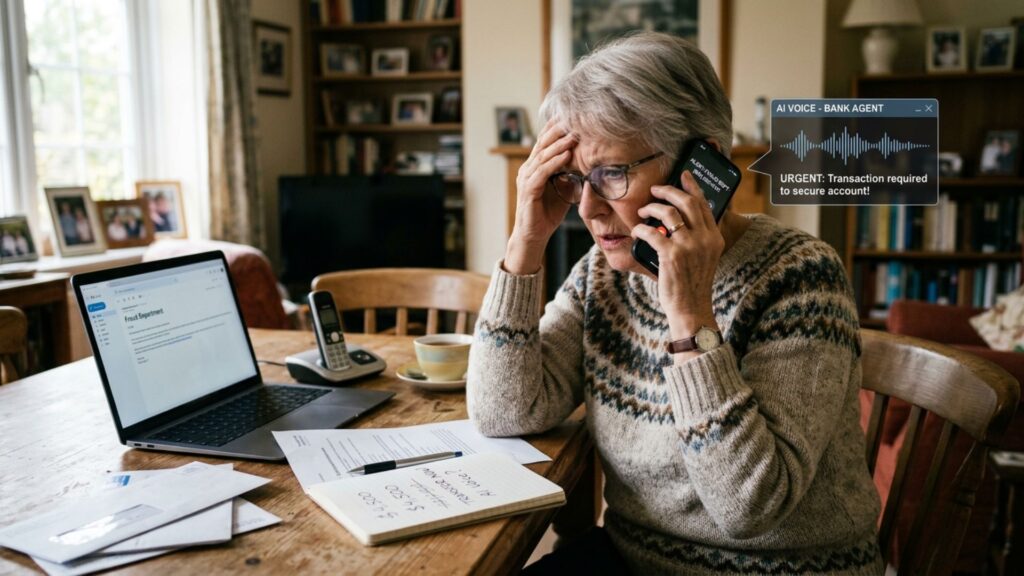
AI voice cloning scams cost Americans more than $893 million last year alone, according to the FBI — and most of that started with a phone call that sounded exactly like someone's kid, parent, or boss. A few seconds of audio is all it takes these days. So this guide breaks down how the scam actually works, real cases from 2026, and the handful of habits that reliably stop it.
Some links are affiliate links · You support us at no extra cost · Full disclosure
What Are AI Voice Cloning Scams?
AI voice cloning scams happen when criminals use artificial intelligence to copy a real person's voice, then use that fake voice over the phone to ask for money or private information. All it takes is a few seconds of audio, often pulled from a public video or voicemail.
Scammers don't need to hack anything. They just need your voice — and these days, almost everyone's voice is sitting in a video somewhere online.
AI Voice Cloning Scams: Quick Definition
A fraud where an AI tool recreates a real person's voice from a short audio sample, then a scammer uses that fake voice on a phone call to pressure someone into sending money or sharing sensitive details.
Most AI voice cloning scams target close relationships on purpose. A caller pretending to be your child, your parent, or your boss feels far more convincing than a stranger asking for cash. That emotional shortcut is exactly what makes this scam so effective.
For a wider look at how fake media shows up across the internet, our deepfake awareness guide breaks down the bigger picture beyond just phone calls. The FTC's consumer alerts on voice cloning confirm what researchers have said for a while now: most people simply can't tell a cloned voice from a real one by ear anymore.
How Scammers Pull Off an AI Voice Cloning Scam
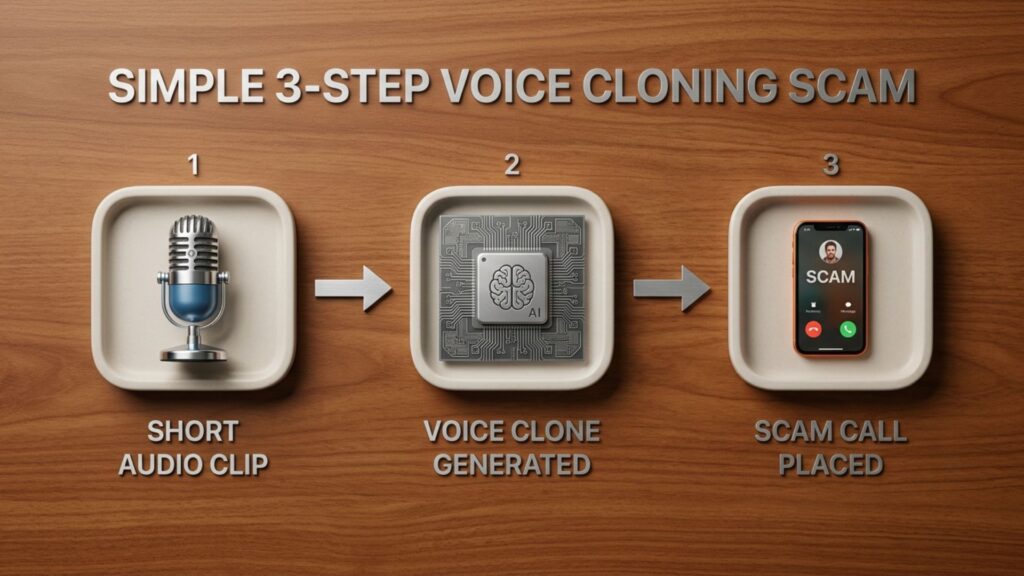
Voice cloning sounds complicated. It isn't, not anymore. Modern voice-cloning software only needs three to ten seconds of clear audio to build a working copy of someone's voice.
Scammers grab that audio from social media clips, YouTube interviews, voicemail greetings, or old recorded calls. Public posts are usually enough on their own.
Once the clone exists, the scammer doesn't read from a script word for word. Many tools generate speech in real time, so the fake voice can answer questions and react to emotion.
That makes an AI voice cloning scam far harder to catch than a basic recorded message. The conversation feels live because, in a sense, it is.
Caller ID spoofing usually comes along for the ride. The screen says Mom. The voice sounds like Mom. Neither one actually is.
There's a second layer too: psychology. The scammer leans on urgency, fear, and a request to keep things quiet, which keeps you from pausing to check. A caller who won't let you hang up or call back is following a script, not living through a real emergency.
For more on how this same cloning technology gets used legitimately — for audiobooks and video dubbing — our guide to AI voice replication tools shows the other side of the coin. The FTC has documented this exact playbook for family emergency scams, and the pattern barely changes from case to case.
Real AI Voice Cloning Scams Making Headlines in 2026
A finance employee in Hong Kong joined what looked like a normal video call with his CFO and several colleagues — then wired $25 million after everyone on that call turned out to be a deepfake.
That case made global headlines, but smaller AI voice cloning scams hit regular families every week. An Arizona mother described a call from a voice that sounded exactly like her teenage daughter, sobbing and saying she'd been kidnapped.
It was a clone built from a few seconds of audio. The FBI's Internet Crime Complaint Center has tracked AI-enabled fraud as a fast-growing category, with reported losses climbing past $893 million in a single year.
- $893M+ lost to AI-related scams in a single year, per the FBI
- $25M wired after a deepfake video call impersonated company executives
- Nearly 60% jump in cybercrime losses among adults over 60 in 2025
Older adults remain the most frequent target. If you want to see how this fits the wider pattern of AI-driven fraud, our piece on dangerous AI tool scams covers several related traps worth knowing about.
These aren't edge cases anymore. AI voice cloning scams have moved from rare news stories to a routine part of the scam landscape in 2026.
Warning Signs of an AI Voice Cloning Scam Call
Most advice about spotting a fake voice is already outdated. Modern AI voice cloning scams sound smooth, calm, and completely natural.
The old advice to listen for robotic pauses just doesn't hold up anymore. So instead of trusting your ears, watch the behavior around the call.
That's where the real warning signs of an AI voice cloning scam actually show up, every single time.
- Refuses to hang up: the caller won't let you end the call or call them back.
- Unusual payment request: wire transfers, gift cards, or cryptocurrency.
- Asks for secrecy: pressure to not tell other family members.
- A detail that's slightly "off": something the real person would never say.
- Heavy emotion as pressure: crying, panic, or fear used to override judgment.
Caller ID isn't proof either. Spoofing makes a scam call display a real, trusted number, so a familiar name on the screen means nothing on its own.
Our guide to spotting deepfakes and verifying media covers similar red flags for video and image-based fraud, if you want the fuller picture.
FTC guidance on family emergency scams repeats the same core lesson: a real emergency can survive a two-minute pause to verify it.
How to Protect Your Family From AI Voice Cloning Scams
The single best defense against AI voice cloning scams costs nothing and takes about two minutes to set up: a family safe word.
Pick a word or short phrase that's never been posted online and isn't something a stranger could guess. Share it with the people you'd actually call in an emergency. If someone calls in distress and can't give the safe word, that's your answer.
- Choose a word never posted online — not a pet's name or a street you've shared.
- Share it only with people you'd genuinely call in a real emergency.
- Hang up and call back on a number you already have saved.
- Ask a personal question only the real person would know, not something searchable.
- Treat any crypto, gift card, or wire transfer request as a hard stop.
Locking down your online accounts matters just as much as locking down your phone habits.
Regulators are paying attention too. The FCC has ruled that AI-generated voices in robocalls are illegal under existing telecom law. That gives states a real legal tool against this kind of fraud.
For more ways to shrink your digital footprint, check our guide to AI privacy gadgets.
What to Do If You're Targeted
If you've already sent money or shared details after a suspected AI voice cloning scam, speed matters more than embarrassment.
- Call your bank or payment provider immediately and ask about reversing or freezing the transfer.
- File a report with the FBI's Internet Crime Complaint Center at IC3.gov.
- Report it to the FTC at ReportFraud.ftc.gov.
- File a local police report — useful for insurance claims and any later investigation.
- Warn your family and close circle. Scammers often run the same script on multiple relatives at once.
Don't skip the report just because the money feels gone already. Reporting an AI voice cloning scam helps investigators connect cases and helps platforms shut down the numbers behind them faster.
It's also worth reviewing what's publicly tied to your accounts. Our guide on locking down what AI can access is a good next step once the immediate situation is handled.
No shame here, either. These scams are built by people who study human trust for a living. Falling for one says nothing about how careful or smart someone usually is, day to day.
Frequently Asked Questions — AI Voice Cloning Scams
What are AI voice cloning scams and how common are they in 2026?
+AI voice cloning scams are frauds where criminals use AI to copy a real person's voice from a short clip, then call pretending to be that person to request money.
They've grown sharply since 2024 and now account for hundreds of millions of dollars in reported losses every year.
How much audio does someone need to clone a voice?
+Most modern voice-cloning tools only need three to ten seconds of clear audio. A voicemail, a social clip, or a few seconds from an interview is usually enough.
Can a family safe word really stop AI voice cloning scams?
+Yes, in most cases. A cloned voice can copy sound perfectly but can't guess information that was never shared publicly — which is exactly what makes AI voice cloning scams fall apart on the spot.
Are older adults more at risk from AI voice cloning scams?
+Older adults remain the most frequently targeted group. Grandparent and family-emergency framing works well on them, and many are less familiar with how convincing AI voice cloning has become.
Can businesses be targeted by AI voice cloning scams too?
+Yes. Several reported AI voice cloning scams have targeted finance teams and executives, including one case where a cloned video call led to a $25 million wire transfer.
How do I report an AI voice cloning scam?
+File a report with the FBI's Internet Crime Complaint Center at IC3.gov, and with the FTC at ReportFraud.ftc.gov.
Reporting helps investigators connect related AI voice cloning scams across victims.
Is there technology that can detect a cloned voice on a call?
+Detection tools exist, but they're not yet reliable enough for everyday consumers to depend on. A family safe word and a callback habit remain more dependable than trying to detect a clone by ear.
Should I tighten my password and account security after a scam attempt?
+Yes. Tools like 1Password make it easier to use unique, strong passwords across accounts.
That limits the damage if a scammer who already tried an AI voice cloning scam also tries to access your accounts.
🛡️ Stay One Step Ahead of AI Voice Cloning Scams
You've got the core defense against AI voice cloning scams now: a safe word, slower verification habits, and tighter privacy settings.
Here's where to go next to round out the rest of your protection: