Mirko
AI Tech Writer
You spend 45 minutes tweaking a Midjourney prompt. The result? Still wrong. Here's the truth: 90% of users fight the AI instead of directing it. This guide reveals the exact prompt hacks, hidden parameters, and formatting tricks that pros use to generate stunning AI art on the first try — no more endless re-rolls.
📋 What's Inside
Some links are affiliate links · You support the blog at no extra cost · Details
1. Introduction
Midjourney prompt hacks are the secret weapon behind jaw-dropping AI art — and this guide delivers the framework that actually works.
Ever stared at a stunning piece of AI-generated artwork wondering "How did they do that?" The answer isn't luck or endless re-rolls. It's strategic Midjourney prompt hacks that transform vague ideas into pixel-perfect visuals.
Here's the truth: Midjourney isn't about typing random words and crossing your fingers. It's about guiding the AI with smart, intentional instructions — and that's where prompt hacks for Midjourney shine. Control lighting, style, composition, and emotional tone with just a few targeted words.
You don't need to be a prompt engineering expert. What you do need is a handful of well-tested Midjourney prompt hacks, reusable templates, and creative structures that actually work.
Comparing Midjourney vs DALL-E? Midjourney excels at artistic, stylized imagery — but only when you know how to communicate with it. That's exactly what this guide teaches.
In this breakdown, you'll master:
- Battle-tested Midjourney prompt hacks for stunning first-try results
- The exact prompt structure pros use to control every detail
- Hidden parameters most creators never discover
- Ready-to-copy templates you can customize in 30 seconds
Whether you're creating for Instagram, client work, or personal projects, these Midjourney prompt hacks cut iteration time in half. Ready to unlock scroll-stopping AI visuals? Let's dive in. Learn more about Midjourney's official prompt documentation.
2. What Is Midjourney
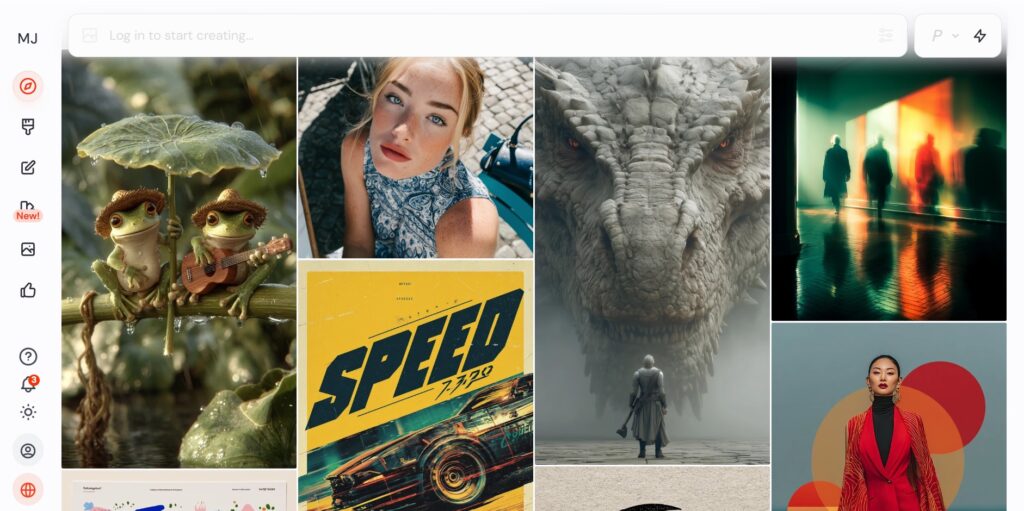
Midjourney is an AI-powered image generation tool that transforms simple text prompts into stunning visual art — and it’s one of the best platforms to apply powerful Midjourney prompt hacks. Unlike other AI tools, Midjourney runs entirely through Discord. Users type their prompts into a dedicated bot, and within seconds, receive high-quality, AI-generated images in response.
It’s a favorite among artists, designers, marketers, content creators, and even casual users — basically anyone who wants to turn words into compelling visuals without needing design experience. And thanks to smart Midjourney prompt hacks, it’s easier than ever to guide the AI toward professional-looking results.
Midjourney stands out for several key reasons:
High artistic quality – Outputs often resemble concept art or polished digital illustrations
Stylized outputs – Easily apply aesthetics like cyberpunk, watercolor, Pixar-style, or noir
Photorealistic capability – With the right Midjourney prompt hack, you can generate realistic faces, products, and scenes
Community-based generation – Everything happens publicly in shared Discord channels, giving you live inspiration and learning opportunities
What makes Midjourney so unique is how much control users have — especially when using well-structured Midjourney prompt hacks. Even with minimal input, you can achieve visually striking results… if you know how to write the right kind of prompt.
3. Why Prompts Matter
Midjourney doesn’t “think” like a human — it doesn’t understand emotion, intention, or storytelling the way we do. Instead, it analyzes your input, detects keywords, and matches them to patterns and styles it has learned from massive datasets.
That’s exactly why Midjourney prompt hacks are essential.
The more structured, specific, and intentional your prompt is, the better your result will be. Think of it like giving directions to someone unfamiliar with the area: the more detail you include, the closer they’ll get to your desired destination.
Let’s compare two examples:
Prompt 1a cat
This basic prompt might generate something random — maybe a cartoonish cat, maybe blurry or oddly shaped.
Prompt 2a ginger cat wearing round glasses, sitting on a bookshelf, studio lighting, depth of field, ultra-detailed --v 6
This version uses a Midjourney prompt hack structure to guide the AI clearly:
Subject: ginger cat
Action/setting: sitting on a bookshelf
Style details: studio lighting, depth of field, ultra-detailed
Model version:
--v 6
The result? A far more intentional, polished image that looks professional and on-brand for your project.
Bottom line: If you want next-level visuals from Midjourney, you have to speak its language — and that’s where the right Midjourney prompt hacks make all the difference.
4. The Most Effective Midjourney Prompt Hacks
Here’s what most users don’t realize: the secret to stunning AI-generated visuals isn’t just the idea — it’s all about how you write the prompt. And that’s where Midjourney prompt hacks come in.
These hacks are simple, yet incredibly effective. By using smart Midjourney prompt hacks, you can instantly upgrade your outputs from basic and generic to professional and scroll-stopping.
Below is a table of our favorite Midjourney prompt hacks — complete with real examples you can copy, tweak, and try in your next session. Whether you’re aiming for photorealism, fantasy, or product mockups, these prompt structures give you a reliable head start.
| Hack | Example Prompt | Result |
|---|---|---|
| Style Stacking | a futuristic city skyline, cyberpunk + watercolor + isometric view + cinematic lighting, highly detailed --v 6 | Blended art style with layered visual complexity |
| Lighting & Camera Angles | portrait of a woman, rim lighting, shallow depth of field, cinematic backlight, shot on 85mm lens --v 6 | Cinematic portrait with dramatic lighting and focus |
| Time & Setting Details | a cozy coffee shop in Tokyo, early morning golden hour, rainy day, warm lighting --v 6 | Rich atmosphere and mood-specific environment |
| Color Palette Guidance | dreamy landscape, pastel colors, soft pink and teal tones, matte finish --v 6 | Unified, controlled color scheme for mood consistency |
| Product Mockup Boost | modern shampoo bottle on a white background, studio lighting, reflective surface, product photography --v 6 | Professional product-style shot for branding or e-commerce |
The Prompt Structure That Works Best Today in 2026
5. Prompt Format Breakdown
One of the easiest ways to improve your Midjourney results is by using a clear prompt structure. While freeform prompts can work, structured ones give you much more predictable and refined outputs — especially when you’re aiming for professional-quality visuals.
Here’s a basic formula you can use and adapt for almost any project:
Example Format:[Main subject], [action or setting], [style or lighting], [optional modifiers] --v 6 --ar 3:2
Real Prompt Example:a futuristic Tokyo alley, neon lights, cinematic lighting, in the style of Blade Runner --v 6 --ar 16:9
Let’s break it down so you can build your own:
Subject: Tokyo alley
This is your main object, location, or character. Keep it specific.Style: futuristic, neon, cinematic
These words guide the visual aesthetic — you can combine moods, color styles, or even movements (e.g., minimalism, steampunk, Pixar).Art Influence: in the style of Blade Runner
This tells Midjourney to draw inspiration from a specific movie, artist, or reference point.Settings:
--v 6,--ar 16:9
These control image quality and aspect ratio. You can switch--arto 1:1 for Instagram, 9:16 for TikTok, or 3:2 for blog use.
Pro Tip:
The more intentional your structure, the more control you have. Think of it like building a sandwich: if the layers are random, the result is messy. If they’re placed with purpose, everything works together beautifully.
For visual inspiration and prompt syntax examples, check out PromptHero — it’s a great way to see how top creators are writing prompts today.
6. Bonus Commands and Parameters
Want even more control over how your images turn out? That’s where Midjourney prompt hacks involving advanced parameters come into play.
Midjourney offers a powerful set of optional commands — also known as parameters — that can dramatically enhance the final output of your prompt. These simple but impactful additions are part of the most effective Midjourney prompt hacks used by experienced creators.
By placing them at the end of your prompt, you can control key elements like the model version, aspect ratio, realism level, or even creative randomness — giving you far more flexibility over your results.
Here are some of the most useful Midjourney prompt hacks involving bonus parameters to try:
| Command | What It Does |
|---|---|
--v 6 |
Use the latest and most advanced Midjourney version |
--ar 1:1, 3:2, 9:16 |
Control the **aspect ratio** of the image — square, landscape, or portrait |
--style raw |
Reduces stylization, giving you **more realistic and raw outputs** |
--chaos 0–100 |
Adds randomness — the **higher the number**, the more unpredictable and creative the image |
--no [word] |
Excludes elements from your result — e.g., --no text removes watermarks or writing |
Tip: Combine these with your main prompt to fine-tune results.
Example:a luxury watch on marble, product photo, studio lighting --v 6 --ar 3:2 --style raw
For a deeper explanation of all Midjourney parameters, visit the official documentation.
7. Common Mistakes to Avoid
Even though Midjourney is incredibly powerful, it's easy to fall into traps that waste time and image credits. These mistakes lead to bland, confusing, or inconsistent results — here's what to watch out for:
Prompts That Are Too Short = Generic Images
Writing something like cat or beautiful house leaves 90% of the creative decisions to the AI — and it will often produce something average or bland.
Be specific with mood, style, and details. Add lighting, composition, and artistic direction.
Conflicting Styles = Muddy or Broken Output
Combining too many incompatible styles — like "pixel art + realism + watercolor + cyberpunk" — confuses the model and produces cluttered, messy visuals.
Stick to 2–3 complementary styles maximum. Choose one dominant aesthetic and use others as accents.
Skipping Commands = Missed Creative Control
Forgetting to use settings like --ar, --v, or --style means you're stuck with defaults — and those might not match your creative vision.
Learn parameters like --ar 16:9 for widescreen, --s 250 for stylization control, and --chaos 30 for variation. They unlock full power.
Overusing References = Repetitive or Ethical Issues
Constantly prompting "in the style of [famous artist]" can lead to repetitive results and ethical concerns around copying visual identities too closely.
Describe the aesthetic instead — like "animated look, soft edges, bright lighting" rather than naming specific artists. It's safer and still effective.
Ignoring Character Consistency = Different Faces Every Time
If you're trying to create multiple images of the same character, generic prompts will give you wildly different results each time — different faces, outfits, and features.
Use --seed to lock randomness, --cref for character reference images, or detailed descriptions. Learn more in our Midjourney character consistency guide.
Final Tip
When in doubt, keep prompts clear, focused, and intentional. The best Midjourney images come from prompts that balance creativity and clarity — specific enough to guide the AI, open enough to let it surprise you.
8. Our Favorite Prompt Templates
Not sure where to start? Use these ready-to-go Midjourney prompt templates to create stunning visuals in different styles. Just copy, paste, and tweak the details to match your needs — whether you're designing for social media, a brand, or pure creative fun.
Product Mockup Style
A modern coffee mug on a white background, soft shadows, top-down angle, minimal style
- Works great for: ecommerce mockups, branding, minimalist visuals
- Try changing: "coffee mug" to "skincare bottle" or "smartphone"
- Tip: Combine with
--style rawfor more realism
Portraits
A female astronaut, close-up portrait, futuristic helmet with reflections, shallow depth of field, 85mm lens style
- Works great for: character design, profile images, sci-fi posters
- Try changing: gender, profession, lighting setup, or lens type
- Tip: Use
--style rawfor photorealism or leave it stylized for concept art
Fantasy Art
A magical forest with glowing mushrooms, foggy atmosphere, in the style of Studio Ghibli
- Works great for: fantasy scenes, book covers, backgrounds
- Try changing: theme to underwater, cyberpunk, dreamscape
- Tip: Add color palettes or camera types to guide the style further
Cinematic Scenes
A lone figure standing on a cliff at sunset, dramatic lighting, wide-angle shot, epic landscape, cinematic color grading
- Works great for: storytelling visuals, video thumbnails, dramatic compositions
- Try changing: location (desert, cityscape, ocean), time of day, weather conditions
- Tip: Adjust
--s(stylize) between 100-1000 to control artistic interpretation
Architectural Renders
Modern minimalist house with floor-to-ceiling windows, surrounded by pine forest, golden hour light, architectural photography
- Works great for: real estate, interior design, architecture portfolios
- Try changing: architectural style (brutalist, art deco, futuristic), materials, environment
- Tip:
--style rawreduces artistic interpretation for more realistic renders
Pro Tip: Create Your Own Template Library
Once you nail a prompt that works, save it as a template and swap out key variables. This builds your personal prompt library and cuts iteration time by 70%. Learn more prompt engineering strategies in Anthropic's prompt engineering guide.
9. Free Midjourney Prompt Generator Tool
Want to skip the guesswork and start using effective Midjourney prompt hacks in seconds?
We've got you covered.
Our free Midjourney Prompt Generator Tool is designed to help you create high-performing prompts instantly — with the perfect balance of subject, style, lighting, and format. It takes the best Midjourney prompt hacks and packages them into an easy-to-use interface. No need to memorize any parameters or formatting tricks.
Just choose what you want — whether it's a product photo, fantasy artwork, or a bold Instagram visual — and the tool builds the ideal prompt for you. It's one of the easiest ways to apply powerful Midjourney prompt hacks without starting from scratch.
Why it's awesome:
- ✅ Built for creators, marketers, and beginners — no technical knowledge required
- 🎨 Mix styles like cyberpunk, watercolor, studio lighting with one click
- 📐 Set aspect ratios and image types in one click — perfect for social media
- ⏱️ Save time and get consistent results every single generation
Looking for more tools like this? Explore our top picks in the AI Art Generators comparison guide to find the perfect creative toolkit.
10. Ethical Use Reminder
AI art is powerful — but with that power comes responsibility. Using Midjourney prompt hacks ethically ensures you're creating responsibly, respecting creators, and staying on the right side of the law.
Quick reminder: AI-generated art exists in a rapidly evolving legal and ethical landscape. Always think critically about how you use your creations, especially when they're for commercial purposes or shared publicly.
Key ethical guidelines to follow:
Don't copy living artists' styles without permission
Avoid prompting "in the style of [living artist name]" unless you have explicit consent. Instead, describe the aesthetic qualities you want (e.g., "whimsical illustration with bold colors") rather than naming individuals.
Disclose when work is AI-assisted
Transparency builds trust. If you're selling prints, offering services, or posting on social media, let people know your work uses AI. Many platforms and clients appreciate honesty — and some require it.
Respect copyright and licensing terms
Review Midjourney's Terms of Service regularly. Commercial use is generally allowed for paid subscribers, but rules can change. Never claim full original authorship if regulations or client agreements require disclosure.
Avoid harmful, deceptive, or inappropriate content
Don't generate deepfakes of real people, misleading news imagery, explicit content without consent, or anything that could cause harm. Midjourney has content policies — follow them, and use your judgment.
Add your own creative value
The best AI art isn't just generated — it's directed, curated, and refined by you. Post-process in Photoshop, combine multiple generations, or use AI as a starting point for deeper creative work. This makes your output uniquely yours.
The Bottom Line
Use Midjourney prompt hacks to unlock creative potential — not to exploit, deceive, or harm. When you create responsibly, you contribute to a healthier, more respectful AI art community. Your creativity, your rules — but always with integrity.
Concerned about AI and privacy? Learn how to protect your creative work and personal data in our guide: How to Stop AI From Reading Your Private Data.
11. Final Tips and FAQ
Before you start creating your next masterpiece, here are some quick final tips and answers to the most common questions about using Midjourney.
Is Midjourney free to use?
+No, Midjourney is no longer free. Previously, the platform offered a limited free trial, but as of 2024, all access requires a paid subscription starting at $10/month for the Basic plan.
You'll also need a Discord account, as Midjourney currently operates through Discord servers. The Basic plan gives you 200 images per month (~3.3 fast GPU hours), which is enough to test the platform and learn prompt engineering before upgrading.
Can I use Midjourney images commercially?
+Yes, if you're on a paid plan ($10/month or higher), you own the rights to use Midjourney-generated images commercially. This includes selling prints, using images in client work, merchandise, marketing materials, social media content, and more.
Free trial users (when trials were available) did not have commercial rights. Always review Midjourney's current Terms of Service for the latest licensing details, especially if you're generating images for high-value commercial projects or brand partnerships.
Can I sell AI art made with Midjourney?
+Yes, paid subscribers can legally sell AI-generated art created with Midjourney. Many creators already monetize their work through multiple channels:
Popular methods include: selling prints on Etsy, Redbubble, Society6, and Printful; offering custom AI art services on Fiverr or Upwork ($50–$500 per project); licensing images to brands, publications, and stock photo sites; creating NFTs on platforms like OpenSea; and building content brands on Instagram or YouTube.
Best practice: Always disclose that your work is AI-assisted, and whenever possible, add your own creative edits, post-processing, or artistic direction to differentiate your style and add unique value.
How do Midjourney prompts work?
+Midjourney prompts are text instructions that tell the AI what image to generate. A well-structured prompt typically includes:
Subject: What you want to see (e.g., "mountain landscape at sunset"). Style keywords: Artistic direction (e.g., "cinematic", "watercolor", "3D render"). Technical parameters: --ar 16:9 for aspect ratio, --stylize 200 for artistic interpretation, --chaos 50 for variation. Quality modifiers: Descriptive words like "detailed", "dramatic lighting", "vibrant colors".
The more specific and structured your prompt, the better your results. This guide covers exactly how to format prompts for maximum control and consistency.
What are the best Midjourney parameters?
+The most useful Midjourney parameters every creator should know:
--ar (aspect ratio): --ar 16:9 for widescreen, --ar 9:16 for vertical/mobile, --ar 1:1 for square. --stylize or --s (0-1000): Controls artistic interpretation; lower = literal, higher = creative. --chaos (0-100): Variation level; 0 = predictable, 100 = wildly different variations. --quality or --q (.25, .5, 1): Rendering detail and generation time. --no: Removes unwanted elements (e.g., --no text, people). --seed: Locks randomness for reproducible results.
Parameters are added at the end of your prompt after a space. Pro tip: Start with --ar and --stylize, then experiment with chaos and seed for advanced control.
How much does Midjourney cost per month?
+Midjourney pricing (2026):
Basic Plan: $10/month — 200 images/month (~3.3 fast GPU hours). Standard Plan: $30/month — Unlimited relaxed mode + 15 fast hours (~450 images). Pro Plan: $60/month — Unlimited relaxed + 30 fast hours, stealth mode (private generations). Mega Plan: $120/month — Unlimited relaxed + 60 fast hours, maximum privacy and speed.
All paid plans include full commercial usage rights. Annual subscriptions offer a 20% discount. Most freelancers and serious creators find the Standard plan ($30/month) to be the sweet spot for quality and volume.
What's the difference between Midjourney V6 and V6.1?
+Midjourney V6.1 (the current default as of 2026) offers significant improvements over V6:
Key upgrades: Improved prompt accuracy (follows instructions more literally), better text rendering in images, more consistent character generation across prompts, enhanced photorealism and detail, faster processing and fewer artifacts, and refined understanding of artistic styles and mediums.
For most users, V6.1 delivers noticeably better results without requiring major prompt rewrites. If you learned prompting on V5 or V6, your prompts will work even better on V6.1 — no new learning curve required.
Can Midjourney generate text in images?
+Yes, Midjourney V6 and V6.1 have significantly improved text rendering capabilities. To generate readable text in your images, wrap your desired words in quotation marks within your prompt.
Example: "movie poster with title \"RISE\" in bold serif letters, centered, red text on black background". Text generation works best for short phrases (1-5 words). Specify font style (serif, sans-serif, handwritten), placement (centered, top, corner), size (large, bold), and background contrast for best results.
Complex layouts or long paragraphs may still require external editing tools. For professional text-heavy designs, consider using Midjourney for backgrounds and adding text in Photoshop or Canva.
How do I make consistent characters in Midjourney?
+Creating consistent characters across multiple images requires using reference features and prompt discipline:
Best methods: Use --cref (character reference) by uploading a reference image URL — this is the most reliable method for character consistency. Use --seed to lock randomness and generate variations of the same character. Save your character description as a template (detailed physical features, clothing, pose) and reuse it exactly. Use --sref (style reference) to maintain visual consistency across scenes. Run /describe on your character image to extract reusable descriptive keywords.
Pro tip: Combine --cref with --cw (character weight, 0-100) to control how closely Midjourney follows the reference image. Higher weight = more faithful to reference.
What are the most common Midjourney mistakes?
+The biggest mistakes that ruin Midjourney results:
1. Vague prompts: "A nice landscape" gives unpredictable results. Be specific: "Alpine mountain valley at golden hour, pine forest, dramatic clouds". 2. Ignoring aspect ratio: Default square (1:1) doesn't fit most uses — specify --ar 16:9 for web, --ar 9:16 for mobile. 3. Overusing chaos: High --chaos (75-100) creates unpredictable, often unusable variations. 4. Not using negative prompts: Use --no to exclude unwanted elements (e.g., --no text, people, watermark). 5. Forgetting style keywords: Specify medium (photo, painting, 3D render) and mood (cinematic, minimalist, dramatic). 6. Not experimenting with --stylize: This parameter dramatically affects artistic interpretation — test ranges from 0 to 1000.
This guide covers all these mistakes in detail with side-by-side examples and fixes.
Is Midjourney better than DALL-E or Stable Diffusion?
+Each platform has different strengths depending on your use case:
Midjourney: Excels at artistic, stylized, aesthetically polished images with minimal prompting. Best for creative professionals, marketing visuals, concept art. Easiest to use for beginners. DALL-E 3 (via ChatGPT): Better prompt following and text rendering, ideal for precise concepts and educational content. Integrated with ChatGPT for conversational refinement. Stable Diffusion: Open-source and fully customizable, supports fine-tuned models and ControlNet for advanced users. Requires technical knowledge but offers unlimited free local generation.
Bottom line: For most creators seeking high-quality, artistic AI images without complex setup or coding, Midjourney remains the top choice in 2026. If you need precise prompt adherence or text, try DALL-E 3. If you're technical and want full control, explore Stable Diffusion.
Can I use Midjourney without Discord?
+As of May 2026, Midjourney still requires Discord for image generation. You must create a free Discord account and join the Midjourney server (or add the Midjourney bot to your own server) to generate images.
However, Midjourney has announced plans for a standalone web interface currently in alpha testing for select users. Once publicly available, the web version will allow image generation directly through a browser without Discord — making the platform significantly more accessible to non-Discord users.
Until then, Discord is mandatory. The good news: Discord is free, and you don't need to understand Discord's social features to use Midjourney — you can treat it purely as a command interface.
Ready to Master Midjourney?
Stop wasting time on trial and error. Get instant access to professional-grade AI image generation and start creating stunning visuals today.
Start Creating with Midjourney →🎨 Master AI Art Creation
You now have the prompt hacks to generate stunning Midjourney art consistently. Take your AI creativity even further with these expert guides: