
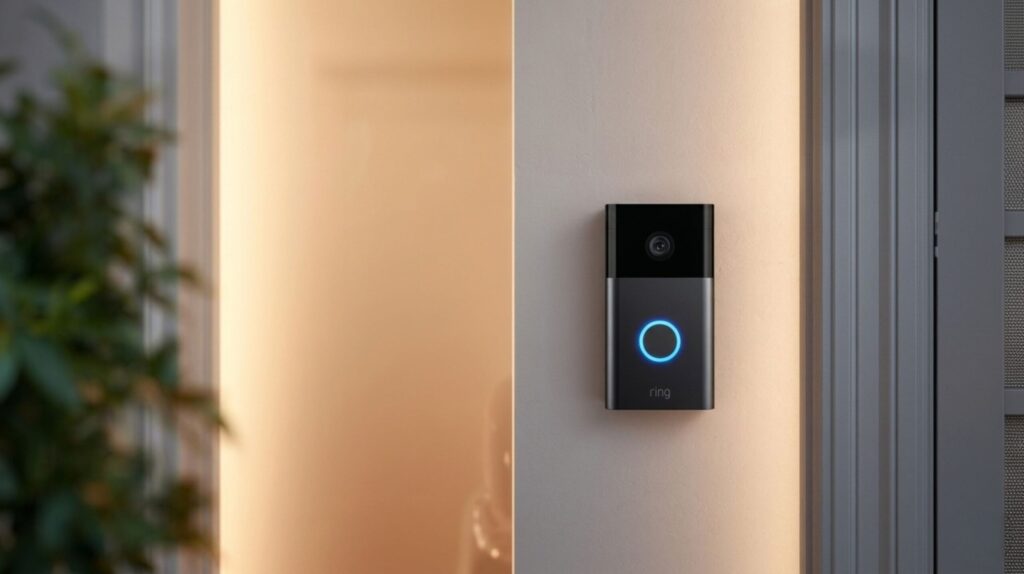
Mirko
AI Tech Writer
Every Ring 4K vs Nest Doorbell review I checked before writing this one quoted subscription prices from 2025 — back when Nest Aware was still $6 a month. That plan doesn't exist anymore. This comparison uses the current August 2026 pricing, the new Nest 3rd gen with Gemini AI, and a plain answer to the question most guides skip: do you even need a subscription?
Some links are affiliate links · they support this site at no extra cost to you · Full disclosure
1. Why AI Doorbells Changed in 2026
The Ring 4K vs Nest Doorbell debate got much messier this year, and it's not because either product got worse. Two things shifted in the last twelve months, and both change the answer to which AI doorbell is worth your money.
First, the hardware. Google released the Nest Doorbell (wired, 3rd gen) with Gemini for Home in October 2025 — the first mainstream doorbell with a real generative-AI layer baked in. Ring answered with the Wired Doorbell 4K Pro at $249.99, its sharpest video doorbell to date, and dropped a Battery Doorbell Pro at Retinal 4K in March 2026.
Second, the pricing. Nest Aware doesn't exist anymore — it's called Google Home Premium now, and the entry tier costs $10 a month, not the $6 every older review still quotes. Ring hiked Ring Protect Basic to $5.99 a month per device on February 1, 2026 — a 20% jump. The old Ring vs Nest cost comparisons that made Nest look like the value pick are outdated arithmetic.
✨ The 2026 Change Most Reviews Miss
Every "Ring 4K vs Nest Doorbell" comparison that quotes $6/month Nest Aware or $3.99/month Ring Protect is running on 2025 numbers. The real 2026 math — Ring Protect $5.99/mo per device vs Google Home Premium $10/mo unlimited — flips who "wins on price" depending on whether you have one camera or three. That single fact reshapes the verdict of this entire AI doorbell comparison.
That's the setup for the rest of this Ring 4K vs Nest Doorbell breakdown. Video quality still matters. Ecosystem still matters. But the subscription math is what decides whether you paid a fair price two years in — and that math looks nothing like what most best video doorbell guides tell you.
Building the rest of your smart home security stack alongside this decision? My best smart home hubs guide covers which hubs pair cleanly with each doorbell — and if privacy is a driver, the AI home devices to disable walkthrough covers both Ring and Nest defaults worth turning off on day one.
2. Ring 4K vs Nest Doorbell: Specs & Current Prices
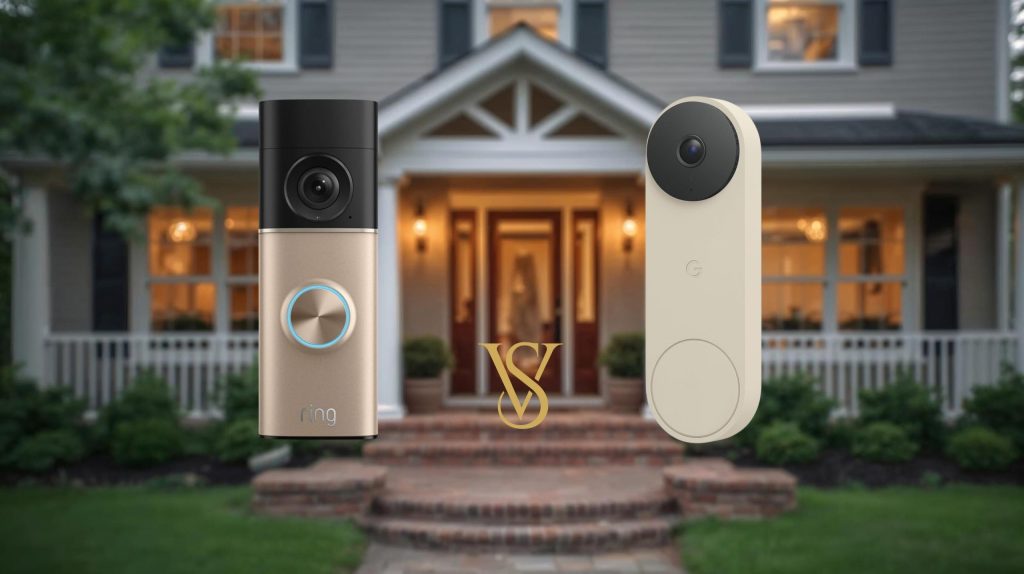
Before the feature breakdown, here's the head-to-head at current 2026 spec and price. This is the exact Ring Wired Doorbell 4K Pro (3rd Gen) at $249.99 against the Google Nest Doorbell (wired, 3rd gen) at $179.99 — the two current wired flagships from each brand.
[IMAGE PLACEHOLDER: side-by-side hero of Ring 4K Pro and Nest 3rd gen]
Two things to flag before you scan the table. The free-tier row matters more than most Ring vs Nest comparisons show — Nest 3rd gen gives you 6 hours of event previews without paying a cent, and Ring gives you zero. And the subscription row is where the "cheap doorbell" story ends. Both brands raised prices in the last twelve months, and the annual math changes the winner.
| Feature |
Ring Wired 4K Pro
Best for Alexa homes
|
Nest Doorbell 3rd Gen
Best for Google/Gemini
|
|---|---|---|
| 🏆 My Verdict | Sharpest video · cheapest for single doorbell | Smartest AI · 6h free · wins on multi-camera |
| List Price | $249.99 Often $199 on Amazon |
$179.99 Often $139 on Amazon 🥇 Cheaper |
| Video Resolution | Retinal 4K + HDR 10x Enhanced Zoom 🥇 Sharpest |
2K HDR · 166° FOV 3:4 head-to-toe view |
| Generative AI | Person + Package + Motion Zones Rule-based detection |
Gemini for Home Natural-language video search 🥇 Smarter |
| Ecosystem | Amazon Alexa + Echo Show Native, fastest response |
Google Home only No Nest app · no Alexa native |
| Free Storage | Live view only ❌ Zero free recording |
6 hours event previews FREE 🥇 Best |
| Subscription (2026) | $5.99/mo Ring Protect Basic · per device |
$10/mo Google Home Premium · all devices |
| Video Retention | 180 days event history 🥇 Longest | 30 days Standard · 60 days Advanced |
| Power | Wired · 16-24VAC transformer Always on |
Wired · 16-24VAC transformer Always on |
| Where to Buy | 🛒 Check Amazon Prime free shipping | 🛒 Check Amazon Includes 6-hour free storage |
⚡ Quick Decision Guide:
Choose Ring 4K Pro if:
✓ You want the sharpest possible footage (Retinal 4K)
✓ You're deep in Alexa/Echo
✓ It's your only camera — Basic $5.99/mo is cheaper than $10/mo Nest
Choose Nest 3rd Gen if:
✓ You want Gemini AI (natural-language video search)
✓ You're on Google Home
✓ You have 2+ Nest cameras — $10/mo covers all
If you're already inside Alexa with Echo devices, the Ring Wired 4K Pro gives you the cleanest integration and the sharpest sensor on the market — with the caveat that Ring Protect Basic is required to save any recordings at all. If you're on Google Home or want the Gemini AI layer, the Nest 3rd gen gives you 6 hours of usable footage before you pay a cent, and one $10/month plan covers every Nest camera in the house.
3. Retinal 4K vs 2K HDR + Gemini AI
Image quality is where most Ring 4K vs Nest Doorbell reviews stop short. Resolution is the easy comparison — 4K beats 2K on paper. The harder question is what your doorbell does with what it sees, and that's where the two products diverge sharply in 2026.
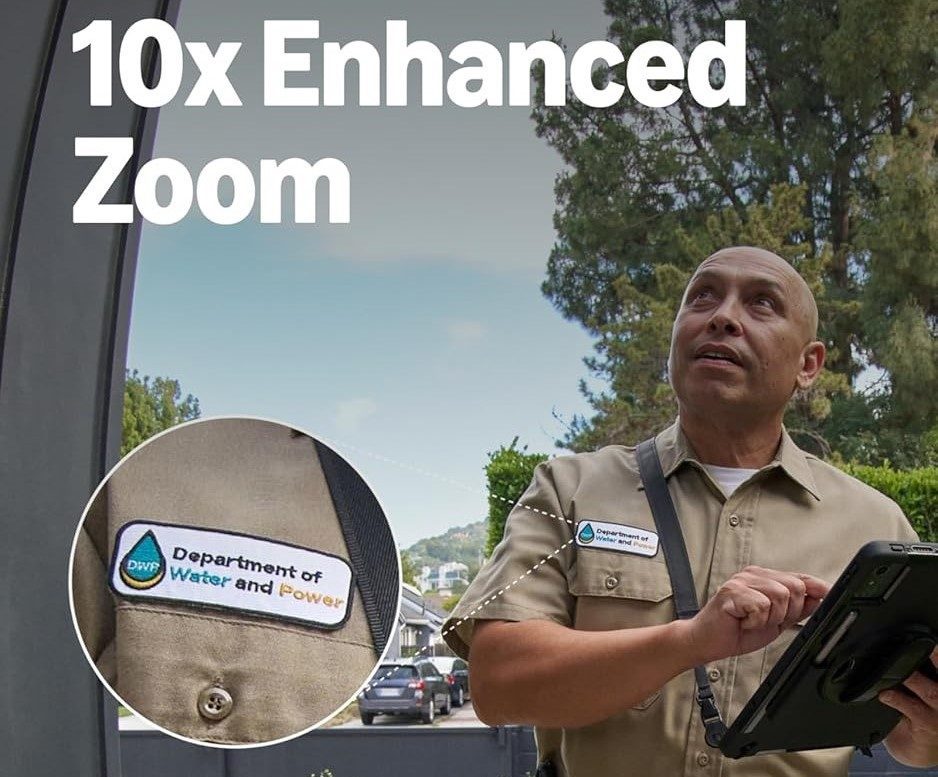
The Ring Wired Doorbell 4K Pro is built for raw pixel count. Its Retinal 4K sensor plus 10x Enhanced Zoom holds detail at distances no other consumer doorbell can match — SafeWise's testing confirmed license plates and small text stay readable on zoom. The Low-Light Sight feature keeps color video in near-dark using just ambient light, only dropping to black-and-white when it's truly dark out.
The Nest 3rd gen trades some resolution for on-device intelligence. Its 2K HDR sensor with 166° field-of-view and 3:4 vertical aspect ratio captures a full head-to-toe view — better for spotting packages on the ground and full-body shots of visitors than Ring's wider-but-shorter frame. But the standout is Gemini for Home: the doorbell writes natural-language descriptions of what it sees, and you can search past video by typing questions like "Who let the dogs out?"
✨ What Gemini Changes in Practice
Instead of "someone walked by at 4:22 PM," Gemini surfaces "person with flowers approached the door" — and lets you search back through weeks of footage with plain-English questions. PCWorld's review called it "a game-changer." The catch: Gemini's natural-language search requires Google Home Premium Advanced at $20/mo — the $10/mo Standard tier gives you Gemini's smarter alerts but not full search.
| Performance Factor | Ring Wired 4K Pro | Nest Doorbell 3rd Gen |
|---|---|---|
| Clarity & Detail | Retinal 4K · license plates readable on zoom | 2K HDR · softer on zoom but 166° coverage |
| Low-Light Performance | Low-Light Sight (color in near-dark) | Standard HDR · IR night vision |
| Aspect Ratio | Wide-angle · 140° horizontal | 3:4 vertical · full head-to-toe view |
| AI Detection | 3D Motion + person/package (rule-based) | Gemini + person/pet/vehicle/package |
| Video Search | Manual scrubbing through timeline | Natural-language ("show me deliveries") |
For pure evidence value — the footage you'd hand to police or insurance — Ring 4K Pro wins the pixel count fight. For daily use, where the question is "did anything happen at the door today?" rather than "can I identify this face?" — Gemini AI on the Nest 3rd gen turns hours of scrubbing into a text search. Both are legitimate wins. Neither cancels the other out.
For deeper context on how AI systems interpret what your camera sees, my breakdown of AI visual understanding covers why on-device processing (like Nest's Gemini layer) behaves differently than cloud-based detection.
4. Alexa vs Google Home + Gemini for Home
A best video doorbell isn't a standalone gadget in 2026 — it's the front door of your smart home security system. The Ring 4K vs Nest Doorbell ecosystem question is less about which one has cooler features and more about which one plays cleanly with what you already own.
[IMAGE PLACEHOLDER: Alexa Echo Show + Google Nest Hub side-by-side showing doorbell live feed]
Ring 4K Pro locks into Alexa the deepest of any doorbell. When someone rings, Echo Show displays flip to the live feed automatically — no tap required. Alexa Routines let the doorbell trigger porch lights, pause the TV, or push announcements to every speaker in the house. If you own a Fire TV, Echo, or eero router, Ring feels like it was always supposed to be there.
The trade-off is Google Home. Ring's Google Home support is limited to basic notifications — no video streaming to Nest Hub displays. If you own Google speakers or displays, the Ring 4K Pro downgrades to a second-class citizen in your smart home security setup.
Nest 3rd gen goes the opposite direction — Google-only, but with Gemini. There's no Nest app anymore; the Google Home app is the only control surface. Doorbell alerts land natively on Nest Hub displays with tap-to-talk. And Gemini for Home layers on top of everything: familiar-face announcements ("Sarah is at the door"), face-triggered routines (auto-unlock for family members with compatible locks), and daily "Home Brief" summaries pulled from every Gemini-connected device.
⚠️ The Nest 3rd Gen Alexa Story Changed
Older Nest doorbells worked with Alexa for basic streaming. The 3rd gen with Gemini does not — per DumbSwitches' 2026 review, "there is no Apple HomeKit support, no Alexa-native integration, and no Amazon account required." If ecosystem flexibility matters, this narrows Nest 3rd gen to Google-only households — a step back from the previous version's flexibility.
Matter & Thread: The Interoperability Story
Both doorbells claim Matter compatibility, but the details matter. Matter 1.5 added camera and doorbell support in late 2025 — but as of August 2026, no wired video doorbell is fully Matter-certified yet. Status sharing works; full cross-ecosystem video streaming through Matter doesn't. Treat Matter as a reason to watch this category rather than a feature either doorbell can genuinely claim right now.
| Smart Feature | Ring Wired 4K Pro | Nest Doorbell 3rd Gen |
|---|---|---|
| Primary App | Ring app + Alexa app | Google Home app only Nest app no longer supported |
| Alexa Integration | ✅ Full support · Echo Show auto-popup BEST | ❌ Not supported on 3rd gen |
| Google Home | ⚠️ Notifications only · no Nest Hub video | ✅ Native · Gemini AI layer BEST |
| Familiar Face Alerts | ❌ No facial recognition | ✅ "Sarah is at the door" UNIQUE |
| Natural-Language Search | ❌ Timeline scrubbing only | ✅ Gemini · "show me deliveries" NEW |
| Detection Categories | Person, Package, Motion (subscription) | Person, Pet, Vehicle, Package, Face |
| Matter Support | Status sharing only (partial) | Status sharing only (partial) |
| Best For | 🏠 All-Amazon smart homes | 🏠 Google Home homes wanting AI |
🏠 Which Ecosystem Fits Your Home?
🔵 Choose Ring 4K Pro if you have:
- Multiple Echo speakers/displays
- Ring cameras or alarm system
- Fire TV or Fire tablet
- Alexa-controlled smart lights
- Amazon Prime + eero router
🟢 Choose Nest 3rd Gen if you have:
- Google/Nest speakers or displays
- Nest cameras or thermostat
- Android phone as primary
- Interest in Gemini AI features
- Chromecast or Google TV
✨ The Feature Most 2026 Reviews Still Miss
Nest's Gemini for Home integration doesn't just add facial announcements — it lets you search past video by asking questions in plain English. Type "who dropped off the package Tuesday?" and Gemini surfaces the clip. Combined with familiar-face announcements ("Sarah is at the door") and Google Routines that can auto-unlock for recognized family members, no AI doorbell comparison gets closer to feeling like a real assistant. The Ring 4K Pro has better video — Nest 3rd gen has more intelligence.
🔗 Building a full smart home? My best smart home hubs guide covers which hubs pair cleanly with Ring vs Nest — and my best smart locks comparison shows which locks work with Nest's familiar-face auto-unlock routines.
5. Setup & Real 2026 Subscription Costs
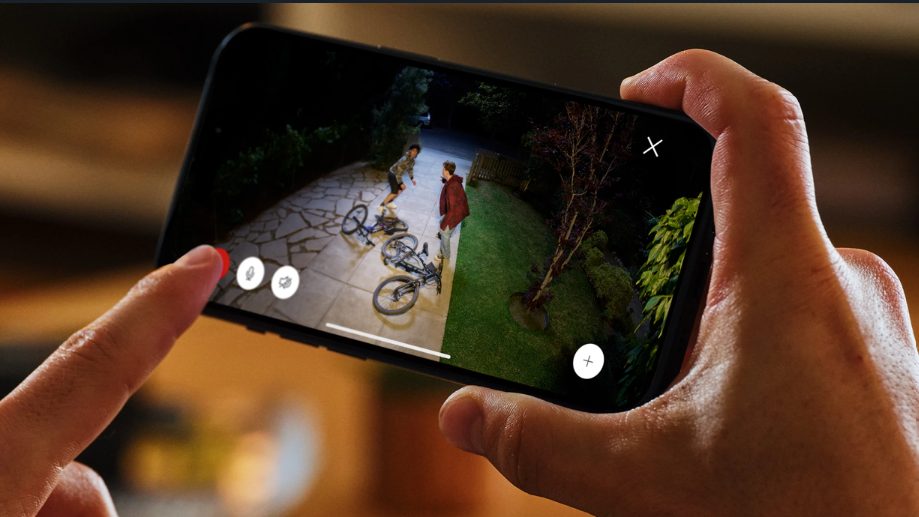
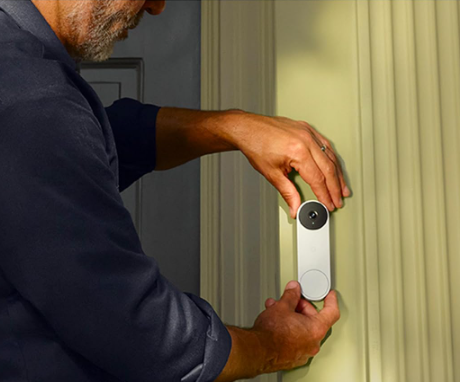
Setup takes about 15 minutes for either doorbell — both need a 16-24VAC transformer, and both use guided app walkthroughs. The real decision isn't installation. It's what happens on your credit card after the purchase, and this is where the current 2026 math looks nothing like the numbers older Ring 4K vs Nest Doorbell comparisons quote.
The pricing that applies right now
Ring Protect Basic costs $5.99/month per device ($69.99/year) as of February 1, 2026 — up 20% from the previous $4.99 rate. Without it, the Ring 4K Pro captures nothing. Live view works; recording doesn't. This is not the $3.99/month figure most 2025 reviews still cite.
Google Home Premium (the rebranded Nest Aware) starts at $10/month or $100/year for Standard, jumping to $20/month or $200/year for Advanced. Standard covers Gemini's smarter alerts, familiar faces, and 30 days of event history for every Nest camera in the house. Advanced adds 24/7 continuous recording, 60-day history, and Gemini's natural-language video search.
⚠️ Ring Home Was Renamed to Ring Protect
On January 14, 2026, Ring rebranded "Ring Home" back to "Ring Protect" — same features, same tiers, new name. If a review references Ring Home Basic or Nest Aware, the pricing quoted is almost certainly stale. Both brands raised prices twice since the plans were originally launched.
| Category | Ring Wired 4K Pro | Nest Doorbell 3rd Gen |
|---|---|---|
| Installation Time | ~15 min · Ring app guided | ~15 min · Google Home app + video |
| Free Features | Live view, notifications, Two-Way Talk ❌ Zero recording without subscription |
6-hour event previews FREE Plus basic alerts BEST |
| Basic Subscription | $5.99/mo per device $69.99/year |
$10/mo unlimited devices $100/year |
| Top-Tier Subscription | Ring Protect Plus: $12/mo Covers all Ring devices at location |
GHP Advanced: $20/mo Adds Gemini video search + 24/7 recording |
| Single Doorbell · 1 year | $69.99/year CHEAPER | $100/year Standard |
| Doorbell + 2 cameras · 1 year | $144/year Plus tier Basic × 3 devices = $210 |
$100/year Standard Same flat fee CHEAPER |
💰 The Real 3-Year Cost (2026 Pricing)
Just the Doorbell
Ring Protect Basic × 36 mo
$215.64
GHP Standard × 36 mo = $360
Save $144 with Ring
Doorbell + 2 Cameras
Ring Protect Plus × 36 mo
$432
GHP Standard × 36 mo = $360
Save $72 with Nest
The pricing switch: With the 2025 numbers most reviews still quote ($3.99 Ring, $6 Nest), Nest looked like the value pick at almost every camera count. With actual August 2026 pricing, Ring Basic wins on single doorbells, and Nest wins once you add cameras. Neither of these matches the older "Nest saves $180" math you'll still see quoted.
The take-home: if you're only buying one doorbell and nothing else, Ring 4K Pro is the cheaper long-term pick — the exact opposite of what older AI doorbell comparison guides claim. If you're already running two or three Nest cameras and want them all covered by one plan, Nest still wins on multi-device value.
Before committing to either plan, it's worth understanding what each tier unlocks. Consumer Reports' subscription breakdown is the most transparent guide on what stays locked without paying — and it confirms what the math above shows: the best video doorbell isn't always the one with the lowest sticker price. It's the one that fits your long-term smart home security budget.
Check the setup video walkthrough below:
6. Doorbell Without Subscription — Do You Even Need One?
Here's the question every Ring 4K vs Nest Doorbell comparison ducks: what if the honest answer is neither, and the real problem is the subscription? If you're buying a doorbell primarily to see who's at the door and get an alert when a package lands, both Ring and Nest have alternatives that skip the monthly fee entirely.
The subscription-free question splits into three answers, depending on what you're willing to give up.
Option 1 — Use Ring or Nest without paying
Ring 4K Pro without Ring Protect: live view works. Notifications work. Two-Way Talk works. What doesn't work is any recording at all — miss the alert, miss the footage. If you're home most of the time and just want a doorbell that shows you the porch camera on your phone when someone rings, Ring will do that free. Most owners won't be happy with this setup for long.
Nest 3rd gen without Google Home Premium: the situation is genuinely different. You get 6 hours of 10-second event previews per PCWorld's testing — enough to catch a delivery from earlier in the afternoon or check who rang while you were in a meeting. It's the closest thing either brand offers to a genuinely usable free tier.
💡 The Cheap Route Most Reviews Skip
Buy the Nest 3rd gen, skip Google Home Premium entirely, and live with 6-hour event previews. You lose Gemini's smart features and long-term history — but you keep face-forward video, package alerts, live view, and Two-Way Talk. For a solo homeowner who checks the door once or twice a day, that's genuinely enough. This is not a compromise Ring can match at any tier.
Option 2 — Buy a doorbell that stores locally
If you want every recording saved indefinitely with zero monthly fee, neither Ring nor Nest is the answer. Cameras from Eufy, Aqara, and Reolink record to a microSD card or local hub — no cloud dependency, no subscription, no vendor lock-in. Consumer Reports' 2026 no-subscription roundup flagged these as legitimate alternatives — the trade-off is losing the ecosystem depth of Alexa or Google Home.
Option 3 — HomeKit Secure Video
Apple owners get a hidden third path: doorbells that support HomeKit Secure Video store encrypted footage in iCloud, and the storage counts against your existing iCloud+ plan rather than a separate subscription. Aqara G4 and select Logitech models support this. If you already pay for iCloud+, you're paying nothing extra for doorbell storage.
🎯 Which Subscription-Free Path Fits You?
🟢 Nest 3rd Gen (no plan)
Best if you want a mainstream brand, ecosystem, and 6h of usable free storage.
🟣 Local storage (Eufy/Aqara)
Best if privacy or long-term footage retention matters and you'll skip smart integration.
🔵 HomeKit Secure Video
Best if you already pay for iCloud+ and live inside the Apple ecosystem.
The Ring 4K vs Nest Doorbell question isn't the only frame. If a subscription genuinely doesn't fit your budget or your comfort level with cloud storage, Nest 3rd gen without a plan is the least-bad mainstream option — and locally-stored competitors deserve a look before you commit. For a fuller smart home security breakdown, my best AI security cameras guide covers the top no-subscription alternatives across the category.
8. Final Verdict: Which AI Doorbell Wins Your Home?
After running through every 2026 spec, subscription tier, and privacy control in the Ring 4K vs Nest Doorbell matchup, there's a clear framing — but not a single winner. The best video doorbell for your home comes down to three questions: what ecosystem you're already in, whether you want to pay a subscription at all, and how many cameras you'll eventually add.
Choose the Ring Wired Doorbell 4K Pro if:
You want the sharpest footage on the market — Retinal 4K with 10x Enhanced Zoom is the reason license plates and package labels stay readable at range. If you've ever squinted at grainy 1080p footage trying to identify a porch pirate, this fixes that permanently.
You're already in the Amazon/Alexa ecosystem. Echo Show auto-popup, Alexa Routines, Fire TV integration — the Ring 4K Pro plugs into all of it natively. And with the corrected 2026 math, Ring Protect Basic at $5.99/mo is cheaper than Google Home Premium at $10/mo if you're only running one camera. For a single-doorbell setup, Ring is now the value pick.
Choose the Nest Doorbell 3rd Gen if:
You want the smartest AI on your porch. Gemini for Home turns your doorbell into a searchable video assistant — familiar-face announcements, natural-language queries ("who dropped off the package?"), on-device face detection that doesn't send data to the cloud. No Ring doorbell offers this at any price.
You refuse to pay just to see who rang your doorbell 10 minutes ago. Nest 3rd gen's 6 hours of free event previews is the most generous free tier in this AI doorbell comparison. And if you have — or plan to have — two or more Nest cameras, one $10/mo Google Home Premium plan covers everything at your address, beating Ring's per-device pricing by a meaningful margin.
The honest truth about both
Neither doorbell is perfect. Ring's privacy defaults — cloud-only storage, opt-in encryption, law-enforcement partnership through Neighbors — are real trade-offs for that 4K quality. Nest's dependence on the Google Home app alone (no Nest app, no Alexa native integration) locks the 3rd gen into a smaller ecosystem than the previous version. Both require subscriptions to unlock full potential, and both cost more in 2026 than they did in 2025.
But here's what most Ring vs Nest reviews miss: the gap between them is smaller than the marketing suggests. Both are excellent. Both will dramatically upgrade your front door smart home security. The wrong move isn't picking Ring over Nest or the reverse — it's buying either one without understanding the 2026 subscription math, ecosystem lock-in, and privacy defaults first.
Ring Wired 4K Pro
Best for Alexa power users
⭐ 8.8 / 10- 🏆 Wins on: Retinal 4K sharpness, Alexa depth, 180-day storage, single-device value
- ✅ Sharpest footage for evidence or ID
- ✅ Echo Show auto-popup on ring
- ✅ $5.99/mo Basic cheapest at single doorbell
- ⚠️ Zero free recording · subscription required
- ⚠️ No facial recognition · limited Google Home
Best For
🏠 Amazon smart homes · 📹 Video quality priority · 🔒 Single-device setupsNest Doorbell 3rd Gen
🏆 Editor's Choice · Gemini AI
⭐ 9.0 / 10- 🏆 Wins on: Gemini AI, 6h free storage, on-device privacy, multi-camera value
- ✅ 6 hours free event previews · no plan needed
- ✅ Gemini natural-language video search
- ✅ Familiar Face announcements · face-triggered routines
- ✅ $10/mo covers unlimited Nest cameras
- ⚠️ 2K (not 4K) · Google Home app only
Best For
🏠 Google Home homes · 🤖 Smartest AI features · 💰 Multi-camera setups🏆 My Pick for Most Buyers
Nest Doorbell 3rd Gen
Gemini AI, 6 hours of free storage, and better multi-camera pricing make Nest 3rd gen the best video doorbell for the average 2026 buyer. You get real usable functionality without paying a cent, and one $10/mo plan scales cleanly if you add cameras later.
Get Nest Doorbell on Amazon →Alexa user or want the sharpest 4K? Ring 4K Pro is your fit →
Frequently Asked Questions — Ring 4K vs Nest Doorbell
Which is better in 2026: Ring 4K or Nest Doorbell 3rd gen?
+It comes down to ecosystem and camera count. The Ring Wired 4K Pro delivers sharper Retinal 4K video and integrates deeply with Alexa, and Ring Protect Basic at $5.99/mo is cheaper if you're only running one camera.
The Nest 3rd gen adds Gemini AI, 6 hours of free storage, and Google Home Premium at $10/mo covers unlimited Nest cameras — the winning bet as soon as you own two or more.
Do I really need a subscription for Ring or Nest Doorbell?
+Ring 4K Pro records nothing without Ring Protect — miss the alert, miss the footage. Nest 3rd gen ships with 6 hours of free 10-second event previews, which is enough to check who rang while you were out.
If avoiding any monthly fee is the priority, Nest is the only mainstream option worth considering. For a fully local, no-cloud setup, alternatives from Eufy or Aqara skip the subscription entirely at the cost of ecosystem depth.
How much does Ring Protect cost in 2026?
+Ring Protect Basic: $5.99/month or $69.99/year per device (after February 2026's 20% price hike).
Ring Protect Plus: $12/month covering all Ring devices at one location. Reviews quoting $3.99/month are using outdated 2025 pricing that no longer applies.
What replaced Nest Aware — is it still $6/mo?
+Nest Aware was rebranded to Google Home Premium on October 1, 2025. Standard costs $10/month or $100/year, covering Gemini smart alerts, familiar faces, and 30 days of event history for every Nest camera at your address.
Advanced is $20/month or $200/year — adds 24/7 continuous recording, 60-day history, and Gemini's natural-language video search. The old $6/mo Nest Aware plan no longer exists.
Does the Nest Doorbell 3rd gen use Gemini AI?
+Yes. Gemini for Home writes natural-language descriptions of what the doorbell sees, generates daily Home Brief summaries, and lets you search past video with plain-English questions like "Who dropped off the package Tuesday?"
Smarter alerts and familiar-face features work on Google Home Premium Standard ($10/mo). Full natural-language search requires the Advanced tier ($20/mo). Ring doesn't offer any equivalent generative-AI layer.
What's the video quality difference between Ring 4K Pro and Nest 3rd gen?
+Ring 4K Pro records at Retinal 4K with up to 10x Enhanced Zoom, holding detail on license plates and small text at range. Nest 3rd gen records at 2K HDR with a 166° field of view and a 3:4 vertical aspect ratio.
Ring wins on pure pixel count. Nest wins on framing — the vertical crop captures both a visitor's face and a package on the ground in one shot, where Ring's wider frame doesn't.
Does the new Nest 3rd gen still work with Alexa?
+No. Unlike the previous Nest doorbell generation, the 3rd gen with Gemini is Google-only. No Alexa-native integration. No Apple HomeKit. No Nest app — the Google Home app is the single control surface.
This is a step back from the previous version's cross-platform flexibility and narrows the 3rd gen firmly to Google Home households.
Which AI doorbell has better privacy: Ring or Nest?
+Both have trade-offs. Ring stores everything in Amazon's cloud (180-day retention), offers optional end-to-end encryption most users never enable, and shares data with law enforcement through Neighbors partnerships.
Nest processes face detection on-device (data never leaves the doorbell), encrypts by default, and requires a warrant for law-enforcement access. Ring wins on granular manual controls. Nest wins on default protections.
Which is cheaper long-term: Ring 4K or Nest Doorbell?
+Single doorbell: Ring wins. $5.99/mo Ring Protect Basic totals $215 over 3 years, vs $360 for Google Home Premium Standard.
Doorbell + 2 cameras: Nest wins. $10/mo flat covers all 3 devices at $360 over 3 years, vs $432 for Ring Protect Plus. The single-doorbell math flipped in 2026 after both brands raised prices.
Do Ring or Nest doorbells support microSD local storage?
+Neither supports local storage via microSD or NAS. Both are cloud-only, subscription-dependent for extended history.
If local storage is a hard requirement, alternatives like Eufy Video Doorbell E340 or Aqara G4 record locally with no monthly fees. HomeKit Secure Video is a third path for Apple users, using existing iCloud+ storage instead of a doorbell subscription.
Can Ring or Nest doorbells work without WiFi?
+No. Both require a stable WiFi connection for live streaming, motion alerts, cloud storage, and every AI feature.
Without internet, a wired unit still works as a physical chime when pressed, but all smart features go dark. Minimum recommended upload speed is 2 Mbps, with 5 Mbps as the practical target for Ring's 4K streaming.
Which is easier to install: Ring 4K Pro or Nest 3rd gen?
+Both are DIY-friendly and take about 15 minutes with the included hardware. Both need a 16-24VAC transformer that most homes already have.
Ring's app walks through mounting, WiFi pairing, and motion zones step by step. Google Home offers video setup guidance many users find slightly more intuitive. For pre-existing doorbell wiring older than 15 years, check transformer voltage before buying either one.
🏠 Build the Rest of Your Smart Home
You've picked your doorbell. Here's where I'd go next to lock down the full smart home security stack — from hubs and locks to the privacy defaults worth changing on day one: