
📅 Published January 15, 2026 · 🔄 Updated November 1, 2026 · ⏱ 13 min read
Faceless videos don't lose monetization because there's no face. They lose it because they look mass-produced. YouTube's own policy says it plainly: what gets cut is content that's generic, repetitive or made from a template, whoever is or isn't on camera.
Most guides hand you a tool list and a "post daily" plan, which is the exact pattern the rules now target. This one gives you a 7-step AI workflow built to stay paid on YouTube and TikTok, the real monthly cost of the stack, and a free checker that scores your channel plan before you upload.
Short answer
To make faceless videos with AI that still earn, write a new script with your own angle for each video, use an AI voice or your own, build visuals that follow the story, and edit in a tool like Descript or CapCut. Skip templates, reused clips and AI "experts" on health or money. Label realistic AI footage before you post.
🎯 Key takeaways
- Faceless is fine. YouTube and TikTok judge originality, not whether you show your face.
- The fastest way to get cut: the same music, the same AI imagery and an AI script on every video. YouTube uses that exact example in its spam policy.
- Real stack cost: about $6 a month to start, about $61 a month once you publish weekly. The math is below.
- The bar doubles on February 1, 2027. New YouTube channels will need 8,000 watch hours or 20 million Shorts views, plus 1,000 subscribers. See what changes.
- TikTok pays only for videos over 1 minute, and only once you reach 10,000 followers.
- Check before you upload: the free risk checker scores your plan in 60 seconds.
📋 What's inside
- Can faceless videos get monetized?
- YouTube monetization requirements in 2027
- What gets faceless videos demonetized
- Free monetization risk checker
- How to make faceless videos with AI (7 steps)
- What the AI stack really costs
- Do faceless videos need an AI label?
- Faceless video niches and formats that hold up
- My verdict
- FAQ
🔍 How I researched this
I read YouTube's channel monetization and spam policies, its Partner Program changes for February 2027, the October 2026 Shorts originality update, TikTok's Creator Rewards rules and both platforms' AI disclosure pages, then checked every price on the vendors' own pricing pages on November 1. Every policy point links to its source.
I've used ElevenLabs, Murf, Descript and CapCut Desktop myself for voiceovers and edits on my own content. I don't run a faceless channel, so the monetization sections are research, not personal results.
Some links are affiliate links (ElevenLabs, Descript, Opus Clip, HeyGen, Kling, vidIQ, Vista Social and the book): if you buy through them I may earn a commission at no extra cost to you. Details
Can faceless videos get monetized on YouTube and TikTok?
YouTube's channel monetization policies ask for content that is "original" and "authentic". On July 15, 2025, YouTube renamed its "repetitious content" rule to "inauthentic content" and said it covers anything repetitive or mass-produced. YouTube called that a minor update: this kind of content was never eligible.
Reviewers don't watch every video. They look at your channel's main theme, most-viewed and newest videos, the videos with the most watch time, titles, thumbnails, descriptions and the About section. One lazy upload rarely sinks a channel. A pattern of them does.
The same page lists what's allowed: using AI to edit your script, to generate a unique background visual, or to visualize a character and story you invented. In YouTube's community FAQ on reused content, the team confirms channels using AI can still monetize if the content is clearly original.
TikTok's Creator Rewards Program sets hard numbers instead. You need to be 18 or older, on a personal account, with 10,000 followers and 100,000 views in the last 30 days. Each paid video must be original, at least one minute long and reach 1,000 qualified For You views.
Faceless videos aren't the risk. Faceless videos that all look the same are.
What are YouTube's monetization requirements for faceless channels in 2027?
| To earn from ads and Premium | Until Jan 31, 2027 | From Feb 1, 2027 (new channels) |
|---|---|---|
| Subscribers | 1,000 | 1,000 |
| Long-form path | 4,000 watch hours in 12 months | 8,000 watch hours in 365 days |
| Shorts path | 10M Shorts views in 90 days | 20M Shorts views in 90 days |
| Shorts earnings for partners | Share of the Shorts Creator Pool | Only in months with 10M Shorts views over the last 90 days |
| Fan funding tier | 500 subs + 3,000 hours or 3M Shorts views | Unchanged |
That's from YouTube's Partner Program changes page and the August 2026 announcement. Two things matter most for faceless videos. First, a channel posting only Shorts-style faceless videos now needs 20 million views to get in, so a long-form path is the more realistic route for most. Second, if you're close to 4,000 hours, applying before February 1 still uses the old bar.
Already earning from faceless videos? You need to accept the updated terms in YouTube Studio by January 31, 2027, or you stop earning from those features until you do. Missing the 10 million Shorts views doesn't remove you from the program: you keep earning on long-form videos.
The higher bar rewards faceless videos people watch for longer: one strong 10-minute explainer earns more watch hours than dozens of quick Shorts.
What gets faceless videos demonetized?
| Pattern | What the rule says | Safe version |
|---|---|---|
| Template channel | YouTube's spam policy example: the same music and repetitive AI imagery on every video, each reading an AI-written script | Keep your intro and brand, change the substance: new research, new visuals, your take |
| Reused clips | Clips or readings of others' material with little or no commentary aren't monetizable, even with permission | Use clips only to support your own analysis, and say what you added |
| AI expert persona | Channels where an AI persona presents as a human expert on health, legal, finance or politics can't monetize | Narrate as yourself, cite sources, and skip the fake doctor or advisor avatar |
| Random AI clips | Unrelated AI clips stitched together to shock, with no narrative arc | Plan visuals from the script, scene by scene, with a beginning, middle and end |
| Mass uploads | Using AI to churn out high volumes of similar content with minimal changes | Publish less, and make each video different enough to stand alone |
| Short TikToks | Creator Rewards only counts original videos of at least one minute; Duets, Stitches and Photo Mode don't qualify | Plan 60–90 second cuts for TikTok, keep shorter cuts for reach |
Shorts reach is now tied to originality too. Since October 1, 2026, YouTube shows fewer re-uploaded Shorts, and Rene Ritchie said a voiceover describing what's on screen, minor edits or template-based bulk changes don't make someone else's clip original. That rules out a classic shortcut for faceless videos: narrating over someone else's viral clips.
If YouTube removes your channel from the Partner Program, you can appeal in YouTube Studio within 21 days, according to the same community FAQ. Before you appeal, fix the pattern: reviewers look at the channel again, not only the video they flagged.
One rule catches people out on TikTok: Creator Rewards asks for content "filmed, designed, and produced entirely by yourself". AI tools you direct are fine, but reposting someone else's viral AI clip is not. Several creator guides claim TikTok bans fully AI-generated videos from the program. I couldn't find that in TikTok's own rules, so I've left it out.
Free checker: will your faceless videos stay monetized?
Answer eight quick questions about your faceless videos plan. The checker scores it against the patterns YouTube and TikTok name in their rules, then tells you what to change. It runs in your browser and saves nothing.
1. Does each video have its own script, research or angle?
2. Do your videos share one template where only the topic changes?
3. Do you use footage or text you didn't make?
4. Does an AI avatar or persona give health, legal, money or political advice?
5. Do the visuals follow the narration as one story?
6. Does it include realistic AI people or scenes, or someone else's voice?
7. How often do you publish?
8. For TikTok Creator Rewards, how long are your videos?
A planning aid built from YouTube's and TikTok's published rules, checked November 1. The score is my own weighting of those rules, not a platform tool, and it can't predict a review.
How to make faceless videos with AI: the 7-step workflow
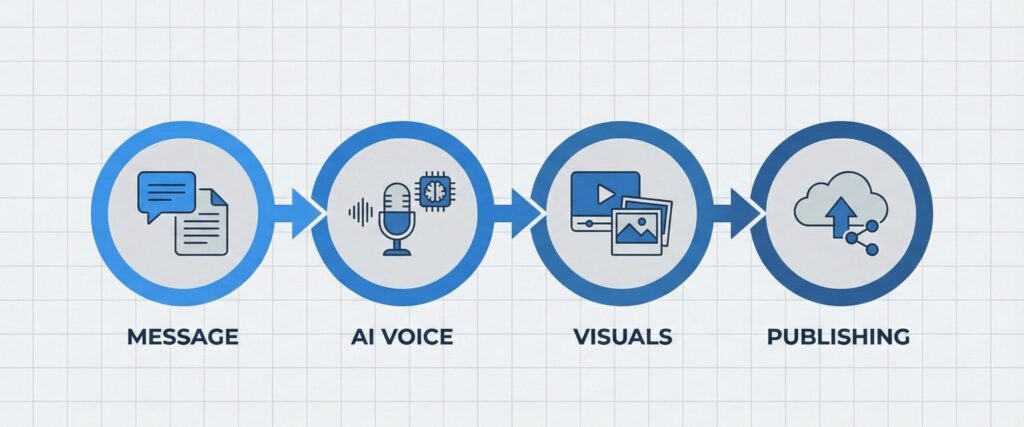
- 1Pick an angle you can own. Choose a niche where explanation matters more than personality: software tutorials, history, personal finance basics, product comparisons. Then add one thing a template can't copy, such as your own tests, a local angle or a strong opinion. Tools like vidIQ help you check what people search on YouTube.
- 2Draft with AI, then rewrite. Ask ChatGPT or Claude for an outline and a first draft, then rewrite it: cut filler, add your example, check every fact. YouTube lists "using AI to edit your video scripts" as allowed. A script AI wrote and nobody touched is the one that gets your faceless videos flagged as generic.
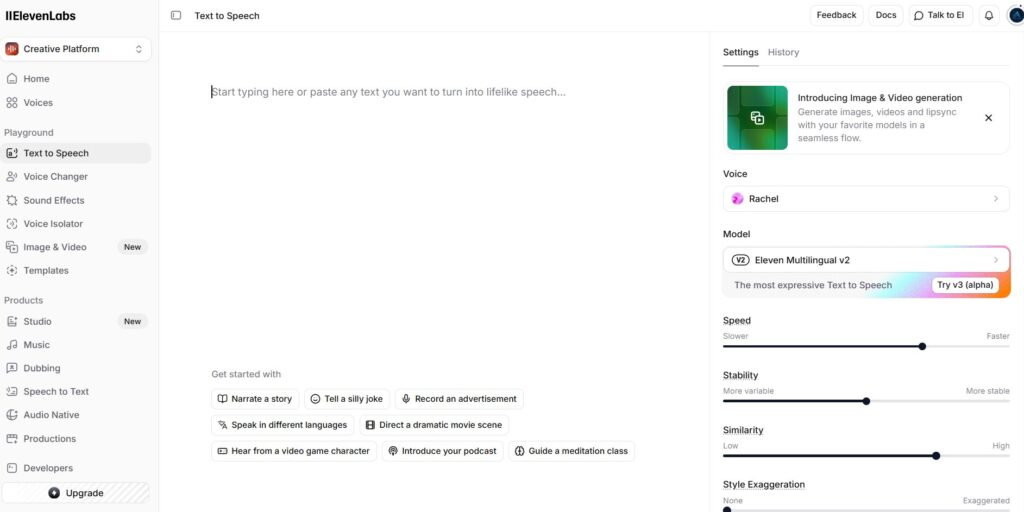
- 3Record or generate the voice. Your own voice is the strongest originality signal. If you'd rather not, ElevenLabs is the voice I reach for: the delivery sounds natural with little tweaking. Its free plan is for personal use only, so you need Starter or higher to publish commercially. Murf is the steadier choice for long, calm narration.
- 4Build visuals from the script. Go scene by scene: screen recordings, your own B-roll, licensed stock, charts, and AI clips only where they add something. Kling makes short AI video shots, and HeyGen makes avatars. An avatar is fine for tutorials, but not as a fake doctor or advisor.
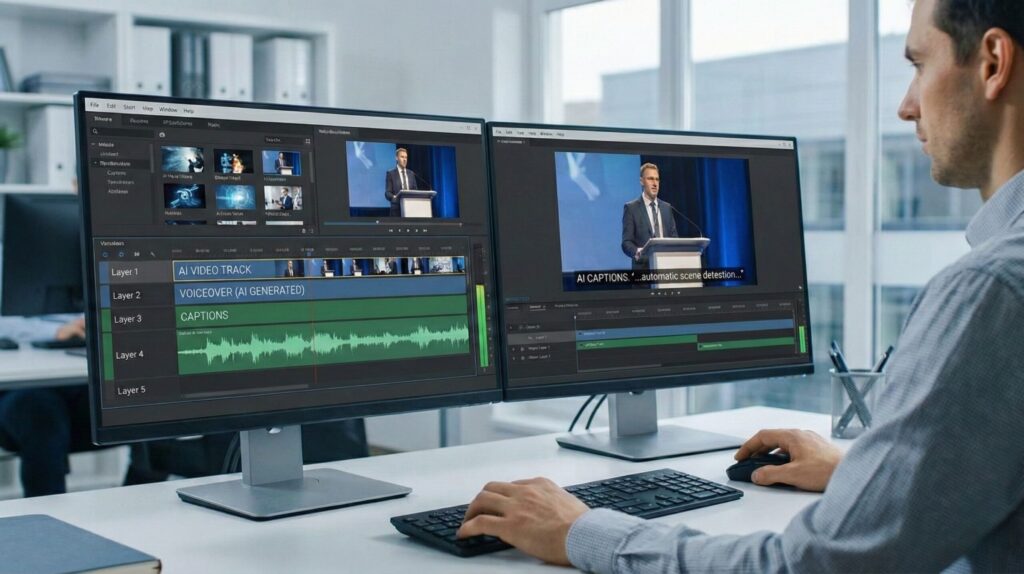
- 5Edit and caption. I edit voiceover-led videos in Descript, because cutting the transcript cuts the video, and Studio Sound cleans up a home recording. CapCut Desktop is my pick for quick vertical edits with auto captions. Both have free plans.
- 6Cut short versions. Opus Clip finds the strongest moments in a long video and reframes them to vertical. Make Shorts for reach, and a 60–90 second cut if you want TikTok Creator Rewards.
- 7Label, then publish. If anything looks realistic and AI made or changed it, switch on each platform's AI label (details in the AI label section). Then schedule across YouTube, TikTok and Instagram from one place with Vista Social.
AI should speed up your faceless videos, not replace the part where you decide what's worth saying.
Want the deeper guides? My best AI voice generator for YouTube ranks six voice tools, and the Descript editing tutorial walks through step 5.
What does an AI stack for faceless videos really cost?
| Tool | Step | Free plan | Entry paid plan |
|---|---|---|---|
| ElevenLabs | Voice | 10,000 credits a month, personal use only | Starter $6/mo with commercial license; Creator $22/mo |
| Descript | Edit | 1 media hour a month, 720p export | Hobbyist $24/mo, or $16/mo billed yearly |
| CapCut | Edit | Basic tools and templates | Pro $19.99/mo |
| Opus Clip | Short cuts | 60 credits a month, watermark | Starter $15/mo, 150 credits |
US list prices from each vendor's pricing page, checked November 1. Prices in the EU and UK can differ and may add VAT. Opus Clip uses about 1 credit per minute of source video.
🌱 Starter stack: $6/month
ElevenLabs Starter ($6) for a voice you can publish, CapCut free for edits and captions, Opus Clip free for a few short cuts. The trade-off: watermarks on Opus clips and a small monthly allowance.
🚀 Weekly-upload stack: $61/month
ElevenLabs Creator ($22) + Descript Hobbyist ($24) + Opus Clip Starter ($15). Paid yearly, Descript drops to $16, which brings the stack to about $53.
Already paying for AI apps you barely use? Before adding a video stack, run your current bills through my AI subscription cost calculator: overlaps between chat and creative tools are common.
Do faceless videos need an AI label?
YouTube's disclosure rules list scripts, captions, idea generation and cloning your own voice for voiceovers as fine without a label. They require the "AI use" setting when a real person appears to say something they didn't, when real footage is altered, or when a realistic scene never happened.
Meta is stricter on sound. Its policy requires the AI label on realistic-sounding audio that was digitally created, so an AI narrator on Instagram Reels is safer labeled. On TikTok, turn on "AI-generated content" for realistic AI visuals or speech put in someone's mouth.
🏷️ Posting the same faceless videos to YouTube, TikTok and Instagram? Get a yes or no for each platform, plus the label text to paste, in 60 seconds.
Free AI label checker →Cloning someone else's voice is a different matter. Even with a label, using a real person's voice without consent can break TikTok's rules on impersonation, and YouTube can remove it under its privacy process. Only clone a voice you own or have written permission to use.
Which faceless video niches and formats hold up best?
If you're going to repurpose long videos or podcasts into short faceless videos, my AI podcast workflow shows how to keep the clips tied to your own commentary.
My verdict: faceless videos still work if they're clearly yours
Faceless videos are still a real way to build a channel without filming yourself, and AI makes the production fast and cheap. What changed is the bar: platforms now cut the channels that let AI do the thinking, not the ones that skip the camera.
So spend the time AI saves on the parts a template can't copy: the angle, the rewrite, the visuals that match the story. Start on the $6 stack, run the risk checker on your plan, and label realistic AI footage. Then judge each video by whether someone would choose to finish it.