Mirko
AI Tech Writer
The shopping features Google demoed in 2025 are not the ones you will find today. One app was shut down, half the features moved, and the most useful one now buys things for you.
Here is what Google AI shopping tools actually look like after eighteen months of quiet rewrites — and which parts work outside the United States.
Some links are affiliate links · You support us at no extra cost · Full disclosure
What Google AI Shopping Tools Do Now
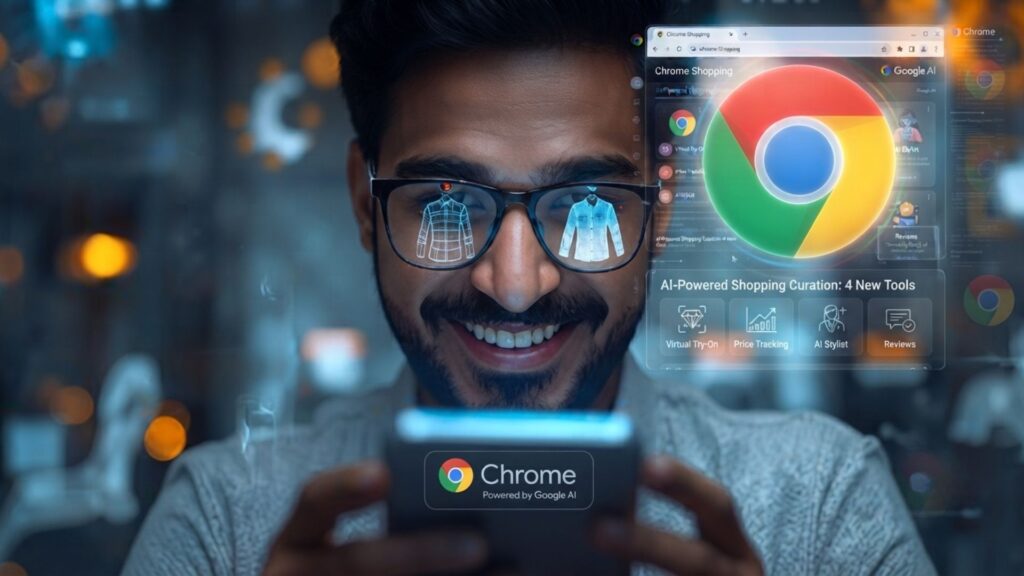
Google AI shopping tools are the AI buying features built into Google Search, the Shopping tab, and the Gemini app.
They cover conversational discovery, virtual try-on, price tracking, agentic checkout, and automated calls to local stores.
All of them read from the same place: the Shopping Graph.
That database now holds more than 50 billion product listings, and Google refreshes roughly 2 billion of them every hour. It is the reason prices in AI Mode are usually current rather than cached.
The 2025 version of this post described two features. There are now five, and the two originals both changed shape.
- Conversational discovery in AI Mode and Gemini
- Virtual try-on directly on product listings
- Price tracking with size, colour and budget filters
- Agentic checkout that completes the purchase for you
- Let Google Call for local stock and promotions
One caution worth stating early. These systems summarise product data confidently even when the underlying listing is wrong, which is the same failure mode we covered in AI hallucinations explained.
Google's own shopping announcement is the clearest primary source on what shipped and when.
Virtual Try-On in Google AI Shopping Tools After Doppl
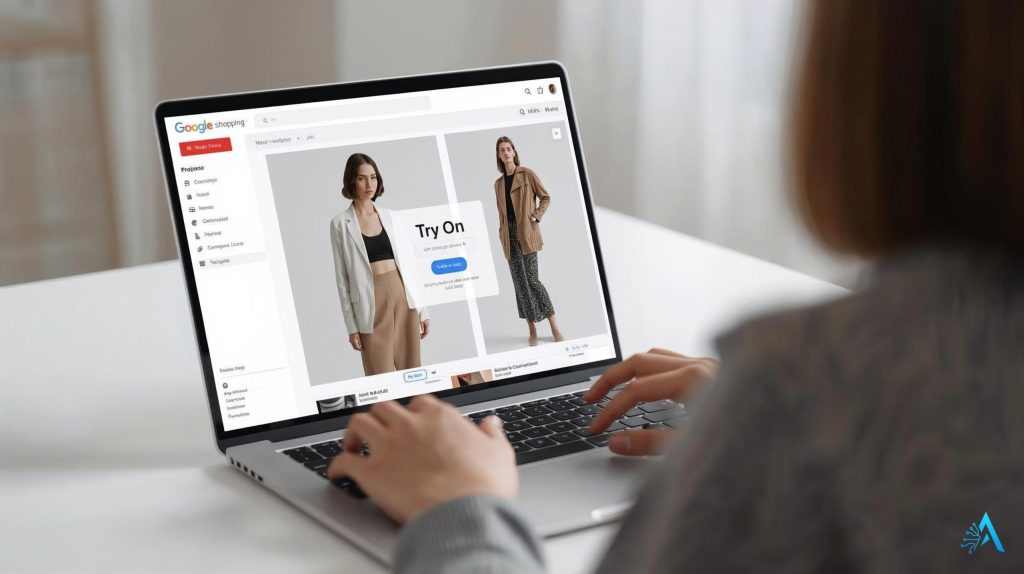
Google closed Doppl, its standalone try-on app, on 30 April 2026. That sounds like a retreat. It was the opposite.
The generative try-on model moved into Search and Shopping, where it reaches everyone instead of the small group who downloaded an experimental app.
You now tap Try it on on an eligible apparel listing, upload one clear full-body photo, and the model renders the garment on your actual body rather than a stock model.
- Coverage expanded from tops and dresses to pants and skirts
- Vision Match generates an image from a written description, then finds matching products
- Doppl's separate app, lookbook and video previews are gone
- Access is still gated through Search Labs in the US
Fit accuracy is genuinely uneven. Google flagged this itself during the Doppl experiment: mirror selfies distort proportions, and intricate garments render poorly.
Treat the output as a styling preview, not a sizing guarantee.
If the renders sometimes look plastic, our breakdown of the best free AI image generators explains the same underlying model behaviour.
Retail coverage from Retail Dive tracks which categories became eligible first.
Price Tracking and "Buy For Me"
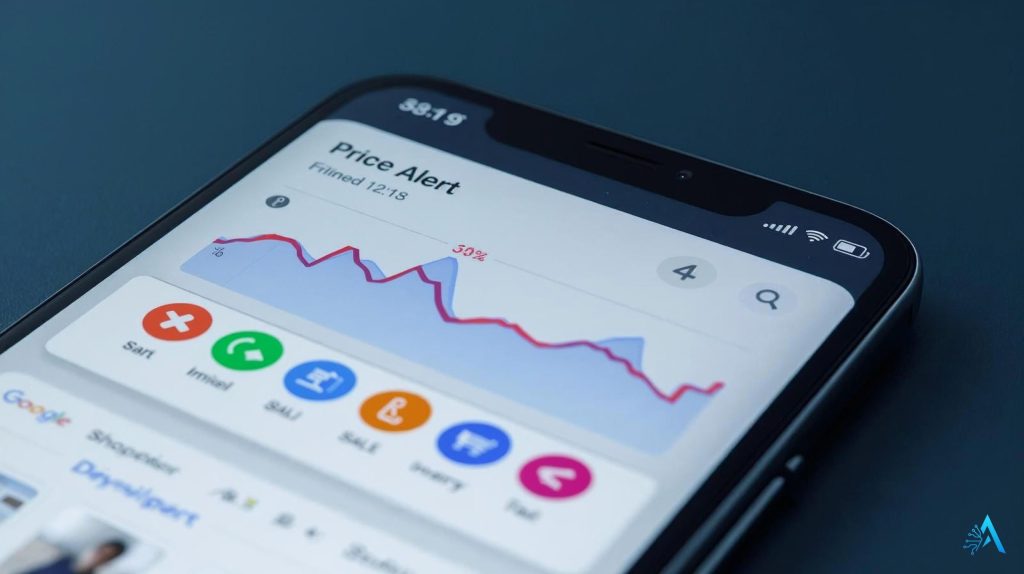
This is the part of Google AI shopping tools that changed most, and the part most people have not tried yet.
Price tracking used to be a simple alert. Now you set the variant you actually want — size, colour, and a maximum price — and Google watches only that combination.
When it hits your number, you get a notification. On eligible merchants, you also get a buy for me option.
- You confirm the item, variant and spending limit up front
- Google adds the product to your cart on the merchant's own site
- Checkout completes through Google Pay, with the retailer as merchant of record
- You are asked to authorise before anything is charged
The plumbing is the Universal Commerce Protocol, announced in January 2026 and co-developed with Shopify. A companion standard, AP2, is what enforces your spending guardrails.
Early merchants include Wayfair, Chewy, Quince and selected Shopify stores. Nike, Sephora, Target, Ulta Beauty and Walmart followed.
If handing a task to software feels familiar, it should. It is the same delegation pattern we walked through in our Bardeen AI automation review, just pointed at your wallet.
Let Google Call and Universal Cart
Two newer additions to Google AI shopping tools get almost no coverage, and both are unusually practical.
Let Google Call phones local stores on your behalf. It asks whether the item is in stock, what it costs, and whether any promotion applies — then sends you a written summary by email or text.
It runs on Duplex with a Gemini upgrade that picks which shops to ring and what to ask. Categories at launch were toys, health and beauty, and electronics, in the US only.
- Nov 2025 — agentic checkout and Let Google Call begin rolling out
- Jan 2026 — Universal Commerce Protocol launches
- Feb 2026 — Business Agent brings brand sales assistants into Search
- Apr 2026 — Doppl closes, try-on moves into Search
- May 2026 — Universal Cart announced at Google I/O
Universal Cart is the newest layer. One cart that follows you across Search, Gemini, YouTube and Gmail, spanning multiple merchants, with Affirm and Klarna options inside Google Pay.
It is rolling out in the US first. Canada and Australia are next, with the UK later.
Power and Prediction
Ajay Agrawal, Joshua Gans & Avi Goldfarb
Agentic checkout looks like a shopping feature. It is really an economics story: when prediction gets cheap, decisions move to whoever holds the data.
This book explains that shift better than any product announcement — and it is the clearest guide to why Google, not the retailer, ends up owning the moment you decide to buy.
Check the book →Where Each Google AI Shopping Tools Feature Works
Availability is the single most confusing thing about Google AI shopping tools. Announcements are global. Rollouts are not.
Here is the honest picture as of July 2026.
| Feature | Where it works | Status | Most useful for |
|---|---|---|---|
| Conversational discovery | Wherever AI Mode is live | Broadly available | Vague, open-ended searches |
| Virtual try-on | US, via Search Labs | Experimental | Apparel and fit checks |
| Price tracking | Most Google Shopping markets | Stable | Electronics and seasonal buys |
| Agentic checkout | US, select merchants | Expanding | Waiting out a price drop |
| Let Google Call | US, select categories | Limited | Same-day local pickup |
| Universal Cart | US first, CA and AU next | Rolling out | Multi-store baskets |
If you are in Italy, Germany or Spain, discovery and price tracking are the two you can rely on today. The agentic layer is not there yet.
Price tracking is where the payoff is largest on expensive items — the same logic we applied when comparing spend against features in our AI fitness tracker comparison.
How to Use Google AI Shopping Tools
Nothing here needs an install. Five steps cover the whole workflow.
- Describe the problem, not the product. In AI Mode or Gemini, write the way you would text a friend. "A warm jacket for Milan in November under 150 euro" beats a keyword string.
- Narrow with follow-up questions. The product panel updates as you refine. Ask about materials, returns or delivery windows instead of restarting the search.
- Try it on where the icon appears. Upload one clear, well-lit, full-body photo. Avoid mirror selfies — they distort proportions and the render suffers.
- Track the exact variant. Tap track price, then set size, colour and your maximum spend. A generic alert on the parent product is far less useful.
- Decide whether to delegate the purchase. If buy for me is offered, set a hard budget ceiling before authorising anything.
Track the specific size and colour, not the product page. Google notifies on the variant you selected, so a broad alert can fire on a colour you would never buy.
Alternatives Worth Pairing With Google AI Shopping Tools
Outside the US, several of these features simply are not available. Two tools fill the gaps well, and two older trackers still beat Google at narrow jobs.
| Tool | What it does better | Cost | Winner for |
|---|---|---|---|
| TryItOn AI | Garment try-on from any product photo, no region lock | Free tier, paid plans | Try-on outside the US |
| Harpa AI | Browser agent that monitors any page and summarises listings | Free tier, paid plans | Tracking non-Google stores |
| Keepa | Multi-year Amazon price history charts | Free, paid add-ons | Amazon price history |
| Idealo | Deep European retailer coverage | Free | Cross-store comparison in Europe |
Pair rather than replace. Google is strongest at discovery and checkout; Keepa is still better at showing whether today's price is genuinely low.
Harpa is the closest thing to Let Google Call for everyone outside the US, because it watches pages Google indexes poorly.
That helps with niche gear — the models in our best AI smart ovens guide, for instance.
Privacy and the Trust Problem
Every one of these features asks for something. Try-on wants a full-body photo. Agentic checkout wants standing permission to spend your money.
That is a meaningful step past showing you an advert.
- Photo retention — review what Search Labs stores and delete uploads you no longer need
- Spending ceiling — AP2 only enforces the limit you actually set
- Sponsored placements — Direct Offers are ads inside conversational answers
That last point deserves emphasis. Google now sells promotional placement inside AI answers, so a recommendation you read as neutral may be paid positioning.
There is a commercial layer underneath the helpfulness, and the labelling is not always obvious. Analysis from Talon.One covers how Direct Offers surface during consideration.
None of this makes Google AI shopping tools a bad deal. It makes them a deal you should understand before you delegate a payment.
Google AI Shopping Tools — Frequently Asked Questions
What are Google AI shopping tools?
+Google AI shopping tools are AI buying features inside Google Search, the Shopping tab and the Gemini app. They include conversational discovery, virtual try-on, price tracking, agentic checkout and local store calls.
All read from the Shopping Graph, a database of over 50 billion listings. Nothing needs installing, and no consumer feature costs money.
Do Google AI shopping tools still offer virtual try-on after Doppl shut down?
+Yes. Google closed the standalone Doppl app on 30 April 2026, but the underlying generative model moved into Search and Google Shopping.
You now tap the try it on icon on eligible apparel listings and upload a full-body photo. Coverage expanded to pants and skirts.
Access still runs through Search Labs in the United States, and Doppl's lookbook and video previews did not survive the move.
Does agentic checkout work outside the United States?
+Not yet. Agentic checkout launched with US merchants including Wayfair, Chewy, Quince and select Shopify stores, then expanded to Nike, Sephora, Target, Ulta Beauty and Walmart.
Canada and Australia come next, with the UK later. Continental Europe has no announced date, though price tracking and discovery already work there.
How accurate is Google's AI price tracking?
+Accurate on current prices, weaker on history. The Shopping Graph refreshes roughly 2 billion listings hourly, so the price you see is usually live.
What it does not give you is a long historical chart showing whether today's discount is genuinely good.
For expensive buys — a laptop, or an appliance from our best AI smart ovens guide — pair it with a history tracker.
Do Google AI shopping tools cost anything?
+No. Every consumer feature described here is free, including try-on, price tracking, agentic checkout and Let Google Call.
Google monetises the surface through merchant advertising rather than shopper subscriptions. That is worth remembering when a result looks like a neutral recommendation — Direct Offers are paid placements shown during consideration.
Can Google AI shopping tools buy something without asking me?
+No. Agentic checkout requires explicit authorisation for each transaction, and the Agent Payments Protocol enforces the spending limits you set.
You define the product, the variant and the maximum price up front. Google only acts when every criterion is met.
It asks you to confirm before the charge goes through, and the retailer stays the merchant of record.
What is the Universal Commerce Protocol?
+UCP is an open standard Google announced in January 2026, co-developed with Shopify, that lets AI agents complete checkout across participating merchants.
It handles discount codes, loyalty credentials and subscription billing alongside Google Pay. Retailers keep the customer relationship, and every transaction requires verifiable authorisation.
Are products shown by Google AI shopping tools sponsored?
+Some are. Google sells Direct Offers, a format that places exclusive promotions in front of high-intent shoppers inside conversational answers.
Sponsored placements also appear in AI Overviews and the Gemini app. Organic Shopping Graph results are not paid, but the two sit close together.
What are the best alternatives to Google AI shopping tools?
+It depends on the gap you are filling. For conversational product research with visible sources, Perplexity is the closest competitor and works globally.
For try-on outside the US, TryItOn AI works from any product photo. For Amazon price history, Keepa remains stronger. Most people are best served combining Google for discovery with one specialist tracker.
Do Google AI shopping tools work on iPhone?
+Yes. Everything runs through the Google app, the Gemini app or a mobile browser, so iOS and Android both work.
Try-on and Search Labs experiments behave identically on both. The only real restriction is geographic — your country matters far more than your phone.
🛒 Keep Shopping Smarter
You know what Google AI shopping tools can do. Now put that buying judgement to work on the gear itself: